 Picking Produce
What Signs Show a Honeydew Melon Is Ripe Before You Bring It Home?
 By the CookClear writers
Checked against USDA grading standards and university extension buying advice
 Clear Answer
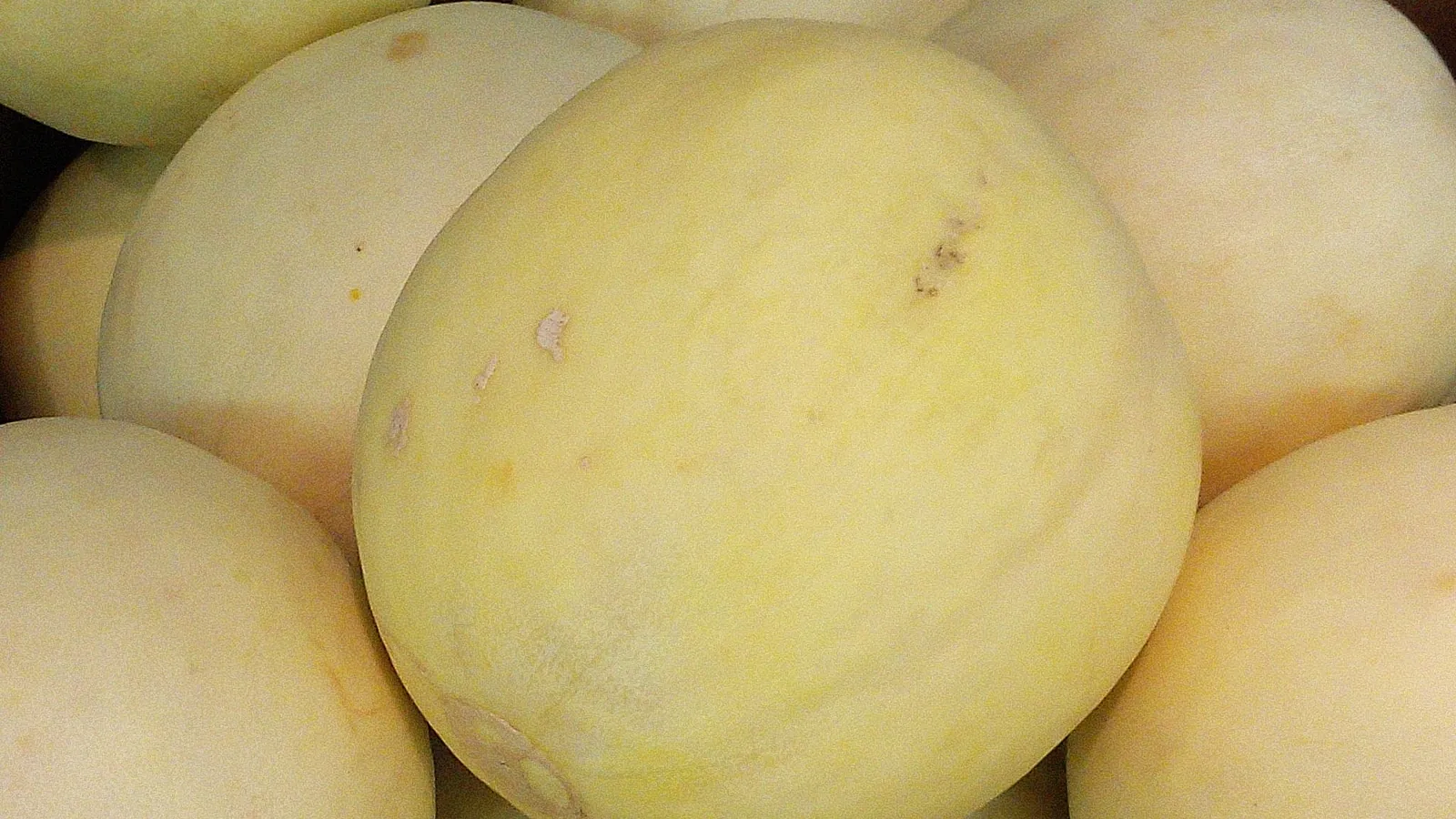
A ripe honeydew melon has a creamy white to pale yellow rind, skin that feels slightly waxy or a little tacky instead of fuzzy, and a blossom end that gives slightly when you press it. It also smells faintly sweet and feels heavy for its size. A green-white, hard, scentless melon was picked too young.
Unlike cantaloupe, honeydew never falls off the vine on its own, so you cannot read the stem end. You read the skin instead.
What color is a ripe honeydew?
Color is the main sign the UC Davis Postharvest Technology Center uses to sort honeydews. Its maturity classes move like this: an unripe but mature melon is white with greenish accents, the class shipped most often is white with a slightly discernible green tint, and a ripe melon is creamy white with yellow accents.
 On the menu10 questions
University of Illinois Extension and Kansas State Research and Extension describe the same shift, from greenish to a creamy or light yellow color, though K-State notes the shade varies by variety. Illinois adds that blotching or streaking on the surface also points to a mature melon, and that the side that rested on the ground turns yellow as the fruit ripens, much like the field spot used for picking a ripe watermelon.
Ohio State University Extension is blunt about the other end of the scale: if the melon is green, it will never ripen.
| Rind color | Skin feel | Blossom end | What it means |
|---|---|---|---|
| Green-white, clearly green cast | Fuzzy or hairy, dull | Hard | Immature; skip it |
| White with greenish accents | Fuzzy, not waxy | Hard | Mature but unripe; will stay bland |
| White with a faint green tint | Slightly waxy | Firm, no give | Typical store melon; may soften in 1 to 2 days |
| Creamy white with yellow accents | Clearly waxy, a little tacky | Gives slightly | Ripe; eat within a few days |
| Deep yellow with soft, wet or dark patches | Sticky, wrinkled or split | Mushy | Overripe; skip it |
The class names and descriptions in the first four rows come from UC Davis.
Why does honeydew skin feel sticky?
Run your palm over the rind. On a young honeydew the skin feels fuzzy or faintly hairy, like a peach. As the melon matures, that fuzz gives way to a smooth, waxy surface. UC Davis lists "fuzzy/hairy and not waxy" as a sign of an unripe melon and a "clearly waxy peel" as a sign of a ripe one. University of Maryland Extension also describes ripe honeydew rind as very waxy and smooth.
Many shoppers describe that waxy feel as slightly tacky or sticky, as if your fingers drag a little on the rind. That drag is a good sign. The extension sources say "waxy," not "sticky," so treat tackiness as the same cue described in kitchen terms.
Ohio State describes the skin as smooth, like velvet; UC Davis says waxy, and waxy is the cue to go by.
Skip melons with deep cuts, cracks, bruises or soft, sunken spots. Those break the rind and let mold in.
Should the blossom end give when you press it?
Find the blossom end, the end opposite the stem. It usually has a small round scar. Press it with your thumb.
UC Davis describes the commercial ripening class as having a blossom end that is "firm and unyielding," while a ripe melon's blossom end "yields slightly to press." Ohio State says it should feel slightly springy, and K-State says ripe honeydews become soft on the flower end.
Here is how to read your thumb:
- No give at all. Not ripe yet. If the color is creamy and the skin is waxy, it may soften on the counter.
- Slight give that springs back. Ripe.
- Soft give over the whole end. Very ripe; eat it in a day or two.
- Mushy, wet or caved in. Overripe or starting to rot.
What does a ripe honeydew smell like?
Hold the blossom end close to your nose. A ripe honeydew smells sweet, clean and floral, lighter than the musky smell of cantaloupe. UC Davis tracks aroma as part of ripeness: no characteristic aroma when unripe, none or slight in the ripening class, and noticeable when ripe. University of Maryland Extension also lists a sweet aroma as a sign of a ripe honeydew.
A melon straight from a cold display gives off very little scent, so a missing smell is not a deal breaker if the color and skin look right. A sour, fermented or alcohol smell is, because it means the flesh has started to break down.
Does weight tell you anything?
Yes. Pick up two melons of about the same size; the heavier one usually holds more juice. UC Davis describes good honeydew as "heavy for size," and University of Illinois Extension tells shoppers to choose melons that are firm and heavy.
For a sense of scale, UC Davis notes honeydews are usually packed 4 or 5 to a 30 pound (13.6 kg) carton, so a typical melon weighs roughly 6 to 7 1/2 pounds.
Why doesn't honeydew slip from the vine like cantaloupe?
A ripe cantaloupe forms a crack around its stem and pulls free with a light touch, which leaves a smooth scar you can check in the store. Reading that scar is the first step for a ripe cantaloupe.
Honeydew does not do this. UC Davis notes that no clear separation from the vine occurs, which is why its maturity is hard to judge. Maryland says honeydews will not reach full slip, and Illinois groups them with Crenshaw and casaba as melons that do not easily pull away from the vine. Growers cut them off instead.
K-State notes one exception, a variety called Earlidew that does slip. For the honeydews in most stores, the stem end tells you almost nothing. A bit of cut stem is normal and is not a sign of an early harvest, so skip the stem and judge by color, skin, blossom end, smell and weight.
Does honeydew ripen after picking?
Only partly, and the sources do not fully agree.
- Sweetness stays put. University of Maryland Extension says honeydews will not increase their sweetness after harvest. California sets a legal minimum of 10 percent soluble solids (a measure of sugar) at harvest, according to UC Davis, because the sugar has to be there when the melon is cut.
- Texture and aroma can change. UC Davis says a mature honeydew can be ripened after harvest, and packers once treated melons with ethylene gas to soften them. Ohio State and Illinois both suggest leaving a melon at room temperature for 1 to 2 days to finish ripening.
- Immature melons never catch up. UC Davis says immature fruit will not soften or develop proper flavor, even with ethylene.
Maryland calls honeydew non-climacteric and says it will not continue to ripen at all once detached. In practice the truth sits between the two views: a mature melon with a creamy rind can get softer, juicier and more fragrant on your counter in a day or two, but it will not get sweeter. A green, fuzzy melon stays hard and bland no matter how long it waits. Fruit like a mango keeps sweetening on the counter, but melons work differently.
My honeydew tastes like cucumber: what went wrong?
Bland honeydew is the most common complaint, and the cause is almost always the harvest, not your kitchen.
| What you find | Likely cause | Fix |
|---|---|---|
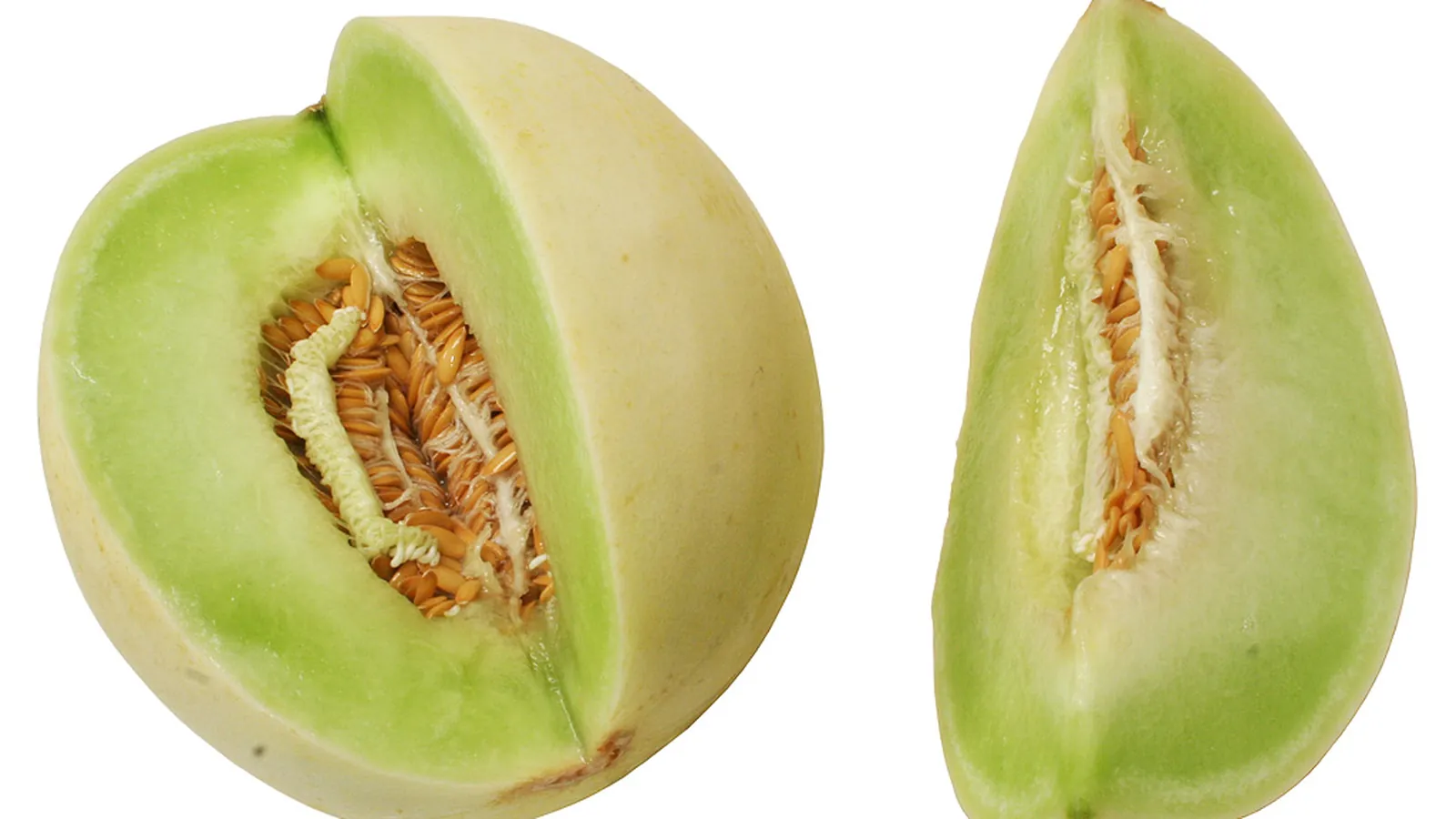
| Hard, pale flesh with little flavor | Picked immature; sugar never built up | Use it in a smoothie, salsa or with salty cheese; next time skip green-white rinds |
| Soft and juicy but not sweet | Softened after an early harvest | Choose by rind color and waxy feel first, softness second |
| Pitted rind, reddish-tan spots, odd flavor | Chilling injury from long, cold storage | Eat what tastes fine; store whole melons cooler than room but not for weeks in a cold fridge |
| Glassy, water-soaked flesh near the seeds | Overripe | Cut away the glassy parts; eat the rest soon |
| Sour, fizzy or alcohol smell | Fermenting | Throw it out |
| White fuzz or mold on the rind | Decay, often from damp storage | Do not buy; if it happens at home, discard |
UC Davis lists pitting, reddish-tan discoloration, failure to ripen and off-flavors as signs of chilling injury, which typically shows up after several days below 45°F. Ripe melons are less sensitive than unripe ones.
How to store honeydew melon at home
Storage depends on where the melon is in ripening.
- Firm but creamy: leave it whole on the counter, out of direct sun, for 1 to 2 days, as Ohio State and Illinois suggest. Check the blossom end daily.
- Ripe and whole: move it to the fridge. Commercial storage runs at 45°F to 50°F, where UC Davis reports 12 to 15 days of storage life, but a home fridge should sit at 40°F or below, which is cold enough to cause chilling damage over time. Plan to eat a ripe whole melon within several days.
- Before cutting: rinse the whole melon under cool running water and scrub the rind with a soft brush. Ohio State advises against soap, detergent or bleach because they can soak into the fruit. Cut on a clean board, and if you also handle raw meat, keep a separate cutting board for produce.
- Cut: store pieces in a sealed container or press plastic wrap on the cut face, then refrigerate.
| Form | Where | How long |
|---|---|---|
| Whole, firm, creamy rind | Counter | 1 to 2 days to soften |
| Whole, ripe | Fridge | Several days; eat soon for best texture |
| Cut, covered | Fridge | 3 days to 1 week (follow the shorter end) |
| Cut, on a tray or table | Room temperature | No more than 2 hours, 1 hour above 90°F |
| Cut, frozen | Freezer | Fine for smoothies; texture turns soft |
Sources differ on cut melon. Ohio State says tightly wrapped cut honeydew keeps up to one week, Illinois says to eat it within a few days, and Utah State Extension recommends 3 days for cut melon. The safer 3 day mark is the one to plan around, the same short window you would give most leftovers in the fridge.
The same counter-or-fridge question comes up with tomatoes, where the fridge mutes flavor much like a too-cold fridge can dull a melon. Smell and a gentle press do much of the work with other fruit too, and the other picking produce checks follow the same pattern.
 Seeing the waxy rind and blossom end on real melons
The difference between fuzzy and waxy skin, and between a firm and a slightly yielding blossom end, is easier to learn when you see someone handle the melon. A short demonstration helps you know what to feel for at the store.
WHEN IS IT RIPE? HONEYDEW MELON
By YourProduceGuy on YouTube. Their method may vary a little from ours. Watch on YouTube
- Notice the rind color: creamy white with yellow accents, not white with a green cast.
- Look for a smooth, waxy sheen on the skin rather than a dull, fuzzy surface.
- Watch how much the blossom end yields: a slight give that springs back, not a hard end or a mushy one.


