 Picking Produce
What's the Surest Way to Tell If a Mango Is Ripe When the Color Lies?
 By the CookClear writers
Checked against USDA grading standards and university extension buying advice
 Clear Answer
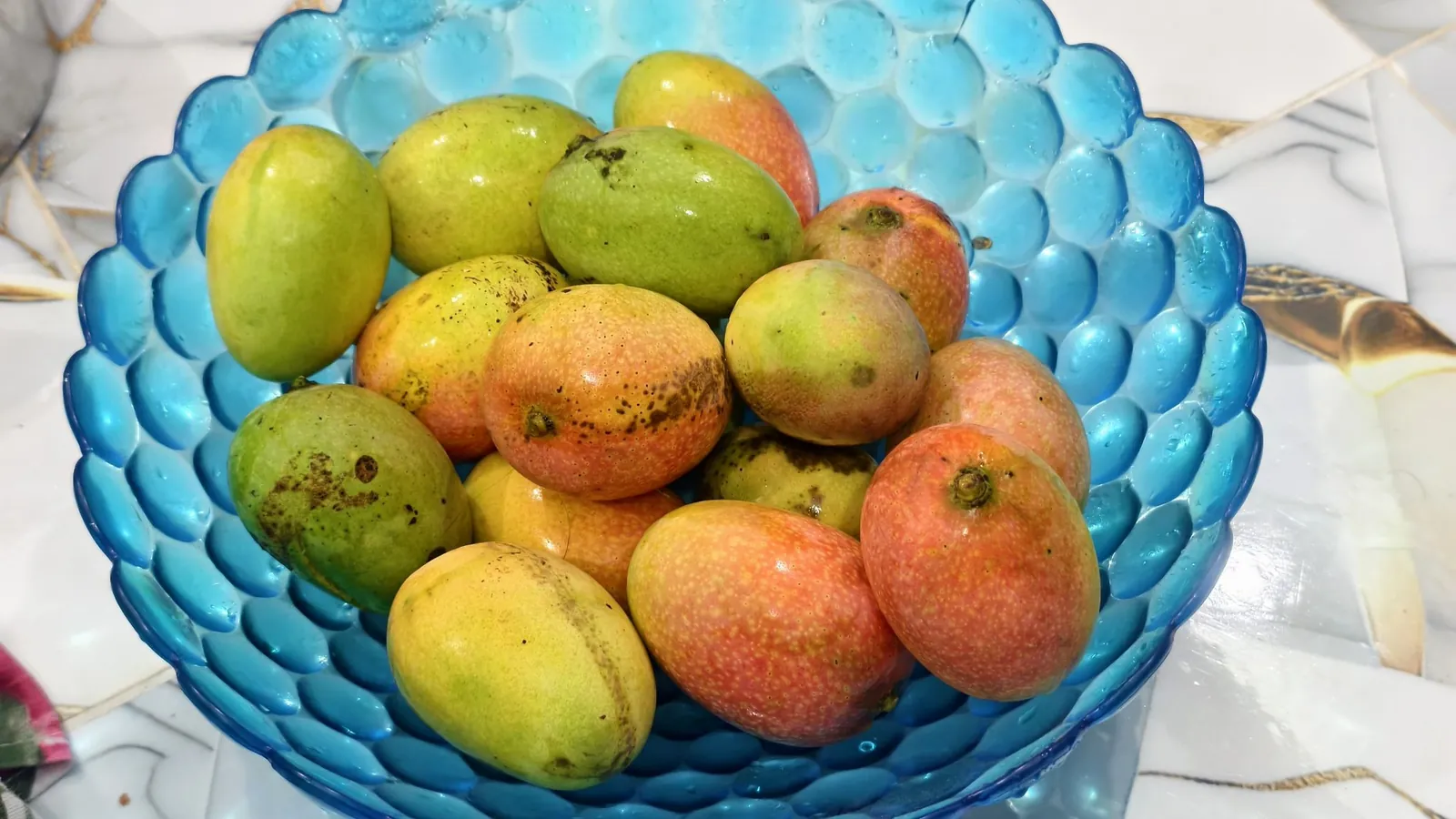
Give it a gentle squeeze: a ripe mango yields slightly under your fingers, about like a ripe peach or avocado, while an unripe one feels very firm. A sweet, fruity smell near the stem is a second good sign. Skin color is the least reliable clue, because some varieties stay green when fully ripe.
The squeeze test works on every mango in the bin, red, green, yellow or mixed.
Why the squeeze beats the color
The National Mango Board is blunt about this: color is not the best indicator of ripeness, and the red blush on some varieties doesn't tell you anything about whether the fruit is ready. Their advice is to always judge by feel.
 On the menu9 questions
A mango can be deep red and still rock hard inside, while a dull green Keitt can be soft, juicy and ready to slice.
The feel test lines up with the board's three stages:
| How it feels | Ripeness stage | What it tastes like | Best use |
|---|---|---|---|
| Very firm, no give at all | Unripe | Sour and tart | Slaws, pickles, or leave on the counter to ripen |
| Somewhat firm, slight give with real pressure | Medium ripe | Tangy with some sweetness | Salsa, cubes that need to hold their shape |
| Gives slightly with gentle pressure | Ripe | Sweet and juicy | Eating fresh, smoothies, desserts |
| Soft all over, dents easily, may leak | Past ripe | Very sweet, can taste fermented | Smoothies or purée if the smell is clean |
The squeeze should be gentle. Cup the mango in your palm and press lightly with your whole hand, not your fingertips, so you don't leave bruises on fruit someone else might buy. If you already judge ripeness by feel with other fruit, the same instinct applies, and the avocado softness test is almost identical.
Does mango color mean ripe on any variety?
Does mango color mean ripe at all? On a couple of varieties, color is a helpful second clue, as long as you still check by feel. The National Mango Board lists these external signs:
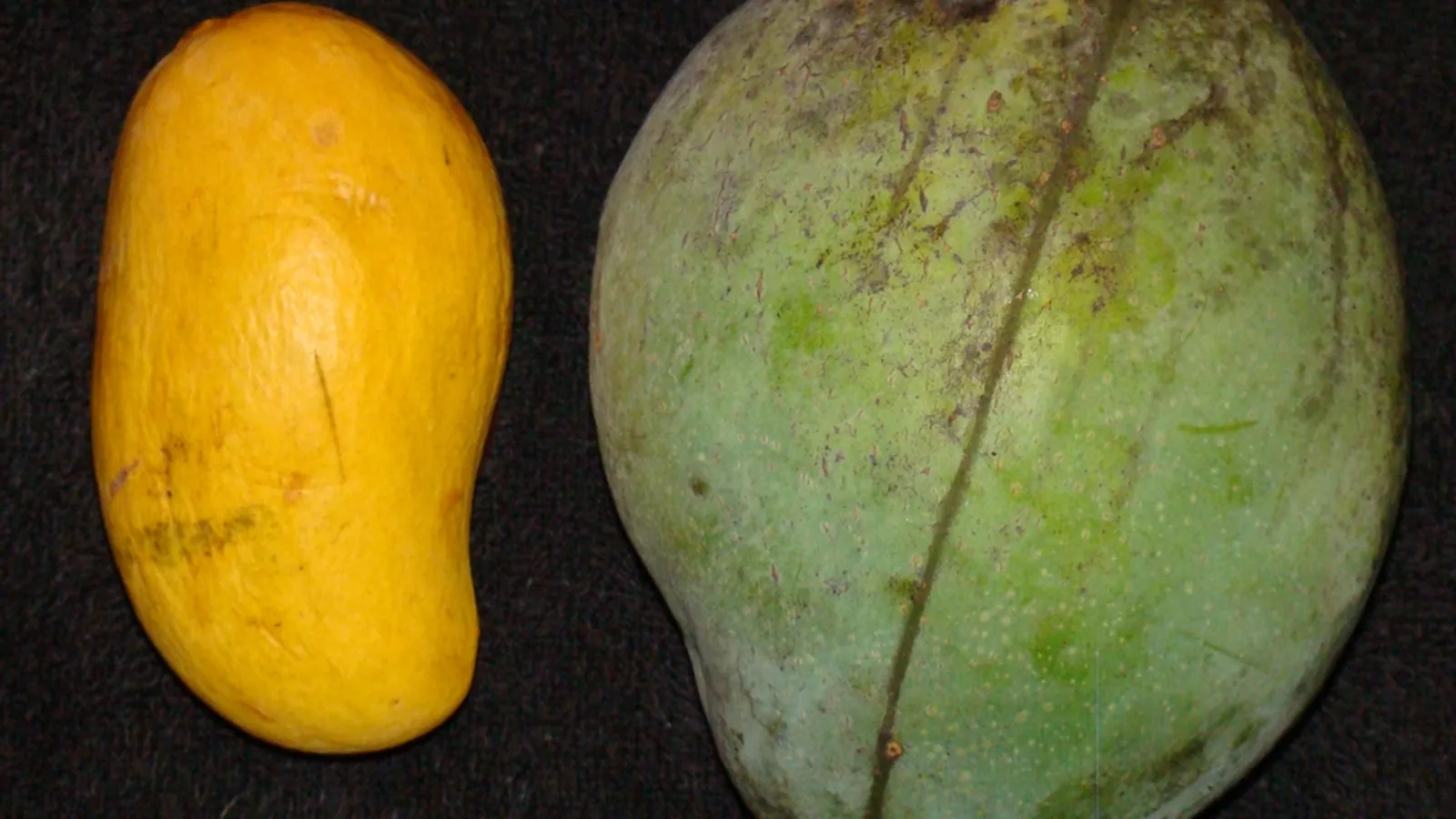
- Honey (Ataulfo). The skin deepens to a rich golden color and small wrinkles appear when it's fully ripe.
- Kent. Yellow undertones or dots spread over more of the skin as it ripens.
- Keitt. The skin stays green even when ripe, so color tells you nothing.
- Tommy Atkins. It may give no visual cues at all, so squeezing is the only way to tell.
The common Tommy Atkins misleads people most: it often looks fully red and orange while still hard as a baseball.
How do the common mango varieties show ripeness?
Most mangoes in U.S. stores are one of a handful of varieties. Each one feels and tastes a bit different when ripe, and knowing which one you're holding takes a lot of the guesswork out. These details come from the National Mango Board's variety profiles.
| Variety | Skin color | Ripe signal | Flavor and texture | Peak availability |
|---|---|---|---|---|
| Tommy Atkins | Dark red blush with green and orange-yellow | No reliable visual cue; squeeze gently | Tart with sweet notes; firm, fibrous flesh | March to July |
| Honey (Ataulfo) | Bright yellow | Deep golden skin with small wrinkles | Sweet and sour; smooth flesh with no fibers | March to July |
| Kent | Dark green, sometimes a small red blush | Yellow undertones or dots spread | Sweet with hints of sour; juicy, tender, few fibers | December to February |
| Keitt | Dark to medium green, sometimes a pink blush | Skin stays green; squeeze gently | Sweet and fruity; firm, juicy, few fibers | March to April, August and September |
Tommy Atkins ships well, which is why it's everywhere, but its fibers suit cubing and smoothies better than spooning. For Ataulfo mango ripeness, the wrinkles that would worry you on most fruit are the board's own signal that it's ready. Kent and Keitt are large and mostly green, so go by feel and smell.
How much should a ripe mango give?
Think of a ripe peach. When you press gently, the flesh gives a little and springs back slowly. If it feels like pressing a tennis ball, it needs more time. If your thumb sinks in and stays, it's past its best for neat slices.
Check the whole fruit. A single soft patch on an otherwise hard mango is more often a bruise than ripeness. Press near the stem end and on the broad cheeks.
Smell is your tiebreaker. The National Mango Board notes that ripe mangoes sometimes have a fruity aroma at the stem. Bring the stem end up to your nose: a sweet, tropical smell means you're close. No smell doesn't always mean unripe, especially straight out of a cold store display, but a strong sweet smell paired with a gentle give is about as sure as it gets. The same nose test helps with picking a ripe pineapple, and it's one of the habits that carries across most of picking produce at the store.
How to ripen a mango at home
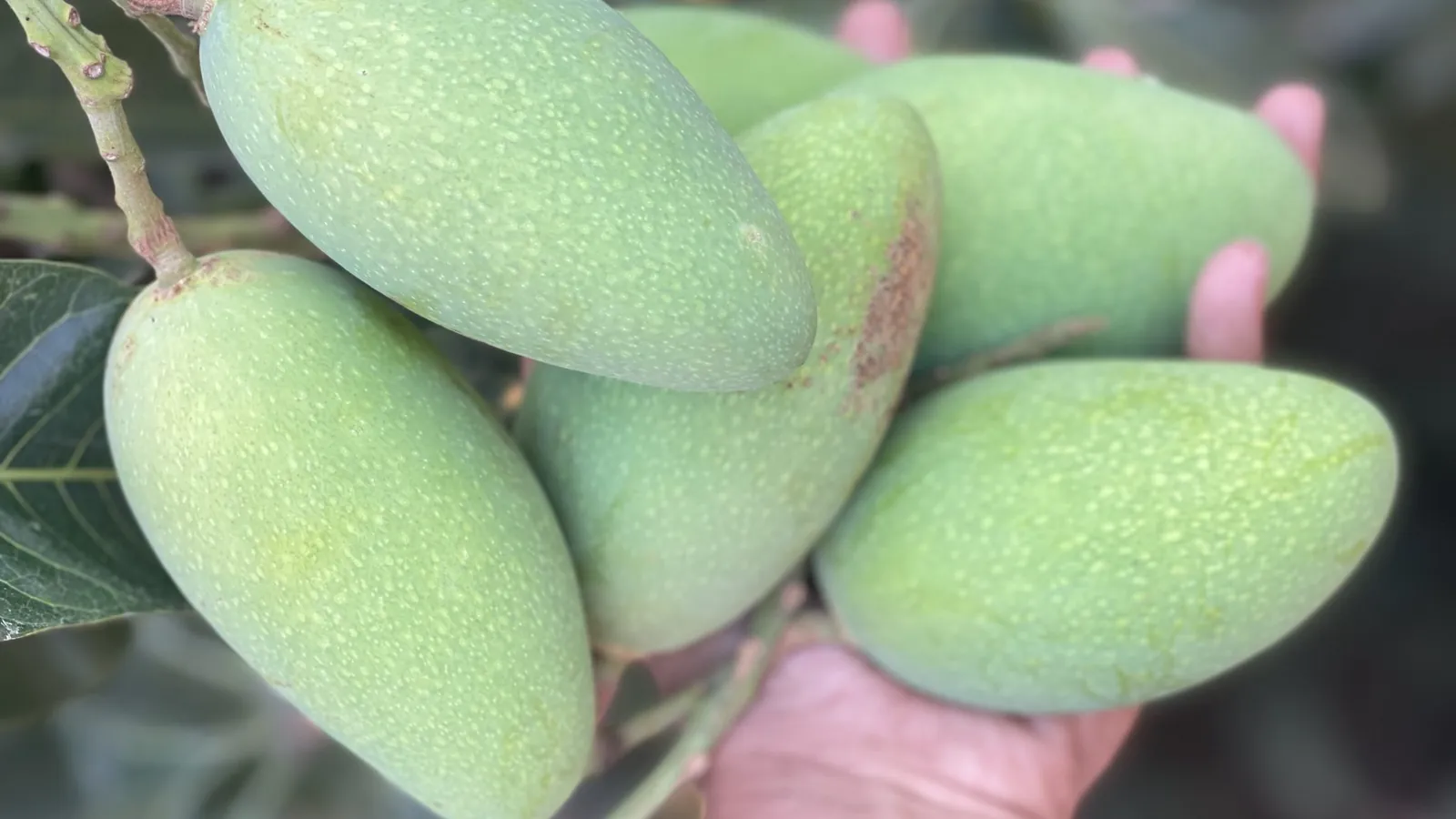
Mangoes keep ripening after they're picked, which means a hard one from the store will soften on your counter. To ripen a mango at home:
- Leave it at room temperature, out of the fridge. The National Mango Board says unripe mangoes shouldn't be refrigerated before they're ripe.
- Aim for a normal room. University of Florida IFAS Extension puts the best ripening range at 70°F to 75°F. Fruit ripened warmer than that often shrivels and picks up off flavors, so keep it away from sunny windowsills and the top of the fridge.
- To speed it up, close it in a paper bag at room temperature, as the board suggests. The bag traps the ethylene gas the fruit gives off, which nudges ripening along. Adding a ripe banana or apple to the bag is a common kitchen trick that works on the same idea.
- Check once a day with the gentle squeeze.
- Move it to the fridge as soon as it gives slightly.
How long does it take? UF IFAS notes that mature mangoes ripen 3 to 8 days after harvest, and the board simply says ripening takes several days. A mango that's been sitting in the store for a while may need only 1 or 2 days on your counter, while a rock hard one can take closer to a week.
A mango picked too immature may soften without ever turning sweet. If one stays sour no matter how long you wait, use it in a green mango salad or chutney.
Can you refrigerate an unripe mango?
Can you refrigerate an unripe mango? Not if you want it to ripen well. Mangoes are tropical fruit, and cold damages them before they ripen. University of Florida IFAS Extension says refrigerating mangoes before they're ripe can cause chilling injury, and the symptoms may not show up until the fruit warms back up. Postharvest researchers at UC Davis describe chilling injury in mangoes stored below about 54°F (12°C), and a home fridge runs well under that.
Chilling injury looks like:
- Brown or gray patches on the skin
- Small pits or sunken spots on the surface
- Flesh that ripens unevenly, soft in some places and hard in others
- Off flavors and weak aroma
Once a mango is ripe, the fridge becomes your friend. The National Mango Board says whole ripe mangoes keep up to 5 days in the refrigerator, which slows further ripening. It's the same idea as deciding whether tomatoes belong in the fridge: ripen on the counter first, chill only after.
Cut mango keeps for several days in an airtight container in the fridge, and up to 6 months in the freezer, per the board. Freeze cubes on a tray first so they don't clump, then bag them. Frozen chunks go straight into smoothies, though they can stall a weak blender, so add enough liquid first to keep things moving.
What are the signs of an overripe mango?
The signs of an overripe mango are mostly the ripe signs taken too far. The feel goes from a gentle give to mushy, and the sweet smell turns sour or boozy. Sort what you're seeing this way:
| What you see | Likely cause | What to do |
|---|---|---|
| Soft all over, dents stay when pressed | Fully ripe heading to overripe | Eat today or purée for smoothies |
| Sour, alcohol-like or fermented smell | Sugars starting to ferment | Cut it open; discard if the flesh smells off |
| Juice leaking from the stem or skin | Flesh breaking down | Use right away if clean, otherwise toss |
| Large dark, sunken or wet patches | Bruising or rot | Cut away small spots; discard if widespread |
| Fuzzy white, gray or black mold | Mold growth | Throw the whole mango out |
| Shriveled skin on a Tommy Atkins, Kent or Keitt | Moisture loss, often from too much heat | Check the flesh; often stringy and dull |
| Wrinkles on a golden Ataulfo | Normal ripeness for this variety | Enjoy it, this is peak eating |
| Gray or brown skin patches on a firm fruit | Chilling injury from cold storage | Flesh may never ripen evenly; use cooked or in smoothies |
A few small black freckles on the skin are common and usually harmless. The flesh tells you more. Cut the mango open: ripe flesh is bright yellow to deep orange and smells sweet. Brownish, translucent or slimy flesh with a sour smell means it's gone.
Very ripe mango that still smells clean makes excellent smoothies, sorbet and lassi. Treat it like a spotty banana and plan to use it the same day, or freeze the cubes the way you'd freeze overripe bananas for later.
A quick shopping routine for picking a good mango
Put it all together at the store:
- Figure out the variety. Look at the sticker or sign. Ataulfo and Honey mangoes can lean on color; the others can't.
- Ignore the red blush.
- Cup the mango in your palm and press gently. A slight give means ripe; very firm means it needs a few days.
- Smell the stem end for a sweet, fruity aroma.
- Skip fruit with large soft spots, leaking juice, mold, or gray patches that hint at cold damage.
- Buy a mix. Grab one that gives now and one or two firm ones that will ripen on your counter over the next several days.
Melons work on a similar mix of feel and smell, so judging a cantaloupe will feel familiar after a few mangoes. Mango also pairs well with avocado in salsas and salads, and since both brown or soften fast once cut, it helps to know how to keep cut avocado green when you're prepping both ahead.
 Seeing the squeeze test on real mangoes
How much a ripe mango gives is easier to judge after you've watched a few being pressed and compared. A short demo showing different varieties side by side makes the feel and smell cues click.
How to Tell If a Mango is Ripe
By Earth Monkey on YouTube. Their method may vary a little from ours. Watch on YouTube
- Notice how little a ripe mango gives under gentle pressure, about like a ripe peach, compared with a firm one that doesn't budge.
- Watch whether a green Keitt or Kent is judged by feel, since their skin can stay green even when ripe.
- Look at the skin of any golden Ataulfo: deep color and small wrinkles are the ripe signals, not flaws.


