 Techniques
Why Do Roasted Vegetables Turn Soggy Instead of Browned and Crisp?
 By the CookClear writers
Checked against test kitchen and food science sources
 Clear Answer
Roasted vegetables turn soggy because they steam instead of roast: when water can't escape fast enough from a crowded pan, wet produce, or a cool oven, the surface stays near 212°F and never browns. Give every piece room on a sturdy rimmed sheet, dry it well, use enough oil, and roast at 425 to 500°F.
Some vegetables are much more prone to sogginess than others, and a pan that's already going limp can often be rescued.
What actually happens on the pan
Browning comes from the Maillard reaction, which starts when a food's surface reaches roughly 300°F. Water can't get hotter than 212°F at sea level, so as long as a vegetable's surface is wet, it is pinned below browning temperature. The oven's job in the first stretch of roasting is to drive that surface water off.
 On the menu13 questions
When pieces are spaced apart, the moisture they release turns to vapor and drifts away into the oven. When they're packed together, the steam has nowhere to go. It condenses on neighboring pieces, pools on the pan, and the whole batch simmers in its own liquid. It's the same reason scallops steam instead of searing in a crowded pan. You end up with vegetables that are cooked through but pale, slick, and floppy.
How much water are you fighting?
Some vegetables bring far more water to the pan than others. These figures are approximate water content for raw produce, and they line up closely with which vegetables home cooks complain about most.
| Vegetable | Approx. water content | Soggy risk | What helps most |
|---|---|---|---|
| Zucchini | 95% | Very high | Large pieces, very hot oven, lots of space |
| Cauliflower | 92% | High | Wedges or large florets, hot preheated oven |
| Bell peppers | 92% | High | Wide strips, skin side down |
| Broccoli | 91% | Moderate to high | Preheated sheet, high heat, don't flip early |
| Carrots | 87% | Moderate | Even batons, longer roast |
| White potatoes | 79% | Lower | Dry thoroughly after cutting or rinsing |
Zucchini at 95 percent water is the classic offender. Potatoes, at under 80 percent, have more starch and less water, which is part of why they crisp so willingly. If you're roasting a mix, put the watery vegetables on their own pan or at the outer edges where air moves best.
The usual causes, ranked
Most soggy batches trace back to one or two of these. Start at the top of the list; the first two account for the majority of problems.
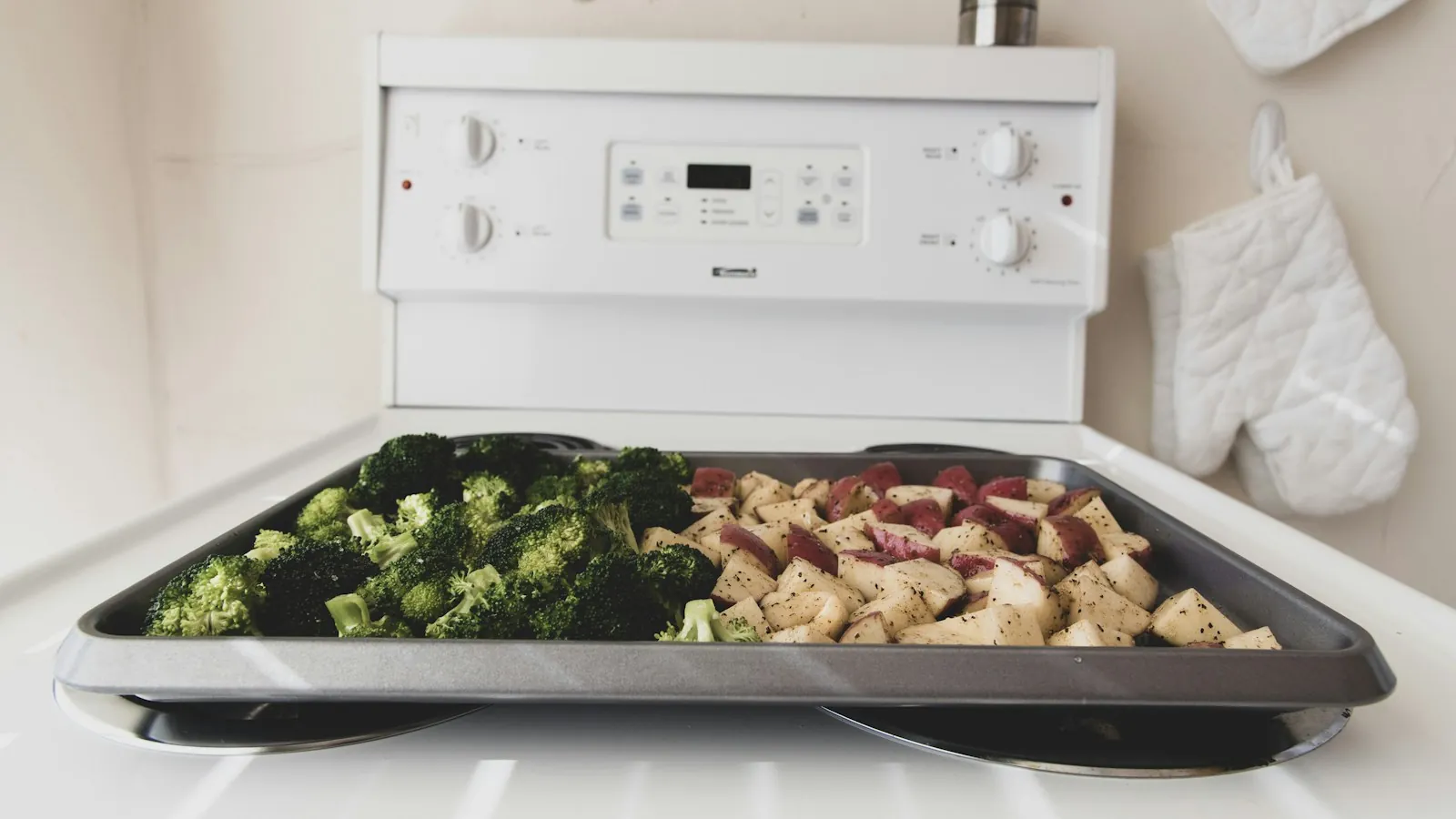
- Crowding the pan. America's Test Kitchen's top rule for roasting any vegetable is a single layer with space between the pieces so steam doesn't stop browning. If pieces touch on every side, you're steaming. Use two sheets rather than piling everything on one.
- Wet vegetables. Water left from washing has to boil off before browning can start. Spin greens and florets dry, and pat cut potatoes and squash with a towel.
- An oven that's too cool. At 350°F, water leaves slowly and the vegetables soften before they brown. Ovens that run hot or uneven throw this off too. Most test-kitchen roasting recipes run between 425 and 500°F.
- Too little oil. Oil conducts heat from the pan into the vegetable and helps the surface fry. Dry spots stay pale.
- A flimsy or dark-coated pan that warps.A thin sheet buckles in high heat, and liquid runs into the low spots. A heavy aluminum rimmed sheet stays flat.
- Flipping too soon. The side touching the metal browns first. Move it early and you trade a crust for a smear.
- Covering or using a deep dish. A casserole dish or a high-sided roasting pan traps steam the same way a lid does.
How much space does each piece need?
There's no magic measurement, but a useful rule is that you should see bare pan between almost every piece. A standard half sheet (roughly 18 by 13 inches) comfortably handles about 1 1/2 to 2 pounds of most cut vegetables. ATK's tested recipes fall in that range: 1 3/4 pounds of broccoli, 1 1/2 pounds of carrots or mushrooms, about 2 pounds of cauliflower, all on a single rimmed sheet.
If you're cooking for a crowd, split the batch across two sheets and swap their rack positions halfway through. It feels like more work, but two half-full pans brown in less time than one overloaded pan steams.
Which oven temperature gives the best browning?
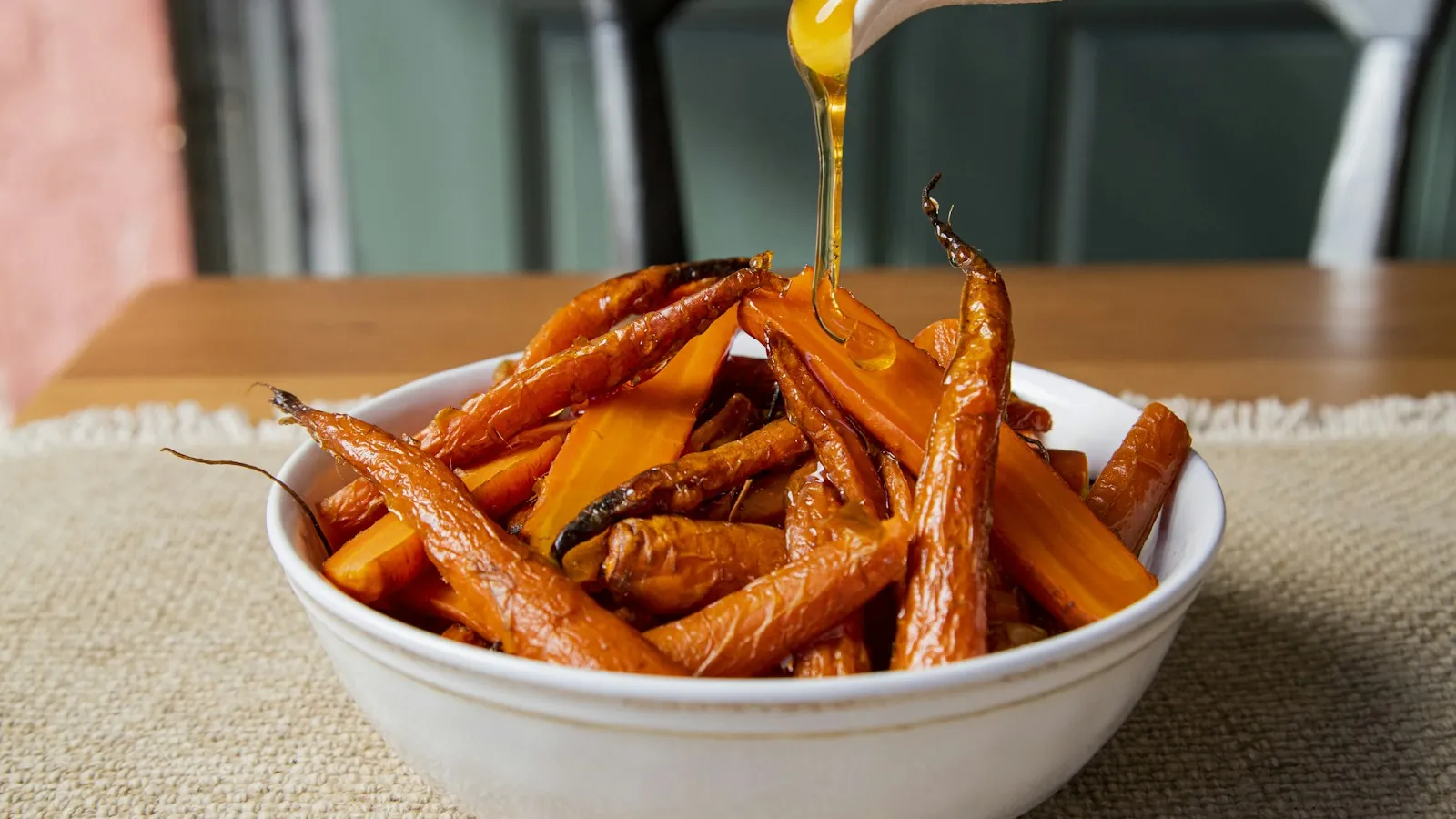
Usually 425°F or above. America's Test Kitchen roasts broccoli and asparagus at 500°F on a preheated sheet, Brussels sprouts at 500°F, cauliflower at 475°F, green beans and mushrooms at 450°F, and denser vegetables like carrots, fennel, and butternut squash at 425°F.
Thin or quick-cooking vegetables get the hottest oven so the outside browns before the inside overcooks. Dense, starchy ones get a bit less heat so the center has time to soften before the outside burns. If your recipe says 375°F and your vegetables keep coming out limp, that number is the first thing to change.
Rack position matters too
The lowest rack sits closest to the bottom heating element, so the underside of the pan gets the most direct heat. ATK uses the lowest rack for broccoli, asparagus, mushrooms, and squash to get a deep sear on the side touching the metal. The middle rack is a gentler choice for vegetables that start covered.
Should you preheat the sheet pan?
For quick-cooking green vegetables, yes. Putting the empty sheet in the oven while it heats means the vegetables hit hot metal and start sizzling immediately instead of slowly warming up and weeping liquid. ATK does this for broccoli and asparagus, then leaves them undisturbed for 8 to 11 minutes until the undersides are deeply browned.
Be careful when you add the vegetables: pull the rack out, slide them on, spread them quickly with tongs, and close the door. A hot pan with oil on it will spatter.
For dense vegetables like carrots or cauliflower wedges, preheating is less important because they need time anyway. Some recipes deliberately cover them with foil for the first 10 to 15 minutes to steam the inside tender, then uncover them to dry and brown. This works only because the foil comes off with plenty of roasting time left.
Does salting early make vegetables wetter?
Salt does pull moisture to the surface of cut vegetables, especially watery ones like zucchini and eggplant. If you salt and let them sit on the counter for half an hour before roasting, you'll see beads of liquid, and that liquid goes onto the pan with them.
The fix is to season right before the pan goes in the oven, not long before. Alternatively, salt watery vegetables ahead on purpose, let them sit in a colander, then blot them dry before oiling. Either approach works. The version that fails is salting, waiting, and then tipping everything onto the pan wet.
Mushrooms are an exception. ATK briefly brines cremini mushrooms in salted water for 10 minutes, dries them well, then roasts at 450°F for 35 to 40 minutes before tossing. The long roast drives off all the water, and the brine seasons them evenly.
Is parchment or foil making your vegetables soggy?
A sheet of parchment or foil laid flat on the pan doesn't cause sogginess on its own. It does put a thin barrier between the vegetable and the hot metal, so browning on the bottom can be a little slower and less even than on a bare pan.
Problems start when the liner bunches up and creates pockets where liquid collects, or when foil is crimped around the vegetables like a packet. Press liners flat into the corners. If you want the deepest crust, oil the vegetables well and roast directly on a heavy bare sheet. The same idea applies to liners in an air fryer, where airflow counts for even more.
How much oil should you use?
Enough to coat every surface with a thin sheen, which is more than a quick drizzle over the pan. ATK's tested amounts give a useful benchmark: about 2 tablespoons for 1 1/2 to 2 pounds of most vegetables, 3 tablespoons for 1 3/4 pounds of broccoli, and 1/4 cup for a whole cauliflower cut into wedges.
Toss the vegetables with oil in a bowl before they go on the pan. Drizzling oil over vegetables already spread out leaves some pieces dry and others sitting in a puddle, and you'll see exactly that pattern in the results: crisp spots next to pale ones.
Cut size and shape
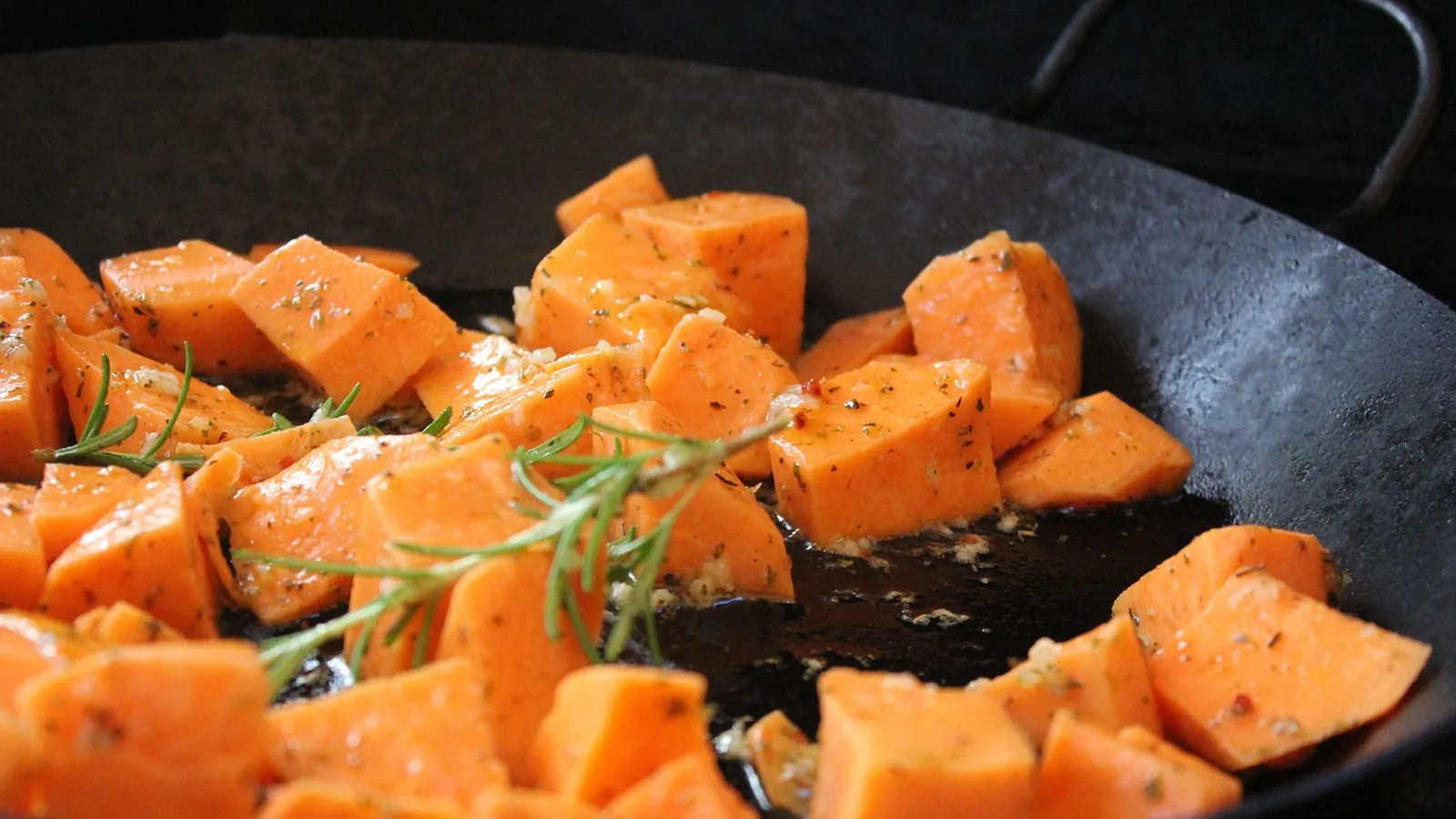
Small pieces seem like they'd crisp faster, but tiny cuts of watery vegetables tend to shrivel and steam before they brown. Larger pieces with at least one broad flat side give you more contact with the hot pan and a better ratio of crust to interior.
- Cut florets so they have a flat face, and lay that face down.
- Halve Brussels sprouts and place them cut side down.
- Keep pieces in a batch roughly the same size so they finish together.
- For zucchini, go big: thick half-moons or long spears instead of small dice.
If you're working with squash or sweet potatoes, timing changes: roasting butternut squash cubes takes 20 to 30 minutes at 425°F, while a medium sweet potato needs 50 to 60 minutes at 400°F when you bake a sweet potato whole.
Can you fix roasted vegetables that are already soggy?
Usually, yes, if they aren't overcooked to mush. Here's the rescue:
- Pour off any liquid pooled on the pan, or move the vegetables to a fresh dry sheet.
- Spread them out so no pieces touch, using a second pan if needed.
- Raise the oven to 450 to 475°F.
- Give them another 8 to 12 minutes without stirring, then check the undersides.
- Season again at the end, since some salt went away with the liquid.
This won't produce the same crust as a batch that roasted properly from the start, because the surface has already softened. It will get you browned edges and a much better texture than serving them limp. Most technique troubleshooting comes back to managing moisture like this.
Why do leftover roasted vegetables go soft?
Even perfectly crisp vegetables soften in the fridge as moisture from the interior migrates out to the surface. Reheating them in the microwave makes it worse because it heats the water inside. To bring leftovers back, spread them on a sheet pan and reheat in a hot oven (around 425°F) for a few minutes, or use an air fryer or a hot skillet, or a hot air fryer. Don't cover them while reheating.
For food safety, refrigerate leftovers within 2 hours of cooking and eat them within 3 to 4 days, per USDA guidance on cooked leftovers.
 Why restaurant vegetables brown and yours do not
Soggy and browned vegetables look very different on the pan, and the gap between them is easier to see side by side. Ethan Chlebowski compares restaurant results with home batches.
Why are a restaurant's vegetables so much better than homemade ones?
By Ethan Chlebowski on YouTube. Their method may vary a little from ours. Watch on YouTube
- Compare the spacing between pieces with the single layer and bare pan between almost every piece advice above.
- Notice how dry the vegetables look going in, and how that affects surface browning before they reach roughly 300°F.
- Look at the oven temperature and pan used, and compare them with the 425°F and above range and heavy rimmed sheet recommended above.


