Picking Produce
What Should You Check to Pick a Ripe Watermelon That Tastes Sweet?
 By the CookClear writers
Checked against USDA grading standards and university extension buying advice
 Clear Answer
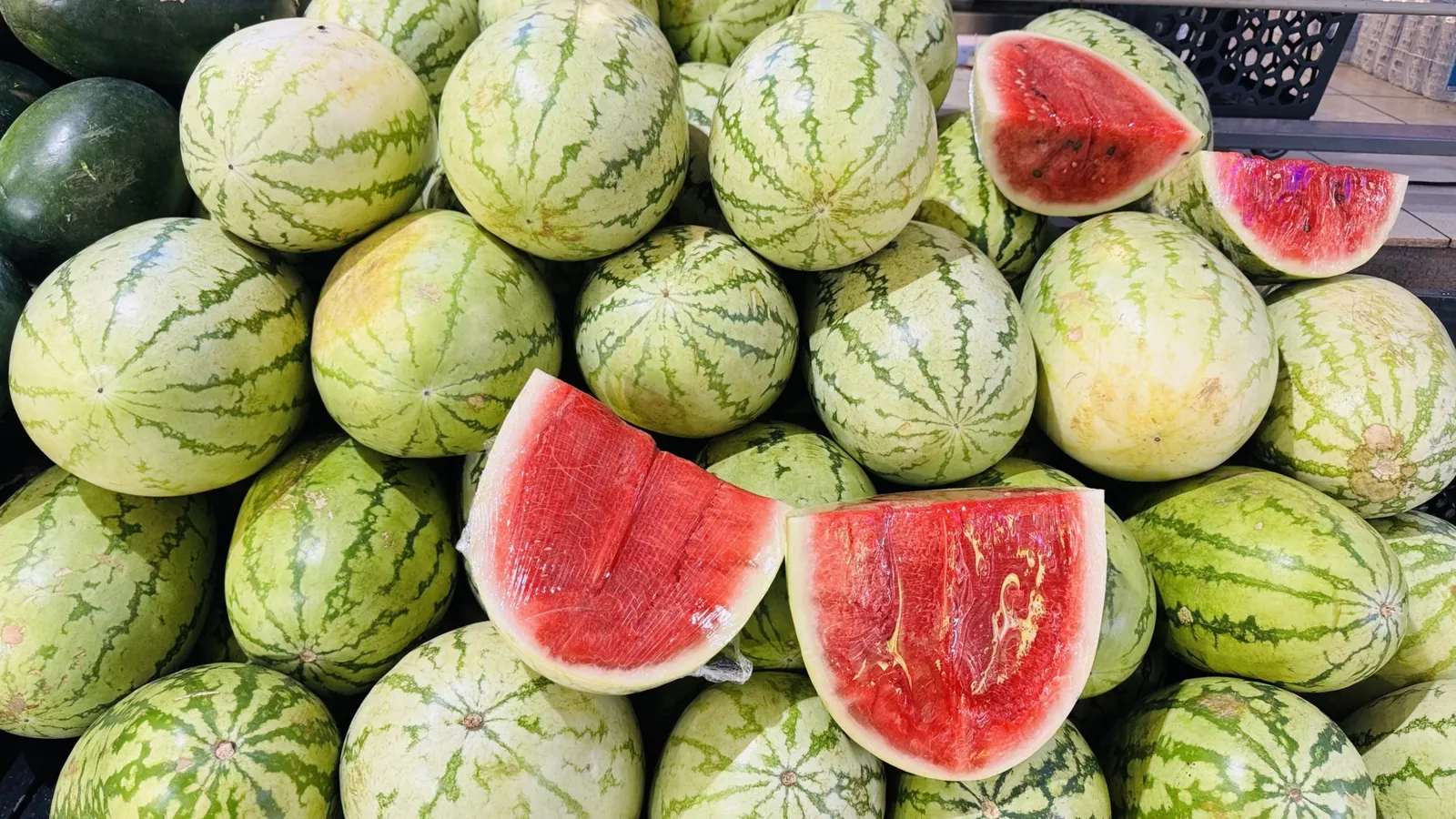
To pick a ripe watermelon, check three things: a creamy yellow field spot on the underside, a melon that feels heavy for its size, and a firm, symmetrical rind with no dents or soft spots. Watermelon does not ripen after it leaves the vine, so the one you take home is as sweet as it will ever be.
The three checks that work: look, lift, turn
The National Watermelon Promotion Board boils selection down to look, lift, and turn. University extension specialists in Arkansas, North Carolina, and Georgia list the same core signs, with a few extras growers use in the field.
- Look. Scan for a firm, symmetrical melon that is free of bruises, cuts, and dents. A dull rind is a better sign than a slick, shiny one, according to NC State Extension, since shine tends to mean the melon was picked young.
- Lift. Pick up two or three melons of about the same size. The heaviest one is usually the ripest. Watermelon is about 92 percent water, and a melon that has filled out fully carries more of it.
- Turn. Roll the melon over and find the pale patch where it rested on the ground. You want that spot creamy or buttery yellow, not white or green.
What does the yellow spot on a watermelon mean?
The yellow spot on a watermelon, called the field spot or ground spot, is where the melon sat on the soil while it grew. Because that side never saw the sun, it starts out pale. As the melon matures on the vine, the patch turns from white to cream to yellow, and on some varieties to a deep golden orange.
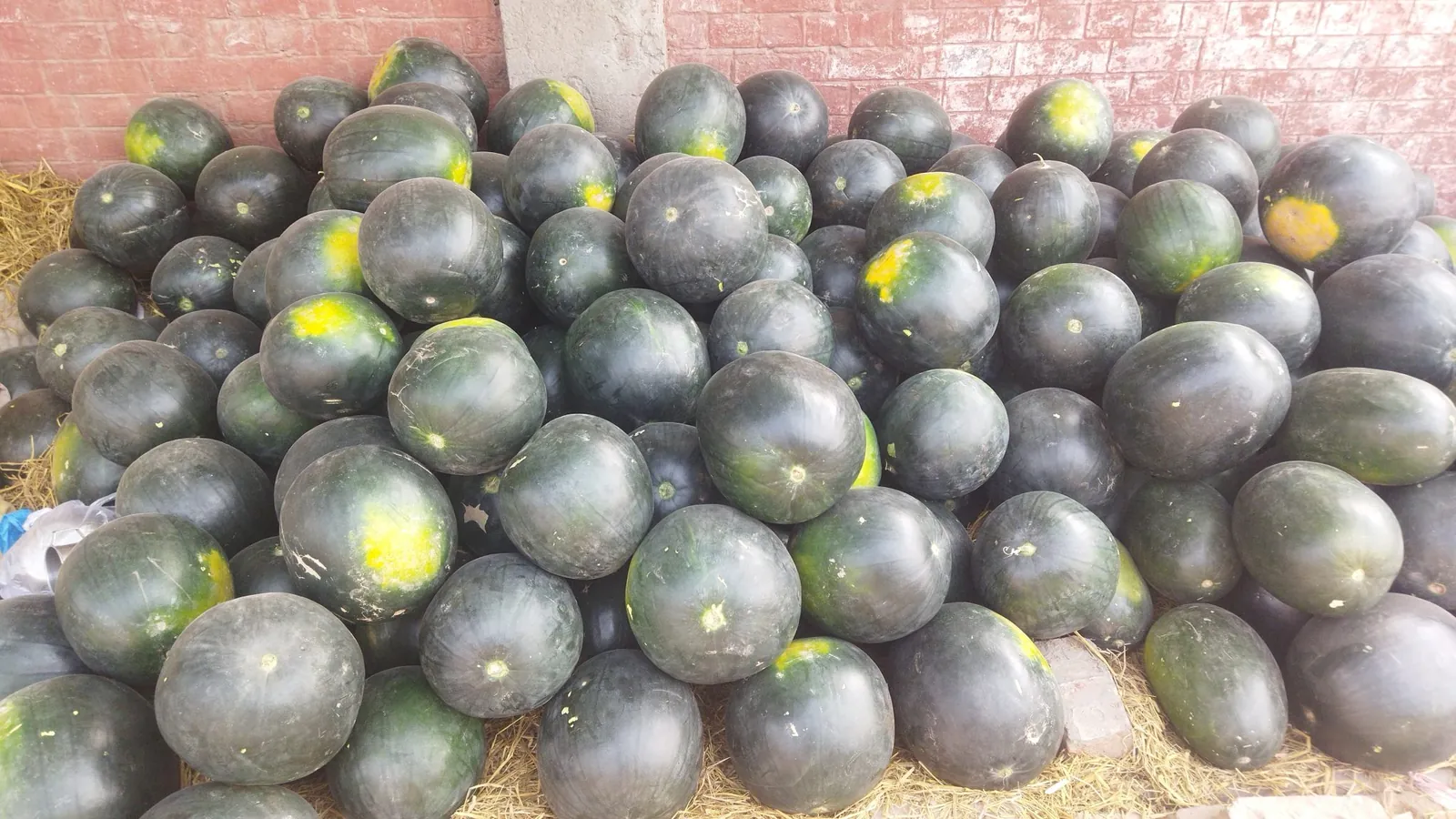
Extension specialists treat this as the single most reliable sign you can check at the store. An Arkansas extension horticulturist describes yellow to orange as the color to look for, and an NC State Extension agent says a white spot means the melon is immature and should be skipped. Alabama Extension adds that a green or very white belly suggests the melon was not ready when it was cut.
Use this as a quick read:
| Field spot color | What it usually means | Buy it? |
|---|---|---|
| White or pale green | Picked early, likely bland and firm | Skip |
| Light cream | Close, but may be mild | Only if nothing better |
| Creamy or buttery yellow | Ripened on the vine | Yes |
| Deep yellow to orange | Fully ripe | Yes, eat within a few days |
| No visible spot at all | Hard to judge, may have been turned in the field | Rely on weight and rind |
One caveat from NC State's watermelon breeding program: the exact shade varies by variety, and mini watermelons under about 9 pounds often do not show the usual signs even when ripe. With small personal melons, lean harder on weight and a dull rind.
Does thumping a watermelon work?
Thumping a watermelon is the most famous test and the least reliable. Some extension fact sheets still list it, saying a ripe melon sounds dull or hollow while an immature one rings higher. In practice, the experts who handle the most melons say it rarely helps a shopper.
An Arkansas extension horticulture specialist put it plainly: he cannot hear the difference between a ripe and an unripe watermelon by thumping. Alabama Extension calls the knock test a myth when it comes to sweetness and says the sound mostly reflects rind thickness, which depends on variety. Smaller melons tend to sound dense and larger ones hollow, regardless of how much sugar is inside.
Growers do use the shift from a bright tone to a dull one on the vine, comparing the same melon over days. At the store you have no "before" sound, so let the field spot and the weight decide.
Why weight for size matters more than size
Size by itself tells you very little. A big melon is not riper or sweeter than a small one; it is just a bigger variety or a melon from a different field. What matters is how heavy the melon feels compared with others of the same size.
A melon that is light for its size may have been picked before it filled out, or it may have lost moisture in storage. Either way, the flesh is more likely to be dry, mealy, or pale.
If the store sells melons by weight, the produce scale can settle a close call. Two melons that look identical can differ by a pound or more, and the heavier one is almost always the juicier pick, the same logic that makes a heavy cantaloupe a good sign.
Does the shape of a watermelon matter?
Shape matters for evenness more than sweetness. The Watermelon Promotion Board tells shoppers to look for a symmetrical melon, and that advice holds whether the variety is round or oblong. What you want to avoid is a melon with flat sides, bumps, or one end much narrower than the other.
Irregular shapes usually come from uneven growing conditions, such as poor pollination or a dry spell, and they can mean uneven flesh inside. Popular claims that round melons are sweeter and oblong ones are more watery are not backed by the extension sources we checked, so treat them as folklore.
What is webbing on a watermelon, and do sugar spots mean sweetness?
Webbing on a watermelon is the rough, brown, net-like scarring you sometimes see on the rind. It is commonly linked to bees visiting the flower during pollination, though that explanation is repeated far more often than it is tested. An Arkansas extension specialist does include darker webbing among the field signs he uses, along with a dry stem and the field spot color.
Count webbing as a mild plus, never a deal breaker. It is surface scarring and does not hurt the fruit. A melon with heavy webbing and a white field spot is still a melon to skip.
Sugar spots, sometimes called syrup spots, are small dark or beige freckles where juice seems to have seeped through the rind. They are popular on social media as a sign of a very sweet melon. We could not find extension research confirming that, so treat it as a maybe. Alabama Extension also calls the idea that stripe width or a spot at the blossom end shows sweetness a myth, since both depend on variety.
Does watermelon ripen after picking?
No. Watermelon does not ripen after picking. NC State Extension notes that its ripeness is fixed at harvest, unlike peaches and cantaloupes, which keep softening after they come off the plant. A watermelon left on the counter for a week may get a little softer as it loses water, but it will not get sweeter. Strawberries work the same way, so both have to be chosen ripe.
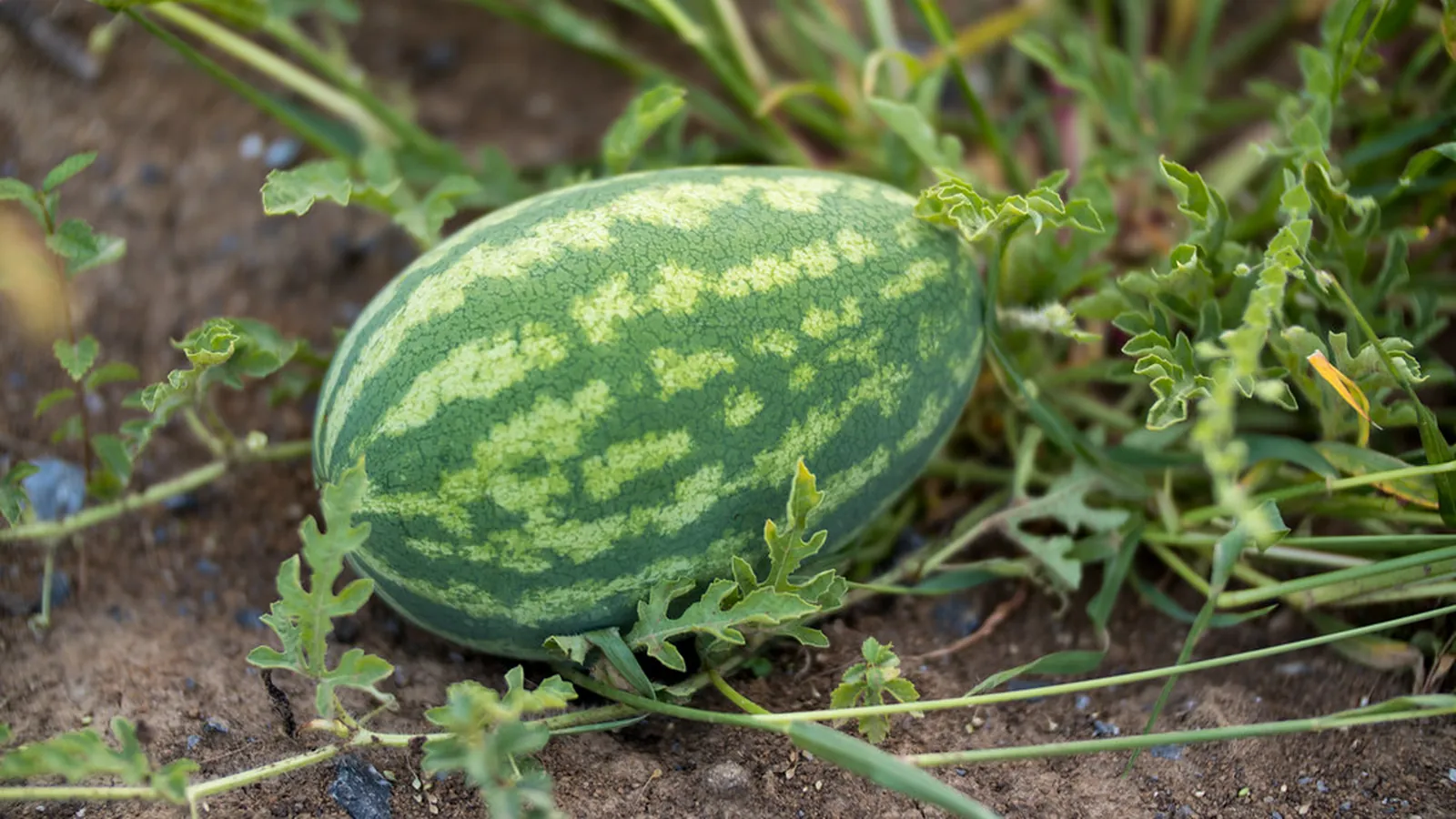
Every check at the store is about reading what happened in the field. The field spot shows time spent ripening on the vine. Weight shows it filled with water before it was cut. No amount of time in your kitchen can add sugar, so a pale, light melon is a poor buy at any price. With pineapple, too, sweetness is set at harvest, so read the fruit at the store instead of hoping it improves at home.
Sugar content gives a sense of the stakes. Alabama Extension says a good watermelon should be at least 10 percent sugar, and some varieties reach 14 percent. NC State uses 10 degrees Brix, about the same thing, as the minimum for marketable fruit. A melon picked early falls short and stays short.
Why did my watermelon taste bland even though it looked fine?
Even careful shoppers bring home a dud sometimes, usually for one of these reasons.
| What you see | Likely cause | Fix next time |
|---|---|---|
| Pale pink flesh, white seeds, little flavor | Picked too early | Insist on a yellow field spot, skip white ones |
| Mealy, grainy, or soft flesh | Overripe or held too warm too long | Avoid deep orange spots with soft areas; eat ripe melons within days |
| Cracks or hollow gaps inside the flesh | Uneven growing conditions (hollow heart) | Choose symmetrical melons without flat sides |
| Pitted rind, off flavor after chilling | Stored near 32°F for a couple of days | Keep whole melons in the main fridge, not a near-freezing drawer |
| Sweet near the center, bland near the rind | Normal for most varieties | Cut from the center out and serve the heart first |
How to store a whole watermelon, and cut melon after
Store a whole watermelon in a cool spot, ideally around 55°F. The Watermelon Promotion Board recommends 50 to 59°F for whole melons and gives a shelf life of about 7 to 10 days at room temperature. Its consumer blog says a whole melon kept in the refrigerator lasts about 2 to 3 weeks, and NC State Extension puts the top end of whole-melon shelf life near a month under good conditions. We follow the shorter numbers for melons from a home kitchen, since you rarely know how long it sat before you bought it.
Keep these points in mind:
- Do not leave a whole melon in direct sun. Heat speeds up the softening and can scald the rind.
- Avoid near-freezing spots. The Promotion Board says 2 days at 32°F causes off flavor, pitting, and color loss.
- Rinse and dry the rind before cutting, the same way you would wash berries before storing. A knife carries anything on the outside straight into the flesh.
- Wrap cut watermelon or store it in an airtight container in the fridge, and eat it within 3 to 5 days.
- Do not leave cut melon out for more than a few hours; treat it like any other cut fruit and follow the same rules as leftovers in the fridge.
A good sharp knife makes the job much easier. A long chef's knife is plenty for halving the melon, slicing off the rind, and cutting cubes.
Quick checklist for the store
When you are standing at the bin, run through this list in order:
- Turn it over and check for a creamy to buttery yellow field spot.
- Lift it and compare it with another melon of the same size.
- Look for a firm, symmetrical, dull rind with no soft spots, dents, or cuts.
- Count webbing as a small bonus, and ignore stripe width.
- Thump it only for fun.
The same mindset works for most summer fruit. Learning how to pick ripe tomatoes or melons comes down to reading the signs the fruit gives you, and more produce picking tips follow the same pattern: color where the sun did not reach, weight for size, and a firm skin.
 Reading a watermelon's field spot and rind in person
Colors and weight are easier to judge once you have seen a few melons turned and lifted side by side. A short demonstration helps you calibrate what creamy yellow looks like compared with white.
How to Pick a Sweet Watermelon
By Daisy Creek Farms with Jag Singh on YouTube. Their method may vary a little from ours. Watch on YouTube
- Notice how the field spot color compares with the table: white or pale green means skip, creamy to buttery yellow means buy.
- Watch for the lift between two melons of about the same size, since the heavier one usually holds more of that 92 percent water.
- Look at how dull or shiny the rind appears, and remember that any melon bought at the store will not climb past its harvest sugar, usually 10 to 14 percent.