 Picking Produce
Is a Firm Pear Ready to Eat, and How Do You Know a Pear Is Ripe?
 By the CookClear writers
Checked against USDA grading standards and university extension buying advice
 Clear Answer
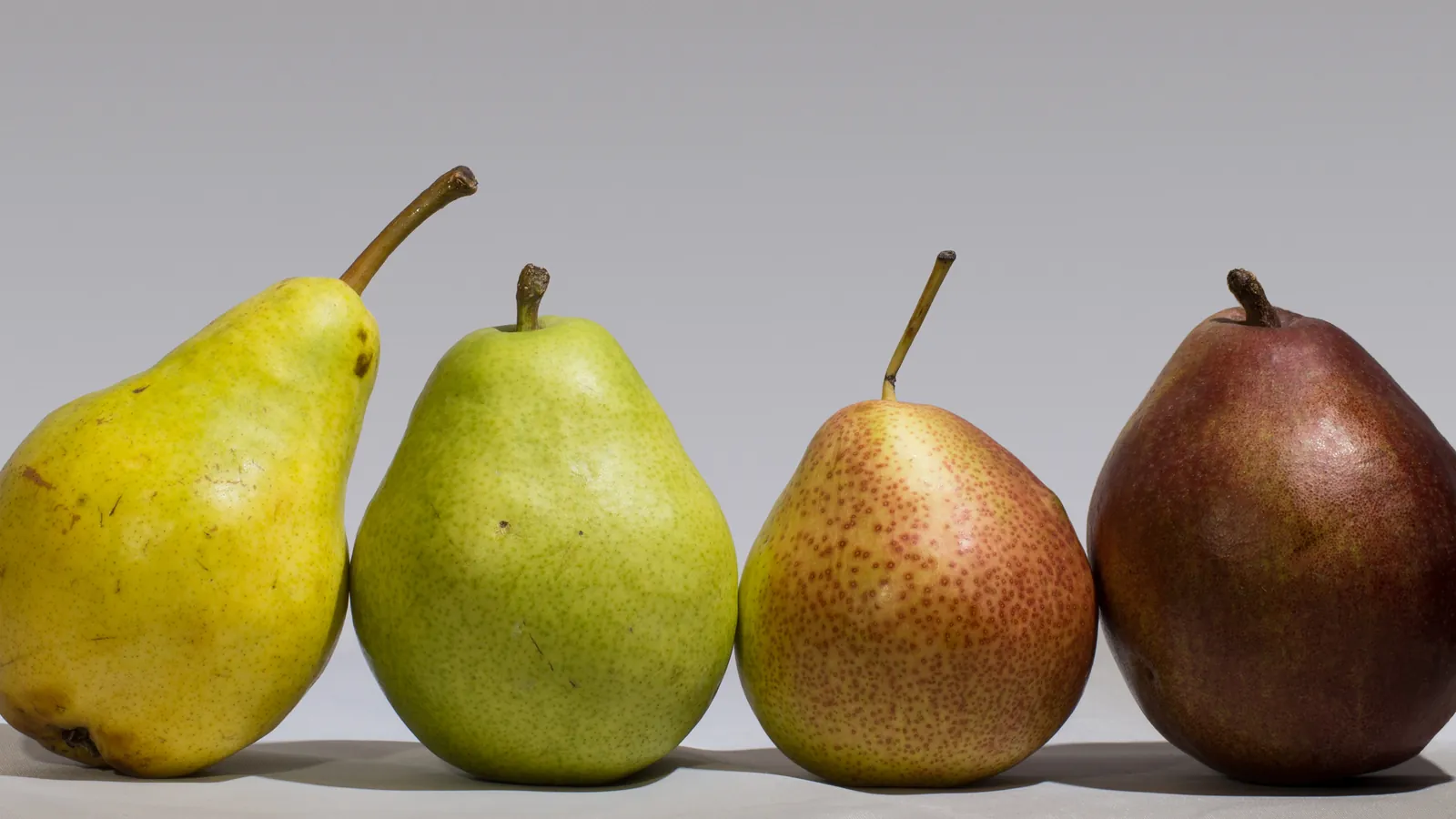
A pear is ripe when the neck, the narrow part just below the stem, gives slightly under gentle thumb pressure, even if the wide body still feels firm. Pears ripen from the inside out, so waiting until the whole fruit is soft usually means the center has turned mealy. Firm pears need about 4 to 10 days at room temperature, depending on the variety.
Color helps with Bartlett pears and almost nothing else, and squeezing the round bottom tells you very little until it is too late, so the neck is the check to learn.
How do you check the neck of a pear?
USA Pears, the marketing group for Northwest growers (Pear Bureau Northwest), calls this "Check the Neck," and Purdue Extension gives the same advice. Pear researcher David Sugar of Oregon State University Extension describes it like a pitcher holding a baseball.
 On the menu8 questions
- Hold the pear in your palm without squeezing the body.
- Rest your thumb on the flesh just below where the stem meets the fruit.
- Press lightly, about as hard as you would press a ripe peach.
- If the flesh yields evenly and slightly, the pear is ripe and ready to eat.
- If you have to push more than a little, it needs another day. Check again tomorrow.
Check once a day. Pears move from too hard to too soft in a fairly narrow window, and a daily press catches it. Press only the neck, not the rounded bottom, since every squeeze there leaves a bruise that turns brown in a day or two.
A ripe neck should feel like the give in a ripe avocado, not a dent. If your thumb sinks in, the pear is past its best for slicing but still fine for sauces, smoothies or baking.
Do pears ripen off the tree?
Yes, and they ripen better off the tree than on it. European pears, the Bartlett, Anjou, Bosc and Comice you see in most stores, are picked when they are mature but still hard. Oregon State University Extension explains that a pear left to ripen on the tree ripens from the inside out, so the core turns mushy by the time the outer flesh is ready.
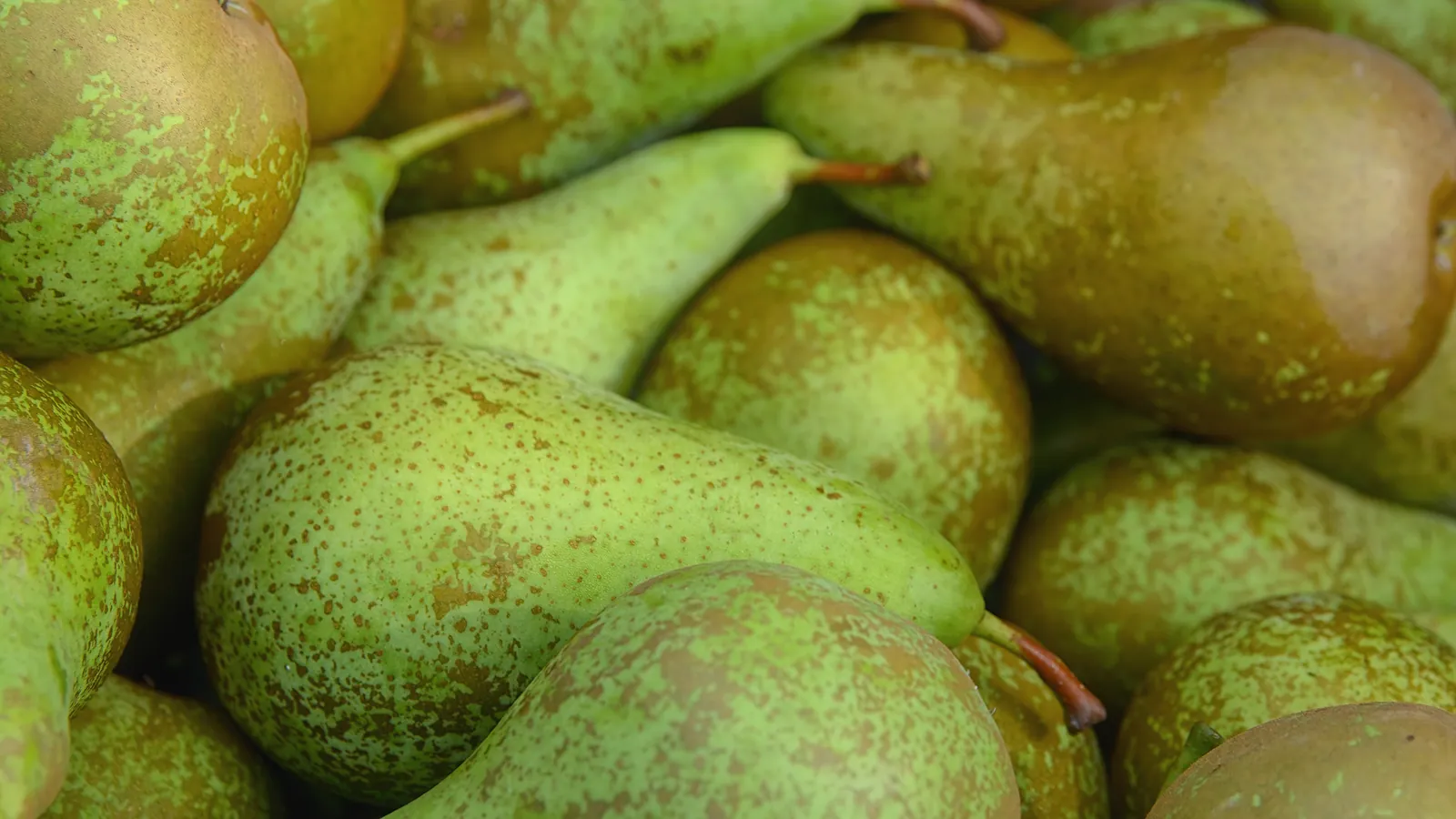
Penn State Extension notes that pears also need a period of cold before they will ripen evenly. Without that chill, a mature pear can shrivel and break down without ever softening properly. Bartlett pears need only a day or two of cold, while winter pears like Anjou, Bosc and Comice need 2 to 6 weeks. Pears sold in supermarkets have already been chilled, so all you have to do at home is give them time at room temperature.
That is also why a rock hard pear at the store is normal. It is a pear that has not had its counter time yet, much like many bananas sold green. Apples work the other way: they are ready to eat when picked, which is why picking good apples is about firmness and freshness rather than waiting.
Which pears change color, and which do not?
A green Anjou looks exactly the same on the day it is ripe as on the day you bought it.
| Variety | Color change as it ripens | Best ripeness check | Days to ripen at room temperature |
|---|---|---|---|
| Bartlett (green) | Green to yellow | Color plus the neck | 4 to 5 |
| Red Bartlett | Red brightens | Color plus the neck | 4 to 5 |
| Green Anjou | Little or none | Neck only | 7 to 10 |
| Red Anjou | Little or none | Neck only | 7 to 10 |
| Bosc | Little; brown russet stays brown | Neck only | 5 to 7 |
| Comice | Little | Neck only | 5 to 7 |
Ripening days come from Oregon State University Extension. Penn State Extension gives slightly different single numbers (5 days for Bartlett, 7 for Bosc and Comice, 9 for Anjou), which fall inside these ranges. Pears that have spent longer in cold storage ripen faster, so late season fruit often lands at the short end.
Does a Bartlett pear change color when ripe?
It does, and it is the one variety where color is worth reading. A green Bartlett turns yellow as it ripens, and a Red Bartlett turns a brighter red. Purdue Extension and USA Pears both describe this shift. Still check the neck: a Bartlett can look fully yellow while the neck is just starting to give, and that is the sweet spot for eating out of hand.
Can a Bosc pear be ripe if it still feels firm?
Yes. Bosc has dense flesh and brown, russeted skin that hardly changes. Purdue Extension notes that Bosc is sweet and juicy even before it is fully ripe, which is why many people eat it while it is still a little crisp. That firmness also makes Bosc a good choice for poaching and baking, since it holds its shape in the pan.
How long do pears take to ripen?
At room temperature, plan on roughly 4 to 10 days from hard to ripe, with Bartlett the fastest and Anjou the slowest. Oregon State and Penn State both put the ideal ripening range at 65 to 75°F. Purdue Extension suggests 60 to 70°F in a paper bag. A normal kitchen counter sits in that range most of the year, so you do not need to do anything special beyond leaving the pears out.
To ripen pears at home:
- Leave them on the counter in a bowl or loosely in a paper bag, out of direct sun.
- Keep them in a single layer if you can, so the bottoms do not bruise.
- Check the neck once a day.
- Move each pear to the fridge as soon as it is ripe, or eat it.
Can you speed up a pear that is still hard?
Yes. Pears give off ethylene gas as they ripen, and extra ethylene speeds things up. Oregon State Extension suggests putting pears in a paper bag with a ripe banana or an apple, since both release plenty of ethylene and the bag holds the gas around the fruit. This trick works on other fruit that keeps ripening after harvest too, including mangoes that are still firm and peaches. Expect to save a day or two, not a week.
A plastic bag is a poor substitute. It traps moisture along with the gas, which can lead to soft spots and mold.
Should you refrigerate pears?
Refrigerate pears once they are ripe, not before. USA Pears is clear on this: do not put an unripe pear in the fridge if you want to eat it soon. Cold slows ripening to a crawl, so a hard pear in the crisper will stay hard for a long time.
Once the neck gives, the fridge is the right place. USA Pears recommends 35 to 45°F, which is where most home refrigerators sit, and says a ripe pear keeps for up to about five days there. That gives you some breathing room when several pears ripen on the same day.
You can also use the fridge on purpose to hold hard pears. If you bought a bag and only want to eat two this week, leave two on the counter and refrigerate the rest. Take them out a few days before you want them, and they will pick up ripening where they left off. Like tomatoes on the counter, timing the move to and from the fridge counts for more than the fridge itself.
Do cut pears turn brown?
Cut pear flesh browns from exposure to air, just as apples and avocados do. It does not change the flavor much. USA Pears suggests dipping slices in a mix of half water and half lemon juice to keep them pale for a cheese board or salad. The same acid trick helps with keeping a cut avocado green, though covering the surface does most of the work there.
Why is my pear mushy in the middle when the outside felt fine?
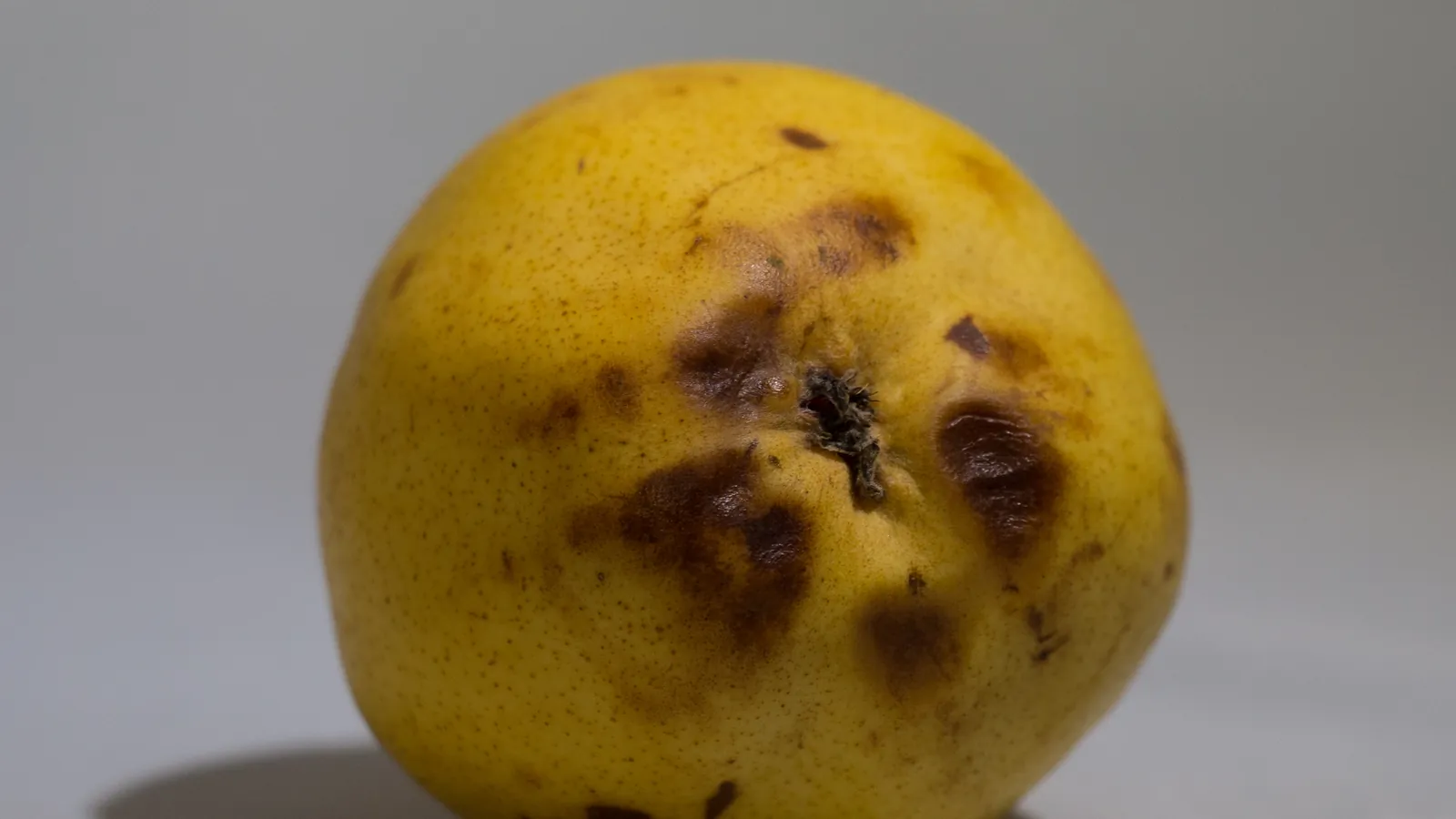
Because pears ripen from the inside out, the center is always a step ahead of the skin. If you wait for the whole pear to feel soft, the core has often gone grainy or brown. These are the problems people run into most, with the likely cause and a fix.
| What you see | Likely cause | Fix |
|---|---|---|
| Brown, mealy center, outside seemed fine | Waited for the body to soften instead of the neck | Check the neck daily and eat as soon as it gives |
| Pear stays hard for weeks | Kept in the fridge before ripening | Move it to the counter at 65 to 75°F |
| Bruised brown spots on the bottom | Squeezed the wide end, or stacked pears | Press only the neck; ripen in a single layer |
| Shriveled skin, never softens | Not enough chilling after harvest (common with backyard pears) | Chill homegrown winter pears before ripening |
| Bland, dry flesh in a Bosc or Anjou | Eaten too early, judged by color | Ignore the skin and wait for the neck to give |
| Wrinkled, soft spots and a fermented smell | Left out too long after ripening | Refrigerate ripe pears and use within about five days |
The shriveling problem mostly hits people with their own trees. Store pears have already been chilled. If you pick winter pears at home, Penn State's 2 to 6 weeks of cold storage for Anjou, Bosc and Comice is the step to copy before setting them out to ripen.
How do you buy pears for the day you want them?
Since nearly all pears are sold firm, shop by your schedule rather than hunting for a soft one in the bin.
- For eating in the next day or two: pick a Bartlett that has started to turn yellow and has a slightly soft neck.
- For later in the week: buy firm Anjou or Bosc and leave them on the counter.
- For baking or poaching: choose firm Bosc, which holds its shape when cooked.
- For a cheese plate or salad: buy ripe or nearly ripe pears and slice them right before serving.
Skip pears with cuts, punctures or dark soft patches, and handle them gently in the store. A pear bruises more easily than it looks, especially near ripeness. The same buy-for-the-day idea works for peaches that need a few days, and there is more on choosing fruit in season across the picking produce section.
 Pressing the neck of a pear for ripeness
The right amount of give at the neck is hard to describe in words, so watching a thumb press next to the stem makes it easier to match at home.
How to Tell if Pears are Ripe and How to Store
By Getty Stewart on YouTube. Their method may vary a little from ours. Watch on YouTube
- Watch where the thumb goes: just below the stem, never the round bottom, and look for a slight, even give.
- Compare a green Bartlett turning yellow with a Bosc or Anjou that barely changes, and remember color only helps with Bartlett.
- Notice how firm the pears start, since 4 to 10 days at 65 to 75°F is normal before the neck softens.


