 Cooking Times
How Can You Tell Pizza Dough Has Risen Enough and Is Ready to Stretch?
 By the CookClear writers
Checked against USDA safe temperatures and test kitchen timing
 Clear Answer
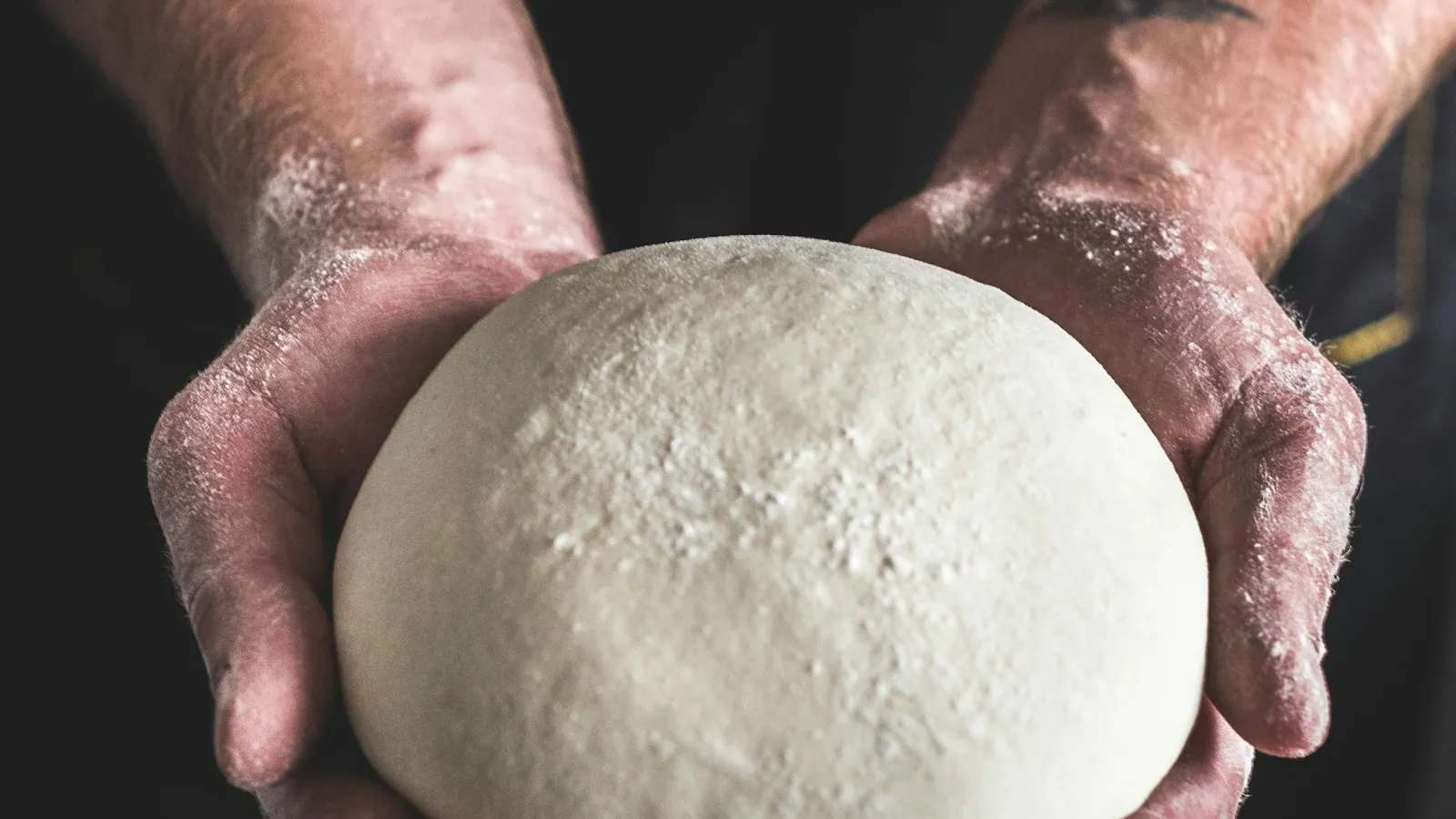
Same-day pizza dough is usually ready to stretch after about 90 minutes to 2 hours at room temperature, once the balls have roughly doubled. Cold-fermented dough needs at least 24 hours in the fridge, then about 2 hours on the counter before shaping. The clock gets you close, but the dough's feel tells you when it's ready.
Pizza is more forgiving than a loaf of sandwich bread. You only need a soft, extensible disk that puffs at the edges in a hot oven, so you have a wide window to work with once you know what to look for.
Typical rise times by method
How long the dough needs depends mostly on two things: how warm it is and how much yeast went in. Here are typical ranges for the common approaches.
 On the menu10 questions
| Method | Where it rises | Typical time | Then before stretching |
|---|---|---|---|
| Same-day, quick | Room temperature | 90 minutes to 2 hours, until doubled | Stretch right away |
| Ball proof, warm kitchen (77 to 82°F) | Counter | 1 to 2 hours | Stretch right away |
| Ball proof, average kitchen (72 to 77°F) | Counter | 2 to 4 hours | Stretch right away |
| Ball proof, cool kitchen (64 to 70°F) | Counter | 3 to 4 hours | Stretch right away |
| Overnight cold rise | Fridge | 12 to 24 hours | 2 to 4 hours on the counter |
| Long cold ferment | Fridge | 24 to 72 hours | About 2 hours on the counter |
Most recipes split the rise into two parts: a bulk rise (the whole mass of dough in one bowl) and a ball proof (after you divide and round it into individual portions). The ball proof is the most important part for stretching, because that's when the gluten relaxes into a shape you can open up.
Is a quick same-day rise good enough?
Yes. A same-day dough makes a perfectly good pizza, and it's the right call when you decide on pizza at 4 p.m. Mix with warm water (by hand or in a stand mixer), let it rest about 30 minutes, divide it into balls, then let them rise 90 minutes to 2 hours until they've doubled. If you double the recipe for a party, divide it into balls right away so each one rises at the same pace.
What you give up is flavor and some ease of handling. A short rise doesn't give the yeast and enzymes much time to break down starches into sugars and build flavor compounds. The crust tends to taste more like plain bread and brown a little less. The dough can also feel tighter, since the gluten hasn't had hours to relax.
If you have time to stretch the schedule even a little, a longer rise at a cooler temperature pays off. Even an overnight rest in the fridge makes a noticeable difference.
What a few days in the fridge does for the dough
Cold slows yeast down without stopping it. In the fridge, the dough rises slowly while enzymes keep working on flavor. That's why pizzerias and serious home pizza makers hold dough for a day or more.
Most sources put the useful range at 24 to 72 hours. Around 24 hours is a good minimum for real flavor improvement, and 2 to 3 days is often called the best balance. Some bakers push to 4 or 5 days, but that's generally the outer limit. Past that, the yeast runs low on food, the gluten weakens, and the dough can turn slack, gray, and overly sour.
A few tips for cold-rising:
- Divide and ball the dough before it goes in the fridge, so you don't have to reshape cold, stiff dough later.
- Store each ball in a lightly oiled container or zip-top bag with room to expand. A quart-size bag works for a single pizza.
- Keep it airtight. Exposed dough forms a dry skin that cracks when you stretch it.
- Write the date on the container so you know when the clock started.
How long should cold pizza dough sit out before you stretch it?
Plan on about 2 hours, and up to 4 in a cool kitchen. Dough straight from the fridge is stiff and springy. It fights you, snaps back, and tears before it thins out. As it warms, the gluten loosens and the gas inside expands, so the ball softens and puffs.
Leave the balls covered while they warm, either under an upturned bowl or in their sealed containers. A loose cover lets the surface dry out.
If you're short on time, one test kitchen trick is to set each container of dough in a larger bowl of 100°F water. That brings the dough up to about 75°F in roughly 30 minutes, changing the water as it cools. An instant-read thermometer takes the guesswork out. A slow counter warm-up still gives the dough more time to relax.
Don't cut the warm-up to 20 minutes and hope for the best. Cold dough is the single most common reason people say their pizza "won't stretch."
Signs the pizza dough is ready, no timer needed
Times are estimates. A cool 65°F kitchen in winter and a warm 80°F kitchen in summer can be hours apart on the same recipe. Check the dough itself, since printed cooking times of any kind are only a starting guess.
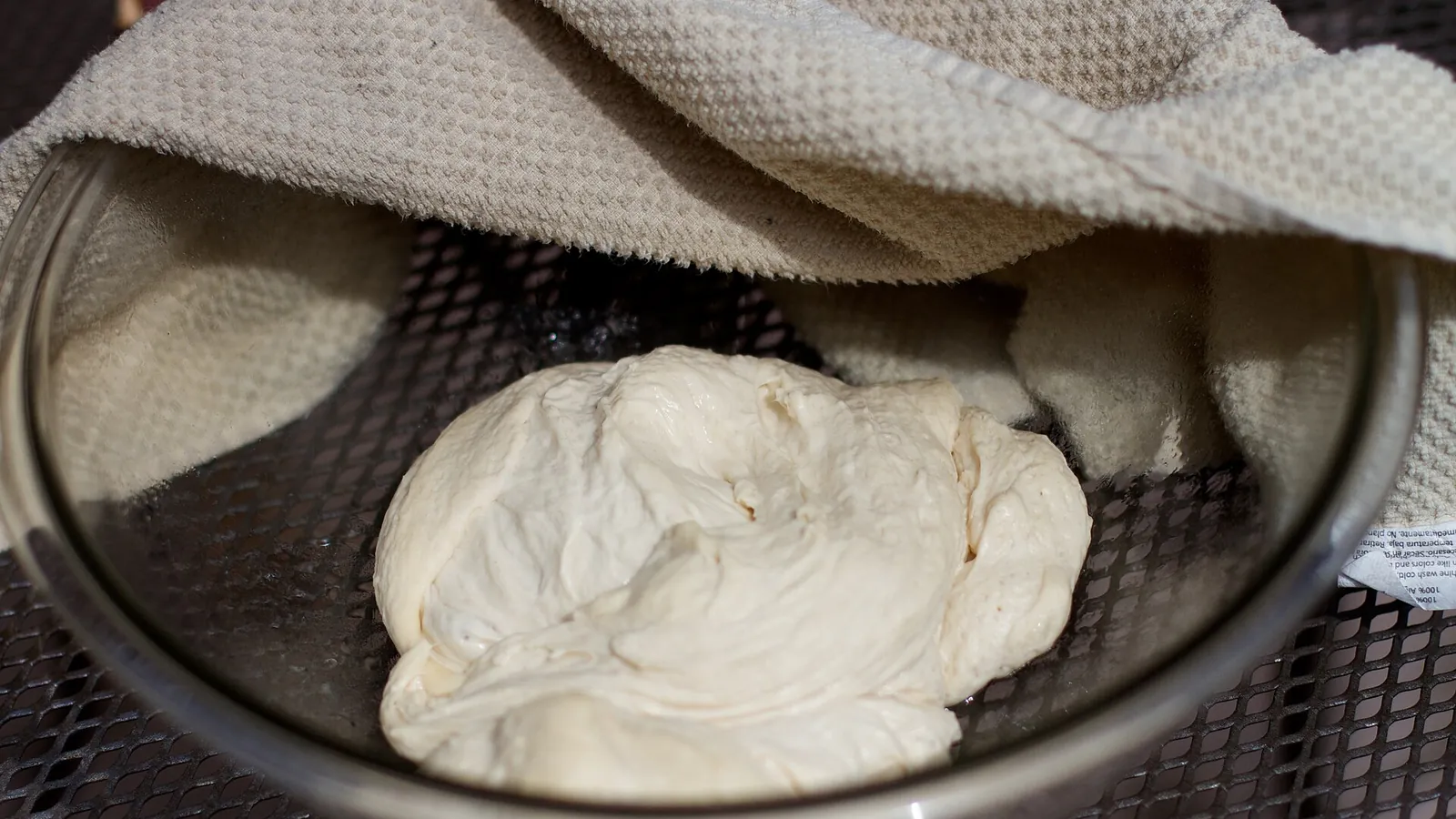
- Size. The ball should look noticeably bigger and puffier, roughly doubled for a same-day dough. Cold-fermented balls may not fully double, but they should look soft and relaxed, not tight.
- Shape. A ready ball spreads slightly and looks domed but slouchy. A tight, perfectly round ball that holds its shape needs more time.
- Surface. You may see small bubbles under the skin. That's gas building, which is what you want.
- Poke test. Flour a fingertip and press about half an inch into the side of the ball. If it springs back right away, give it more time. If it springs back slowly and leaves a small dent, it's ready. If the dent stays put and the ball looks deflated, it's gone too far.
- Temperature. The dough should feel cool to neutral in your hand, not cold. Cold-from-the-fridge dough feels clammy and firm.
If two or three of those line up, go ahead and stretch.
What if the pizza dough keeps shrinking back?
That's the gluten pulling tight, and the dough is fine. It happens when the dough is too cold, hasn't rested long enough after being balled, or has been worked too much while shaping. Flour plays a part too; bread flour gives more chew and pulls back a bit harder.
Stop and cover the half-stretched dough and walk away for about 15 minutes. When you come back, it will stretch much more easily. It's the same gluten relaxation behind letting pancake batter rest. If it's still fighting you, give it another 15.
A few other habits help:
- Press and push from the center outward with your fingertips instead of pulling at the edges.
- Leave a thicker rim around the outside so it can puff into a crust.
- Use the backs of your hands to stretch it in the air, letting gravity do the work, once the center is thinned out.
- Skip the rolling pin for most styles. It squeezes out the gas and makes a flatter, crackery crust.
Warm, well-rested dough should open from a ball to a 12-inch round in a minute or two with little resistance. Tight gluten is also why pie crust shrinks in the oven.
Can pizza dough rise too long?
It can. At room temperature, a dough with a normal amount of yeast can overproof in a few hours past ready, especially in a warm kitchen. In the fridge you have much more slack, measured in days instead of hours.
Overproofed pizza dough has some telltale signs:
| What you see | What it means |
|---|---|
| Ball has spread into a flat puddle | Gluten has weakened from too much fermentation |
| Very sticky and tears easily when lifted | Structure is breaking down |
| Strong sour or alcohol smell | Yeast has used up most of its food |
| Poke leaves a dent that never fills | Little gas left to push back |
| Crust bakes pale and doesn't puff | Not enough sugar left for browning or gas for rise |
Mildly overproofed dough is still usable. Gently reball it, let it rest 30 minutes or so to relax, and stretch it. It won't be perfect, but it will make pizza. Dough that's gray, soupy, or smells harshly of alcohol is better used as flatbread or thrown out.
How to plan your rise around dinnertime
The easiest way to get the timing right is to work backward from when you want to eat.
Tonight: Mix the dough at least 3 hours before dinner. That covers mixing, a short rest, a 90-minute to 2-hour ball rise, and preheating. Your oven and baking steel or stone need time to heat fully anyway, so start preheating while the balls finish rising.
Tomorrow: Mix and ball the dough tonight, refrigerate it, and pull it out about 2 hours before you plan to bake.
This weekend: Mix the dough 2 to 3 days ahead and refrigerate it. On pizza night, pull it about 2 hours before baking. This is the schedule most pizza makers prefer for flavor and easy stretching.
Room temperature also shifts things. If your kitchen runs cold, add an hour or more to counter times, or put the covered dough in an oven with only the light on. In a hot kitchen, check early and use a little less yeast next time; weighing it on a scale makes small changes easier.
Does the style of pizza change the timing?
Somewhat. Thin, high-heat styles like Neapolitan usually get a 2 to 4 hour ball proof at room temperature (or a long cold rise followed by that warm-up). They need to be fully relaxed so they stretch paper thin in the center.
Pan pizzas and Sicilian or grandma styles often get a longer final rise right in the oiled pan, sometimes 3 hours or more, so the dough can relax and spread to the corners on its own. If pan dough won't reach the edges, cover it, wait 15 to 20 minutes, and press again.
Whole wheat dough tends to land in the middle, around 2 to 3 hours for the final proof. The bran cuts through gluten a bit, so it can feel slacker and tear more easily if pushed too far.
 How do you judge pizza dough by eye and touch?
Doubling, a slouchy dome and a slow poke-back are hard to read from words alone. Vito Iacopelli works with pizza dough, so you can match what you see to those signs.
How to Make Perfect Pizza Dough - For the House⎮NEW 2021
By Vito Iacopelli on YouTube. Their method may vary a little from ours. Watch on YouTube
- Compare the puffiness and relaxed dome of the dough balls with the size and shape signs listed above.
- Notice how the dough responds when it is pressed, and whether a dent springs back slowly as in the poke test.
- Watch how easily the dough opens toward a 12-inch round once it is warm and rested, with little resistance.


