Picking Produce
At the Seafood Counter, How Do You Tell If Fish Is Fresh or Old?
 By the CookClear writers
Checked against USDA grading standards and university extension buying advice
 Clear Answer
You can tell if fish is fresh by checking five things: a mild, clean smell, clear and shiny eyes, red gills, firm flesh that springs back when pressed, and fillets with no dark, discolored or dried edges. The FDA also says to buy only fish kept refrigerated or on a thick bed of fresh ice.
Smell does most of the work, and your eyes confirm it. Color alone tells you very little, which surprises a lot of shoppers.
What does fresh fish smell like?
Fresh fish smells mild and a little like the ocean or a clean lake. The FDA's wording is that fish "should smell fresh and mild, not fishy, sour, or ammonia-like." A strong fishy smell comes from compounds that build up as fish ages, so the fishier it smells at the counter, the older it is.
Ask the person behind the counter to let you smell the piece you want. If the whole case smells sour or sharp from a few feet away, that tells you something about how the counter is run, even if your piece seems fine.
The same rule holds at home. The FDA says that if raw or cooked seafood smells sour, rancid or fishy, don't eat it.
The five checks, in order
Work through these quickly at the case. Whole fish give you the most clues, fillets fewer, so lean harder on smell and edges when you are buying fillets.
- Smell. Mild and clean, never fishy, sour or like ammonia.
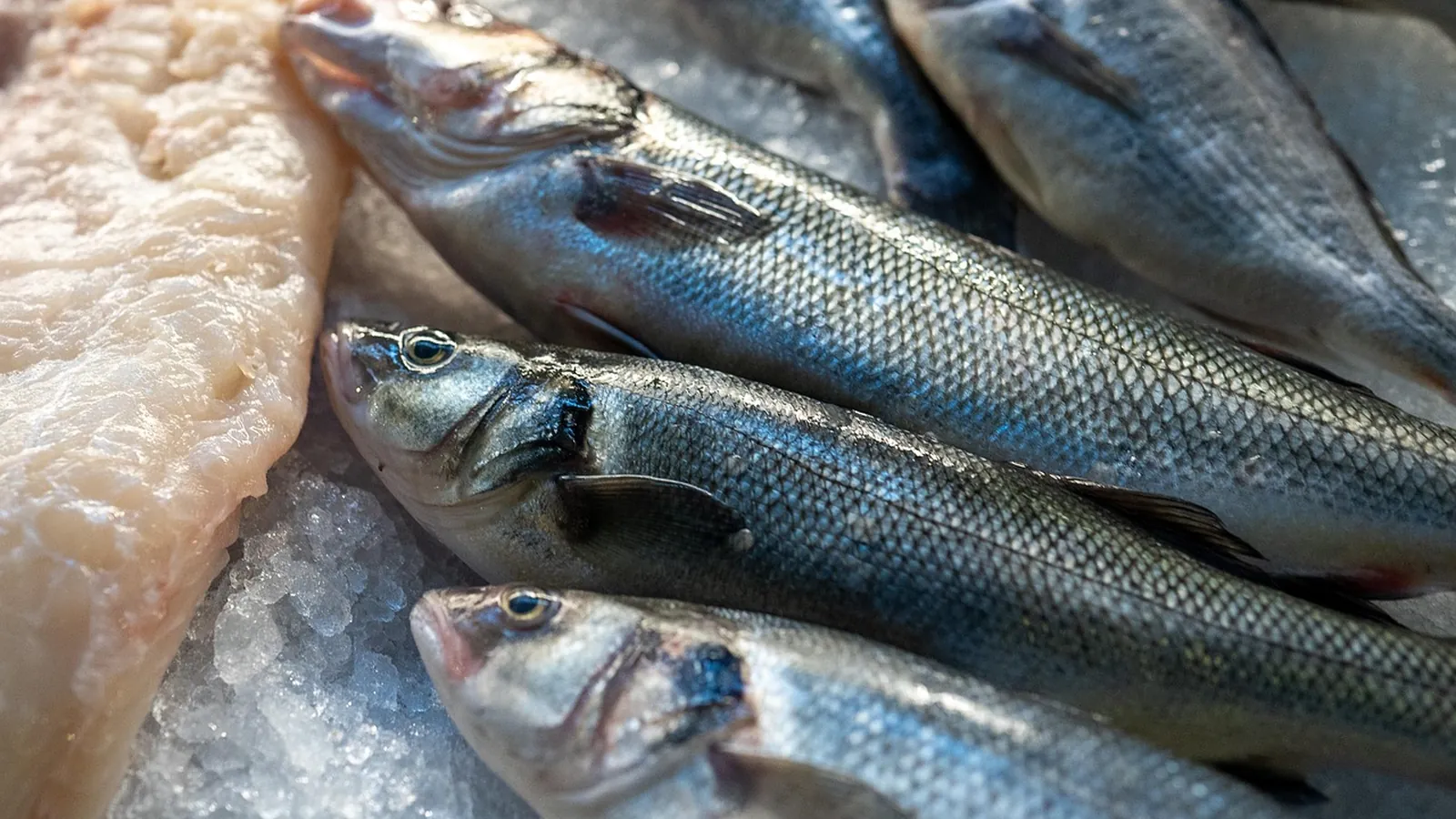
- Eyes. Clear, shiny and slightly bulging on a whole fish. Cloudy, sunken or gray eyes mean it has been out of the water a while.
- Gills. Bright red with no slimy, milky film and no odor.
- Flesh. Firm, so a gentle press springs back. A dent that stays is a sign of age or rough handling.
- Edges and surface. Fillets and steaks look moist and even, with no darkening, browning or dry, curled edges.
Raw shrimp should look translucent and shiny with little or no odor, and the quick check for shrimp adds a few more signs specific to them.
Color is not on that list. The FDA states plainly that color alone is not an indicator of freshness. Some salmon is color-enhanced through its feed, tuna can be treated to hold a red color, and a pale fillet can be perfectly fresh. Judge color only as part of the whole picture, and focus on dull patches or brown edges rather than the overall shade.
What should fish gills look like?
Gills are the most honest part of a whole fish. Lift the flap behind the head, or ask the fishmonger to, and look for a clean, bright red color. As fish ages, the gills fade to pink, then brown or gray, and pick up a sticky, milky slime.
Here is how the main signs shift from fresh to past its prime.
| Part | Fresh | Getting old |
|---|---|---|
| Smell | Mild, clean, like seawater | Fishy, sour, ammonia |
| Eyes | Clear, shiny, slightly bulging | Cloudy, gray, sunken |
| Gills | Bright red, no slime | Pink to brown, milky film |
| Flesh | Firm, springs back when pressed | Soft, finger dent stays |
| Fillet edges | Moist, even color | Dark, brown or dried and curled |
| Skin and scales | Bright, tight scales, clear slime | Dull, loose scales, sticky |
| Display | Thick bed of fresh ice or refrigerated | Melting ice, puddles, warm case |
The gill and eye checks only work on whole fish, so consider buying one whole and asking the counter to fillet it.
Why the ice and the case matter as much as the fish
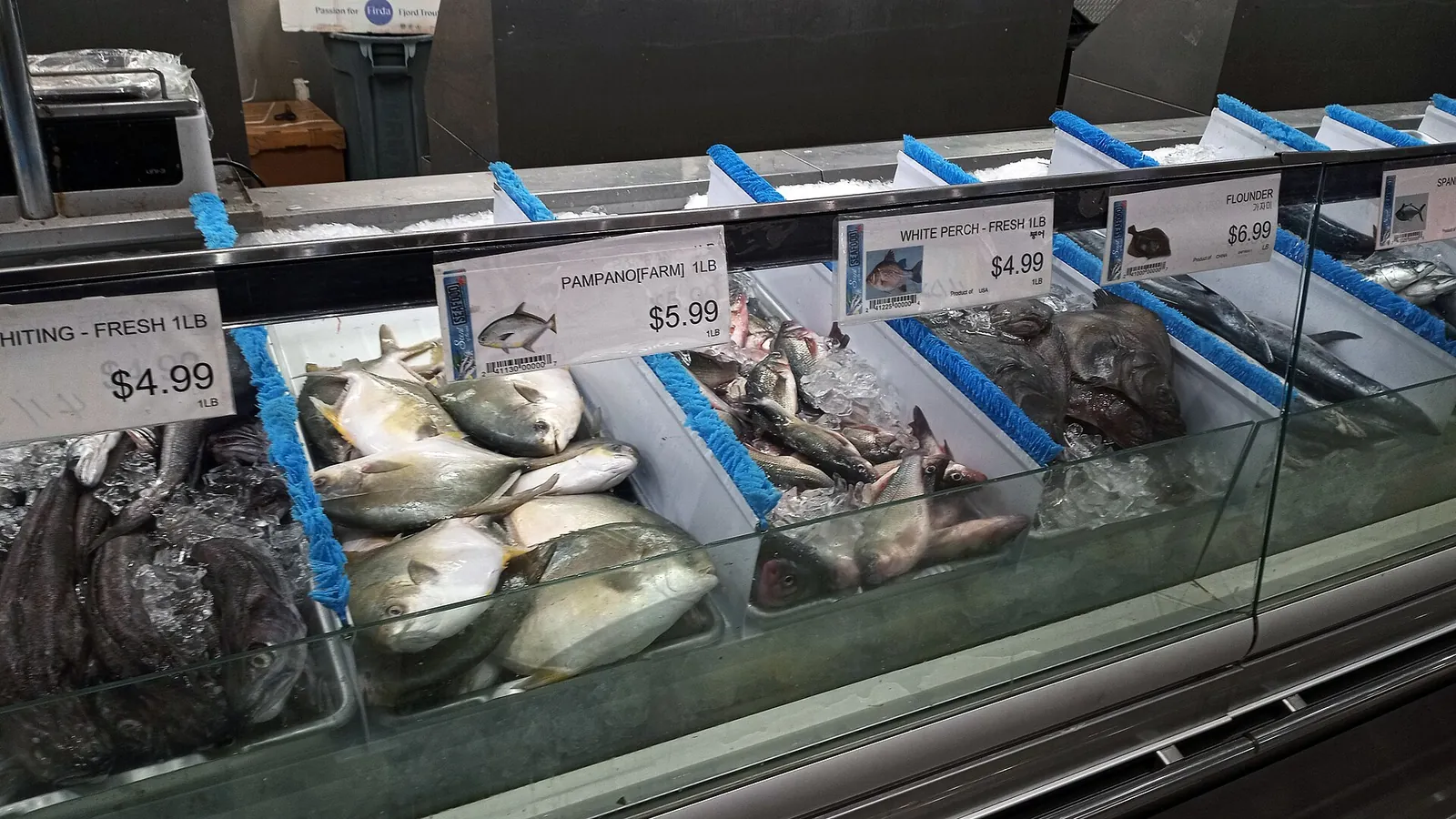
The FDA advises buying fish only if it is refrigerated or displayed on a thick bed of fresh ice. Look at the ice itself. It should be clean, mostly solid and piled deep enough that fish sit down in it, not on top of a thin layer turning to slush. Meltwater pooling around fillets is a sign the case is running warm.
Some packaged seafood carries a time and temperature indicator, a small label that changes color if the product got too warm. The FDA says to check it whenever it is there and to buy the seafood only if the indicator shows it is safe. Package dates help too, though what a best by date means for safety is narrower than most people assume.
A few other things about the counter are worth a glance:
- Cooked and raw seafood should be kept apart, with no juice from raw fish dripping onto ready-to-eat items like cooked shrimp or smoked fish.
- The case should not have a strong smell from a few steps away.
- Staff should use separate tongs or gloves for raw and cooked items.
Treat a store's seafood case the way you would treat its meat case when you choose a good steak: if the display looks neglected, the product probably was too.
Is frozen fish as good as fresh?
Often it is better. Much of the "fresh" fish at a grocery counter was frozen at some point and thawed for display, and a sign saying "previously frozen" is common and honest. Fish frozen quickly soon after catch can hold its quality very well, while a thawed fillet sitting on ice for days keeps losing ground. If you are not cooking within a day or two, a good frozen fillet is often the smarter buy.
The FDA's checks for frozen seafood are simple:
- Skip packages that are open, torn or crushed on the edges.
- Avoid packages with frost or ice crystals inside, a sign the fish was stored a long time or thawed and refrozen.
- Make sure the frozen fish is rock hard. Flesh that bends or feels soft has started to thaw.
- Pick packages from below the frost line or fill line of the store freezer, where they stay coldest.
A few ice crystals do not make fish unsafe, but heavy frost, white dry patches and a pool of frozen liquid in the bag all point to a fillet that will cook up dry and woolly. If your fish thaws on the way home and you are wondering whether to put it back in the freezer, the rules for refreezing thawed meat work much the same way for seafood: thawed in the fridge and still cold, it can go back in, with some loss of texture.
How to pick fresh shellfish
Shellfish have their own rules, and most of them come down to whether the animal is still alive.
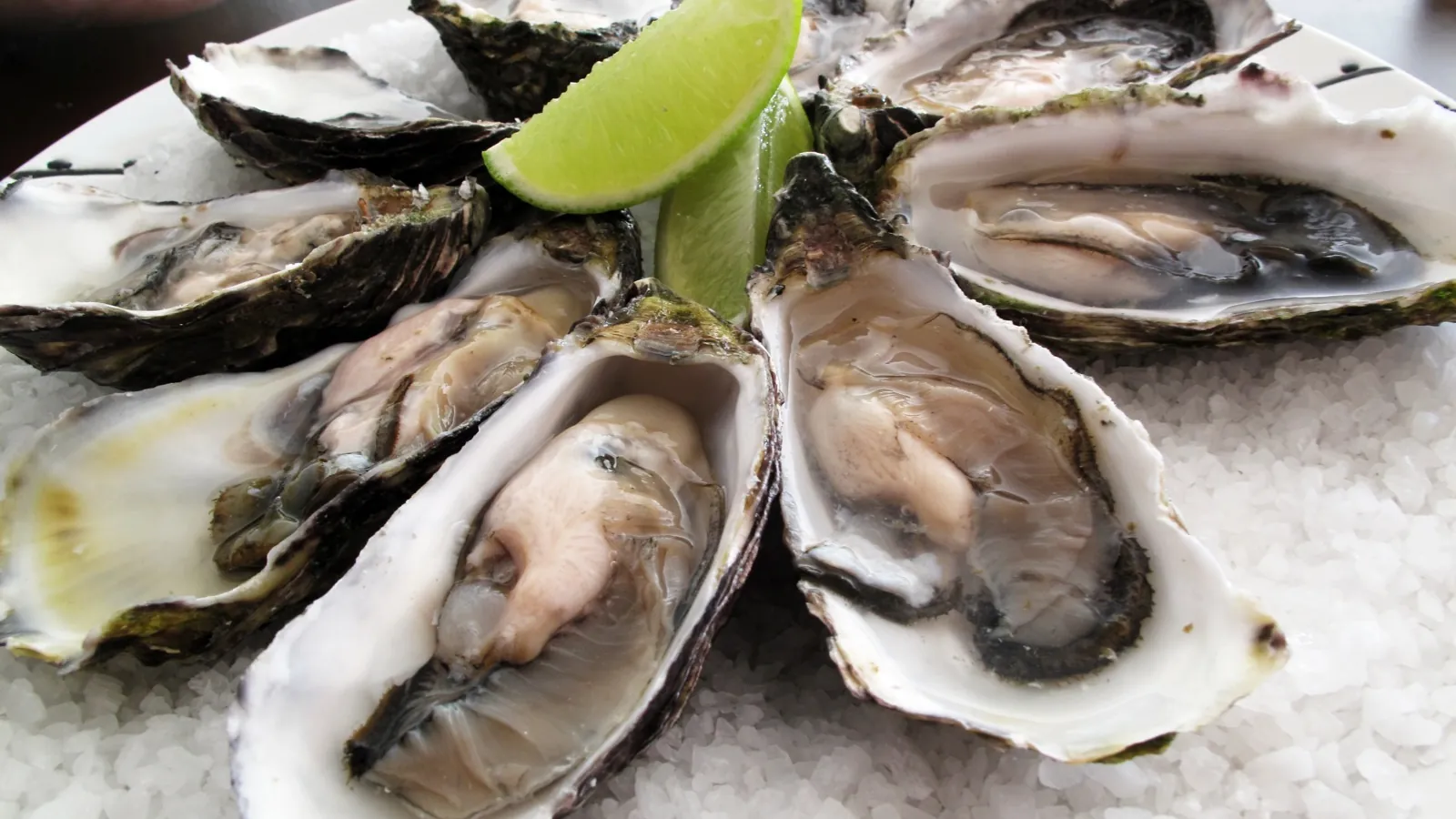
Live clams, oysters and mussels: The shells should be closed. If one is slightly open, tap it; the FDA says live ones will close when tapped. Throw away any with cracked or broken shells, and any that stay open after a tap.
Tags and labels: Live shellfish in the shell come in sacks or containers with a tag, and shucked shellfish come in labeled containers. The FDA tells shoppers to look for these. They list the processor's certification number, which shows the shellfish came from a source handled under national shellfish safety controls. Under the FDA Food Code, the store has to keep the tag for 90 days after the last shellfish from that container is sold, so it is fair to ask to see it.
Crabs and lobsters: Buy them live only if they show some leg movement. A limp lobster in the tank is a bad sign.
Shrimp and scallops: Raw shrimp should be translucent and shiny. Scallops should smell sweet and clean and look moist but not sitting in milky liquid. Ask whether scallops are "dry" or "wet," since wet scallops are treated with a solution that adds water weight, and knowing why scallops steam instead of sear starts right here at the counter.
"The fish looked fine at the store but smells fishy now"
| What you see | Likely cause | Fix |
|---|---|---|
| Fillet smells fishy the day after buying | Too warm on the way home or in the fridge | Shop for fish last, bring a cooler bag with ice, keep the fridge at 40°F or below |
| Fillet weeps a lot of liquid and turns soft | Previously frozen fish thawed at the store, then held too long | Cook thawed fish within 1 to 2 days, or buy frozen and thaw it yourself |
| White, dry, papery patches on frozen fish | Freezer burn from air in the package | Trim the patches before cooking, wrap tightly next time |
| Sour or ammonia smell when you open the package | Spoilage | Do not cook it; throw it out or return it with the receipt |
| Clams or mussels still open after tapping | Dead before cooking | Discard those, cook the closed ones |
If something smells off, trust it. Cooking does not undo spoilage.
How long does fresh fish last in the fridge?
The FDA says that if you will use seafood within 2 days of buying it, keep it in a clean refrigerator at 40°F or below. For anything longer, wrap it tightly in plastic, foil or moisture-proof paper and freeze it.
Get fish onto ice or into the fridge soon after buying. A few habits help it keep:
- Store it on the coldest shelf, usually the back of the bottom shelf, set in a dish to catch drips.
- Keep live shellfish in a bowl covered with a damp cloth, never sealed in plastic or under water, so they can breathe.
- Thaw frozen fish in the fridge overnight. If you are short on time, seal it in a plastic bag and set it in cold water, or use the microwave defrost setting and stop while it is still icy but bendable.
Buying the right amount helps too. Planning portions per person means you are not left with a second fillet getting older in the fridge.
When fresh fish hits the pan
The FDA's target for most seafood is 145°F inside, and an instant read thermometer is the easiest way to know you are there. Without one, fish is done when the flesh turns opaque and flakes easily with a fork, and shrimp, scallops, crab and lobster turn firm, pearly and opaque. Clams, mussels and oysters open as they cook; throw out any that stay shut.
Fresh salmon is a good place to start, and learning to check baked salmon doneness by look and feel works best with a fillet that started out firm and mild. Melons and tomatoes get the same treatment: trust smell and firmness over color, which runs through all the picking produce basics.
 Checking a whole fish before you buy it
Freshness signs are easier to judge once you have watched someone check a real fish, because clear, red and firm are hard to picture from words alone.
Fulton Fish Market | 3 Ways To Tell Your Fish Is Fresh
By Fulton Fish Market on YouTube. Their method may vary a little from ours. Watch on YouTube
- When gills are shown, compare their color with the bright red of fresh fish and the brown or gray of older fish.
- If the flesh gets pressed, check whether it springs back right away, the firmness test from the five signs.
- Look at any ice under the fish and compare it with the FDA advice to display fish on a thick bed of fresh ice.