 Picking Produce
Can You Choose Fresh Apples With a Real Crunch by Touch and Color?
 By the CookClear writers
Checked against USDA grading standards and university extension buying advice
 Clear Answer
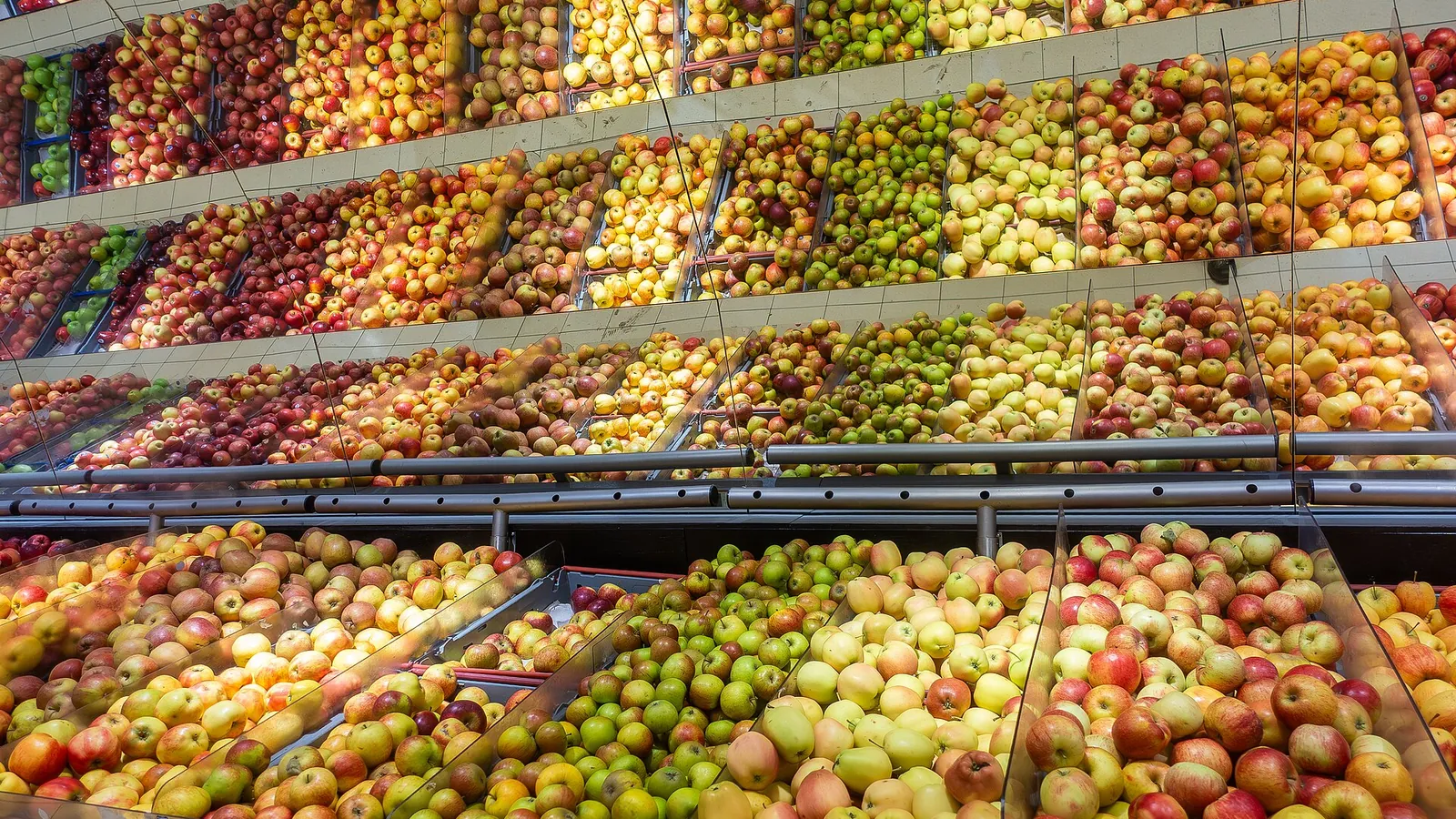
To choose fresh apples, check 4 things: the apple feels rock firm with no give, it is heavy for its size, the skin is smooth and glossy with no bruises or soft spots, and the background color under any red is yellow or cream rather than dull green. An apple that passes all four will almost always bite crisp and juicy.
How to tell if an apple is crisp before you buy it
Firmness is the most reliable clue. North Dakota State University Extension says to choose apples that are firm to the touch, naturally shiny and heavy for their size, and to skip any with bruises, cuts or punctures. Each check takes a few seconds.
 On the menu8 questions
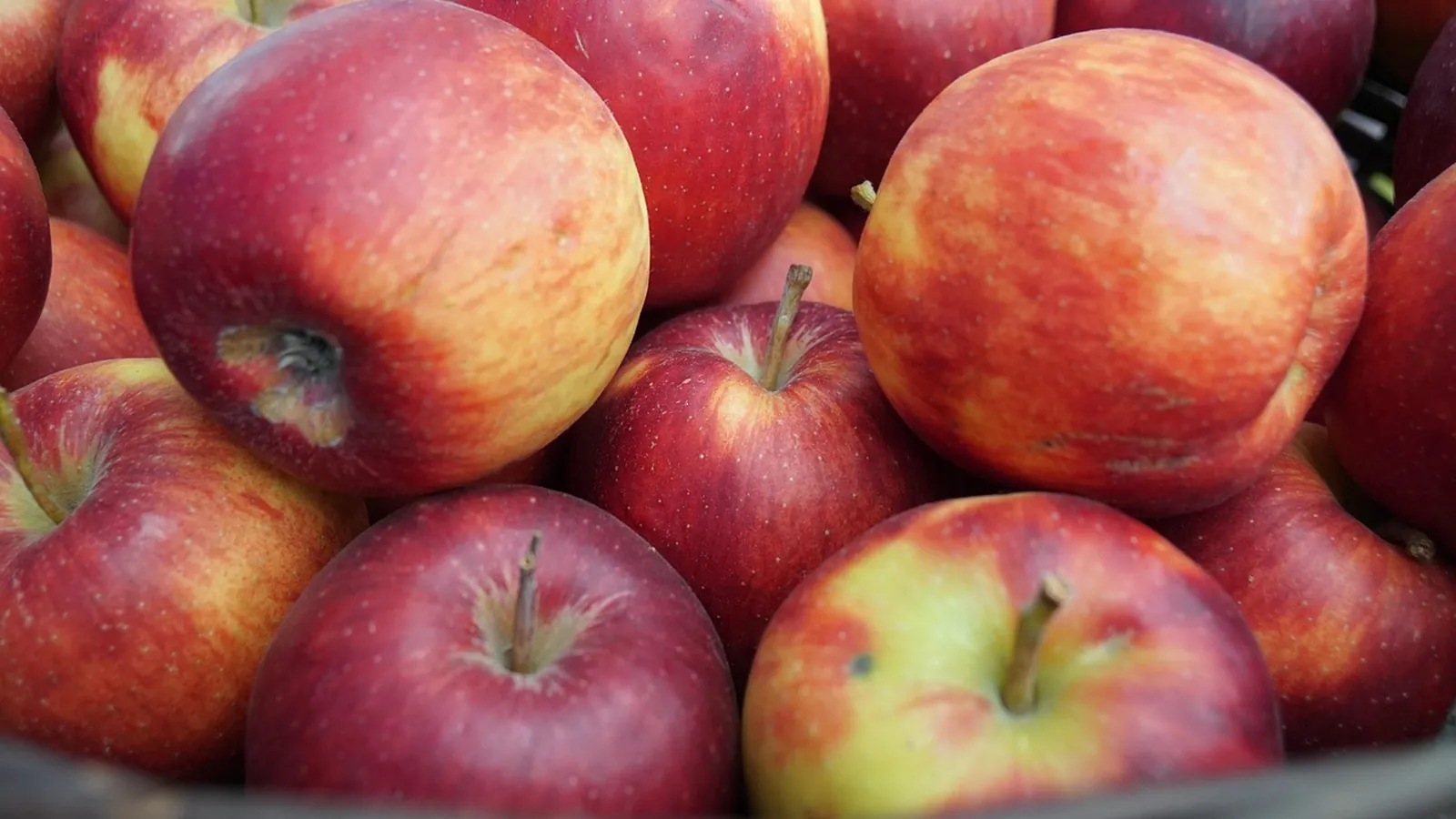
- Press gently near the widest part with the pad of your thumb. A crisp apple feels hard, like a baseball. Any give, or a dent that stays, means the flesh is turning mealy.
- Hold two apples of similar size, one in each hand. The heavier one holds more water, which is what makes an apple snap when you bite it.
- Look for a natural sheen. A dull, leathery look or fine wrinkles near the stem means the apple is drying out.
- Turn it over and check the side that rested in the bin, where bruises from stacking hide.
- Check the stem end. A moldy stem area or a soft ring around the stem means the apple is aging from the inside.
Press lightly. A hard squeeze bruises the apple for the next shopper.
What do bruises and skin marks tell you?
Some marks are cosmetic and some mean the apple will go bad fast. Clemson Cooperative Extension notes that bruising leads to decay and breakdown, and that rot from one damaged apple spreads to the apples touching it in storage.
| What you see | What it means | Buy it? |
|---|---|---|
| Soft, darker patch that dents under light pressure | Bruise; flesh underneath is brown and mushy | No, or use within a day for sauce |
| Small cut, puncture or broken skin | Open door for mold and rot | No |
| Fine wrinkles or a dull, leathery skin | Moisture loss; apple will taste soft and mealy | No |
| Rough, tan, netted patch near the stem (russeting) | Cosmetic weather mark on the skin | Yes, if the apple is firm |
| Tiny pale dots (lenticels) on the skin | Normal breathing pores | Yes |
| Sunken brown spots in the skin | Possible storage disorder or rot | No |
When in doubt, press the spot. A cosmetic mark sits on firm flesh.
What does the background color of an apple mean?
Every apple has two layers of color. The surface color is the red blush or stripes. The background color, sometimes called ground color, is the base shade of the skin where there is no red. University of Maryland Extension explains that a change in background color from green to yellow is a good sign of maturity, and calls it especially useful for Gala and Fuji.
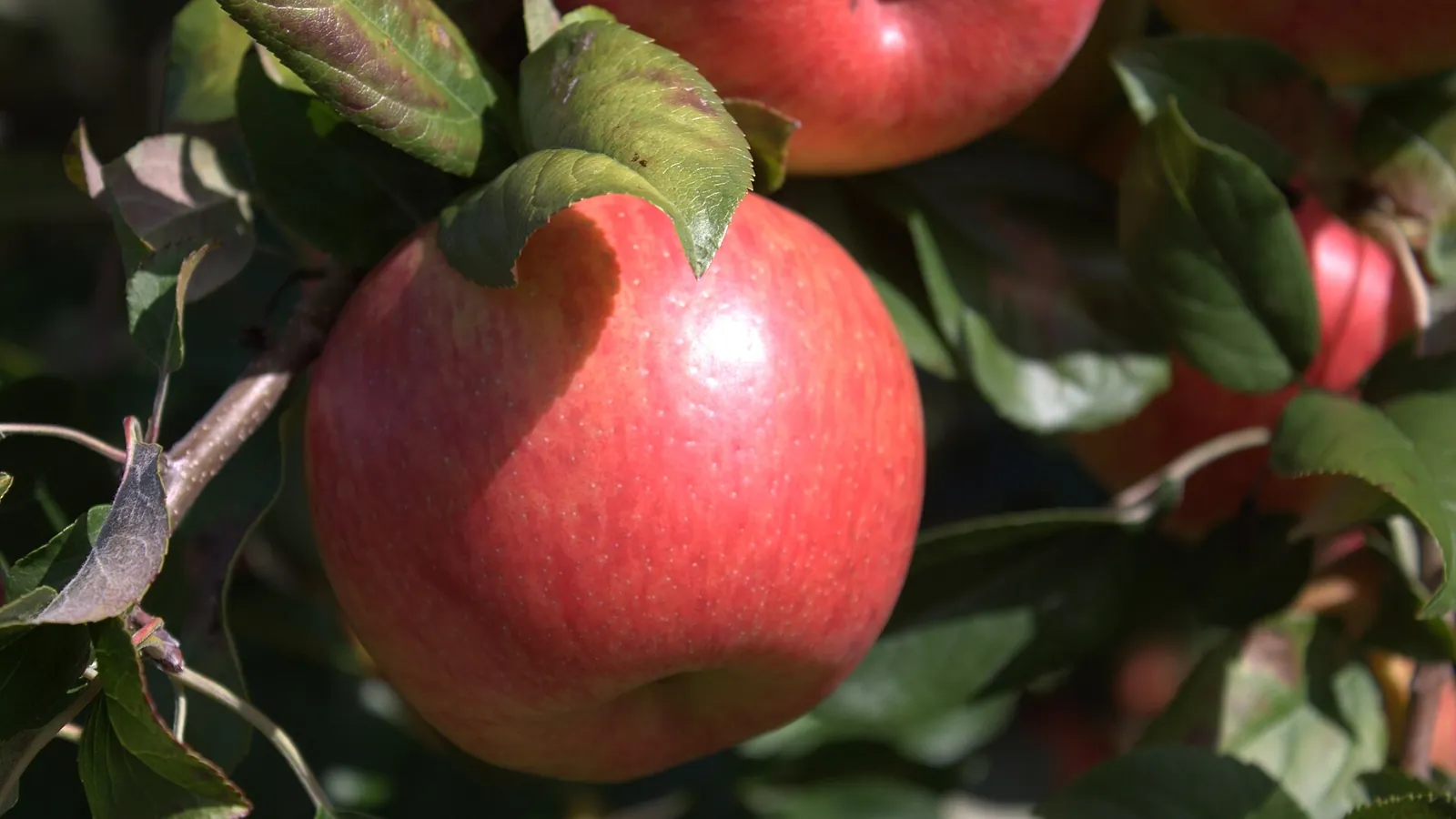
That gives you a simple shopping rule:
- Green background on a red or striped apple: picked early, firm but possibly starchy or flat.
- Yellow or golden background: mature and sweet, the best pick for most red and bicolor varieties.
- Cream or very pale background: fully ripe or getting past it, so check firmness carefully.
Do not judge by how much red an apple has. Red depends on sunlight and strain, so a deep red apple can still be immature. Look between the red patches, especially near the stem.
Granny Smith is the exception: look for a bright, even green, since a yellowish one is past its best. With Golden Delicious you want clear golden yellow, not green.
Are grocery store apples old?
Some are many months past harvest, which hurts less than it sounds. U.S. apples are mostly picked from late summer to fall. USApple notes that Gala harvest starts in mid July, Granny Smith in August, and Honeycrisp and Fuji in September. Yet you can buy those varieties in May. The reason is controlled atmosphere storage, often shortened to CA.
In CA storage, apples sit in sealed, cold rooms where the oxygen is cut from the normal 21 percent of air to a few percent. The Northwest Horticultural Council puts CA room temperatures at 32 to 34°F with oxygen as low as 1 percent, depending on variety. With less oxygen, apples breathe more slowly and age more slowly. Extension sources put CA storage life at about 6 to 7 months, and the Northwest Horticultural Council says many varieties can store 12 months or longer under good conditions. CA itself is a non-chemical process, though packers may also use a ripening blocker called 1-MCP.
What this means when you shop:
- Fall and early winter (about September to December). Many apples are fresh from the orchard or from regular cold storage. This is the best time to buy for flavor and crunch.
- Late winter through summer. Most U.S. apples come out of CA rooms. A well stored apple can still be very crisp, but quality varies more from bin to bin, so press and weigh carefully.
- Summer. You may also see apples imported from the Southern Hemisphere, harvested in their fall.
Once an apple leaves CA storage, its clock starts again, so lean hardest on the firmness and weight checks in spring and summer. Package dates tell you little, much like best by dates on other foods, so let the apple itself tell you.
Which apples are best for eating and which are best for baking?
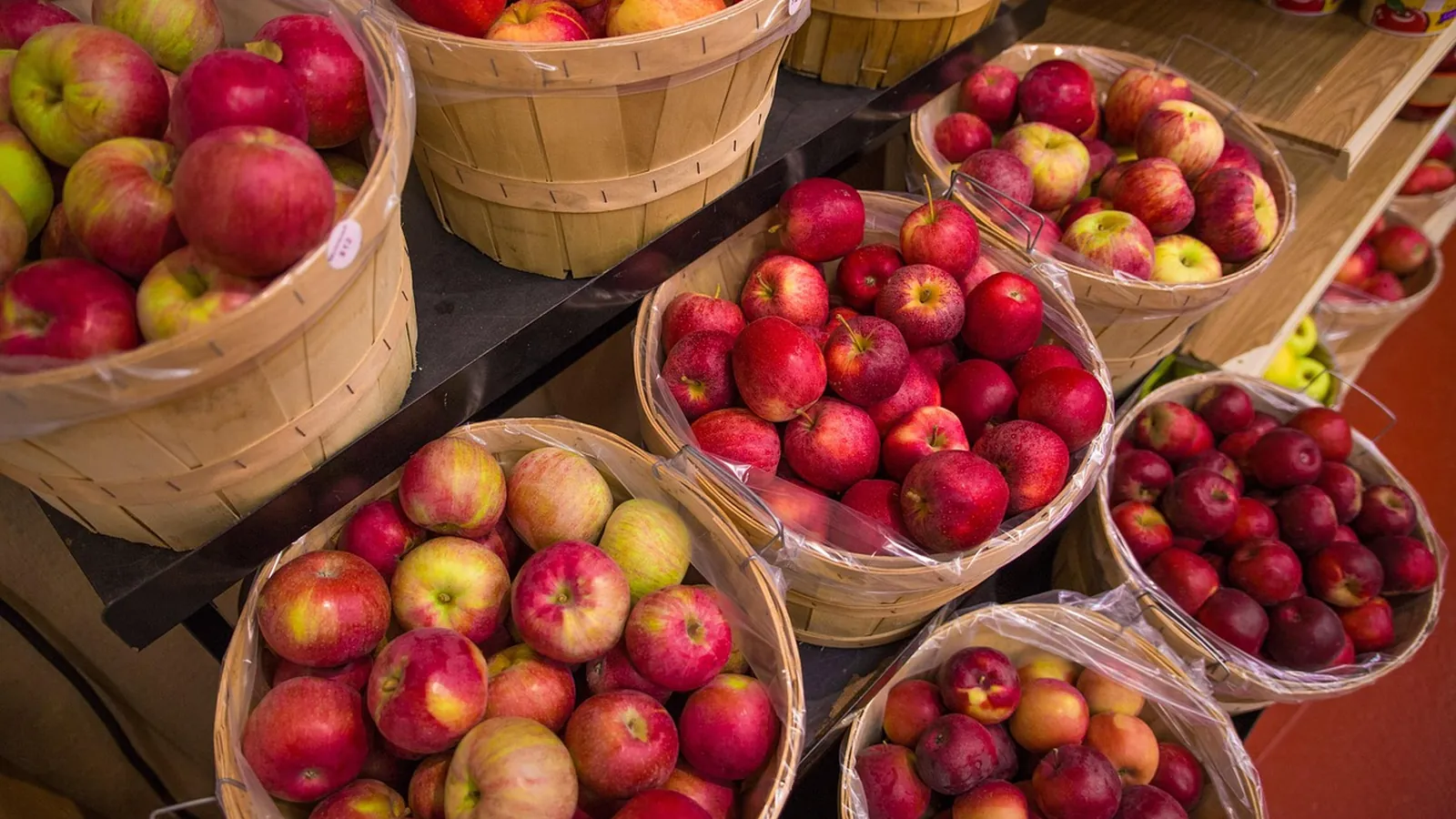
Firm apples keep their shape in a pie, while softer ones collapse into sauce. The table uses the descriptions from USApple and the usage chart from the Michigan Apple Committee, with notes where the sources differ.
| Variety | Taste and texture | Best for eating | Best for baking | Look for |
|---|---|---|---|---|
| Honeycrisp | Sweet, mild, very crisp and juicy | Yes, top choice | Fair; USApple lists salads and sauce, Michigan lists fresh only | Mottled red over a yellow background |
| Granny Smith | Very tart, firm | Yes, if you like tart | Yes, holds its shape in pies | Bright, even green with no yellowing |
| Fuji | Sweet, firm, crunchy | Yes | Yes | Red and yellow stripes, yellow base |
| Gala | Sweet, crisp, thin skin | Yes, ideal for snacking | Fair; softer once cooked | Red stripes over a yellow or cream base |
| Braeburn | Mildly sweet, crisp | Yes | Yes | Red over a yellow green base, very firm feel |
| Pink Lady (Cripps Pink) | Tart and sweet, firm and crisp | Yes | Yes, firm enough for pies and tarts | Pink blush over a yellow base |
| Golden Delicious | Mild, sweet, buttery | Yes | Yes, great mixed with a tart apple | Clear golden yellow, not greenish |
For the best apples for baking, mix varieties. USApple suggests pairing sweet Golden Delicious with tart Granny Smith in pies and crisps, which gives you both flavor and structure. If your filling turns watery or your crust pulls away, why pie crust shrinks usually comes down to dough handling, not the apples.
Fuji and Pink Lady also tend to keep well at home. Clemson Extension lists Fuji and Pink Lady among the thicker skinned apples that can last 5 months or more in ideal storage, while softer skinned Gala and Golden Delicious may last only a few weeks.
How to store apples in the fridge so they stay crisp
The fridge is the right place for apples you will not eat in the next few days. NDSU Extension says apples can sit at room temperature for less than 7 days and belong in the refrigerator for longer.
Extension recommendations for home storage are consistent:
- Use the crisper drawer, which holds more humidity than open shelves. Apples keep best at about 32°F with humidity near 95 percent, according to the eXtension apple community of practice, which is colder and more humid than most fridges, so the crisper is the closest you can get.
- Put them in a plastic bag with a few holes. Clemson Extension recommends this to hold in humidity without trapping too much moisture.
- Keep them apart from other produce. Apples give off ethylene, a ripening gas, and they are also affected by ethylene from other fruit. Keep them in their own drawer when you can, away from leafy greens and carrots.
- Sort first. Pull out any apple with a bruise or soft spot and eat it first. Rot spreads from apple to apple.
- Wash just before eating. The same logic that applies when you wash berries before the fridge holds here: extra surface moisture invites mold.
Stored this way, apples can keep for about 30 to 90 days depending on variety, according to eXtension, though apples from the store have already spent time in storage, so expect the lower end. The counter versus fridge answer differs by produce, and tomatoes on the counter keep more flavor, but apples are a fridge fruit.
Apples also speed up the ripening of fruit near them. If you have a hard pear that needs ripening or a green banana you want to ripen, a paper bag with an apple inside can help. Just do not store a bowl of apples next to bananas you want to keep yellow.
Why did my apple taste mealy even though it looked perfect?
A mealy, dry, grainy apple usually comes down to one of these:
- It was soft and you missed it. A tiny bit of give is the first sign. Next time press a few apples from the same bin and compare.
- It sat warm for days. Apples that leave cold storage and then sit at room temperature lose crunch quickly, both in the store and on your counter.
- It was overripe at harvest. A very pale, cream background often means the apple was picked late and will soften sooner.
- The variety is naturally softer. Gala and Golden Delicious soften faster than Fuji, Granny Smith or Pink Lady.
A mealy apple with no mold or rot is safe; cook it into applesauce or muffins. The same firm, heavy, glossy rule helps with other tree fruit too, and the rest of the Picking Produce basics, from ripe peaches to ripe avocados, work the same way: trust touch and weight before color.
 Watching an apple pass the firmness and color checks
It is easier to learn the press, weigh and look routine by seeing someone sort through a real bin of apples. Pay attention to how lightly the apples are handled.
How to Pick Out a Crispy and Sweet Apple Every Time...The SECRET Every Smart Shopper Uses!
By Click DIY on YouTube. Their method may vary a little from ours. Watch on YouTube
- Watch how the thumb presses near the widest part of the apple, looking for zero give rather than a dent.
- Notice the background color between the red streaks, and whether it reads green, yellow or cream.
- Compare the size and weight of two apples side by side, since the heavier one is the juicier pick.


