 Picking Produce
What Are the Gentle Signs an Avocado Is Ripe and Ready to Cut Open?
 By the CookClear writers
Checked against USDA grading standards and university extension buying advice
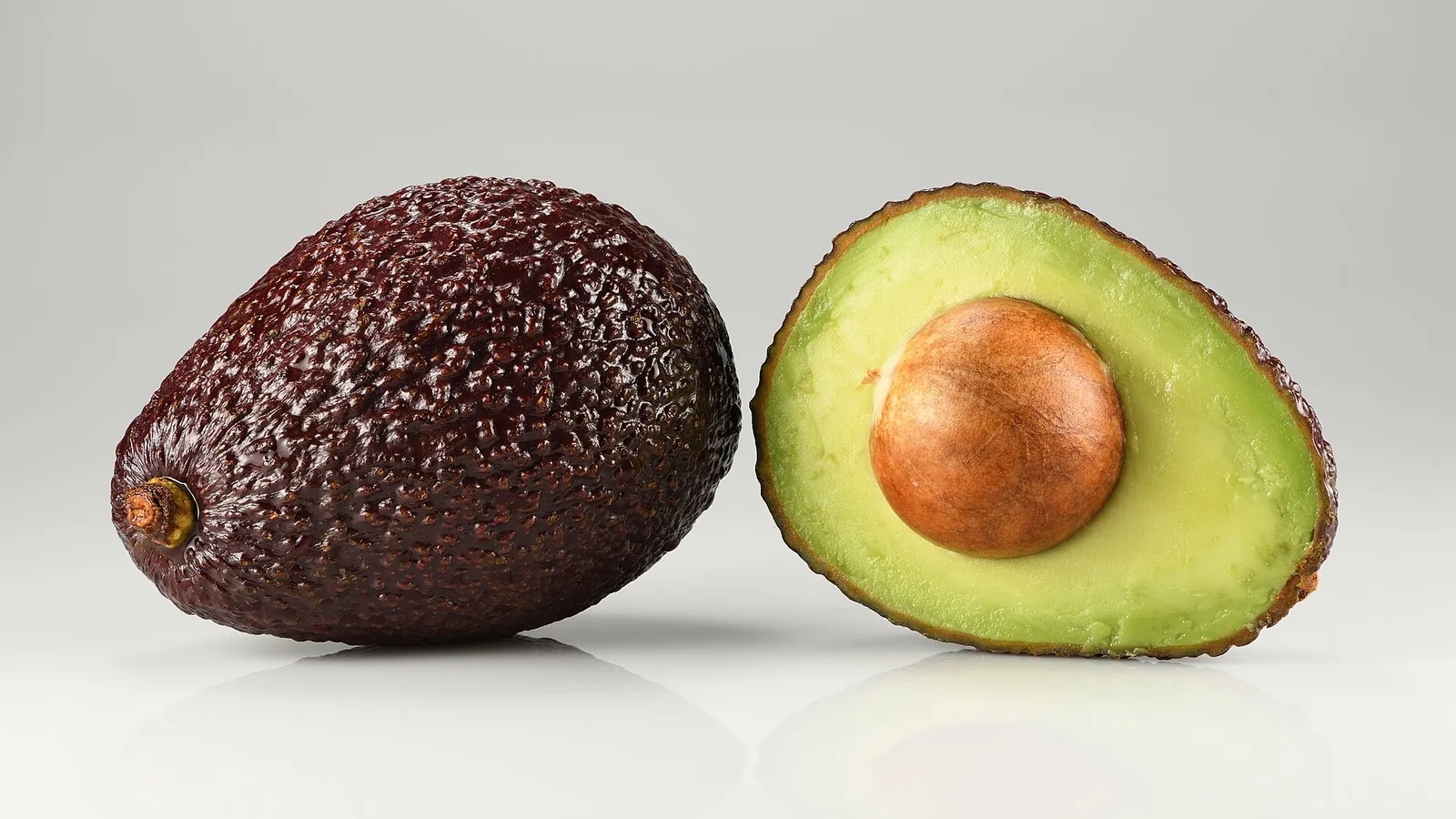
 Clear Answer
A ripe avocado feels firm but gives slightly when you cradle it in your palm and press gently, with no fingertip poking. On a Hass, the skin usually turns from bright green to dark green, purple or near black as it ripens. Hard fruit ripens in a paper bag at 65°F to 75°F in about 2 to 5 days.
Fingertip prodding is how most avocados in a store get bruised, and those bruises show up later as brown, stringy patches inside. The checks that follow are all gentle, and used together they tell you when to buy, when to wait and when to eat.
How should a ripe avocado feel in your hand?
Set the avocado in your palm, close your fingers around it loosely and press with the whole hand. The California Avocado Commission describes ripe fruit as "firm but will yield to gentle pressure." That means a small, even give, like pressing the base of your thumb, not a dent that stays.
 On the menu10 questions
Use your palm instead of your fingertips for two reasons. Fingertips concentrate the force on one small spot, which bruises the flesh under the skin. And a fingertip only reads one point, while your palm reads the whole fruit, so you notice if one end is soft and the rest is still hard.
Here is what the palm test usually tells you:
| How it feels in your palm | Ripeness stage | When to use it |
|---|---|---|
| Hard, no give at all | Unripe | 3 to 5 days on the counter |
| Slight give, still mostly firm | Almost ripe | 1 to 2 days, good for slicing soon |
| Even, gentle give all over | Ripe | Today or tomorrow, or move to the fridge |
| Soft, gives easily, skin feels loose | Very ripe | Use now for guacamole or mashing |
| Mushy, dents stay, hollow under skin | Overripe | Cut and check before using |
The day counts in the first two rows are rough. The Commission gives 2 to 5 days for hard fruit at room temperature, and UC Davis postharvest researchers note that commercial fruit typically ripens in 3 to 6 days depending on variety and how mature it was when picked. We follow the Commission's 2 to 5 days for home kitchens and tell you to check daily.
What color is a ripe Hass avocado?
A ripe Hass avocado is usually dark green, purple-brown or near black. Hass is the pebbly-skinned variety in most American grocery stores, and its skin darkens as the fruit softens. UC Davis lists that green-to-black skin change as one of the ripening signs for Hass.
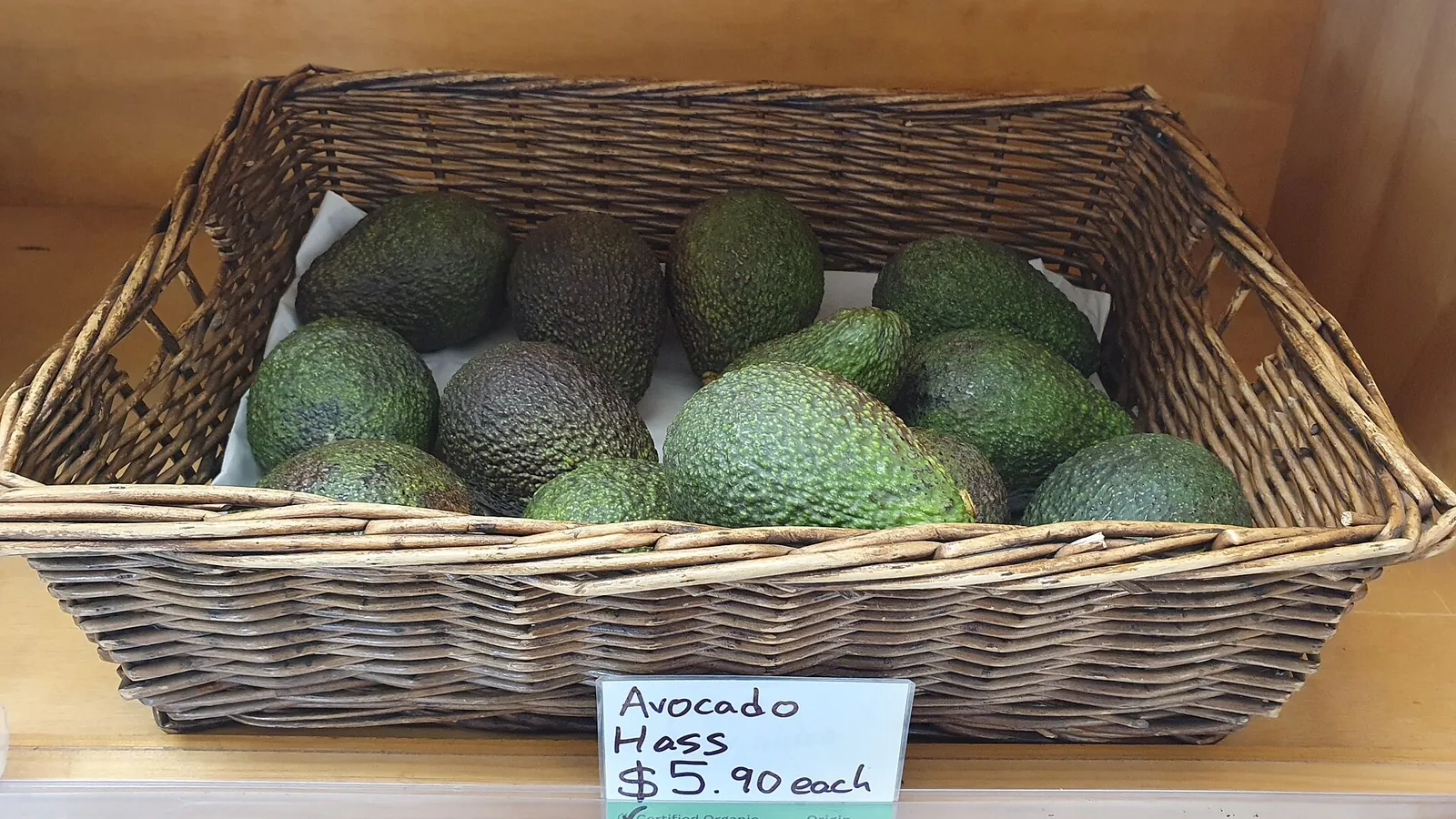
Color is a helpful first sort in the store, but it is not proof. The Commission warns not to rely on color alone, and you will see why at home: some Hass fruit darkens before it softens, and some stays greener than you expect even when ready.
Other varieties play by different rules. Smooth-skinned green types such as Bacon, Fuerte and Zutano, plus the large Florida avocados, stay green when ripe. For those, skip color entirely and go by feel.
A quick store routine that avoids bruising:
- Scan the bin for Hass fruit in the color stage you need: bright green for later in the week, dark for tonight.
- Pick one up and hold it in your palm without squeezing yet.
- Press gently with the whole hand and feel for an even, slight give.
- Turn it over and look for sunken spots, cracks or loose skin.
- Set it back gently if it fails; dropping fruit back into the bin bruises it for the next person.
Does the avocado stem trick work?
Somewhat, as a tiebreaker. The trick is to flick off the small stem cap at the narrow end and look underneath. Green or yellow-green means the fruit is likely ripe. Brown means it may be past its best inside. If the cap will not budge, the fruit is probably still unripe.
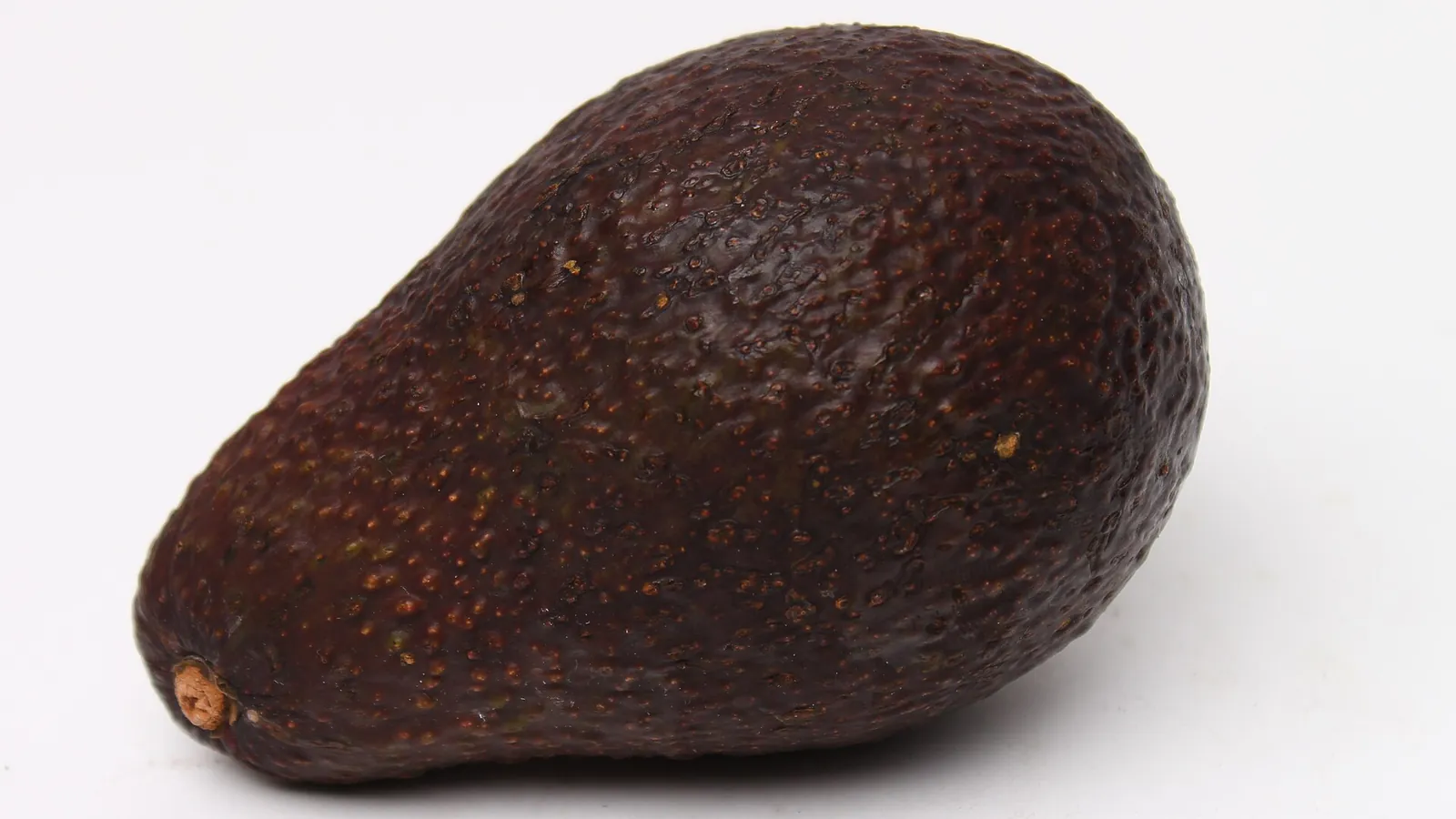
The California Avocado Commission leaves this kitchen trick out of its own ripeness advice, which sticks to gentle pressure and color. It reads only one small spot near the stem, so treat it as a second opinion after the palm test, never the only check.
Popping the cap off fruit you have not bought is also bad manners, since it leaves a small opening at the stem end, and avocados without caps can dry or spoil there faster. Do the stem check at home on fruit you already own, or on one you are definitely buying.
How to tell if an avocado is overripe
An overripe avocado feels mushy, keeps the dent when you press it, and the skin may feel loose or slightly hollow over the flesh. The Commission says to avoid fruit with dark blemishes on the skin or fruit that is oversoft. Sunken spots, cracks, a sour or fermented smell and mold at the stem end are all signs to pass.
Inside, ripe flesh is pale yellow near the seed and green toward the skin, smooth and buttery. A few small brown spots from bruising can be cut away. Long dark streaks, stringy brown fibers through most of the fruit, a rancid smell or mold mean it goes in the compost.
Why is my avocado brown and stringy inside when it felt fine?
The cause is usually one of a few things you can spot next time.
| What you see | Likely cause | Fix |
|---|---|---|
| Brown patches in one spot, rest is fine | Bruise from fingertip squeezing or a drop | Cut the patch away; press with your palm next time |
| Dark fibers running through the flesh | Fruit was overripe or stored too long | Use the clean parts; buy greener and ripen at home |
| Hard and rubbery even after a week | Fruit was picked too early or kept too cold | Give it more time at room temperature; some never soften well |
| Soft outside, hard in the center | Uneven ripening, often from fridge then counter | Leave it on the counter another day before cutting |
| Gray, watery flesh near the stem | Spoilage starting at the stem end | Discard if it smells off or shows mold |
Browning on a cut surface over a few hours has nothing to do with ripeness. Keeping a cut avocado green comes down mostly to blocking air from the flesh.
How long does an avocado take to ripen?
At room temperature, a hard avocado usually takes 2 to 5 days to ripen, according to the California Avocado Commission. The range depends on how hard it was when you bought it, the season and how warm your kitchen is. A fruit that already gives slightly will often be ready in a day or two.
Warmth speeds things up. The Commission recommends 65°F to 75°F, and UC Davis uses 68°F as its standard ripening temperature. A cold kitchen in winter slows everything, while a sunny windowsill can overheat fruit and ripen it unevenly. A spot on the counter out of direct sun is the safest bet.
Check once a day with your palm, since the jump from almost ripe to very ripe can happen overnight.
How to ripen an avocado faster
To ripen an avocado faster, put it in a paper bag with an apple or a kiwi and fold the top closed. The Commission says apples and kiwis give off ethylene, the gas that triggers ripening, and the more of that fruit you add, the faster it goes. The bag traps the gas around the avocado.
Ways to speed up ripening, from fastest to slowest:
- Paper bag with an apple or kiwi. The trapped ethylene helps the most; check daily.
- Paper bag alone. The avocado's own ethylene builds up inside, which still helps.
- Grouped with other ripening fruit. A fruit bowl with ripening fruit nearby gives a mild boost.
- Loose on the counter. Slowest, but fine when you have several days.
Many cooks use a ripening banana in the bag too, since ripening bananas also release ethylene, though the Commission's own advice names apples and kiwis. Paper works better than plastic because it lets moisture escape, which helps prevent mold.
Two shortcuts to skip: the microwave and the oven. The Commission specifically says not to microwave avocados to speed ripening. The same idea applies to other fruit; a mango that ripens on the counter tastes far better than one forced along.
Should you refrigerate avocados?
Refrigerate avocados only once they are ripe. The Commission says to put only ripe or soft fruit in the fridge, where whole, uncut ripe avocados keep about 2 to 3 more days. UC Davis lists 36°F to 40°F as the best storage range for ripe fruit, which lines up with a normal home refrigerator.
The fridge slows ripening a lot, which is the point when you have a ripe avocado but plans to eat it later in the week. Chilling hard, unripe fruit before it softens tends to stall ripening, and fruit moved between the fridge and counter often softens unevenly. Keep hard ones on the counter until they pass the palm test.
A simple plan if you buy several at once:
- Buy them at different stages, a couple dark and soft, a couple bright green and hard.
- Leave the hard ones on the counter, or bag one with an apple if you need it sooner.
- Move each one to the fridge the day it turns ripe.
- Pull it out 30 minutes or so before cutting if you prefer it less cold.
Tomatoes follow nearly opposite logic for flavor, which is why storing tomatoes on the counter is usually the better choice. The same gentle-handling idea carries across the produce aisle. Pressing near the stem works for choosing a ripe tomato, and smell does much of the work when you pick a ripe cantaloupe.
How do you buy avocados for the day you need them?
Plan by the date you will eat them, not by what looks best in the bin. Buy dark, gently yielding fruit for tonight, almost ripe fruit for the next day or two, and hard bright green fruit for later in the week.
For guacamole or mashing, a very ripe fruit is fine and even helpful, as long as the flesh is not stringy or brown. For slices and cubes on salads or toast, choose fruit that is just ripe, since it holds its shape when you cut it. The same buy-for-the-day idea helps with other fruit too, and pineapples have their own ripeness cues since they do not ripen further once picked. More produce buying tips live in the picking produce section.
 Checking an avocado by feel, color and stem
Pressure is the hardest cue to describe in words, so watching someone cradle an avocado and press with the palm makes the right amount of give easier to judge.
The Most Important Avocado Questions Answered | What’s Eating Dan?
By America's Test Kitchen on YouTube. Their method may vary a little from ours. Watch on YouTube
- Notice the whole-hand press and how slight the give is on ripe fruit compared with a hard one that needs 2 to 5 more days.
- Compare the skin color on Hass fruit, from bright green to dark purple or near black, and remember color only narrows the choice.
- Watch how the stem end is handled, and treat a green spot under the cap as a second check after the palm test.


