Kitchen Tools
Is It Okay to Line an Air Fryer Basket With Foil or Parchment Paper?
 By the CookClear writers
Checked against manufacturer instructions and test kitchen reviews
 Clear Answer
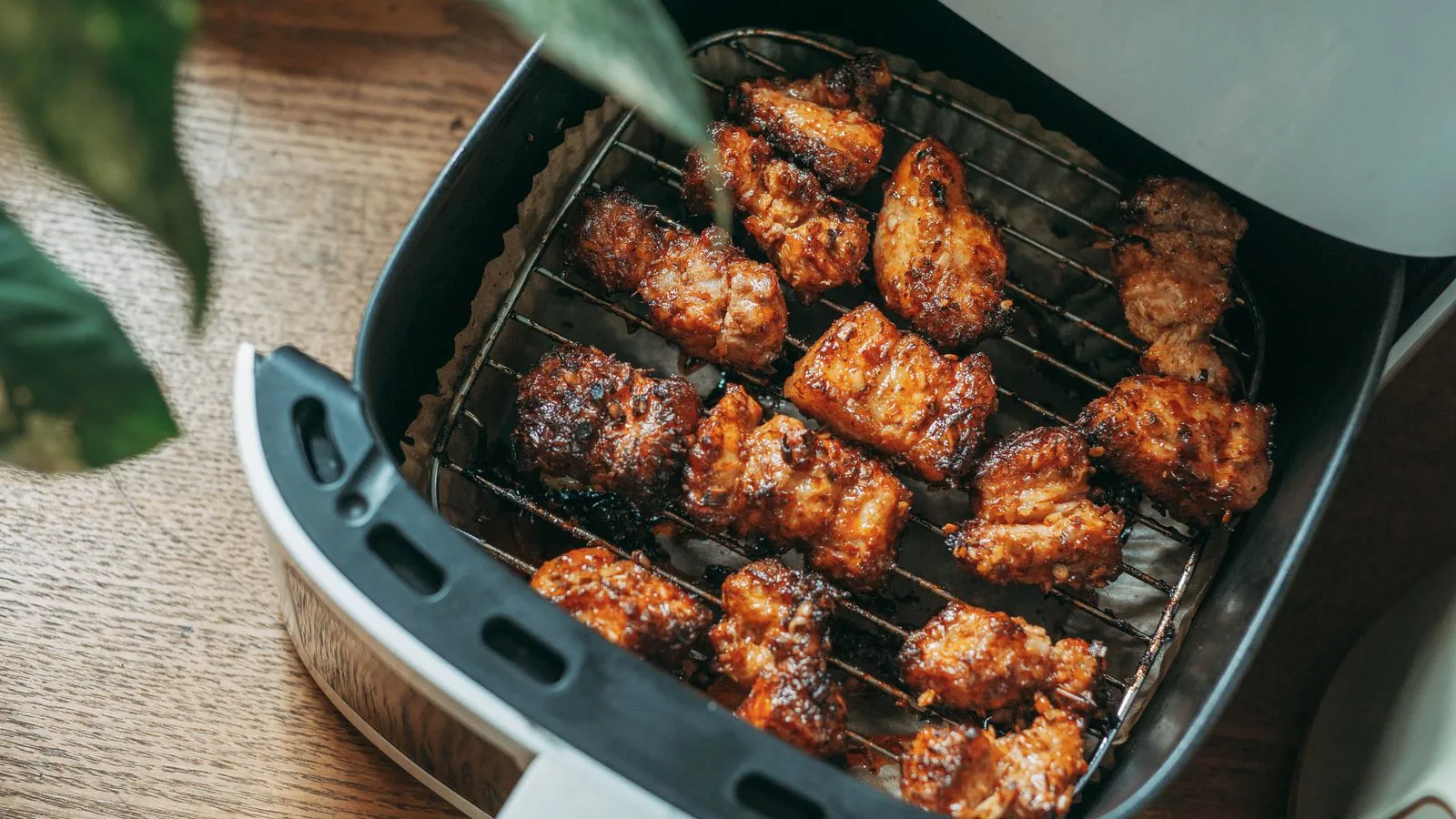
Yes, you can line an air fryer basket with foil or parchment paper as long as food sits on top to weigh it down, the liner stays away from the heating element, and it doesn't cover the whole basket floor. Most parchment is rated to about 420 to 450°F, so keep the temperature at or below that. A loose sheet blown into the heater is the main danger.
Why a loose liner is dangerous
An air fryer is a small convection oven with a powerful fan sitting just above the food. That fan moves air fast enough to lift anything light. An empty sheet of parchment, or one with only a couple of small items on it, can flip up and touch the coil.
Parchment that touches a red-hot element can scorch or catch fire. Foil won't burn, but it can get pulled against the heater or fan guard, where it may spark, warp, or damage the element. Either way, the fix is the same: never put a liner in during preheating, and never run it without enough food to pin it flat.
America's Test Kitchen gives the same warning in its liner testing: add the liner with the food, not before. Reynolds says the same thing on the package for its air fryer parchment.
Foil vs. parchment: which should you use?
They behave differently, so the better pick depends on what you're cooking.
| Aluminum foil | Parchment paper | |
|---|---|---|
| Heat limit | Won't burn at any home air fryer setting | Usually 420 to 450°F; air fryer liners often rated to 400°F |
| Stays put | Can be crimped around food or the basket edge | Lightweight, needs food on top |
| Sticking | Food can stick unless oiled | Naturally nonstick |
| Acidic foods | Avoid (tomato, citrus, vinegar can react with it) | Fine |
| Airflow | Solid sheet blocks air unless you poke holes | Comes perforated or can be punched |
| Best for | Wrapping fish or veggies in a packet, slings, catching drips | Breaded items, cookies, cheesy or sticky foods |
| Reusable | Rarely | No, toss after one use |
Parchment is the easier everyday choice, since it is nonstick and safe with acidic foods, which suits any simple kitchen tools setup. Foil earns its place when you want to make a packet, a sling for lifting out a frittata, or a small boat to hold marinade.
How to line the basket without ruining the cook
The goal is a liner that catches mess but still lets hot air reach the bottom of the food. Here's how to set it up:

- Preheat the empty basket first. Run the fryer for 3 to 5 minutes with nothing in it if your recipe calls for preheating the basket.
- Cut or buy a liner smaller than the basket floor. Leave a gap of about half an inch around the edges so air can travel down the sides and up through the bottom.
- Use perforated parchment, or poke holes in foil. A skewer or fork works. Holes let air pass and let fat drip away instead of pooling.
- Lay the liner in and put the food on immediately. Don't set the liner in the hot basket and walk away to grab the food.
- Keep everything below the heater. Trim any edges that curl up toward the top. Nothing should be within an inch or so of the element.
- Cook at 400°F or below with parchment, unless the package says otherwise.
- Check halfway. If a corner has lifted, push it down or trim it.
If you're flipping food partway through, use tongs and hold the liner down while you turn things. When the basket empties out, the bare sheet becomes light enough to fly.
Does a liner make food less crispy?
Often, yes, a little. Air fryers crisp food by moving hot air all the way around it, including underneath. A solid sheet of foil or parchment covering the whole basket floor turns the bottom of the basket into a flat pan. Fat and moisture pool against the food instead of dripping away, and the underside steams, the same reason roasted vegetables turn soggy.

ATK's testing found that liners with low sides and thin material worked best, and that thick silicone liners slowed cooking by around 3 to 4 minutes. Paper performed well because it transfers heat quickly. Thinner and smaller is better.
For foods you want crunchy (fries, wings, breaded chicken), cook on the bare basket if you can. Save the liner for foods that would otherwise make a mess or stick.
When a liner is worth it
Some foods are much easier with something underneath them. These are the cases where a liner pays off:
- Cheesy or saucy foods, like quesadillas, stuffed peppers, or anything with a glaze that will drip and burn onto the basket.
- Battered or very wet coatings, which drip through the grate before they set. Parchment holds them in place until the crust forms. If coatings slide off entirely, that is a breading problem, not a liner one.
- Delicate fish, which tends to stick and tear on the grate. A foil sling makes it easy to lift fillets out whole.
- Small, loose items like chopped vegetables that might fall through larger grates.
- Baked goods, such as cookies or a small cake in a pan.
- Bacon, where foil under the basket insert (not the food) catches grease and cuts cleanup. For big batches, bacon in the oven is easier.
For marinated meats, a liner also helps protect a nonstick basket from sugary marinades that caramelize and bake on.
When to skip the liner
There are times when a liner causes more trouble than it saves.
- During preheat. Always.
- With very light foods, like a few kale chips, that won't hold the sheet down.
- For fries, wings, and anything you want deeply crisp, like chicken thigh skin, since the bare grate gives better results.
- With acidic foods on foil. Tomato sauce, lemon, and vinegar can react with aluminum, leaving tiny pits in the foil and a metallic taste. Use parchment instead.
- In the bottom of the outer drawer. Some people line the drawer under the basket insert to catch drips. Many manufacturers advise against this because it can block the airflow path. If you do it, keep the foil flat and check your manual first.
- In models whose manual says no. Some brands specifically warn against foil, especially in oven-style air fryers where the element sits on the bottom.
Is aluminum foil safe to cook with at these temperatures?
For normal use, yes. Aluminum foil doesn't melt or burn at home cooking temperatures (aluminum melts around 1,220°F). Some aluminum does move into food, more so with acidic or salty foods and long cooking times, which is the main reason to keep tomato and citrus off it.
The FDA considers aluminum foil a safe food-contact material for everyday cooking. If you'd rather limit contact, parchment is the simple swap for most air fryer jobs.
Does it matter which side of the foil faces up?
No. The shiny and dull sides come from the manufacturing process, where two sheets are rolled together. Any difference in how much heat each side reflects is too small to notice in an air fryer. The exception is nonstick foil, where the coated (dull) side should face the food.
Pre-cut liners vs. cutting your own
Pre-cut air fryer parchment comes in rounds and squares sized to common baskets, usually with holes already punched. They're convenient and inexpensive per sheet, and some have low sides that act like a shallow tray. Pick the size slightly smaller than your basket floor, not the same size.
You can also cut regular parchment yourself. Trace the basket insert on a sheet, cut about half an inch inside the line, fold it in quarters, and snip a few small notches along the folds to make vent holes. That costs almost nothing and fits your basket exactly.
Reusable silicone liners are another option. They last for hundreds of uses and go in the dishwasher, but thicker ones slow cooking and they don't crisp the bottom of food as well. If you buy one, look for something thin with short walls.
Avoid wax paper entirely. Wax paper is not heat resistant, and the wax can melt and smoke in a hot air fryer. Paper towels and regular printer paper are also a bad idea; they'll scorch or burn.
Does lining the basket protect the nonstick coating?
It helps. Most baskets have a nonstick coating that wears down over time from scrubbing and from sugary residue baked onto the surface. A liner under messy foods means less scraping afterward, which keeps that coating in better shape longer.
That said, the basket is designed to be cooked on directly. Washing it with warm soapy water and a soft sponge after each use does more to protect the coating than any liner. Skip steel wool and abrasive powders. For baked-on residue, the gentler tricks for cleaning a burnt pot work here too.
Quick reference by food
| Food | Liner? | Notes |
|---|---|---|
| French fries | No | Bare basket gives the best crunch |
| Chicken wings | No | Let fat drip through |
| Salmon fillets | Parchment or foil sling | Prevents sticking and tearing |
| Quesadillas | Parchment | Weigh the top down with a rack or toothpick if it lifts |
| Breaded chicken | Optional, perforated parchment | Spray the coating with oil either way |
| Cookies | Parchment | Cook in small batches |
| Roasted vegetables with balsamic | Parchment, not foil | Vinegar reacts with aluminum |
| Bacon | No on the basket; foil under the insert if your manual allows | Watch for smoke from pooled grease |
 Where foil and parchment belong in an air fryer basket
Where a liner sits and how much food weighs it down is a matter of placement you can see. This clip from Sam & Dom's KitchenGadgetsClub covers when paper liners and foil trays help in an air fryer and when they get in the way.
When NOT To Use Paper Liners & Foil Trays In The Air Fryer (Number 1 Thing Series)
By Sam & Dom's KitchenGadgetsClub on YouTube. Their method may vary a little from ours. Watch on YouTube
- Check whether the liner sits smaller than the basket floor, with about half an inch of gap for airflow.
- Notice if food is on the liner before the basket goes in, since a light empty sheet can lift toward the heater.
- Compare how the liner is used with the cases above where it helps, such as saucy foods, fish, or cookies.