Picking Produce
Which Clues Point to a Ripe Cantaloupe Before It Goes in Your Cart?
 By the CookClear writers
Checked against USDA grading standards and university extension buying advice
 Clear Answer
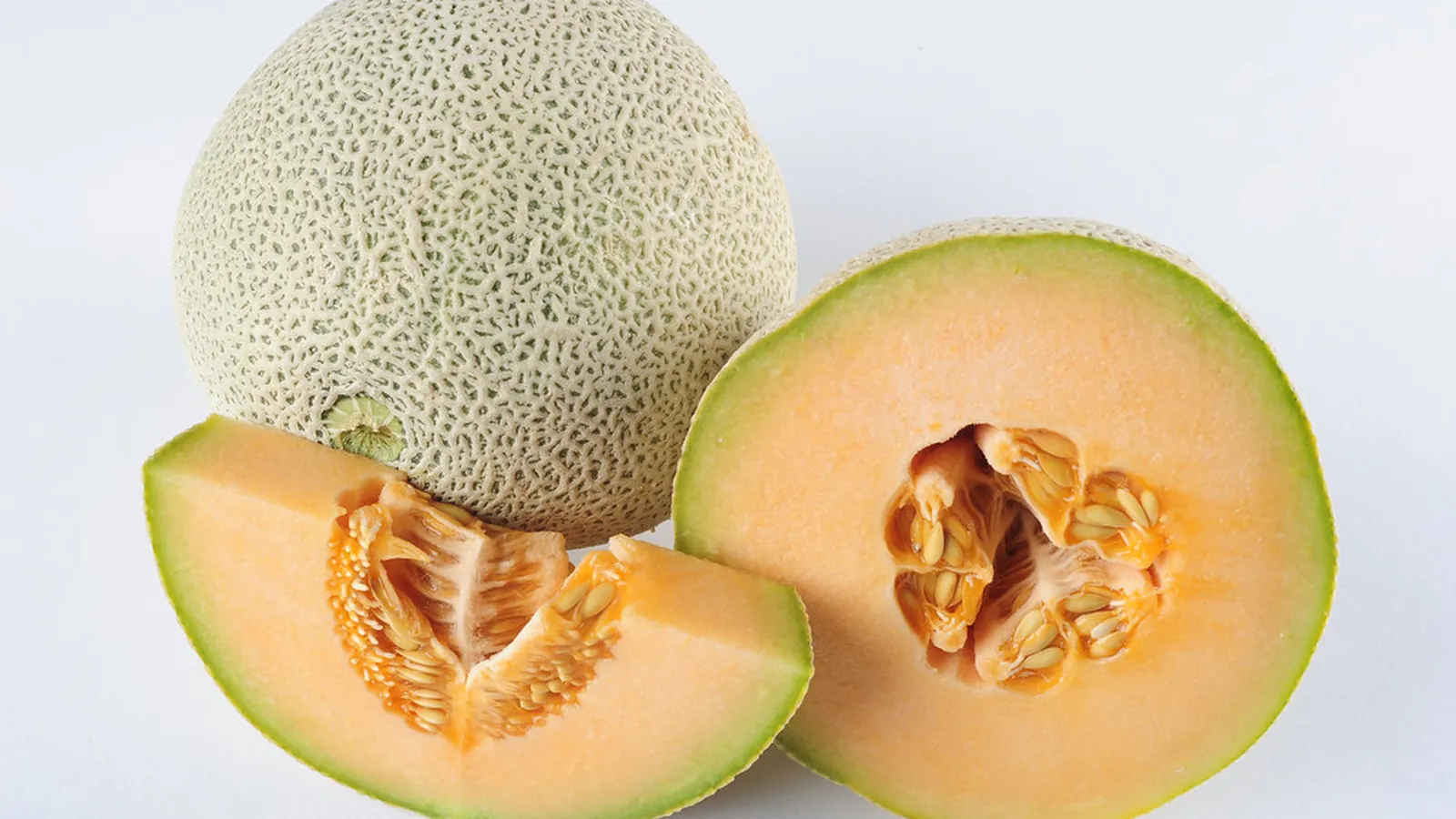
Start at the stem end: a ripe cantaloupe has a smooth, shallow, clean dent where the stem was, a sign it slipped off the vine on its own at full ripeness. Then look for tan or golden color under raised netting, a sweet musky smell, a heavy feel and a blossom end that gives slightly under your thumb.
Those five checks take about 30 seconds per melon, though a honeydew needs different cues because it never slips from the vine. The stem scar matters most, because a cantaloupe stops gaining sugar the moment it is picked.
What does full slip mean on a cantaloupe?
As a cantaloupe ripens on the vine, a crack forms in a ring around the base of the stem. At full ripeness the melon separates from the stem with almost no pressure. Growers call that "full slip," and it leaves a round, smooth, slightly sunken scar with no stem attached.
A melon picked earlier has to be pulled or cut off. Ohio State University Extension notes that underripe melons "do not pull cleanly from the vine," so you see a rough, torn scar or a piece of stem still stuck to the fruit.
| What the stem end looks like | What it tells you | Buy it? |
|---|---|---|
| Smooth, round, shallow dent, no stem | Full slip, picked ripe | Yes, first choice |
| Mostly smooth with a small rough edge | Close to slip, picked slightly early | Fine if the other signs agree |
| Torn, jagged scar or bits of stem | Pulled or cut off before ripe | Skip it |
| Stem still attached | Cut from the vine early | Skip it |
| Scar is soft, wet, moldy or sunken deep | Overripe or starting to rot | Skip it |
Commercial growers often harvest a little before full slip so melons survive shipping, and some varieties do not slip cleanly at all. So check the stem first, then confirm with the other signs.
Netting and background color: what should the rind look like?
Look at two things on the rind: the raised net pattern, and the skin color showing underneath it.
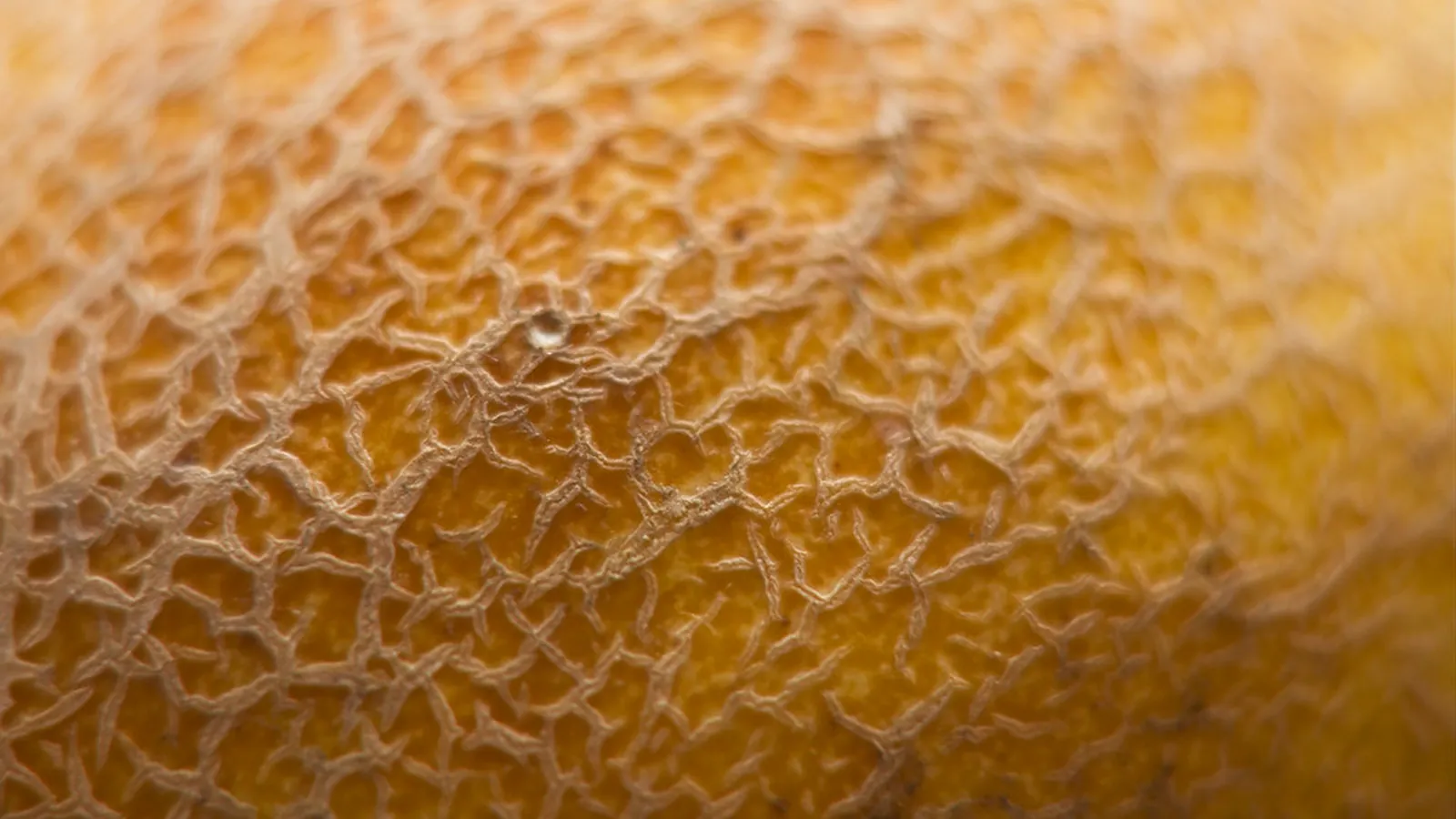
The netting should be thick, corky and spread evenly over the whole melon. Both Ohio State and Utah State University Extension describe good netting as "prominent" or "evenly distributed" and corky. Flat, faint or patchy netting often goes with a melon that was picked young.
The background color is the skin between the netting. On a melon picked too soon it is green. As the fruit matures it shifts toward light tan, beige, cream or golden yellow. Washington State's variety notes track the same path for several cantaloupes: green when immature, light green turning tan near peak, and golden orange when overripe. Utah State points out that the background can read green, yellow or gray depending on variety, so judge it together with the stem.
A pale or bleached patch on one side is normal. That is where the melon rested on the ground, and Utah State lists it as acceptable.
What does a ripe cantaloupe smell like?
Hold the stem end up to your nose. A ripe cantaloupe smells sweet and musky, like the fruit itself, and the scent is strongest at the stem scar. University of Maryland Extension notes the aroma is often most noticeable around the stem.
No smell at all usually means the melon is underripe or very cold from the display case. A smell that is heavy, boozy or fermented means it has gone past ripe.
Smell is a supporting clue. Utah State says a sweet aroma "may or may not be a good indicator of ripeness," partly because a chilled melon gives off very little scent.
Should a cantaloupe feel heavy or soft?
Pick up two melons of about the same size. The one that feels heavier for its size has more water and juice inside, and Ohio State lists a heavy feel for its size as a sign of a good melon.
Next, find the blossom end, the end opposite the stem. It often has a small round mark or nub. Press it with your thumb. Ohio State says it "should yield gently to the thumb." A ripe melon gives a little and springs back.
Here is how to read the press:
- Rock hard, no give at all: underripe, or picked well before slip.
- Slight give, springs back: ripe or nearly there.
- Soft give across the whole end: very ripe; eat within a day or two.
- Mushy, wet or caves in: overripe, skip it.
Squeeze only the blossom end. Pressing hard all over the melon bruises it for the next shopper, and Utah State warns against fruit that feels spongy. Pass on any cantaloupe with soft spots, bruises, punctures or dark, wet patches on the rind.
Does cantaloupe ripen after you buy it?
Partly. A cantaloupe keeps softening and getting juicier after harvest, but its sweetness is fixed when it leaves the vine. Ohio State says that if a cantaloupe is picked before it is fully ripe, "it won't become any sweeter afterwards." Utah State says the same: cantaloupes do not get sweeter after harvest, but they do continue to soften.
That difference shapes how you shop. A melon that is a bit firm but has a clean full slip scar and tan color will soften on your counter in a couple of days and taste great. A green, hard melon with a torn stem will also soften, but it will stay bland, because the sugar never arrived. Melons behave differently from fruit that keeps converting starch to sugar off the plant, the way a mango keeps sweetening as it sits.
To finish softening a cantaloupe at home:
- Leave it whole and uncut on the counter, away from direct sun.
- Check the blossom end and the smell once a day.
- Move it to the fridge as soon as it gives slightly and smells sweet.
Utah State says an uncut cantaloupe should not stay at room temperature more than 2 to 4 days. Once it is fully ripe, refrigerate the whole melon and use it within about 5 days.
A melon that looked right but tastes flat: what went wrong?
Sometimes you pass every check and still cut into a melon that tastes like cucumber. This table matches what you find with the likely cause.
| What you see | Likely cause | Fix |
|---|---|---|
| Firm, pale flesh with little flavor | Picked before full slip, so sugar never built up | Nothing will sweeten it; use it in a smoothie or with salty prosciutto |
| Soft, juicy flesh but bland | Softened on the counter after an early harvest | Next time, choose by the stem scar first, softness second |
| Mushy, translucent flesh near the seeds | Overripe | Cut away the soft parts; blend the rest if it smells fine |
| Sour, fizzy or alcohol smell | Fermenting, past ripe | Throw it out |
| Green rind under the netting, no smell | Immature melon | Skip melons like this at the store |
| Mold at the stem scar | Rot starting where the stem broke off | Do not buy; if it happened at home, discard |
The same idea applies across produce: some fruit can only get softer once picked, while others can still ripen. Watermelons, like cantaloupes, will not sweeten after harvest, so the clues for picking a ripe watermelon lean on the field spot and weight instead.
How to wash cantaloupe before cutting
Cantaloupe rind has deep grooves in its netting that can hold soil and bacteria, and cantaloupes have been linked to foodborne illness outbreaks. When you slice through an unwashed rind, the knife carries whatever is on the outside into the flesh you eat.
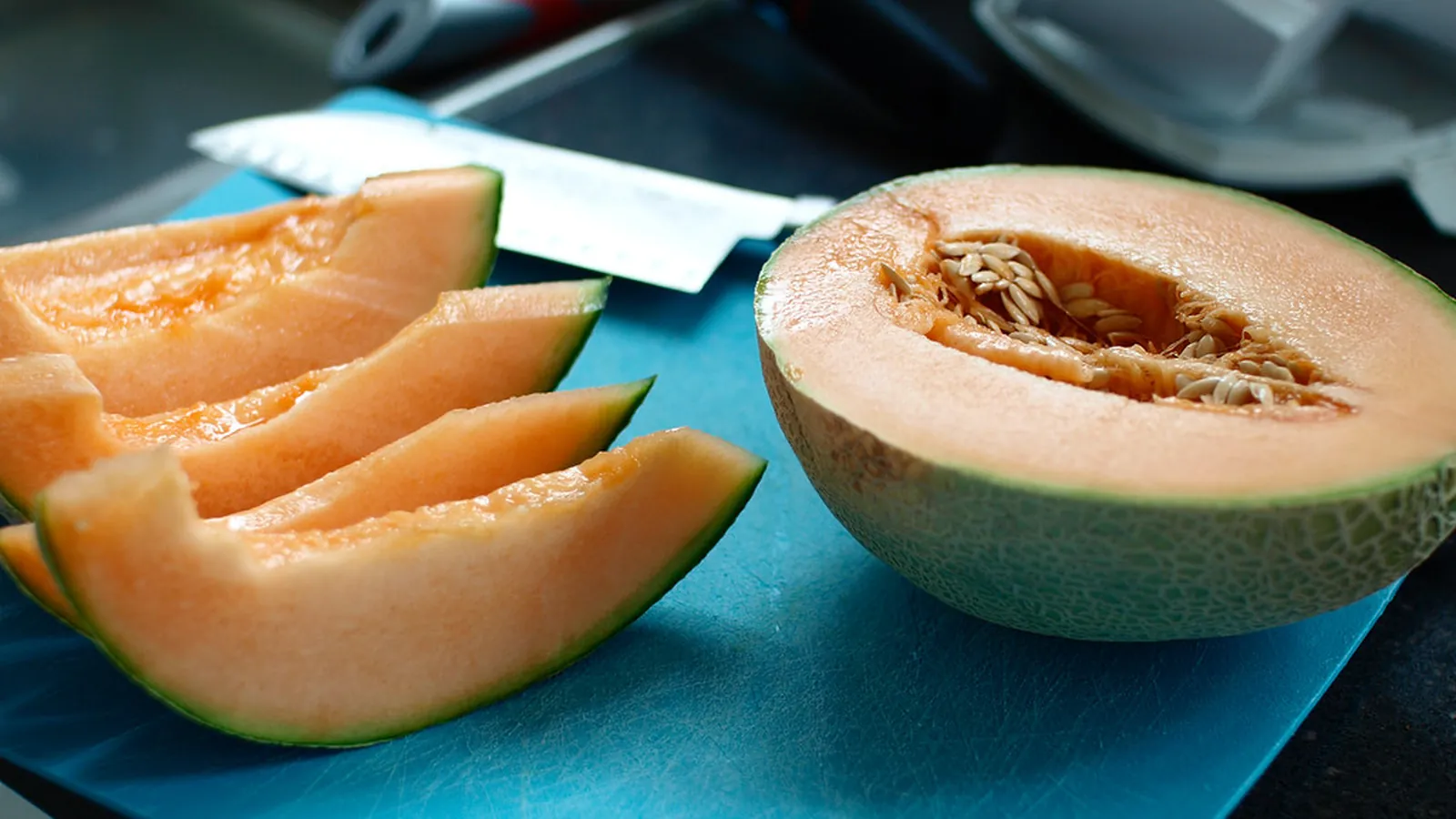
The FDA advises scrubbing firm produce such as melons with a clean produce brush under running water before peeling or cutting, then drying it with a clean cloth or paper towel. The FDA does not recommend soap, detergent or commercial produce washes; plain running water does the job.
- Wash your hands for 20 seconds with soap and water.
- Hold the whole melon under cool running tap water.
- Scrub the entire rind, including the stem and blossom ends, with a clean produce brush.
- Dry it with a clean towel or paper towel.
- Cut on a clean board with a clean knife.
Utah State Extension suggests washing the rind with warm soapy water before cutting. The FDA advises against soap on produce because the rind is porous, and that is the advice followed here: water and a brush.
Wash just before cutting. The same logic applies to berries, where washing right before eating keeps them from turning soft and moldy. If you also cut raw meat at home, keep a separate board for produce and clean your cutting board with hot soapy water after each use.
How long does cantaloupe last once it's cut?
Cut cantaloupe spoils much faster than a whole one. Utah State Extension recommends refrigerating cut melon in a covered container and using it within 3 days. Keep cut fruit out of the fridge no longer than 2 hours, the general food safety limit for perishable food, or 1 hour when it is above 90°F, such as at a picnic.
| Form | Where | How long |
|---|---|---|
| Whole, not yet ripe | Counter | 2 to 4 days, until it softens |
| Whole, ripe | Fridge | Up to about 5 days |
| Cut, covered | Fridge | Up to 3 days |
| Cut, sitting out | Room temperature | No more than 2 hours (1 hour above 90°F) |
| Cut, frozen | Freezer | Best used within about 1 month (Utah State) |
Frozen cantaloupe chunks lose their crispness, so save them for smoothies and sorbet. Store a cut half with plastic wrap pressed on the flesh, the same way you would treat a cut tomato in the fridge.
Quick store checklist for picking a ripe cantaloupe
Run through the clues in this order:
- Stem end. Smooth, round, shallow dent with no stem or torn edges.
- Background color. Tan, beige, cream or golden under the netting, not green.
- Netting. Thick, raised and even over the whole melon.
- Weight. Heavier than another melon of the same size.
- Blossom end. Gives slightly to your thumb and springs back.
- Smell. Sweet and musky at the stem end, never fermented.
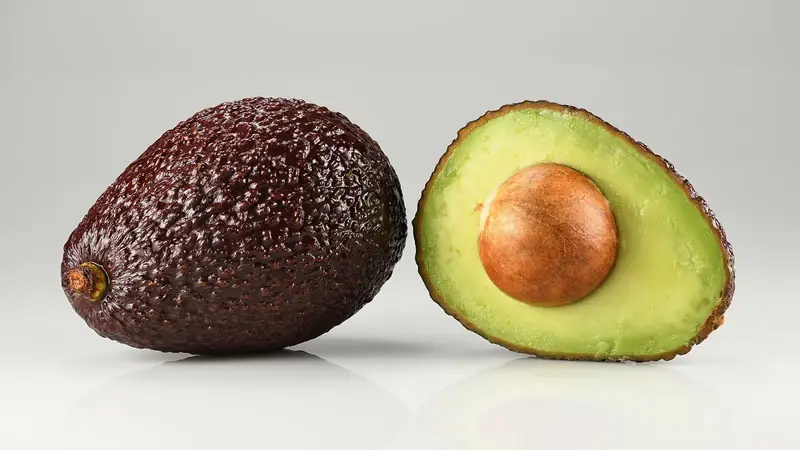
The checks differ from fruit to fruit. A pineapple is judged mainly by smell and weight, so the pineapple ripeness clues work differently, and an avocado that gives slightly is judged mostly by feel.
For other fruit in the picking produce section, the same habit helps: check the stem or base first, then weight, then feel.
 Seeing the stem scar and blossom end up close
The stem scar and the slight give at the blossom end are easier to judge after you have seen them on a real melon. A short demonstration shows what to look and feel for.
How to Pick a Ripe Cantaloupe or Honeydew Melon | Giant Eagle
By Giant Eagle on YouTube. Their method may vary a little from ours. Watch on YouTube
- Look at the stem end for the smooth, shallow full slip dent and compare it with a torn or stem-attached scar.
- Notice the background color under the netting turning from green to tan or golden, the shift that marks a ripe melon.
- Watch how much the blossom end gives under a thumb: a slight give that springs back, not a soft or mushy press.