Kitchen Tools
Is an Instant Read Thermometer Necessary for Everyday Home Cooking?
 By the CookClear writers
Checked against manufacturer instructions and test kitchen reviews
 Clear Answer
If you cook meat, poultry, or reheat leftovers more than once in a while, yes. Color, juices, and recipe times are all unreliable signals, and USDA testing found that more than 25 percent of fresh ground beef patties turned brown inside before they reached a safe 160°F. A thermometer is the only way to know, and it also stops you from overcooking food "just to be safe."
For pasta, vegetables, rice, and most stovetop sides, you can skip it. The value is concentrated in a handful of foods you probably cook every week.
Why can't you just go by color or cooking time?
That USDA research showed ground beef can turn brown early, especially after long refrigerated storage or slow thawing, because the meat's pigment oxidizes. The same work found patties can stay pink even after passing 160°F. Neither brown nor pink tells you anything reliable.
Cooking times have a different problem. A recipe that says "bake chicken breasts 20 minutes" was written for a specific thickness, a specific oven, and meat that started at a specific temperature. Your chicken breast might be twice as thick as theirs. Your oven might run hot. Treat a time as the point to start checking.
The old tricks (poking for firmness, cutting into the meat, checking if juices run clear) take practice, and cutting lets juice escape. A probe gives you a number in a few seconds.
Which foods need a thermometer?
These are the safe minimum internal temperatures from FoodSafety.gov:
| Food | Safe minimum internal temperature | Rest time |
|---|---|---|
| Chicken, turkey, all poultry (including ground) | 165°F (74°C) | None |
| Ground beef, pork, lamb, and sausage | 160°F (71°C) | None |
| Beef, pork, lamb, veal steaks, roasts, chops | 145°F (63°C) | 3 minutes |
| Raw ham | 145°F (63°C) | 3 minutes |
| Precooked ham, reheating | 165°F (74°C) | None |
| Fish | 145°F (63°C), or opaque and flakes with a fork | None |
| Egg dishes (frittata, quiche) | 160°F (71°C) | None |
| Casseroles | 165°F (74°C) | None |
| Leftovers, reheated | 165°F (74°C) | None |
Look at that list and think about a normal week. Chicken thighs on Monday, burgers Wednesday, leftover lasagna Thursday, a pork chop Saturday. That is four times a thermometer would have given you a clear answer.
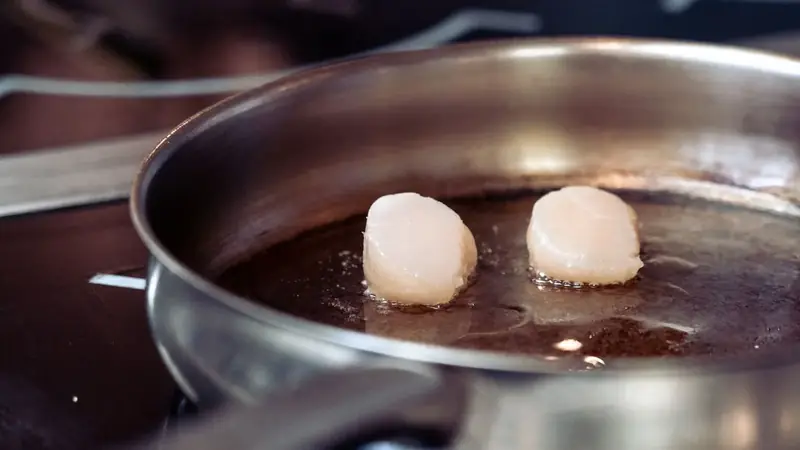
Fish and shellfish are the exception where visual cues work fairly well. FoodSafety.gov itself says fish is done at 145°F or when the flesh is no longer translucent and separates easily with a fork. Shrimp, lobster, and scallops are done when opaque and pearly. You can cook seafood confidently without a probe.
What does it fix besides food safety?
Most people buy a thermometer to avoid undercooking chicken. They keep using it because it stops overcooking everything else.
A steak is the clearest example. America's Test Kitchen recommends pulling steak off the heat at 120°F for rare, 125°F for medium-rare, and 135°F for medium, because the temperature keeps rising about 5 degrees as the steak rests. That 10 to 15 degree window between a great steak and a gray one is too narrow to judge by poking it.
For pork chops, the safe temperature for whole cuts of pork is 145°F with a 3-minute rest, which leaves the center slightly pink and juicy. Plenty of home cooks still take chops to 160°F or beyond out of habit, and that is where pork gets dry and stringy.
Chicken breast dries out fast past its target. Without a thermometer, the usual move is to leave it in "a few more minutes," which often means 10 or more degrees too far. A reading lets you pull it the moment it's done.
Is a thermometer useful for baking too?
It is, though it's less necessary than for meat. Bread is the main case. Doneness targets published by a thermometer manufacturer's test kitchen are:
- Lean breads (baguette, sourdough, rye): 190 to 210°F
- Enriched breads (brioche, challah, sandwich loaves, dinner rolls): 180 to 190°F
- Cheesecake: about 150°F in the center
- Milk or cream custards (flan, crème brûlée, pumpkin pie): 170 to 175°F
- Egg-heavy dishes (quiche, bread pudding): 160°F
The thump test on a loaf's bottom works for experienced bakers. A probe takes the guesswork out of a dense whole-grain loaf that looks done outside but is gummy in the middle. For cookies, brownies, and most cakes, a toothpick or visual cues are fine.
Why "instant-read" instead of a dial thermometer?
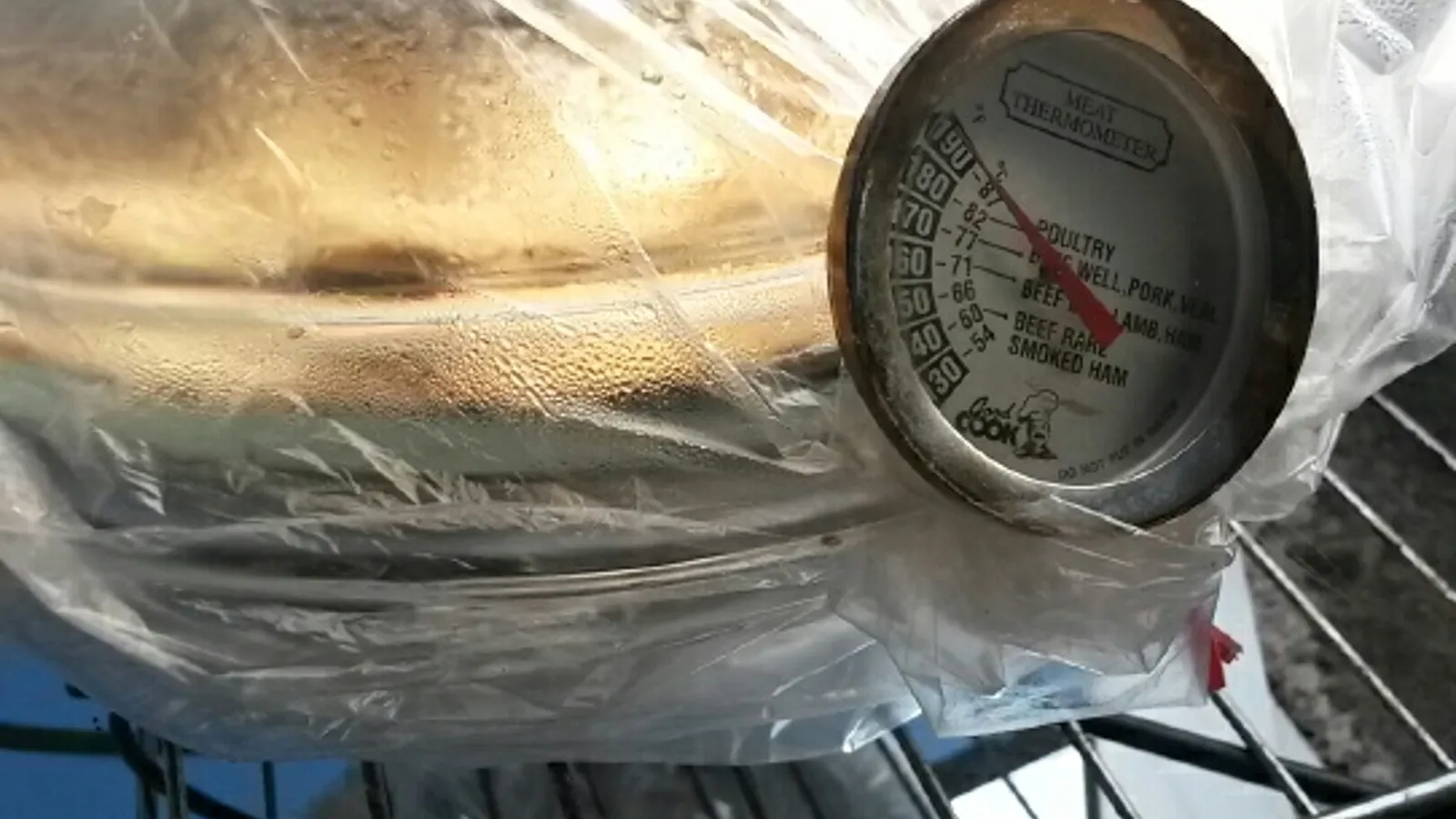
A slow dial thermometer can take 15 seconds or longer to settle, which means you're holding the oven door open, letting heat escape, or hovering over a hot pan. That friction is why many people buy one and stop using it.
A fast digital instant-read model gives you a reading in a few seconds. You check, you close the oven, you move on. When checking is that quick, you check more often.
The other type worth knowing is a leave-in probe with a cable and an external display. It sits in a roast or a whole bird the entire time and alerts you at a set temperature. It's handy for long roasts and smoking, but an instant-read covers far more everyday cooking. If you only get one, get the instant-read.
You don't need an expensive model. What matters is that it reads quickly, is accurate (an ice water test checks it), and has a thin probe that doesn't leave a big hole in a chicken breast.
How do you get an accurate reading?
Most bad readings come from where the probe goes.
- Go to the thickest part. That's the part that finishes last. On a chicken breast, slide in from the thick end toward the center.
- Stay off the bone. Bone conducts heat differently and skews the number.
- Probe thin food from the side. For burgers, USDA says to insert the probe at least 1/2 inch into the thickest part, and to go in sideways if the patty is too thin to probe from the top.
- Take a second reading. On larger roasts or uneven pieces, check one more spot. Trust the lowest number.
- Don't touch the pan. Pushing the tip through to the skillet or grill grate gives you the pan's temperature, not the food's.
If you're cooking several pieces at once, check the biggest one. Smaller pieces will be at least as done.
How do you know your thermometer is accurate?
Test it with ice water. Fill a glass to the top with ice, then add just enough water to fill the gaps. Stir, let it sit a minute or two, and put the probe in at least 2 inches deep without touching the sides or bottom.
Texas A&M AgriLife Extension says a reading between 30°F and 34°F after about 15 seconds means it's accurate. If it's off and your model has a calibration feature, set it to 32°F. If it can't be adjusted and is off by more than a couple of degrees, mentally correct for the difference or replace it.
Boiling water works as a second check at 212°F, but only at sea level. Water boils at a lower temperature at higher altitudes, so the ice test is more dependable for most people.
Check it every few months, and after it's been dropped.
When can you skip it?
You don't need to probe everything. Plenty of cooking runs on taste, texture, and sight, and those cues work fine there.
- Pasta, rice, grains, and beans: taste them.
- Most vegetables: a knife tip or a bite tells you more than a number.
- Shrimp, scallops, and fish fillets: opaque and flaky is reliable.
- Fried or scrambled eggs: FoodSafety.gov says to cook raw eggs until the yolk and white are firm, which you can see without a probe.
- Soups and sauces cooked from scratch: if it's been simmering, it's well past any safety target.
Where the thermometer pays off is anything thick, anything ground, any poultry, and anything you're reheating. Those are the foods where your eyes can't see the center.
Does it change outcomes for a beginner?
Probably more than for anyone else. An experienced cook has a mental library of how a done chicken thigh feels and how long their own oven takes. A newer cook doesn't, and the usual fallback is overcooking everything out of caution.
A thermometer saves years of guessing. After a few months of checking, you'll start to recognize what 145°F feels like on a pork chop or what 165°F looks like in a chicken thigh. You may find you reach for it less on familiar dishes, and keep it for the ones that matter: a holiday roast, a thick steak, burgers for a crowd, leftovers for someone with a weaker immune system.
It's one of the cheapest tools in the kitchen relative to how often it saves a dinner. If you cook meat at home regularly, it belongs in the drawer next to your spatula. Once it is there, a few other useful kitchen tools can follow it into the drawer.
 Where the probe goes in an instant-read thermometer reading
Probe placement decides whether a reading is trustworthy, and that is a hand motion rather than a number. The Meat Institute demonstrates using a meat thermometer.
How to Properly Use a Meat Thermometer
By Meat Institute on YouTube. Their method may vary a little from ours. Watch on YouTube
- Watch which part of the meat the probe enters and compare it with the thickest part that finishes last.
- Notice how deep the tip sits and whether it stays clear of bone, pan, and the edge of the food.
- Compare the technique with the ice water test above, since a probe only helps if it reads accurately.