 Kitchen Tools
Why Do Nonstick Pans Lose Their Coating So Fast, and Can You Stop It?
 By the CookClear writers
Checked against manufacturer instructions and test kitchen reviews
 Clear Answer
Most nonstick pans die early because of heat, not age. Preheating empty on high, cooking spray residue, the dishwasher, and metal utensils can wreck a coating in under a year, while a pan treated gently usually lasts 3 to 5 years. The good news is that almost every cause is a habit you can change today.
A nonstick coating is a thin layer, often well under the thickness of a sheet of paper, bonded to aluminum or steel. It was never meant to be as tough as the metal under it. Knowing what attacks that layer explains most peeling pans.
What actually breaks down a nonstick coating?
There are two families of nonstick. Traditional PTFE coatings (the Teflon type) are slick plastics. Ceramic coatings are a silica-based layer applied in a sol-gel process. Both wear out, but for slightly different reasons.
 On the menu11 questions
The common causes, roughly in order of how much damage they do:
- High heat. PTFE starts to break down above roughly 500°F. Ceramic tolerates more heat but loses its slickness quickly when overheated repeatedly.
- Preheating an empty pan. With nothing in it to absorb energy, a thin pan on a high burner can pass 500°F in just a few minutes.
- Cooking spray. The lecithin and propellants in aerosol sprays polymerize into a sticky film that soap won't lift. Food starts grabbing that film, and you scrub harder.
- The dishwasher. Hot water, long cycles, and harsh alkaline detergent slowly etch the coating and the bond under it, even on pans labeled dishwasher safe.
- Metal utensils and abrasive scrubbers. Every scratch is a weak edge where flaking can start.
- Thermal shock. Running cold water into a hot pan makes the metal contract faster than the coating, which stresses the bond and can warp thin bases.
- Stacking without protection. The rim of one pan grinds on the cooking surface of the next every time you pull one out.
How hot is too hot for a nonstick pan?
Medium heat is the working ceiling for most nonstick cooking. You rarely need more, because the whole point of the pan is that eggs, fish, and pancakes release at gentle temperatures.
This table gives a rough sense of where common burner settings land on a typical 10-inch aluminum nonstick skillet. Stoves vary a lot, so treat these as ballpark numbers, and an infrared thermometer is the only way to know for your setup.
| Situation | Approximate pan surface temperature | Safe for the coating? |
|---|---|---|
| Medium-low with oil, 2 to 3 minutes | 275 to 325°F | Yes |
| Medium with food in the pan | 350 to 400°F | Yes |
| Medium-high with food | 400 to 450°F | Short bursts only |
| High, empty, 3 to 5 minutes | 500°F and up | No |
| Under the broiler | Often above 500°F | No |
PTFE that gets pushed well past 500°F can give off fumes. Those fumes are known to be dangerous to pet birds, so if you keep birds, be especially careful about empty preheating and high flames.
Is cooking spray really that bad for nonstick?
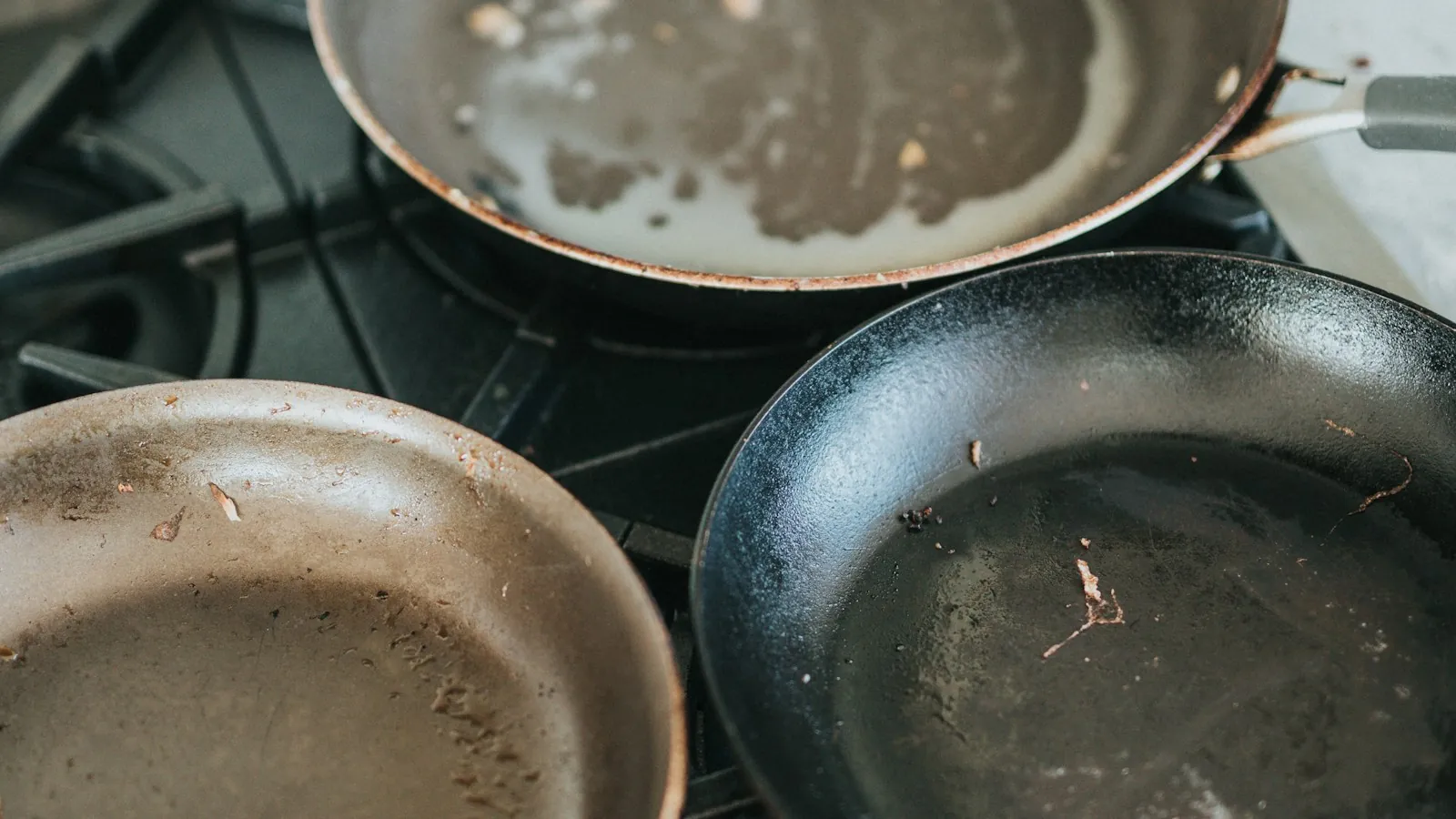
Yes, and it's the cause people are most surprised by. Spray goes on in a fine mist, and the thin spots heat fast and bake into a gummy, amber layer. You'll often see it as a dull, tacky ring near the edges where the spray landed but food never covered it.
Food sticks to that residue, which makes the coating seem to have failed, and scrubbing it off with something rough then does damage the coating.
Use a teaspoon or two of regular oil or butter instead. Spread it with a paper towel if you want a thin layer. The same spray buildup affects air fryer baskets. If your pan already has buildup, try this:
- Let the pan cool completely.
- Make a paste of 2 tablespoons baking soda and about 1 tablespoon water.
- Rub it over the sticky areas with a soft sponge, using gentle circles, for a minute or two.
- Rinse, wash with dish soap and warm water, and dry.
- Repeat once if the tackiness is still there. If it won't budge after two rounds, the film has likely fused for good.
Does the dishwasher ruin nonstick pans even if the label says it's fine?
"Dishwasher safe" usually means the pan won't fall apart in one cycle. It doesn't mean the coating will last as long as it would with hand washing. Dishwasher detergent is strongly alkaline and often contains abrasive particles, and the cycle runs hot for an hour or more.
Over dozens of cycles, the coating dulls and starts to lose its release. The aluminum around the rim and the bottom can also discolor and pit. Hand washing takes about a minute: warm water, a drop of dish soap, a soft sponge, and a quick towel dry.
If food is stuck on, don't attack it the way you might a burnt stainless pot. Fill the pan with warm water and a little soap and let it sit for 15 to 20 minutes. Most residue slides off after that.
Which utensils and scrubbers are safe?
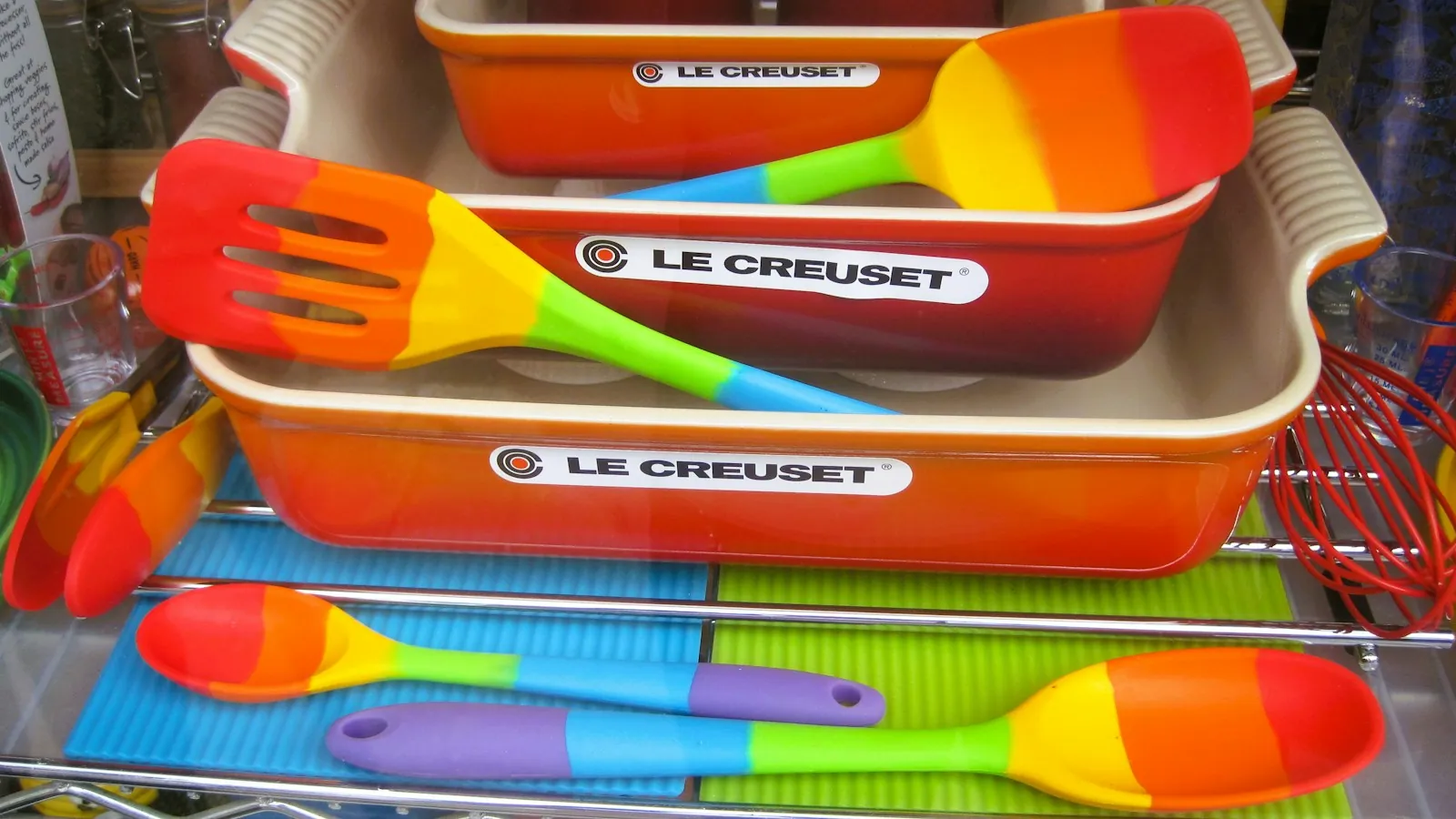
Use silicone, wood, or nylon. Silicone handles heat well and has the softest edge. Wood is fine too, though a sharp-edged wooden spatula can still leave marks if you scrape hard.
For cleaning, stick with the soft side of a sponge, a dishcloth, or a nonscratch pad specifically labeled for nonstick. Skip steel wool, the green scouring side of a standard sponge, and powdered cleansers.
Some newer pans advertise themselves as "metal utensil safe." Those coatings are tougher, often with hard particles mixed in, but repeated scraping with a metal fish spatula still shortens their life. Treat the claim as a margin of safety.
Why does a new pan lose its slickness so quickly?
Sometimes the pan is the problem. Very cheap nonstick often uses a thin single coat, and it can lose its release in months even with good care. Thicker multi-layer PTFE coatings, usually two or three coats, tend to hold up longer.
Ceramic pans have their own pattern. They're extremely slick when new, then often lose much of that slickness within the first year, especially with high heat or spray. That's a common complaint across brands, and it's a property of the material more than a defect in your particular pan.
How the coating types compare:
| Coating type | Typical lifespan with good care | Main weakness |
|---|---|---|
| Budget single-coat PTFE | 1 to 2 years | Thin layer, scratches easily |
| Multi-layer PTFE | 3 to 5 years | Breaks down above about 500°F |
| Ceramic (sol-gel) | 1 to 2 years of strong release | Slickness fades with heat and spray |
| Reinforced "hybrid" | Varies widely | Still wears with abrasion |
A heavier pan with a thick base also helps. Thin aluminum heats unevenly and develops hot spots, and those spots overheat the coating even when the burner dial looks reasonable.
How should you store nonstick pans?
Stacking wears down coatings. Every time you slide one pan out of a stack, the bottom edge of the pan above it drags across the cooking surface.
Hang them if you have the space. If you must stack, put a paper towel, a dish towel, or a felt pan protector between each one. These protectors cost a few dollars, one of the cheapest kitchen tool fixes around.
Also let pans cool before washing or storing. Ten minutes on a cold burner is enough for most skillets, and it avoids both thermal shock and accidental scratches while you're juggling a hot pan.
A daily routine that keeps the coating intact
You don't need special products. A few small changes cover most of the damage:
- Add a teaspoon of oil or butter before the pan heats, so it's never truly empty.
- Heat over medium-low to medium for 1 to 2 minutes. The oil should shimmer, not smoke.
- Cook with silicone, wood, or nylon tools.
- Save searing steaks and high-heat stir-fries for cast iron, carbon steel, or stainless steel.
- Let the pan cool for about 10 minutes after cooking.
- Hand wash with warm, soapy water and a soft sponge.
- Dry right away and store hung up or with a liner between pans.
Following those steps, a good PTFE pan should keep releasing soft scrambled eggs cleanly for years.
When should you replace a nonstick pan?
Replace it when it no longer does its job or when the surface is visibly coming apart. Signs include:
- Eggs stick even with a little fat at medium heat.
- The coating has deep scratches down to bare metal.
- You see flaking or peeling, especially in the center.
- The base has warped enough that the pan rocks on a flat burner.
The FDA considers PTFE coatings safe for food contact, and small flakes of PTFE that you accidentally eat are generally considered inert and pass through the body. Still, a flaking pan cooks poorly, and peeling usually means more is on the way. Once release is gone, retire it rather than cranking up the heat to compensate, since more heat only speeds up the breakdown.
A worn pan doesn't have to go straight to the trash. It can live on as a toasting pan for nuts and spices (at moderate heat), or check whether your local recycling program accepts scrap metal cookware.
Can you restore a worn nonstick coating?
No. Once the coating is scratched off or burned past its limit, nothing at home puts it back. Some people "season" a nonstick pan by rubbing in a little oil and heating it gently. That can make an older pan behave slightly better for a while by filling in tiny surface pits, but it won't repair real damage.
Commercial "nonstick repair" sprays exist, but their durability is inconsistent, and they're not the same as a factory-bonded coating. For a pan that cost $25 to $50, replacement is usually the more sensible move, combined with better habits so the next one lasts.
 Nonstick care habits worth copying
Wear on a coating builds slowly, so the habits that protect it are easier to learn by watching than by reading a list. Misen Kitchen shows how a nonstick skillet is used and looked after.
How To Extend the Life of Your Nonstick Pan
By Misen Kitchen on YouTube. Their method may vary a little from ours. Watch on YouTube
- Notice the heat level used on the burner and compare it with the medium or lower range recommended above.
- Watch which utensils touch the surface, and compare them with the silicone, wood, or nylon advice.
- Look at how the pan is cleaned and dried afterward, and compare it with the hand washing routine.


