 Techniques
Why Does Homemade Bread Come Out Dense Instead of Light and Airy?
 By the CookClear writers
Checked against test kitchen and food science sources
 Clear Answer
Dense homemade bread almost always comes from one of three things: too much flour, not enough gluten development, or not enough rise before baking. If it happens every time, look for a habit, like scooping flour with a measuring cup or baking when the recipe's timer goes off instead of when the dough is ready.
What actually makes bread light instead of heavy?
A light loaf depends on two things working together. Yeast produces carbon dioxide, and a stretchy gluten network traps that gas in thousands of small pockets. In the oven, the gas expands, the water turns to steam, and the structure sets around those bubbles.
 On the menu10 questions
If either half fails, the loaf comes out dense. Plenty of gas with weak gluten leaks out and collapses. Strong gluten with too little gas never inflates. Most dense loaves trace back to one side of that balance being off.
The most common reasons your loaf turns out heavy
Match what you see to the likely cause:
| What you notice | Likely cause | What to change |
|---|---|---|
| Dough felt stiff and dry, hard to knead | Too much flour | Weigh flour (about 120 to 125 g per cup of all-purpose) |
| Tight crumb, loaf didn't rise much in the pan | Underproofed | Proof until the dough nearly doubles and passes the poke test |
| Crumb is tight and tears instead of stretching | Underkneaded | Knead to the windowpane stage |
| Loaf rose well, then sank or spread flat | Overproofed | Shorten the rise or use a cooler spot |
| Dough barely moved at all | Dead or shocked yeast | Check yeast date and water temperature |
| Gummy, damp streak near the bottom | Underbaked or sliced too soon | Bake to 190 to 210°F inside, cool 1 hour |
| Heavy whole wheat loaf | Bran cutting gluten, too little water | Add water, let it rest, or blend with bread flour |
Most people have more than one of these going on at once. Start at the top, because flour measurement fixes more dense bread than anything else.
Are you putting too much flour in your bread?
Scooping a measuring cup straight into the flour bag packs it down. Depending on how hard you scoop, a "cup" can land anywhere from about 130 to 160 grams, when most American recipes assume around 120 to 125 grams for all-purpose flour. Across a 3 or 4 cup recipe, that can add a half cup or more of extra flour.
Extra flour lowers the hydration. Stiffer dough has a harder time stretching as gas builds, so the loaf rises less and bakes up tight. A kitchen scale costs less than a few bags of flour and removes the guesswork completely.
If you don't have a scale, fluff the flour, spoon it into the cup, and level it with a knife. Also resist adding flour during kneading just because the dough sticks to your hands. A slightly tacky dough is normal for most sandwich breads. Use a bench scraper or lightly oiled hands instead of piling on more flour.
How long should you knead, and how do you know it's enough?
By hand, most bread dough needs about 10 to 12 minutes of steady kneading. In a stand mixer on low to medium speed, figure 6 to 8 minutes. Those numbers are starting points, since flour type, hydration, and your technique all change them.
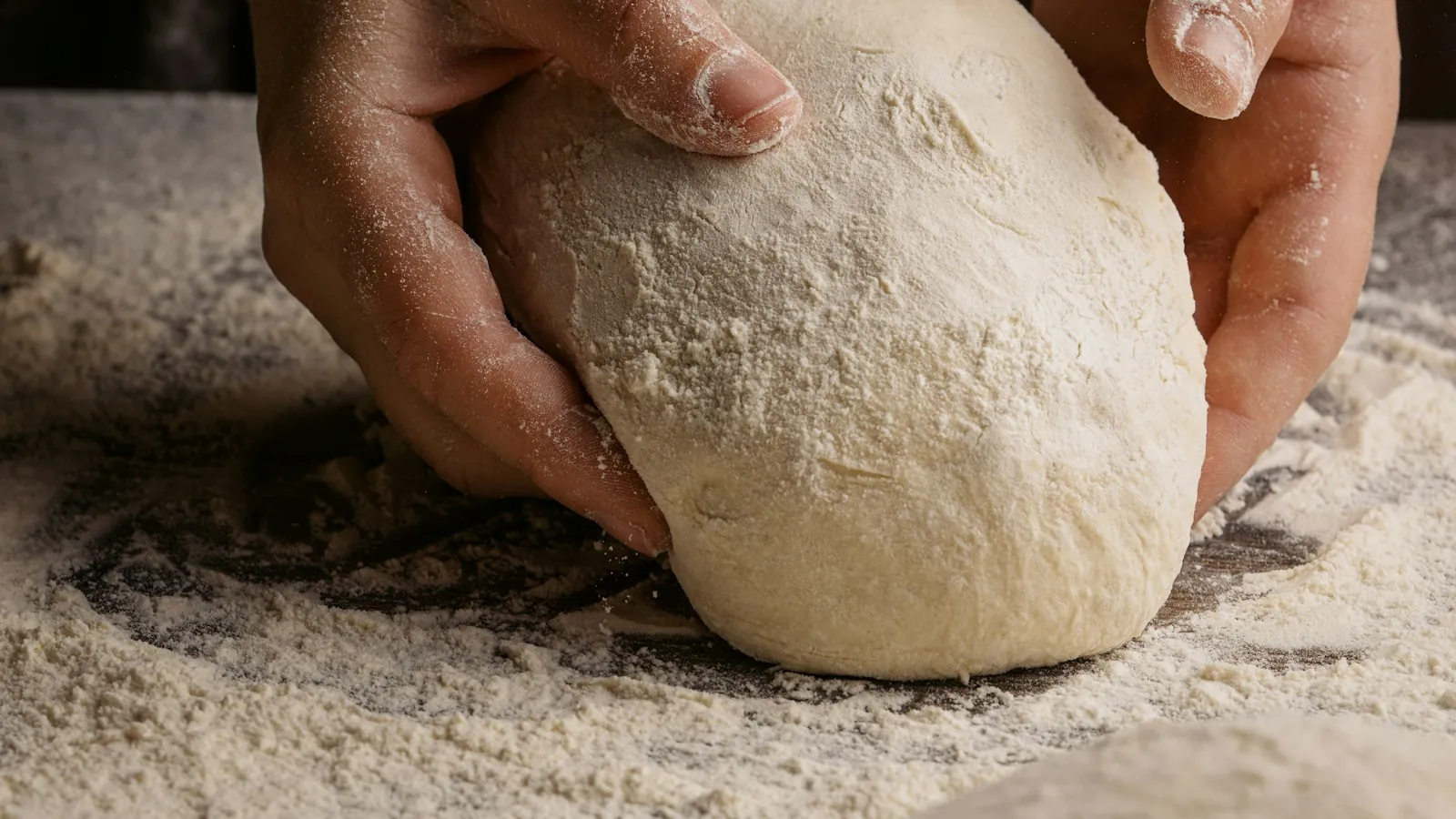
The better signal is how the dough looks and feels:
- It turns from shaggy and rough to smooth and slightly glossy.
- It springs back slowly when you poke it.
- It passes the windowpane test: pinch off a small piece, gently stretch it between your fingers, and it thins enough to let light through before tearing.
Underkneaded dough tears into ragged holes during that test. Bread made from it holds gas poorly and bakes up tight and crumbly. Overkneading by hand is rare. With a powerful mixer it can happen, and the dough goes slack and sticky, but it takes a long time on high speed to get there.
If you'd rather not knead much, a long rest does a lot of the work. Mixing the flour and water and letting it sit 20 to 30 minutes before adding salt and kneading (an autolyse) gives gluten a head start. Stretch and folds every 30 minutes during the first rise also build strength with very little effort.
Underproofed or overproofed bread: which one is it?
Recipes give times like "let rise 1 hour," but rise time depends on temperature. A cool kitchen at 65°F can take twice as long as a warm one at 78°F. Baking on the clock instead of on the dough is one of the most common reasons bread comes out dense loaf after loaf.
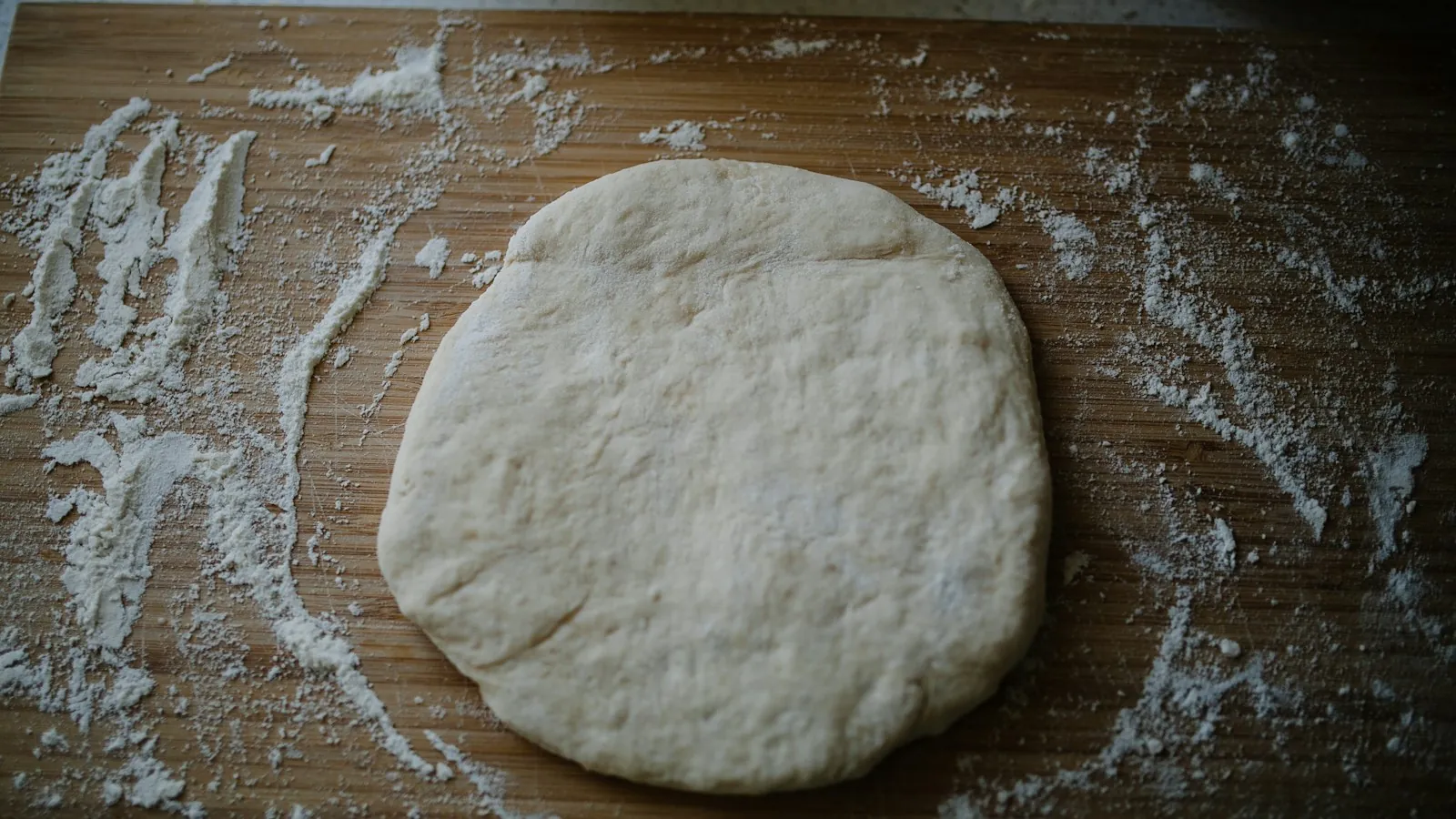
Underproofed dough hasn't built up enough gas. It goes into the oven tight, sometimes bursts open along the side, and bakes up with a dense, close crumb. This is the more common problem for home bakers.
Overproofed dough has risen so long that the gluten is stretched thin and the yeast has used up much of its food. It looks big and puffy, then deflates when you score it or collapses in the oven. The result is flat and often dense too, with a sour or boozy smell.
Use the poke test before baking:
- Flour a fingertip and press about half an inch into the side of the dough.
- If the dent springs back immediately, it needs more time.
- If it springs back slowly and leaves a slight dent, bake it now.
- If the dent stays put and the dough sighs or sinks, it's overproofed. Gently reshape it and give it a shorter second rise.
For the first rise, look for the dough to roughly double. For a sandwich loaf in a pan, the second rise is usually done when the dough crowns about 1 inch above the rim of a standard 9 by 5 inch pan. A clear straight-sided container for the first rise makes doubling easy to judge. Pizza dough follows the same cues, though a same-day batch needs about 90 minutes to 2 hours to double, as pizza dough rise times show.
Could your yeast or water temperature be the problem?
Yeast is easy to weaken. Water above roughly 130 to 140°F starts to kill it. Water that's too cold just slows it down a lot. For instant or active dry yeast, aim for water around 100 to 110°F, which feels comfortably warm on your wrist, not hot.
Check the expiration date, and store opened yeast in the fridge or freezer in an airtight container. If you're unsure, proof it: stir a packet (2 1/4 teaspoons) into a half cup of 105°F water with a pinch of sugar. After 10 minutes it should look foamy and smell yeasty. If it doesn't, buy new yeast.
Salt also affects the rise. It slows yeast, which is normal and helps flavor, but dumping salt directly onto yeast in a small amount of water can hurt it. Mix the salt into the flour first. Also measure carefully, since doubling the salt by mistake will noticeably slow your rise.
Does the type of flour make a difference?
It does. Bread flour has roughly 12 to 14 percent protein, compared to about 10 to 12 percent for all-purpose. More protein means more gluten potential, which means a stronger structure that traps more gas. All-purpose flour makes perfectly good bread, but if you're getting dense results with it, switching to bread flour is an easy test.
Whole wheat flour is a common source of heavy loaves. The bran and germ cut through gluten strands, and bran soaks up a lot of water. A few adjustments help:
- Add more water than you'd use for white flour, often 5 to 10 percent more by weight.
- Let the dough rest 20 to 30 minutes after mixing so the bran softens.
- Start with half whole wheat and half bread flour, then increase the whole wheat as you get comfortable.
- Expect a whole wheat loaf to be somewhat denser than white bread no matter what. That's normal.
Add-ins matter too. Large amounts of seeds, oats, dried fruit, cheese, or butter all weigh dough down or interfere with gluten. If an enriched or loaded bread keeps coming out heavy, give it more time to rise rather than less.
Shaping, oven heat, and when you slice
A loose, slack shape lets gas escape and spreads sideways instead of rising up. When you shape a pan loaf or boule, pull the outer skin tight across the top so the dough holds its form. You should feel some surface tension, but stop before the skin tears.
Many lean breads bake at 425 to 475°F, and sandwich loaves around 350 to 375°F. Preheat the oven fully: give it at least 20 to 30 minutes since an oven thermometer often shows the dial running 25°F or more off. A strong burst of heat in the first 10 minutes gives you oven spring, the last big rise before the crust sets.
Check doneness with an instant-read thermometer. Lean breads are done around 200 to 210°F in the center, and enriched breads with milk, eggs, or butter around 190°F. A pale, underbaked loaf often looks dense and gummy near the bottom.
Finally, wait before slicing. The inside keeps cooking and setting as steam escapes. Cutting into a loaf hot from the oven compresses the crumb and leaves it wet and doughy. Let a sandwich loaf cool at least 1 hour on a rack, and a large boule closer to 2, then store it properly once it is fully cool.
A quick checklist for your next loaf
If dense bread is your normal result, change these in order and see where it improves:
- Weigh your flour and stop adding extra during kneading.
- Check that your yeast is fresh and your water is around 105°F.
- Knead until the dough passes the windowpane test.
- Proof by look and the poke test, not by the clock.
- Shape with good surface tension.
- Fully preheat the oven and bake to the right internal temperature.
- Cool the loaf completely before cutting.
Change one or two things per bake so you can tell what made the difference. Keeping a few notes on room temperature and rise times helps you spot patterns fast, and the same one-change-at-a-time habit helps with most baking techniques.
 What well-kneaded dough should look like
Gluten development is a stretch and feel judgment, and a photo cannot show how dough thins before it tears. Bake with Jack shows what properly developed dough looks like when stretched.
75: How to do the windowpane test PROPERLY
By Bake with Jack on YouTube. Their method may vary a little from ours. Watch on YouTube
- Notice how thin the piece of dough gets before it tears, and compare that with the windowpane description above.
- Look at the surface of the dough, which should turn from shaggy to smooth and slightly glossy as kneading goes on.
- Compare how slack or tacky the dough looks with the advice above about not adding extra flour during kneading.


