 Cooking Times
How Many Hours Does a Slow Cooker Pot Roast Need on Low Versus High?
 By the CookClear writers
Checked against USDA safe temperatures and test kitchen timing

 Clear Answer
A 3 to 4 pound chuck roast needs about 8 to 10 hours on low or 5 to 6 hours on high to turn fork-tender. Low is the better choice if you have the time, because the gentler climb gives the connective tissue longer to melt before the muscle fibers squeeze dry. Smaller roasts finish sooner, bigger ones later, and a fork tells you more than the clock does.
Those ranges are wide on purpose. Slow cookers vary a lot by brand and age, and newer models tend to run hotter than the ones from twenty years ago.
Low vs. high at a glance
Both settings end up at roughly the same temperature, just under a simmer (around 209°F). The difference is how fast they get there. Low takes several hours to reach that point, while high gets there in a few. That slower ramp on low is what gives a tough cut more time in the range where collagen turns to gelatin.
 On the menu12 questions
| Chuck roast size | Low | High | Notes |
|---|---|---|---|
| 2 to 3 lb | 7 to 8 hours | 4 to 5 hours | Check early on newer cookers |
| 3 to 4 lb | 8 to 10 hours | 5 to 6 hours | The standard family roast |
| 4 to 5 lb | 9 to 11 hours | 6 to 7 hours | Use a 6-quart or larger cooker |
| 5 to 6 lb | 10 to 12 hours | 7 to 8 hours | Cut into 2 pieces for more even cooking |
A rough rule: one hour on high equals about two hours on low. It isn't exact, but it gets you in the right window when you need to switch settings partway through the day.
Why does pot roast need so long when steak cooks in minutes?
Chuck is a hard-working shoulder muscle packed with collagen, the connective tissue that makes it chewy. At steak temperatures (130 to 145°F) that collagen stays tough. It only starts breaking down in a meaningful way once the meat holds somewhere above 160°F, and it takes hours at that heat to fully convert into gelatin.
That gelatin is what makes pot roast feel juicy even though the meat itself is cooked far past well done. The muscle fibers do lose moisture, but the melted collagen coats them and keeps each bite soft. Pull the roast too early and you get the worst of both: dry fibers held together by rubbery tissue.
This is also why a pot roast can seem tough at hour 6 and then fall apart at hour 9. At hour 6 it simply hasn't finished.
Is low actually better, or is that a myth?
For chuck, low gives a more forgiving result. The meat spends more time between about 160 and 200°F, where collagen melts but the fibers aren't being pushed hard. On high, the outside of the roast can reach full heat while the center is still catching up, so the edges tend to come out stringier.
That said, high works fine. If you started late, a roast cooked 5 to 6 hours on high will still be tender and sliceable. You'll notice the difference most with leaner cuts like bottom round, which have less fat and collagen to protect them.
A good compromise when you're home: start on high for the first hour to get the pot heated quickly, then drop to low for the rest. Count each hour on high as about two on low.
How do you know the pot roast is done?
Go by texture first. A finished roast lets a fork slide in and twist with almost no pushback, and a chunk pulls away cleanly. If you have to tug, give it more time.
- Insert a fork into the thickest part of the roast.
- Twist it a quarter turn.
- If the meat shreds easily, it's ready. If it resists or springs back, cover and check again in 45 to 60 minutes.
- For a number, aim for an internal temperature of about 195 to 205°F in the thickest spot.
Food safety is reached long before tender. The USDA's minimum for whole beef roasts is 145°F with a 3-minute rest, so chuck is safe long before it is soft enough to shred.
What changes the cooking time?
Several things push the clock one way or the other, and most of them are in your control.
- Your slow cooker's age and size. Many newer models run hotter. A roast that takes 10 hours in an old cooker might be done in 7 in a new one. A cooker that's less than half full also cooks faster.
- The cut. Chuck (shoulder) is the classic and most forgiving. Bottom round and rump are leaner and dry out faster, so they want the shorter end of the range. Brisket flat behaves more like chuck but may need an extra hour.
- Shape and thickness. A thick, compact 4-pound roast takes longer than a flat, wide 4-pound roast. Thickness counts for more than weight.
- Lifting the lid. Each peek lets out heat that takes 15 to 30 minutes to recover. Leave it closed until near the end.
- Liquid amount. You only need about 1 cup of broth or wine, enough to come about a third of the way up. The roast and vegetables release plenty of their own juice.
- Cold ingredients. Meat straight from the fridge and a cold crock both add time, which is normal and already built into the ranges.
Should you sear the roast first?
Searing doesn't make it cook faster or seal in juices, but it does add a lot of flavor. Browning the outside in a hot skillet for 3 to 4 minutes per side creates deep, savory notes that a slow cooker can't produce on its own, since it never gets hot enough to brown anything.
If you skip it, the roast will still be tender. The broth will just taste flatter. A middle path is to sear the onions and a spoonful of tomato paste in the same pan, then scrape that into the pot. You get much of the flavor for less effort.
Can you put a frozen roast in the slow cooker?
No. The USDA advises thawing meat before slow cooking. A frozen roast warms so slowly in a slow cooker that it can sit in the 40 to 140°F danger zone for hours, which is long enough for bacteria to multiply.
Thaw it in the refrigerator instead. Plan on about 24 hours for every 4 to 5 pounds. If you forgot, cook it in a Dutch oven in a 325°F oven, which handles a frozen roast more safely, and expect it to take about 50 percent longer than a thawed one.
Where do the carrots and potatoes go in a pot roast?
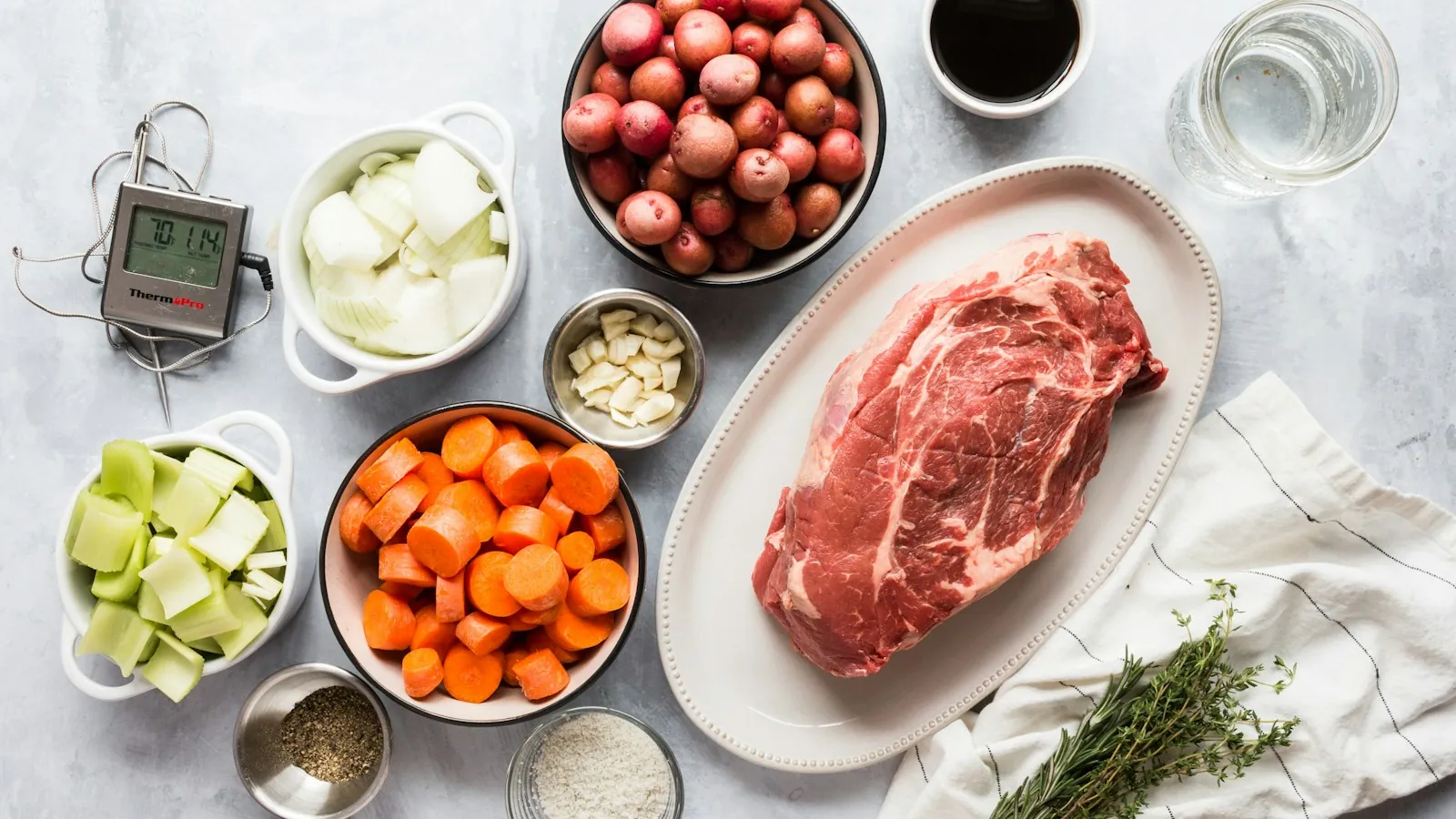
Under the roast. Root vegetables cook more slowly than you'd expect in a slow cooker, so they need the hotter spot near the bottom and sides, sitting in the liquid. Cut potatoes and carrots into 1 1/2 to 2 inch chunks so they hold their shape over a long cook.
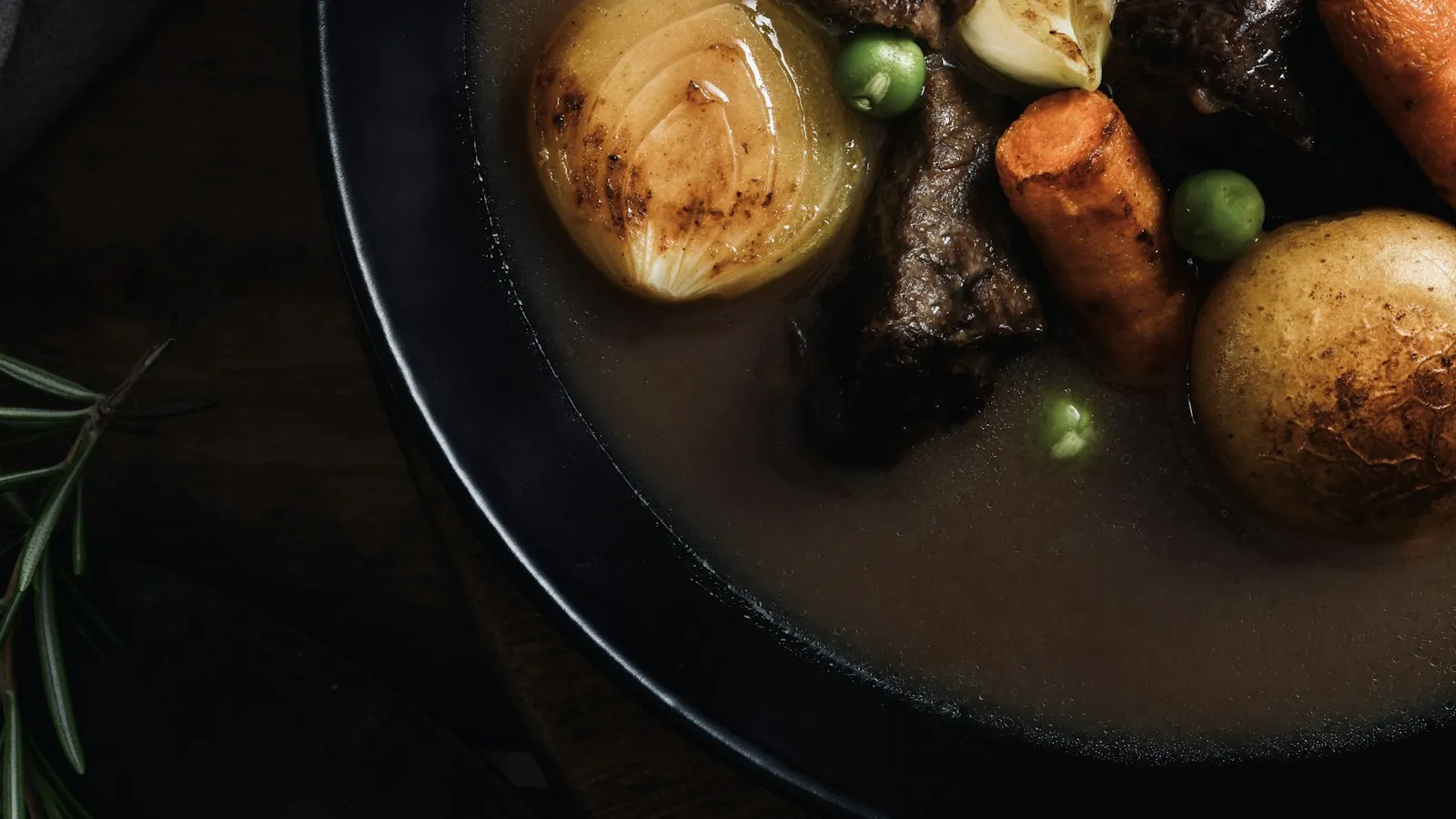
Waxy potatoes like Yukon Golds or red potatoes stay intact better than russets, which tend to crumble after 9 hours. If you like your carrots with some bite, add them halfway through a low cook instead of at the start.
What happens if you cook pot roast too long?
Pot roast is forgiving, but not endlessly. An extra hour on low rarely hurts chuck. Go 3 or 4 hours past done, though, and the meat goes from tender to mushy and dry at the same time, with fibers that feel like cotton. Leaner cuts reach that point sooner.
If you'll be gone longer than 10 hours, these options help:
- Use a cooker with an automatic switch to warm, which holds food around 145 to 165°F.
- Pick a larger roast (4 to 5 pounds) so the cook time fits your day.
- Set it on low with the roast cut into two thick pieces only if you'll be back on the early side, since smaller pieces finish faster.
The warm setting only holds cooked food, so don't start a roast on warm.
How should you handle leftovers?
Get leftovers into the fridge within 2 hours of cooking. Pull the meat off the bone (if any), and store it in shallow containers with some of the cooking liquid so it doesn't dry out. It keeps for 3 to 4 days refrigerated or about 2 to 3 months frozen.
Reheat on the stovetop or in the microwave until it reaches 165°F. The USDA recommends against reheating leftovers in a slow cooker, because it warms too slowly to get food through the danger zone quickly.
The leftover juice makes excellent gravy. Skim the fat, then simmer 2 cups of liquid in a saucepan with a slurry of 2 tablespoons cornstarch and 2 tablespoons cold water until it thickens, about 2 minutes.
A simple timeline that works
Here's a schedule for a 3 1/2 pound chuck roast on low, with dinner at 6:30 p.m.:
- 8:00 a.m. Season the roast with 2 teaspoons kosher salt and 1 teaspoon pepper. Sear 3 to 4 minutes per side.
- 8:15 a.m. Layer chunked potatoes, carrots, and onion in the cooker. Set the roast on top, add 1 cup broth, and set to low.
- 5:00 p.m. First fork check. If it resists, close the lid and leave it.
- 6:00 p.m. Lift out the roast and vegetables, tent with foil, and make gravy from the liquid.
- 6:30 p.m. Serve.
If you start at noon instead, switch to high and plan on 5 1/2 to 6 hours, checking at the 5-hour mark. The same low-and-slow logic applies to other big cuts, so check cooking times for tough roasts before you plan the day around one.
 How tender should a slow cooker roast look at the end?
Fork-tender is a texture, and it is easier to recognize once you have seen how a finished chuck roast gives way. How To Feed A Loon shows a roast going into the cooker, which helps with judging the layout of meat and vegetables.
The Best Slow Cooker Pot Roast | Tender, Juicy, and Full of Flavor!
By How To Feed A Loon on YouTube. Their method may vary a little from ours. Watch on YouTube
- Notice where the carrots and potatoes sit relative to the roast, and compare that with the under-the-roast placement advised above.
- Look at how the roast is seasoned and seared before it goes in, and weigh that against the 3 to 4 minutes per side suggested.
- Compare the finished meat with the fork twist test above, where a chunk should pull away with almost no pushback.


