Techniques
Why Do Scrambled Eggs Turn Dry, and How Do You Keep Them Soft?
 By the CookClear writers
Checked against test kitchen and food science sources

 Clear Answer
Restaurants keep scrambled eggs soft with low to medium-low heat, constant stirring, a generous knob of butter, and by taking them off the heat while they still look slightly wet. The eggs keep cooking for 30 to 60 seconds on the plate, so pulling them early lands them creamy instead of tight and rubbery. A splash of cream or cold butter at the end also stops the cooking.
Why do scrambled eggs turn rubbery in the first place?
Eggs are mostly water held in place by proteins. When those proteins heat up, they unwind and link together into a loose mesh that traps the water. That is what turns liquid egg into soft curds.
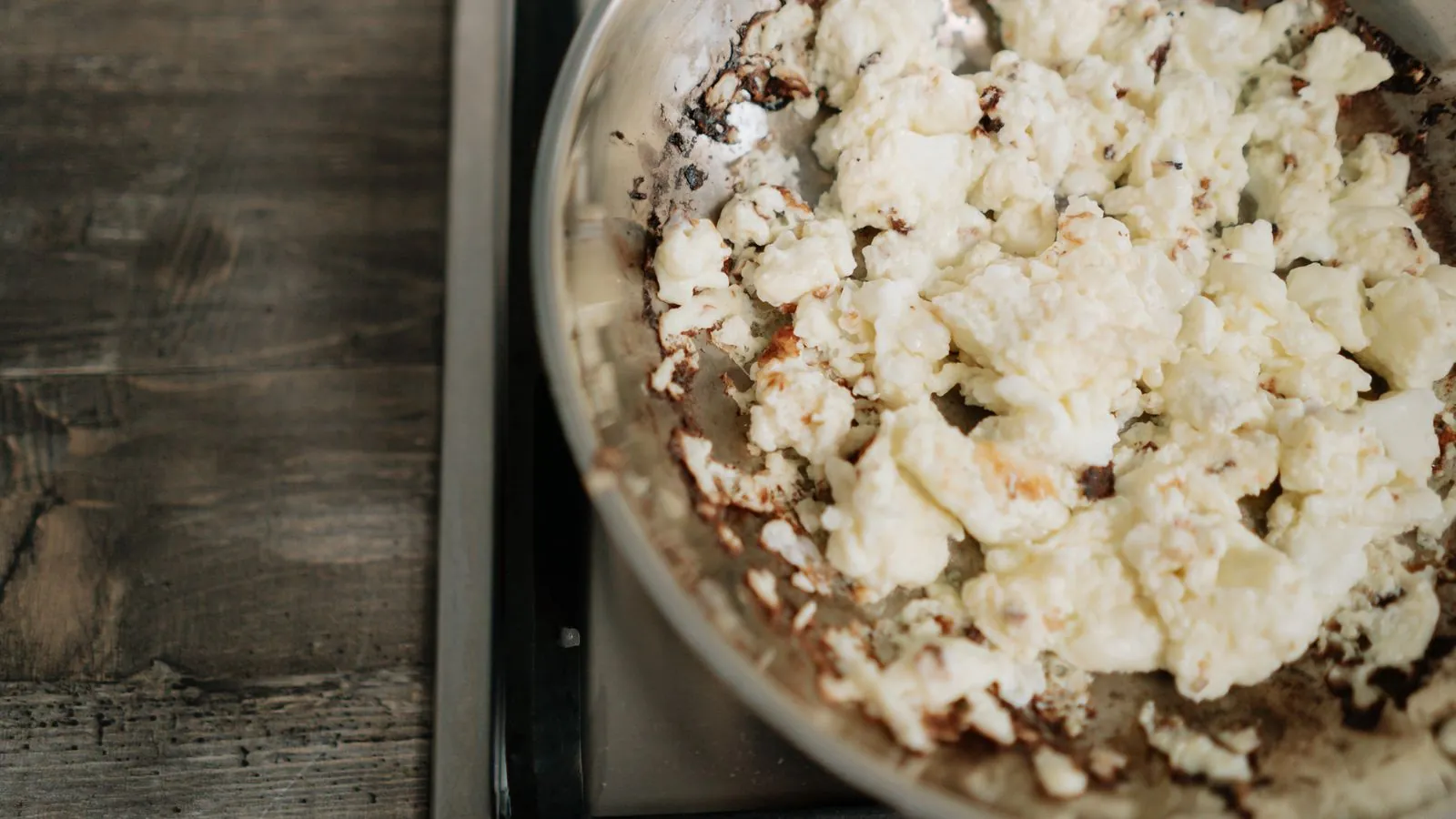
Keep heating, and the mesh tightens. The proteins squeeze together, push the water out, and you get firm, squeaky curds sitting in a little puddle of liquid on the plate. That puddle is the moisture that used to make your eggs soft.
Rough temperature landmarks help here. Egg whites start to set around 140 to 145°F, yolks thicken around 150 to 160°F, and by about 170°F a scramble is firm and starting to dry out. The window between "creamy" and "rubbery" is only about 15 to 20 degrees, and a hot pan can push eggs through it in seconds. The same landmarks explain a jammy soft boiled yolk.
What restaurant cooks actually do differently
Most of it comes down to control. That is true of most cooking techniques. A line cook making eggs all morning has a feel for the pan, but the moves are easy to copy at home.
- Use moderate, even heat. Medium-low on most home burners. The butter should foam gently, not brown or sizzle hard.
- Start with butter in the pan. About 1 tablespoon for 3 eggs. Fat coats the proteins and keeps curds tender.
- Beat the eggs fully before they hit the pan. No streaks of white. Uniform eggs cook evenly, so you do not get rubbery white bits next to runny yolk.
- Keep them moving. A silicone spatula sweeping the bottom and sides every couple of seconds makes small, soft curds and stops any one spot from overcooking.
- Pull them early. When the eggs look about 80 percent done (glossy, loose, a little wet), slide the pan off the heat and plate them.
- Finish with something cold. A teaspoon of cold butter, crème fraîche, or cream stirred in at the end drops the temperature and adds richness.
Those last two steps are where most of the difference comes from. Home cooks tend to cook eggs until they look done in the pan, and by the time they reach the table they have gone a step too far.
How low should the heat really be?
You do not need to cook eggs for 15 minutes over the faintest flame, though that method does make luxuriously smooth, almost custardy eggs. For everyday soft scrambled eggs, medium-low works well and three eggs take about 2 to 4 minutes.
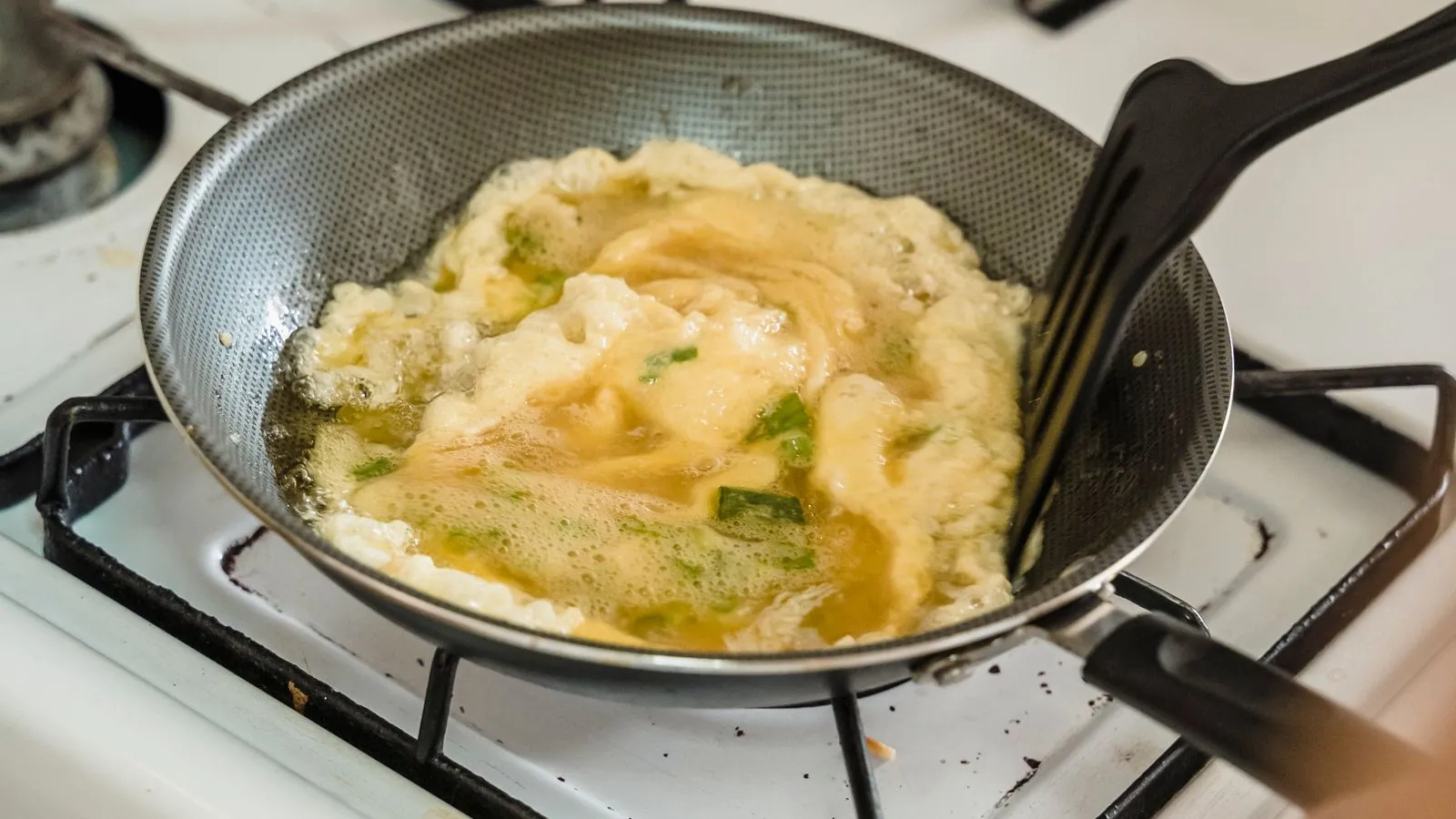
Here is roughly how heat level changes the result for 3 large eggs in an 8 to 10 inch nonstick pan:
| Heat level | Approx. cook time | Curd size | Texture |
|---|---|---|---|
| Low | 6 to 10 minutes | Very small, almost custard | Silky, spoonable, French-style |
| Medium-low | 2 to 4 minutes | Small to medium | Soft, creamy, moist |
| Medium | 1 to 2 minutes | Medium to large | Tender if pulled fast, easy to overshoot |
| Medium-high | Under 1 minute | Large, fluffy folds | Diner-style; dry within seconds if you wait |
Diners often do use higher heat. The cooks get away with it because they watch the eggs constantly and pull them the moment they set. If you are also flipping toast and pouring coffee, lower heat gives you a wider margin.
A useful trick when the eggs start setting too fast: lift the pan off the burner for 10 to 15 seconds while you keep stirring, then set it back down. Some cooks do this the whole time, moving the pan on and off the heat. It works on any stove, including electric coils that are slow to cool.
Does adding milk or cream make eggs softer?
A little, but less than people think, and too much milk in scrambled eggs hurts. Dairy adds water and fat. The fat tenderizes. The water dilutes the proteins so they set at a slightly higher temperature, which gives you a bit more time.
The problem is that milk-heavy eggs weep. Add a quarter cup of milk to three eggs and you often end up with watery curds and a wet plate. If you want dairy, about 1 tablespoon of whole milk or cream (or a cream substitute) per 2 to 3 eggs is plenty. Many restaurants skip it in the mix entirely and add a spoon of cream or crème fraîche at the end instead.
Butter is the bigger lever. A tablespoon in the pan, plus a small cold piece stirred in as the eggs finish, gives you richness and softness without the weeping.
When to salt scrambled eggs
Salt early. This one surprises people, because older advice said salt would make eggs watery. The opposite is true in practice: salt mixed into raw eggs a few minutes before cooking helps keep proteins from bonding as tightly, which makes for more tender curds that hold onto their moisture.
Use about 1/8 teaspoon of fine salt per egg (a pinch more if you like). Beat it in, then let the eggs sit for 10 to 15 minutes if you have the time. You will notice the beaten egg turns slightly darker and looser. That is normal and a good sign.
If you forget and salt at the end, the eggs are still fine. They just will not be quite as soft as they could have been.
Pan, spatula, and egg count
Equipment matters more for eggs than for almost anything else you cook at breakfast, though poached eggs need little more than a pot.
- Pan: A nonstick skillet is the easiest choice. Eggs do not stick, so you can use less force and keep the curds soft. A well-seasoned carbon steel or cast iron pan works too, but it holds heat longer, so pull eggs even earlier.
- Size: Match the pan to the eggs. Two to three eggs suit an 8-inch pan; four to six suit a 10-inch. A big pan spreads a few eggs too thin and they set in seconds.
- Spatula: A flexible silicone spatula reaches the corners and scrapes the bottom clean. Forks and wooden spoons leave patches that overcook.
- Batch size: Restaurants cook eggs to order in small batches. Ten eggs in one pan at home take longer and cook unevenly. If you are feeding a crowd, cook two batches.
Signs your eggs are done (before they look done)
This is the part that takes some practice. Look for these cues and take the pan off the heat when you see them:
- The curds are formed but still glossy, with a sheen like wet custard.
- There is a little loose, uncooked egg around the curds, roughly a tablespoon's worth for three eggs.
- When you drag the spatula through, the eggs slowly slump back rather than staying in a clean line.
Plate immediately. Leaving eggs in a hot pan off the burner is still cooking them. By the time you sit down, the loose bits will have set and the whole scramble will be soft and moist, with no puddle.
If you want to use a thermometer while you learn, soft scrambled eggs tend to come off the heat around 150 to 160°F. Firm diner-style eggs end up closer to 165 to 170°F.
Are soft scrambled eggs safe to eat?
The USDA and FDA advise cooking eggs until the yolks and whites are firm, and cooking egg dishes to 160°F. Very soft, glossy scrambled eggs can finish a bit under that, which carries a small risk of Salmonella, mostly a concern for young children, older adults, pregnant people, and anyone with a weakened immune system.
If you are cooking for someone in those groups, either cook the eggs a little further, to just set with no visible liquid, or use pasteurized in-shell eggs. Pasteurized eggs behave almost the same in a scramble and let you keep the soft texture with much less risk. Either way, keep eggs refrigerated at 40°F or below and do not leave cooked eggs out for more than 2 hours.
Why are my scrambled eggs dry or watery?
| What you see | Likely cause | Fix |
|---|---|---|
| Eggs brown, squeak, and set on contact | Pan too hot | Medium-low heat, butter foaming gently |
| Large dry slabs on the bottom | Eggs sat still in the pan | Stir every few seconds |
| Rubbery by the time you eat | Cooked until "done" in the pan | Pull at 80 percent, glossy and wet |
| Watery curds and a puddle on the plate | Too much milk | 1 tbsp dairy per 2 to 3 eggs, or none |
| Eggs keep firming after you turn off the burner | Carryover heat from the pan | Plate right away, warm the plate if you like |
| Uneven texture, overcooked edges | Cooking a dozen at once | Smaller batches |
One more: reheating. Scrambled eggs made ahead and microwaved later almost always toughen. If you need to hold them for a few minutes, slightly undercook them and keep them in a covered bowl. If you must reheat, use short 10 to 15 second bursts and stir between each.
Do restaurants use any shortcuts?
Some do. High-volume places like hotel buffets and chains sometimes use liquid egg products, which are pasteurized and often contain small amounts of stabilizers or citric acid that help eggs hold their color and texture on a steam table. That is why buffet eggs can stay soft-looking for longer than homemade ones.
Others hold eggs in a bain-marie (a warm water bath) or in a chafing dish with a bit of extra butter or cream stirred in. And a few kitchens finish eggs with a spoon of cold crème fraîche because it cools the eggs and stops carryover.
At home, you do not need any of that. Moderate heat, steady stirring, early salt, real butter, and the discipline to pull them while they still look underdone will give you restaurant-quality soft scrambled eggs in about 3 minutes.
 What soft scrambled eggs look like in the pan
Pulling eggs while they still look wet is a judgment call, and it is easier to learn by watching. Ethan Chlebowski tests heat, salt timing, dairy, and stirring side by side.
How to make Perfect Scrambled Eggs, according to science.
By Ethan Chlebowski on YouTube. Their method may vary a little from ours. Watch on YouTube
- Look for glossy curds with a little loose egg around them, the cue to take the pan off the heat.
- Compare how the eggs slump back after the spatula passes with the done signs listed above.
- Notice the curd size at different heat levels and match it against the heat table for 3 large eggs.