Kitchen Tools
Does Preheating an Air Fryer Actually Change How Your Food Turns Out?
 By the CookClear writers
Checked against manufacturer instructions and test kitchen reviews

 Clear Answer
For most foods, no. A basket air fryer gets close to its set temperature in about 2 to 3 minutes, so starting cold mostly means adding a minute or two to the cook time. Preheating does help with a short list of foods that need a hard sear or a fast set on the outside, like steak, breaded cutlets, and puff pastry.
Manuals still say to preheat because they are written for the best possible result every time, which is less important on a Tuesday night when you want frozen nuggets on the table.
Why do manuals say to preheat at all?
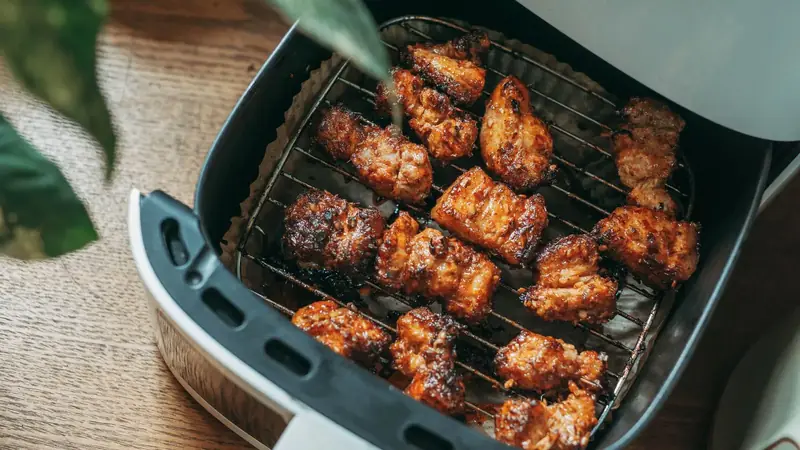
An air fryer is a small oven with a strong fan. The heating element sits right above the basket, and the fan pushes hot air down and around the food. Because the cooking chamber is tiny (often 3 to 6 quarts), it heats up far faster than a full-size oven, which can take 10 to 15 minutes.
Manufacturers write recipes and cook charts assuming the chamber is already hot. That keeps their times consistent across kitchens. If you skip the preheat, those charts run a little short, and that's where most "my food wasn't done" complaints come from.
There's also a texture argument. Food that hits hot air right away starts drying and browning on the surface immediately. Food that starts cold sits in warm, slightly humid air for the first couple of minutes, which can soften breading and slow down browning.
How long does an air fryer take to preheat?
Most basket air fryers take 2 to 5 minutes to preheat, depending on the target temperature and the wattage. Oven-style air fryers with doors and racks take longer because there's more space and metal to heat.
| Air fryer type | Typical preheat time | Notes |
|---|---|---|
| Small basket (2 to 4 qt) | 2 to 3 minutes | Heats fastest; many have no preheat button |
| Large basket (5 to 8 qt) | 3 to 5 minutes | Dual-basket models heat each side separately |
| Air fryer toaster oven | 5 to 8 minutes | More air volume, more metal to warm |
| Built-in oven air fry mode | 10+ minutes | Behaves like a regular oven preheat |
If your machine has a preheat button, it usually runs a fixed cycle of about 3 minutes and beeps. If it doesn't, set the temperature, run it empty for 3 minutes, and you're there.
When skipping the preheat is fine
Plenty of air fryer cooking doesn't care whether the chamber starts hot. Anything that cooks long enough to catch up, or anything you're mainly reheating, does fine from cold.
- Frozen fries, tots, and nuggets. They cook 12 to 20 minutes anyway. Add 1 to 2 minutes and shake the basket halfway.
- Roasted vegetables. Broccoli, Brussels sprouts, and potato chunks take 15 to 25 minutes, so the first 2 minutes barely register.
- Chicken thighs and drumsticks. Long cook, forgiving cut. Go by the thermometer, not the clock, and pat the skin dry for crisper thigh skin.
- Reheating leftovers. Pizza, fried chicken, and roasted vegetables just need to get hot and re-crisp.
- Bacon. Starting cold renders a bit more fat before the edges crisp, similar to starting bacon in a cold pan.
For these, add about 2 minutes to the recipe and check a little earlier than you think you need to.
Foods that really do turn out better with a preheat
The foods that benefit share a trait. They cook quickly, or their outside needs to set before the inside overcooks or the coating goes soggy.
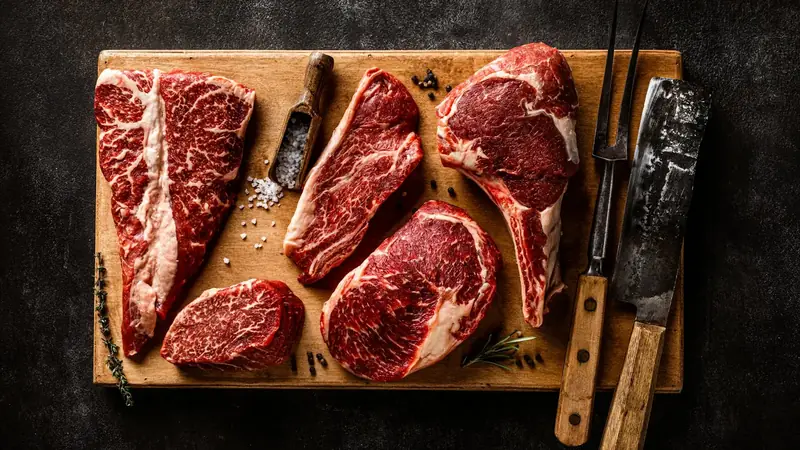
- Steak, pork chops, and burgers. You want a browned crust in the time it takes the center to reach temperature. A cold start gives you a grayer outside and a more cooked-through middle.
- Breaded or battered food. Chicken cutlets, fish fillets, and homemade breaded vegetables brown and crisp better when the coating hits hot air right away. Wet batter is a poor fit for an air fryer in any case.
- Puff pastry, biscuits, and crescent dough. These need a burst of heat to puff. A slow start lets butter melt out before the layers set.
- Thin fish fillets and shrimp. Shrimp of one size, such as a 21/25 count per pound, cook evenly. They cook in 5 to 8 minutes. A 2-minute warm-up is a big chunk of that, which throws off timing.
- Baked goods like muffins or small cakes. Baking recipes depend on predictable heat. Treat the air fryer like an oven and preheat.
A good test: if the recipe is under about 10 minutes, or if the word "crust" or "crisp" is doing a lot of work, preheat.
How to adjust cook time if you skip it
A cold start mostly shifts the timing.
| Recipe cook time (preheated) | Add if starting cold |
|---|---|
| Under 10 minutes | 2 to 3 minutes, or just preheat |
| 10 to 20 minutes | 1 to 2 minutes |
| Over 20 minutes | 1 minute, or nothing |
Shake or flip at the halfway point of the new total, not the original. And for meat, don't trust the adjusted time. Trust a thermometer.
Does preheating change food safety?
No. Safety comes from the internal temperature of the food, not from how the cooking started. USDA minimum temperatures still apply whether you preheat or not:
- Chicken and turkey: 165°F
- Ground beef and pork: 160°F
- Whole cuts of beef, pork, veal, and lamb: 145°F, then rest 3 minutes
- Fish: 145°F, or until it flakes and turns opaque
An instant-read thermometer settles the question in a few seconds. Insert it into the thickest part, away from bone. If you skipped the preheat and the timer goes off, check the temperature before you serve. A cold start is the most common reason chicken comes out a little under.
Will preheating an empty air fryer damage it?
Running a basket air fryer empty for 3 to 5 minutes is normal and what the preheat function does. It won't hurt the element or the coating. What you shouldn't do is leave it running empty at high heat for long stretches, since some nonstick baskets don't love extended dry heat.
One real hazard: parchment or foil liners. If you drop a loose liner into an empty basket and preheat, the fan can lift it into the heating element. Either preheat first and add the liner with the food on top, or skip liners that aren't weighed down.
Also watch the oil spray. Aerosol cooking sprays with propellants can build up on some nonstick baskets over time. A pump mister with plain oil, applied to the food rather than the empty hot basket, is easier on the coating.
How do you preheat an air fryer without a preheat button?
Most cheaper or older models have no preheat setting. You can do it by hand:
- Put the empty basket in and close it.
- Set the temperature you plan to cook at.
- Set the timer for 3 minutes (5 for a toaster-oven style unit).
- When it shuts off, load the food quickly and start the timed cook.
Load fast. Every second the basket is out, the small chamber loses heat. Have the food ready on a plate next to the machine before the timer ends.
Does preheating use a lot more electricity?
Barely. A typical basket air fryer draws somewhere around 1,400 to 1,800 watts at full power. Three minutes of preheating at that rate is roughly 0.07 to 0.09 kilowatt-hours, which works out to about a penny or two at average U.S. electricity prices.
You'd save more by not opening the basket to check every 90 seconds. Each time you pull it out, the chamber dumps its heat and has to recover, which is basically a mini preheat.
Basket vs oven-style: does the answer change?
It does a little. Basket air fryers heat so quickly that skipping the preheat is low risk for most food. The difference between cold and hot is a couple of minutes.
Oven-style air fryers (the ones with a door and racks) behave more like small convection ovens. They have more air to heat, glass doors that lose heat, and often a heavier body. For those, a preheat makes more difference, especially for baking or anything with a short cook time. If you use the air fry setting on a full-size oven, always preheat. It takes too long to come up to temperature otherwise, and your food will steam for the first several minutes.
Why is my air fryer food pale or soggy?
If your air fryer food is coming out pale or soggy, preheating is rarely the main culprit, just as with soggy oven-roasted vegetables. These usually make a bigger difference:
- Don't crowd the basket. Hot air needs to reach every side. A single layer with gaps beats a packed pile every time. Cook in batches if you have to.
- Dry the food. Pat chicken, fish, and washed vegetables dry with paper towels. Surface moisture has to steam off before anything browns.
- Use a little oil. A teaspoon or two tossed with vegetables or brushed on breading helps them brown. Air fryers aren't magic without any fat.
- Shake or flip halfway. The top gets the most direct heat from the element. Flipping evens it out.
- Leave space around the machine. Most manuals call for several inches of clearance behind and above for vents. A blocked vent runs hotter inside the unit and less evenly in the basket.
Keep the preheat for the foods where a hot start really shows: steak, breaded cutlets, and anything made with pastry dough. Most small kitchen appliances reward the same habit of preheating only when the food needs a hot start.
 Does an air fryer brown food better than an oven?
Browning is what preheating is meant to improve, and it is far easier to judge on a plate than in a chart. America's Test Kitchen tests how different air fryers perform.
Equipment Review: Air Fryers
By America's Test Kitchen on YouTube. Their method may vary a little from ours. Watch on YouTube
- Compare the browning across foods, then think about which ones in your own cooking fall in the better with a preheat list.
- Notice how crowded or spread out the basket is, since that matters at least as much as the preheat step.
- Look for whether the food is shaken or flipped, one of the habits that matter more than preheating.