 Food Storage
Is It Really Bad to Store Onions and Potatoes Together in One Bin?
 By the CookClear writers
Checked against USDA and FDA food safety guidance
 Clear Answer
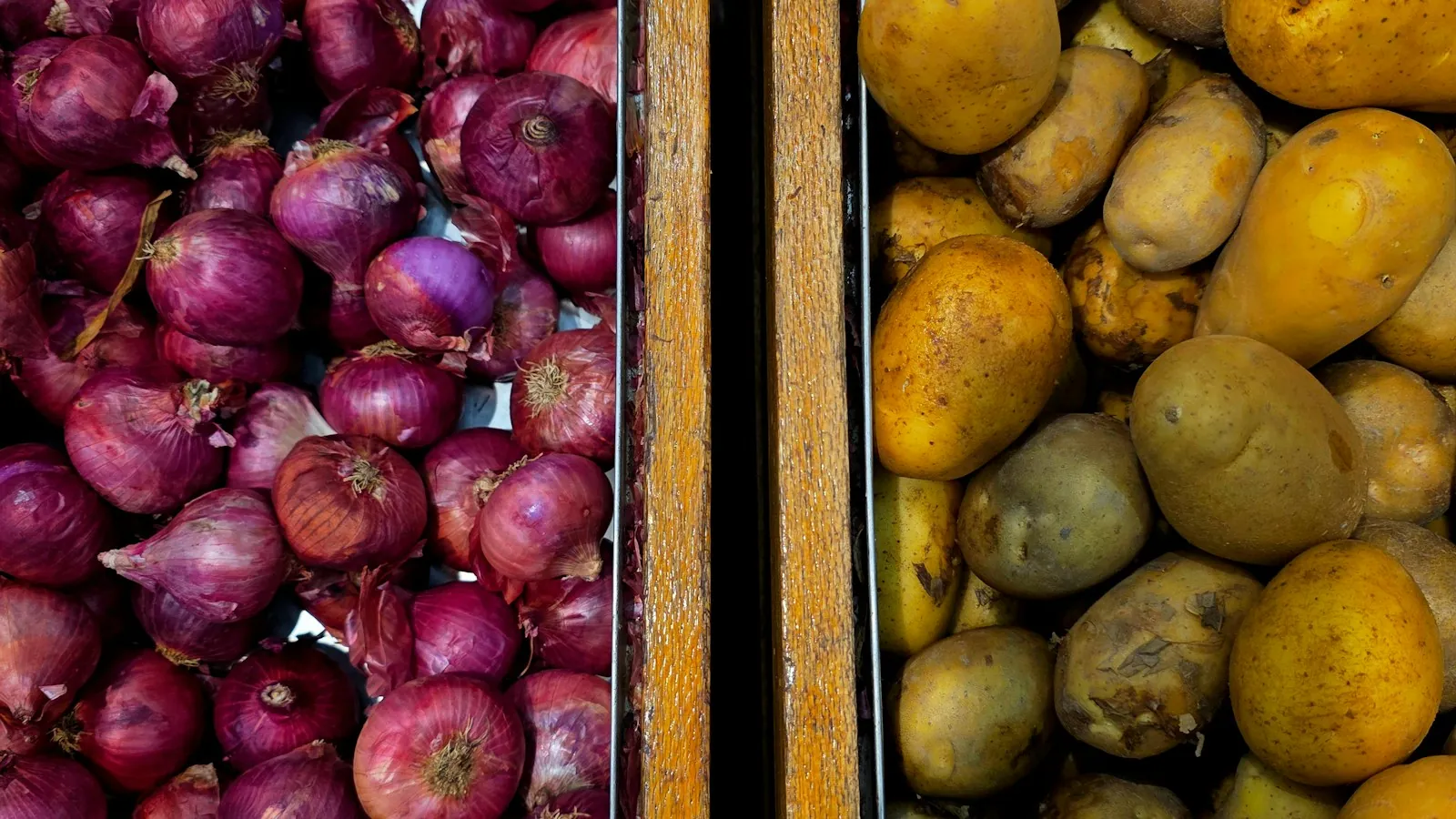
Yes, storing onions and potatoes together is a bad idea, though not a dangerous one. Potatoes give off moisture that makes onions soften and rot sooner, and kitchen sources such as America's Test Kitchen say onion gases speed up potato sprouting. Nothing toxic happens when they share a basket, but you'll throw more of both away.
The fix is simple: same dark pantry is fine, same bin is not. Give them separate containers and a little distance, and both will last noticeably longer.
What actually goes wrong when they share a bin?
Two things work against you, and the moisture problem is the bigger one.
 On the menu12 questions
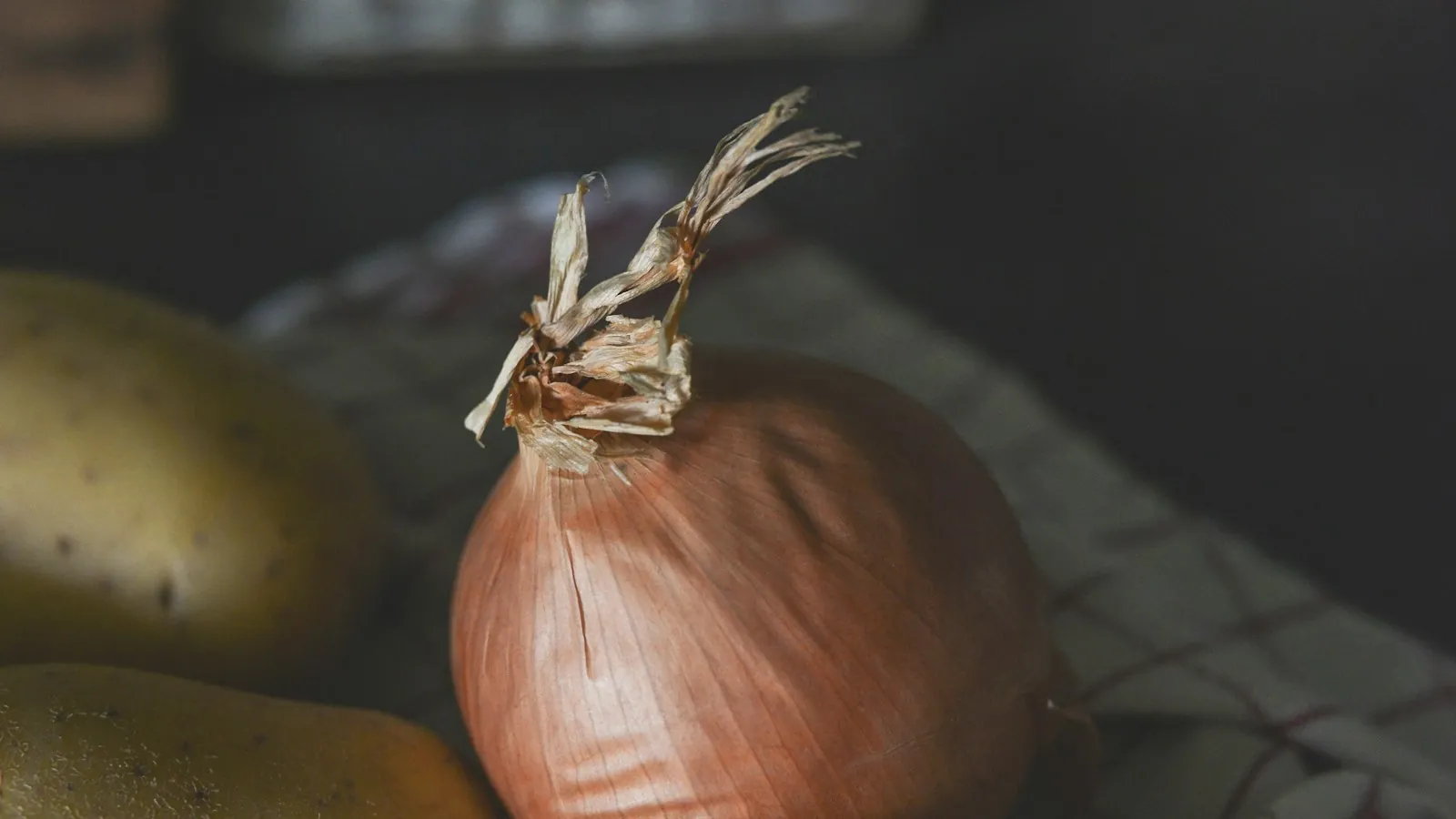
Potatoes are living tubers that are still breathing. They release water vapor as they sit, and they prefer it that way: the University of Wisconsin Extension lists long-term potato storage at 90 to 95% relative humidity. Dry storage onions are the opposite. The same publication puts them at about 65% relative humidity, in cold, dry conditions.
Put them in one basket and the onions sit in the potatoes' damp microclimate. The papery outer skins absorb moisture, the necks soften, and mold or rot gets a foothold. One soft onion then spreads the problem to its neighbors.
The second issue runs the other way. Onions give off pungent sulfur-containing gases. America's Test Kitchen advises keeping potatoes "away from onions, which give off gases that hasten sprouting." The Wisconsin Extension also warns that onions stored near potatoes or apples can pass their flavor along. A sprouted potato is still usable, but it is softer, wrinkled, and wasteful to peel.
Is the "toxic" claim true?
No. Every so often a viral post claims onions and potatoes stored together become poisonous. Fact-checkers have looked at this and found no evidence for it.
What is real is that potatoes naturally contain glycoalkaloids, mostly solanine, and those concentrate in green patches and sprouts. Light causes greening. Warmth and age cause sprouting. Onions nearby may nudge sprouting along, but the onion itself isn't adding anything harmful to the potato.
The rule doesn't change: cut away green areas and sprouts generously, and toss any potato that is extensively green, shriveled, or tastes bitter after cooking.
Ideal conditions for each, side by side
The numbers come from university extension recommendations for home storage.
| Potatoes | Dry storage onions | |
|---|---|---|
| Ideal temperature | 45 to 50°F for long-term storage (University of Illinois Extension) | 32 to 40°F (University of Wisconsin Extension) |
| Ideal humidity | 90 to 95% relative humidity | About 65% relative humidity |
| Light | Complete darkness (light causes greening) | Dark or dim |
| Airflow | Some, but not drafty | Plenty, they need to breathe |
| Best container | Paper bag, cardboard box, burlap, or a basket with a cloth over it | Mesh bag, wire basket, or open bowl |
| Avoid | Plastic bags, the refrigerator, warm spots | Plastic bags, damp spots, stacking deep |
| Gives off | Moisture | Strong sulfur odors |
The humidity row shows a gap of roughly 25 to 30 percentage points, which is the main reason they shouldn't share a container. Temperature-wise, a cool pantry or basement is a reasonable compromise for both.
How far apart do they need to be?
There's no magic distance, and no source I trust gives one in inches. What you're aiming for is that the onions are out of the potatoes' humid air and the potatoes aren't sitting in a cloud of onion odor.
In practice, that looks like this:
- Different shelves of the same pantry work well, especially with onions on the higher, drier shelf.
- Opposite ends of a deep shelf, each in its own breathable container, is fine for a normal week or two of groceries.
- Separate drawers in a stacking potato-and-onion bin are fine as long as the drawers vent and aren't sealed boxes sharing one airspace.
- The same basket, touching, is the setup to avoid.
If you buy small amounts and cook through them within a week or so, the effect is modest. The difference shows up when you buy a 10-pound bag of potatoes and a 3-pound bag of onions and expect them to last a month.
Where should you store potatoes instead?
A cool, dark, dry cabinet or closet away from the stove, dishwasher, and any sunny wall. The FDA specifically recommends storing potatoes "outside the refrigerator, preferably in a dark, cool place, such as a closet or a pantry," which also helps prevent sprouting.
The refrigerator is the one spot people get wrong. The FDA notes that storing potatoes in the refrigerator can increase acrylamide when they're later fried or roasted, because cold storage converts some starch to sugar. Those sugars also make fries and roasted potatoes brown too fast and taste oddly sweet.
A few habits that help:
- Don't wash potatoes before storing. Surface moisture invites rot, so wash right before cooking. Berries follow the same wash-later rule.
- Take them out of any plastic bag as soon as you get home. America's Test Kitchen warns that plastic-bag conditions can make potatoes sprout and rot.
- Sort them. Pull out anything cut, bruised, or soft and use it first; a quick microwaved potato is an easy way.
- Keep them in the dark. A paper grocery bag with the top folded over is cheap and effective.
- Check every week or so, and remove anything that's gone soft before it affects the rest.
And where should you store onions?
Onions want the driest, airiest spot you have. A wire basket on an upper pantry shelf, a mesh bag hung on a hook, or even a bowl on a cool counter away from the window will do. A big bag is also a good excuse for a batch of slow caramelized onions. Don't pile them deep, since the ones on the bottom get no airflow.
Whole dry onions should stay out of the fridge too. The fridge is humid, and onions soften there. The exception is sweet onions, like Vidalia or Walla Walla, which have thinner skins and more water. Those hold up better wrapped individually in paper towels in the crisper.
Cut onions are a different story. Once an onion is cut, wrap it or put it in a sealed container and refrigerate it. Chilling a whole onion before you cut it also helps stop the tears.
What about the rest of the pantry produce?
Potatoes and onions are only the most famous mismatch. A few more pairings are worth knowing, and checking how each food stores best before a bulk buy saves money:
- Apples and potatoes: apples give off ethylene, a ripening gas, so keep them apart as well. The Wisconsin Extension names apples, pears, and tomatoes as ethylene producers, which is also why a firm pear ripens faster in a paper bag with an apple.
- Onions and apples: apples can pick up onion flavor if stored close.
- Garlic and onions: these get along fine. Both like dry air and good circulation.
- Sweet potatoes: keep them in a cool, dry pantry spot, not the fridge. They're a different plant from regular potatoes and have their own storage quirks. Whole ones bake in 50 to 60 minutes at 400°F.
- Bananas and tomatoes on the counter: keep these away from both potatoes and onions to avoid adding more ethylene to the mix. A green bunch of bananas ripens faster near other fruit for the same reason.
Is a combined potato and onion bin a bad buy?
Not necessarily. Many of those stacking wooden or metal bins have one drawer labeled for each, and they work if the design keeps the two separated and ventilated.
Look for:
- Separate compartments, ideally stacked with onions on top
- Slats, holes, or mesh on each compartment for airflow
- A lid or front that blocks light from the potato section
- No shared sealed interior, where humid potato air flows straight into the onion drawer
Skip the single open basket sold as a "potato and onion keeper" if it puts both in one space.
How can you tell the pairing is causing problems?
You'll usually see it in the onions first. Watch for these signs:
- Onions with soft, damp necks or skins that feel clammy rather than papery
- Dark mold spots, often at the root or neck end
- A sour smell from the bin, beyond normal onion aroma
- Potatoes with sprouts several weeks earlier than usual, or skins that have gone wrinkled and soft
If you spot any of this, separate them, throw out anything moldy or mushy, and wipe and dry the container before reusing it.
Do onions really make potatoes sprout faster?
This is the most repeated claim, and it's backed by test kitchens and extension sources rather than a single landmark study I can point you to. America's Test Kitchen states it plainly, and plenty of growers repeat it from experience.
The humidity problem, on the other hand, is well documented. Even if you're skeptical about the gas effect, the moisture mismatch alone is reason enough to keep them in separate containers. You lose nothing by doing it, and the cost is one extra paper bag.
A practical setup for most kitchens
If you want one arrangement that works for an ordinary apartment or house, here it is:
- Potatoes go in a paper bag or a lidded basket on the lowest pantry shelf or in a dark cabinet away from the oven.
- Onions go in a mesh bag or wire basket on a higher shelf with open air around them.
- Garlic and shallots can join the onions.
- Apples, bananas, and tomatoes stay elsewhere, on the counter or in the fridge as appropriate.
- Once a week, give both containers a quick look and pull out anything soft or sprouted.
With that much separation, your potatoes will stay firm longer, your onions will stay dry and papery, and you'll stop finding a mushy surprise at the bottom of the basket.
 Seeing potatoes and onions stored apart at home
Airflow, light, and container choice are easier to judge when you can see a working setup. From Dream to Seed shows how a home keeps each crop in the conditions it likes.
How to Store Potatoes, Onions & Garlic Without a Root Cellar (My Personal Tips)
By From Dream to Seed on YouTube. Their method may vary a little from ours. Watch on YouTube
- Compare the containers used for each crop with the paper bag, basket, and mesh bag advice in the piece above.
- Notice how much separation there is between the potatoes and the onions, and whether they share any airspace.
- Look at where the storage spot sits and whether it is dark and cool, as the side-by-side table recommends.


