Picking Produce
Which Signs Help You Choose a Ripe Tomato With Real Flavor?
 By the CookClear writers
Checked against USDA grading standards and university extension buying advice
 Clear Answer
A ripe, flavorful tomato passes four checks: deep color all the way to the shoulders, a heavy feel for its size, a slight give under gentle thumb pressure, and a sweet, earthy smell at the stem. If it fails two or more of those, especially the smell, pick another one or buy cherry tomatoes instead.
What color should a ripe tomato be?
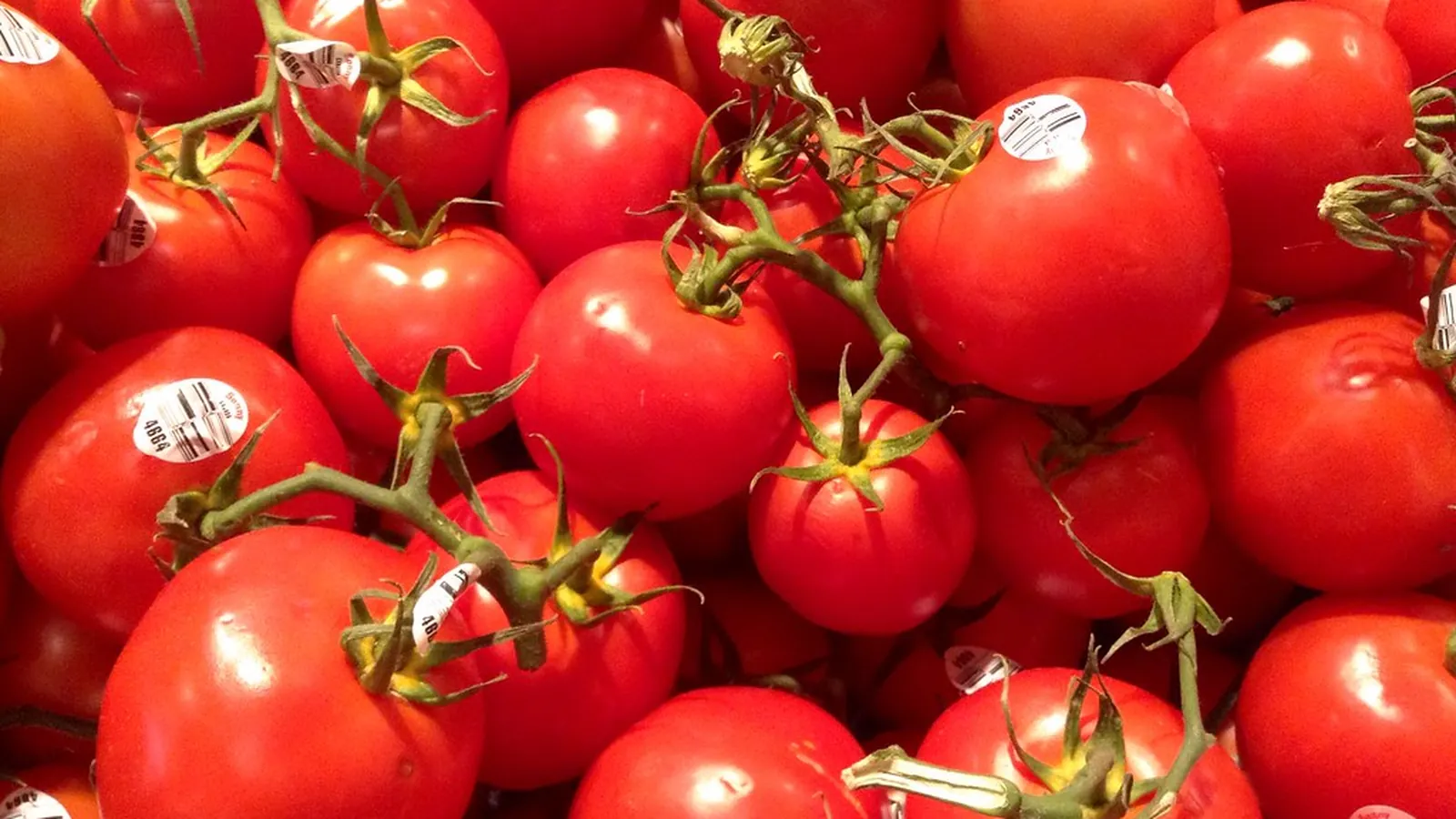
For a standard red tomato, the color should be deep and even, with red covering nearly the whole surface, including the area around the stem. The USDA grading standard for fresh tomatoes sorts them into six color stages, and those stages are a handy way to read what is in the bin.
| USDA color stage | What the surface looks like | What it means for you |
|---|---|---|
| Green | Entirely green, light to dark | Not ripe; cook it or skip it |
| Breakers | Up to 10 percent tannish yellow, pink or red | Just starting; needs days on the counter |
| Turning | More than 10 up to 30 percent colored | Still firm and tart |
| Pink | More than 30 up to 60 percent pink or red | Can finish ripening at home |
| Light red | More than 60 percent colored, red no more than 90 percent | Nearly there; good in 1 to 2 days |
| Red | More than 90 percent red | Ready to eat |
Source: USDA standards for grades of fresh tomatoes (7 CFR 51.1860).
A few color clues help beyond the stage itself:
- Green shoulders. A ring of green or yellow near the stem on an otherwise red tomato often means it was picked early. Some older varieties keep a little green there even when ripe, so let smell settle it.
- Pale orange red. A washed out orange shade with no depth usually points to a tomato that ripened off the plant in cool storage or very hot weather.
- Blotches and pale patches. Uneven, blotchy color is one sign of chilling injury, which happens when tomatoes are held too cold before you ever see them.
- Glossy, tight skin. Dull, wrinkled skin means it is past its best.
How heavy and how soft should it feel?
Hold two same-size tomatoes, one in each hand. The heavier one is usually juicier, with less air in the seed cavities. The University of Kentucky extension's selection advice is to choose tomatoes that are "heavy for their size" and "give slightly to pressure." As a reference, they put three to four medium tomatoes at about 1 pound.
For the give, cradle the tomato in your palm and press very gently near the middle with your thumb. You want the feel of a ripe peach: firm, with a slight springy yield. Then check these two failure points:
- Rock hard all over. It was likely picked green and has not ripened yet. It may soften on your counter, but it will not gain much flavor.
- A soft spot or dent that stays. That is bruising or the start of decay, which spreads quickly once you get it home.
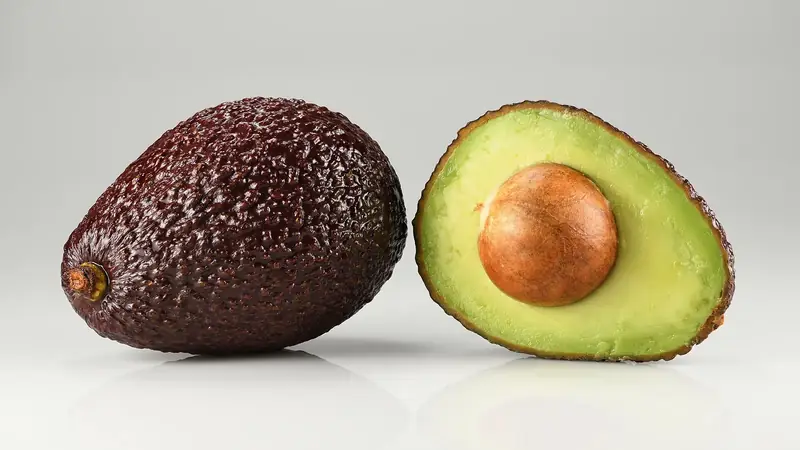
Never squeeze hard or poke with a fingernail. The same light touch works for checking an avocado for ripeness without leaving dents.
How to smell a tomato for ripeness
Turn the tomato over and sniff right at the stem scar or the green calyx. A ripe tomato smells sweet, green and earthy, the way a garden smells in August. Delaware's extension describes this as a strong, sweet, earthy scent near the stem, and it is the single most reliable flavor check you have at the store.
Much of what we call tomato flavor is aroma, and the stem end is where it escapes most easily through the waxy skin. A tomato with no aroma almost always eats flat.
If you smell nothing, try one more. If that is blank too, the batch was likely picked early or held too cold, and counter time will not fix it. That is the point to switch to cherry or grape tomatoes, or to plan on cooking them. Honeydew and other melons follow the same logic, which is why the stem end is also where you check when picking a ripe cantaloupe.
Vine ripened vs gassed tomatoes: does it matter?
For flavor, yes. Most large supermarket tomatoes are harvested at what growers call the mature green stage, then ripened in warehouses with ethylene, the same natural gas tomatoes give off on their own. UC Davis postharvest research describes the standard treatment as about 100 ppm ethylene at 65°F to 70°F for 24 to 72 hours.
Gassing is safe, since ethylene is a plant hormone the tomato makes anyway. The trouble is that it turns a tomato red without time on the plant to build sugars and aroma.
| Label or type | How it was usually ripened | What to expect |
|---|---|---|
| Large loose round tomatoes | Picked mature green, ripened with ethylene | Even red, firm, often mild |
| "Vine ripened" loose tomatoes | Picked once color starts to show | Better than mature green, still varies |
| Tomatoes on the vine (clusters) | Picked as a cluster with partial to full color | Usually more aroma; the vine smell helps sell them |
| Local or farmers market, in season | Picked red or nearly red | Best flavor, softer, shorter shelf life |
| Cherry and grape tomatoes | Small fruit, often bred for sweetness | Most reliable flavor year round |
"Vine ripened" has no single legal definition at the store level, so treat it as a loose hint. The green vine itself adds a strong tomato leaf smell, so on clusters, sniff the fruit's own stem end rather than the vine.
Chilling is the other flavor killer. UC Davis notes that tomatoes held below 50°F can fail to ripen fully and lose flavor, and Oklahoma State's extension puts the line at 55°F. A tomato bin parked in the refrigerated case is a warning sign.
Are cracked heirloom tomatoes OK to buy?
Usually yes, if the cracks are healed and dry. Heirlooms are grown for flavor rather than shipping, and many crack, scar and grow lumpy shoulders. That is cosmetic.
NC State extension says cracking happens when heavy rain follows dry weather and the fruit swells faster than its skin can stretch. There are two kinds:
- Concentric cracks. Rings around the stem end. These are usually shallow and heal over with a tan, corky scar. Fine to buy.
- Radial cracks. Splits running down the sides from the stem. NC State calls these the more serious kind. A healed radial crack is fine; a fresh, wet or deep one is not.
Pass on any crack that is wet, oozing, moldy or sour smelling; NC State advises composting cracked fruit like that, and the rule works at the store too.
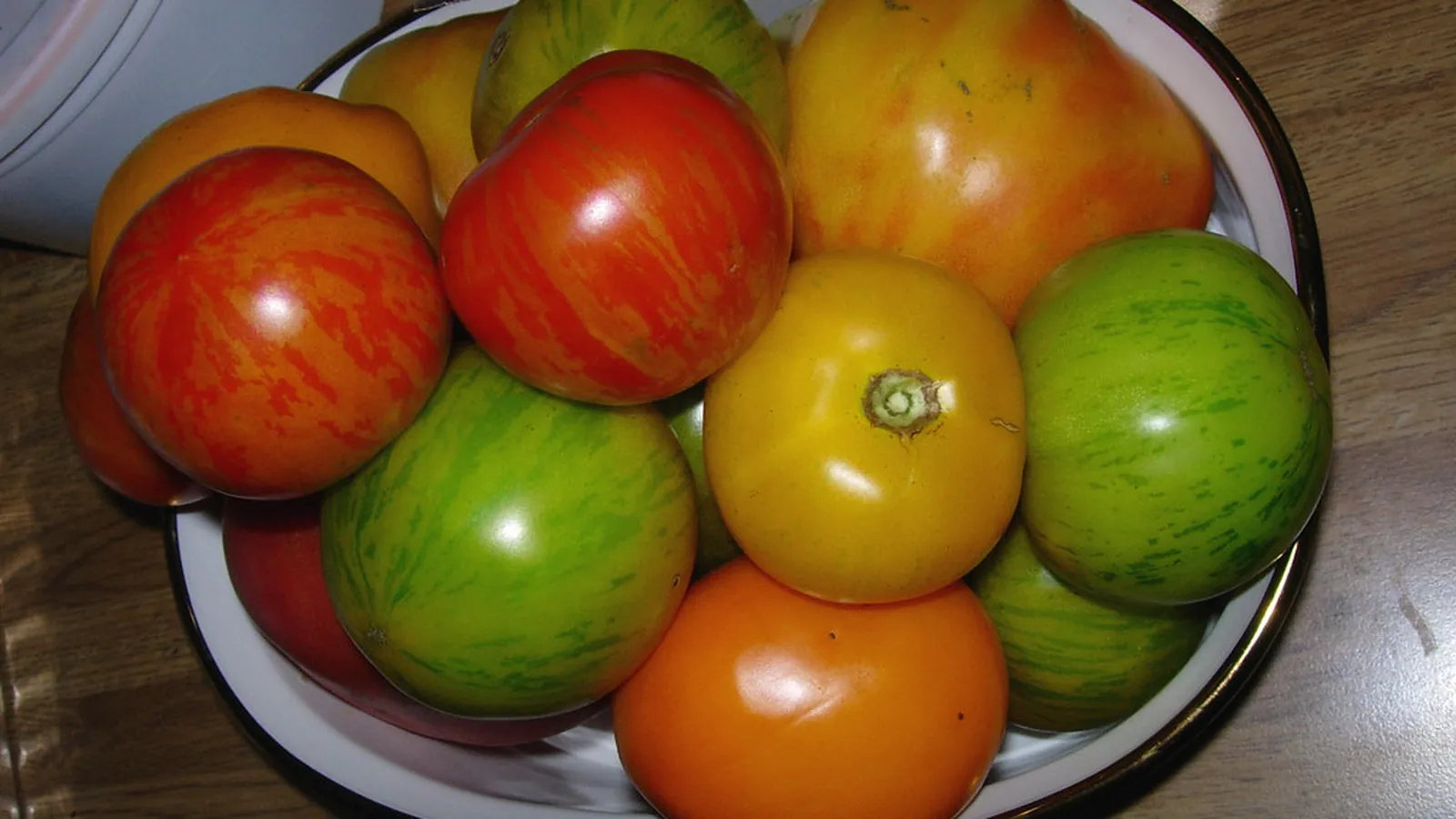
For heirlooms, color tells you little because a ripe one can be yellow, orange, purple, striped or green. Judge them by weight, a slight give and a strong smell at the stem. Expect them to be softer than supermarket rounds, and plan to eat them within a day or two.
When is tomato season where you live?
In most of the United States, local field tomatoes peak from about July through September, sometimes into October. Kentucky's extension lists July through October; Delaware's lists July through September. Florida and parts of California grow them much of the year.
That is when big slicers, heirlooms and farm stand tomatoes are worth buying, because they ripen on the plant and travel a short distance. It lines up with sweet corn, so the same trip can follow the rules for picking fresh sweet corn too.
Outside that window, most large tomatoes are shipped from far away and ripened in transit. The four checks still help.
What are the best tomatoes to buy in winter?
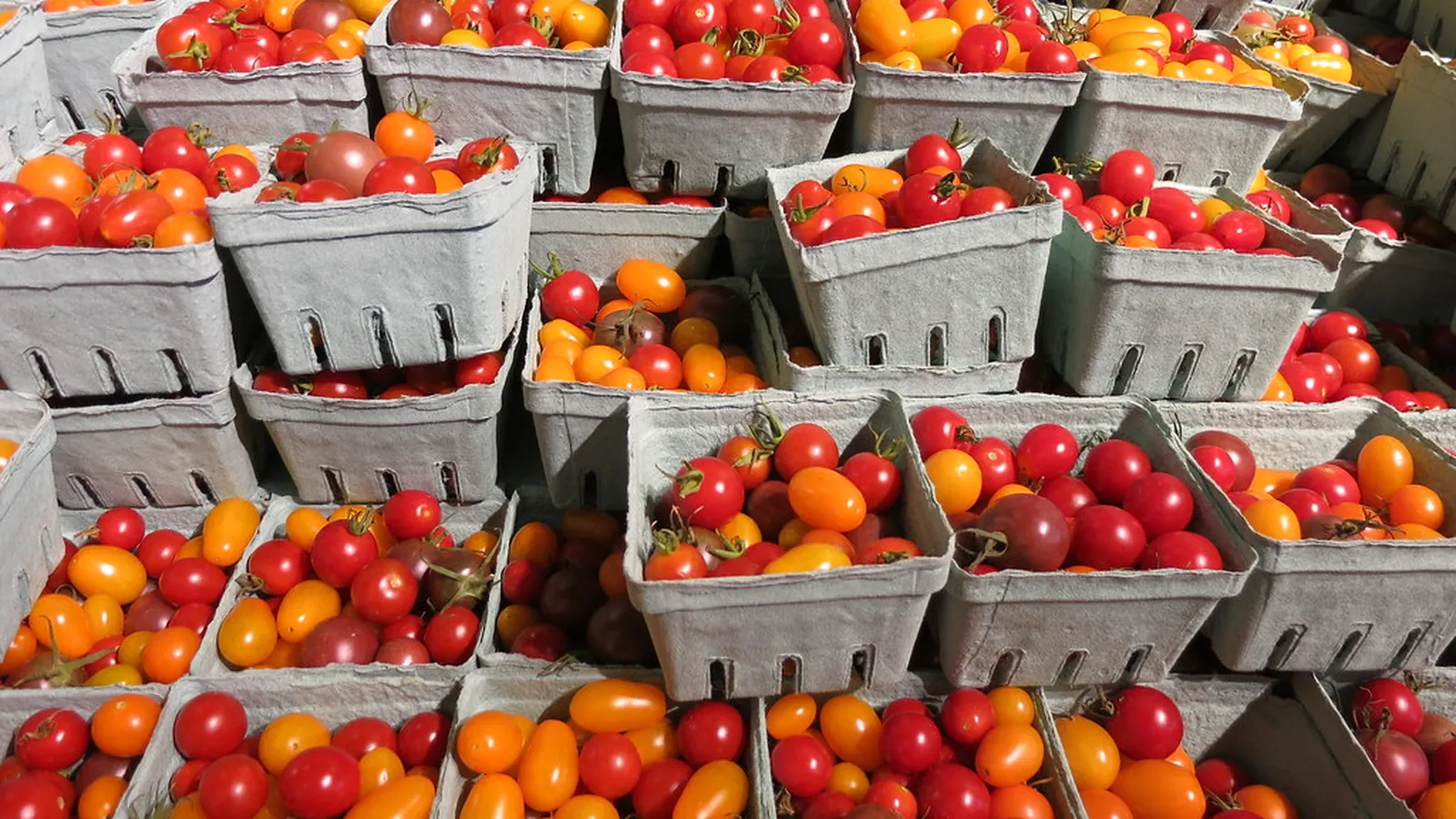
Cherry and grape tomatoes are the best bet from about November through May. Their small size means they reach full color quickly, and many varieties are bred for sweetness. In a Rutgers University variety trial, most of the grape and cherry types tested measured between about 6 and 8.7 degrees Brix (a measure of sugar), and the researchers found the higher Brix numbers closely matched better flavor scores.
A ranking for the off season, from most to least reliable:
- Cherry tomatoes, red, orange or yellow. Usually the sweetest.
- Grape tomatoes. Firmer, less juicy, very consistent.
- Cocktail or Campari type tomatoes, usually sold in clamshells. A good middle size for slicing.
- Tomatoes on the vine from greenhouses. Decent when they smell strongly at the stem.
- Plum or Roma tomatoes. Meaty and mild; better roasted than raw in winter.
- Large loose rounds. The least likely to taste good raw this time of year.
For pint boxes, tip the container and check the sides and bottom. Pass on boxes with split, leaking or moldy fruit or wrinkled skins. Wait to rinse them until you eat them, the same reason you skip washing berries early.
When raw tomatoes are bland, heat helps. Halved cherry tomatoes on a hot sheet pan concentrate their sugar, but give them space, since crowded roasted vegetables turn soggy instead of browning.
Why did my tomato taste bland even though it looked perfect?
Red and firm but tasteless usually comes down to one of these.
| What you see | Likely cause | Fix next time |
|---|---|---|
| Bright red, firm, no smell at the stem | Picked mature green and ripened with ethylene | Trust the smell test over color; buy cherry types off season |
| Mealy, grainy flesh | Held below 50°F to 55°F somewhere along the way | Avoid tomatoes from refrigerated cases |
| Watery, light for its size | Hollow seed cavities, underdeveloped flesh | Compare weights and take the heavier one |
| Soft and sour near a crack | Decay starting at a fresh split | Only buy fruit with dry, healed cracks |
At home, whether a ripe tomato belongs on the counter or in the fridge depends on how ripe it is and how soon you will eat it.
Can you ripen a store tomato at home?
You can finish the color and softness of a tomato that is at the pink or light red stage. Leave it stem side up at room temperature, out of direct sun, for 1 to 3 days. Kentucky's extension suggests a paper bag for tomatoes that are still green, which traps the tomato's own ethylene.
What you cannot add is flavor that was never there. A tomato picked very green turns red on the counter but stays bland, which is the main idea behind every picking produce check: buy as close to ripe as you can find. Watermelon is the extreme case, because it does not ripen at all after picking, so choosing a ripe watermelon at the store is the only chance you get.
 Ten seconds at the tomato bin
Watching someone press, weigh and sniff a tomato shows how light the touch should be and how fast the checks go. It also helps to see what deep color looks like next to a tomato with green shoulders.
How to choose tomatoes at the grocery store | Tomato 101
By Food Chain TV on YouTube. Their method may vary a little from ours. Watch on YouTube
- Look for red covering more than 90 percent of the surface, the USDA "red" stage, with no green ring at the shoulders.
- Notice how gentle the thumb press is: a slight springy give, like a ripe peach, with no dent left behind.
- Watch for the sniff at the stem scar, the check that best predicts flavor, especially on supermarket tomatoes ripened at 65°F to 70°F with ethylene.