 Picking Produce
Which Bananas Should You Pick So They Ripen on Your Own Schedule?
 By the CookClear writers
Checked against USDA grading standards and university extension buying advice
 Clear Answer
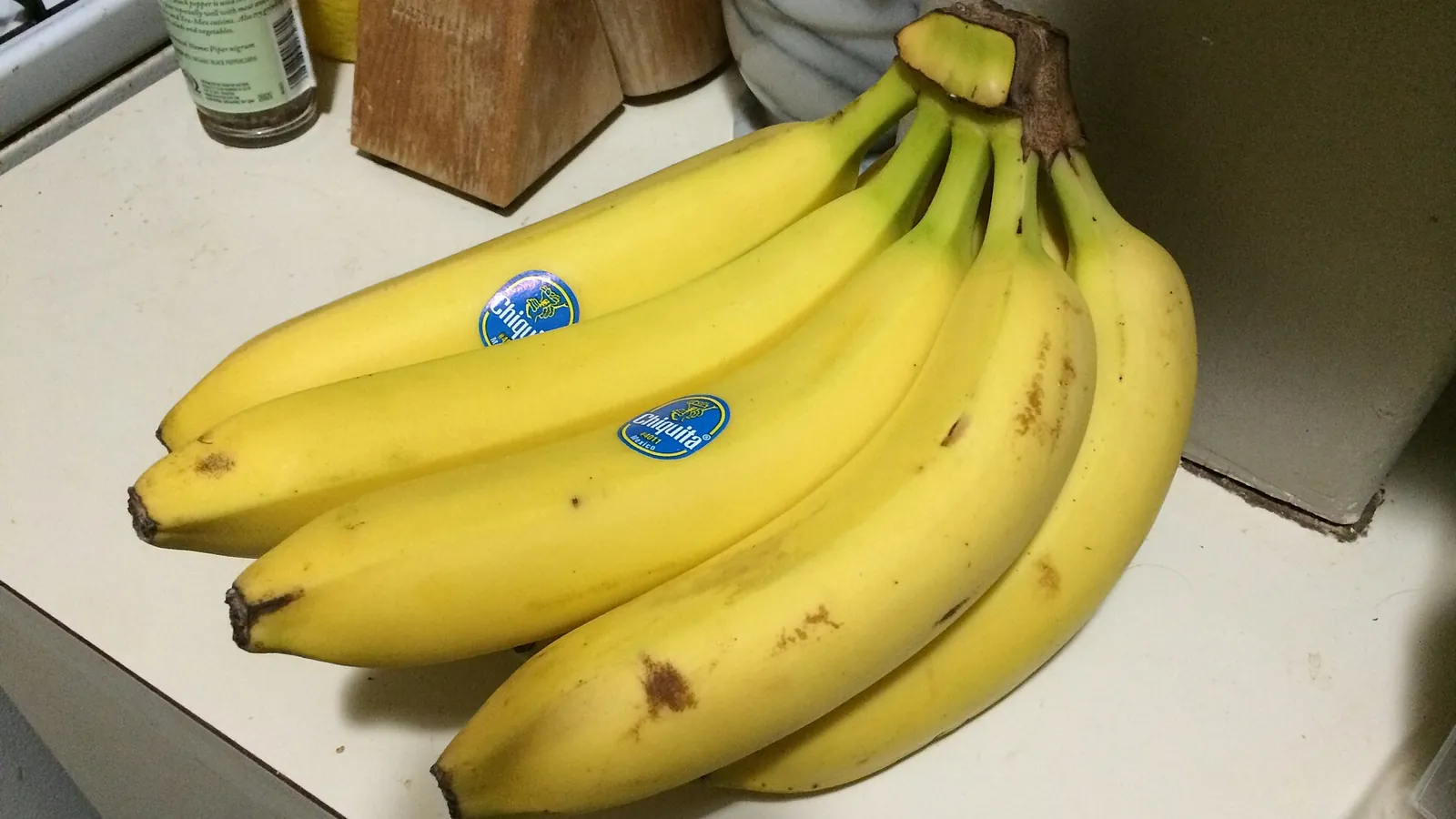
Pick bananas by peel color on the industry's 1 to 7 scale: full yellow (stage 6) to eat today, yellow with green tips (stage 5) for tomorrow, and more green than yellow (stage 3 or 4) for 2 to 5 days from now. Buying a mix of stages is the easiest way to have a ripe banana every day of the week.
Bananas are picked green and ripened after harvest, so the peel tells you most of what is inside.
What do the banana ripeness stages look like?
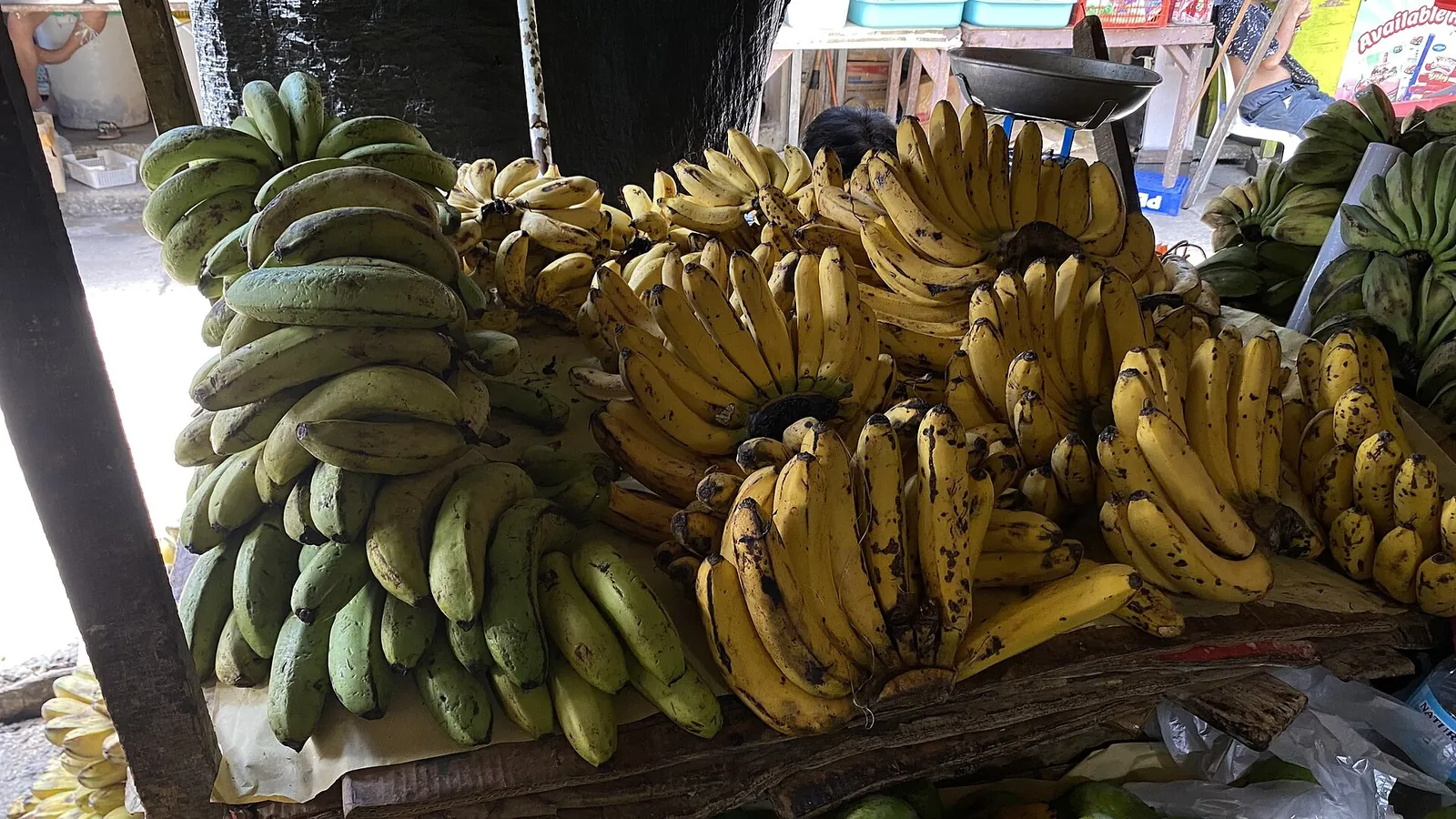
Growers, ripening rooms and grocery buyers describe banana ripeness stages with a seven-step color index. USDA inspection aids, Chiquita's color scale and foodservice distributors such as Markon all use the same basic ladder, with small differences in wording. Here is how it lines up with what you see in the store and when you can eat each one.
 On the menu9 questions
| Stage | Peel color | Texture and taste | Ready to eat |
|---|---|---|---|
| 1 | All green | Hard, starchy, not sweet | About a week or more, if ripened warm |
| 2 | Green with a trace of yellow | Hard, starchy | 5 to 7 days |
| 3 | More green than yellow | Firm, mild | 3 to 5 days |
| 4 | More yellow than green | Firm, lightly sweet | 2 to 3 days |
| 5 | Yellow with green tips | Firm, sweetening | Tomorrow |
| 6 | All yellow | Ripe, firm, sweet | Today |
| 7 | Yellow flecked with brown | Soft, sweetest, strong aroma | Today, or bake with it |
The day counts are typical for a kitchen in the high 60s to low 70s°F. Markon describes stage 4 as needing "a couple more days" and stage 5 as ripe the next day; the longer spans for green fruit are estimates, since a cool or warm kitchen can shift them a day or two in either direction.
Chiquita sells its color scale to retailers so they can order fruit at the stage shoppers want, which is why most stores show mostly yellow fruit with some green. Fully green bunches are less common on the shelf.
How do you pick bananas at the store?
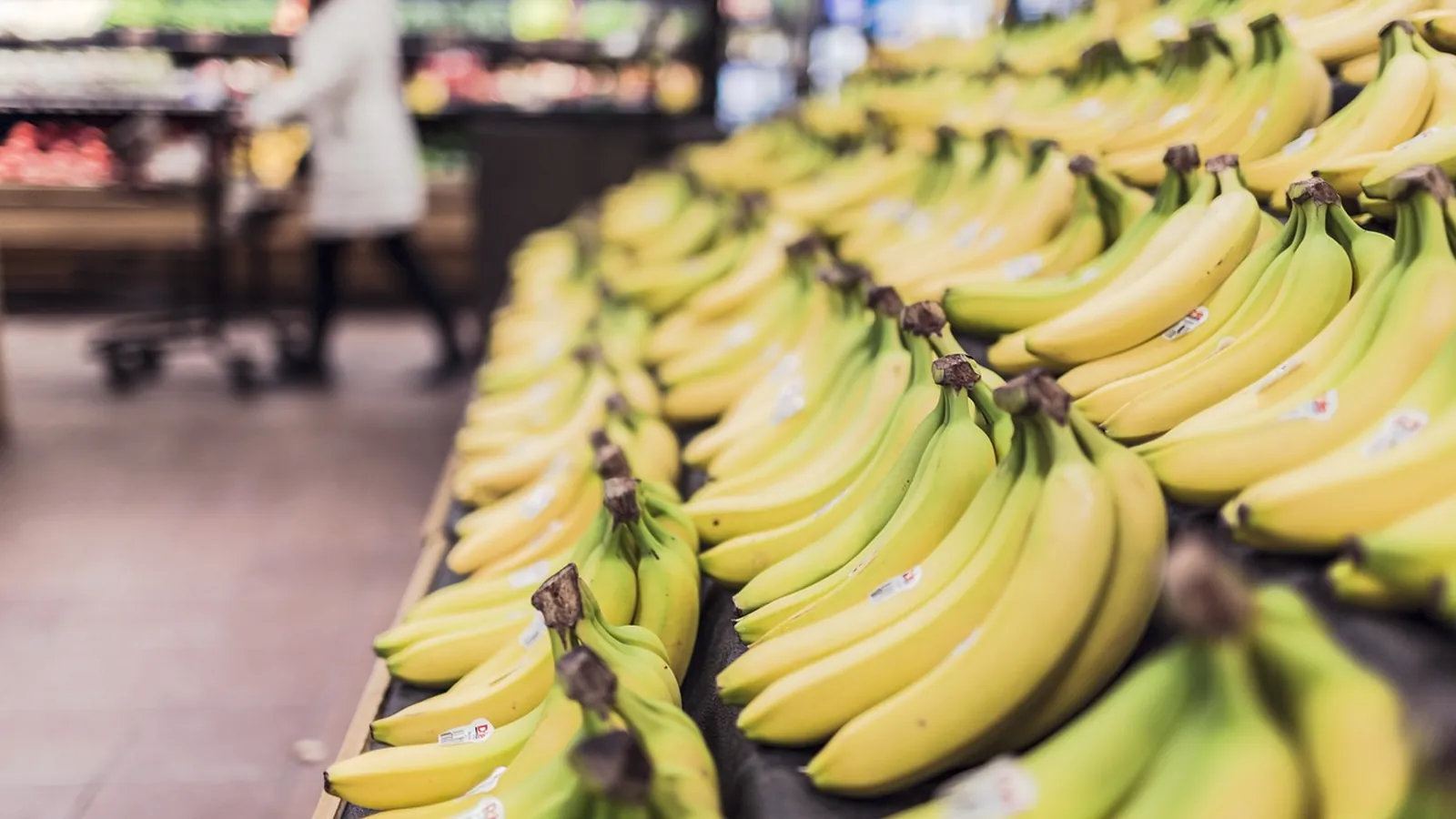
Start with what you need and when, then check the bunch with your eyes before your hands. Utah State University Extension recommends evenly colored fruit with slightly green tips and no bruises or soft brown spots, and Mississippi State Extension gives the same advice by timing: bright yellow to eat right away, pale yellow with some green for a few days out.
A few quick checks help you choose well:
- Look at the stem and crown. A green, firm crown with no mold or split means the bunch was handled well. A black, soggy crown means it has been sitting.
- Check for even color across the bunch. Mixed green and yellow on the same bunch ripens unevenly, which is fine if you want a spread, but harder to plan.
- Skip fruit with split peels, gray or dull skin, or dark sunken patches. Dull grayish yellow can be a sign the fruit got chilled before it ripened.
- Hold the bunch by the crown, not the fingers. Bananas bruise easily, and the damage shows up a day later as brown mush.
Small brown freckles are not a flaw. Bruises are different: they look like soft, dented, darker areas that give under light pressure, often on the side the bunch was resting on.
How many bananas should you buy for a week?
Buy two or three small bunches at different stages instead of one big uniform bunch. A family that eats a banana or two a day might pick up something like this:
- One small bunch at stage 6 for the first 2 days.
- One bunch at stage 4 or 5 for the middle of the week.
- One bunch at stage 3 for days 5 to 7.
If the store has only one stage, buy greener than you think you need. You can always speed a banana up, and slowing one down only works once it is ripe. The same buy-for-the-day approach works with choosing ripe avocados, which ripen on the counter in a similar way.
Keep the greener bunch away from the ripe one at home. Ripe fruit gives off more ethylene, the gas that drives ripening, and it will pull the green bunch along faster than you planned.
How to ripen bananas faster
UC Davis Postharvest Technology Center research shows bananas ripen faster as the temperature rises, within the range of about 54°F to 86°F, and that ethylene starts the process. At home that means warmth plus trapped gas.
Methods that work, from gentlest to fastest:
- Warm spot: Set the bunch on top of the fridge or near (not on) a warm appliance. Dole notes that the warmer it is, the faster bananas ripen.
- Paper bag: Dole recommends a brown paper bag in a warm, dry place for a day or two. The bag holds in ethylene but still lets moisture escape.
- Bag plus ripe fruit: If the bananas are still not yellow enough, Dole suggests adding a ripe apple. A ripe banana, pear or avocado in the bag does the same job, and choosing apples for the bowl gives you something to eat once the bag trick is done.
Avoid plastic bags. They trap moisture along with the gas, and the fruit can turn blotchy or start to mold before it ripens evenly. Dole also says to take bananas out of the store's plastic produce bag once you get home.
The trick of baking whole bananas in a low oven softens and darkens the peel, but it does not ripen the fruit in the usual sense. It can make a firm banana mashable for a recipe, but it will not make a green banana sweet for eating out of hand.
How to slow down banana ripening
Slowing works best once the fruit is already yellow. You have three tools.
Separate the bunch. Pull the ripest bananas off and keep them apart from greener ones and from other ripening fruit like peaches, pears and tomatoes. Less shared ethylene means a slower pace. Mississippi State Extension also suggests hanging bananas from their stems or resting them stem-side down on the counter to prevent bruising.
Keep them cool, not cold. A cooler corner of the kitchen, away from sunny windows and the stove, buys you a little time.
Wrapping the stems in plastic is a popular tip with little evidence behind it. Bananas produce ethylene throughout the fruit, not mainly at the stem, so treat it as a myth or at most a minor help. Separating and cooling do far more.
Ripe pears and peaches follow the same rules, so checking a pear for ripeness at the neck and moving it to the fridge once it gives is the same play you will use with bananas.
Should you refrigerate bananas?
Yes, but only once they are ripe. Before that, cold does real damage. UC Davis notes that below about 54°F, chilling injury prevents bananas from ripening, and Mississippi State and Utah State Extension both warn that bananas chilled before they ripen will not ripen properly. A green banana that goes into the fridge often comes out gray, hard and bland, and stays that way.
Once a banana is yellow, the fridge is a good place for it. Here is what happens:
- The peel turns brown to black within a day or two. That is a cold reaction in the skin, not spoilage.
- The fruit inside stays cream colored and firm. Mississippi State Extension says the flesh stays cream colored even as the skin browns.
- You gain about 2 to 3 extra days of good eating, according to Mississippi State Extension. Utah State puts it as "a few more days."
Dole puts it plainly: the peel will turn black but the fruit inside will be fresh and ripe. If the black peel bothers you, peel and taste one before you give up on the batch. Bananas behave the opposite way from tomatoes here, which keep better flavor when stored on the counter.
When even the fridge cannot keep up, the freezer is the next stop. Freezing bananas for baking works best with fruit that is well spotted, so the sweetness is already locked in.
What are sugar spots on bananas?
Sugar spots are the small brown freckles that appear at stage 7. As a banana ripens, starch in the fruit turns into sugar, acidity drops and aroma builds, a change UC Davis describes as the core of banana ripening. The freckles show up on the peel around the time the fruit reaches peak sweetness.
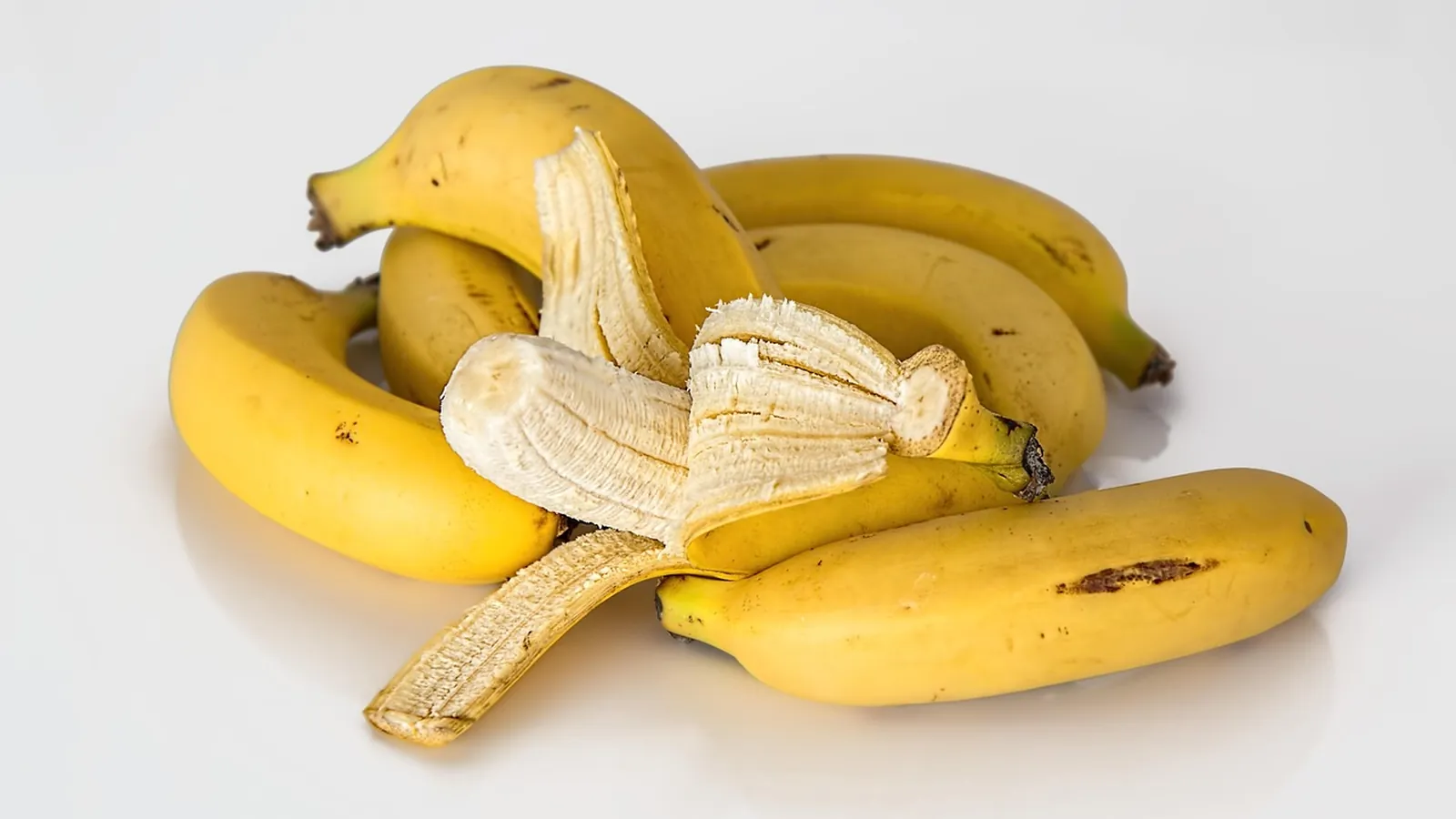
They are a good sign. Markon calls stage 7 the sweetest stage and the best for baking, and Dole recommends speckled bananas for baking, smoothies and any recipe that calls for mashed banana. Mississippi State Extension says soft bananas with brown spots are excellent for baking.
How much spotting you like comes down to taste:
- A few freckles: Sweet, still firm enough to slice onto cereal or pack in a lunch.
- Heavy spotting: Very sweet and soft, best for banana bread, pancakes and smoothies. Spotted fruit also blends more smoothly, which helps if your blender leaves frozen chunks with firmer fruit.
- Mostly brown or black peel at room temperature: Very soft and strongly flavored, still fine for baking as long as the fruit smells sweet, not fermented.
My bananas went from green to brown overnight. What happened?
This table matches common banana problems to their usual cause.
| What you see | Likely cause | Fix |
|---|---|---|
| Green bananas never turn yellow, peel looks gray | Chilled before ripening, in the fridge or a cold car or porch | Nothing restores them; buy again and keep them above 54°F |
| Whole bunch went spotty in a day | Warm kitchen, sun or a fruit bowl full of ripening fruit | Separate the bunch and move ripe ones to the fridge |
| Yellow peel but starchy, chalky taste | Eaten at stage 5 or earlier | Wait a day for the green tips to clear |
| Brown mushy patches under unbroken peel | Bruising from handling or stacking | Hold by the crown, store on top, not under heavy fruit |
| Black peel in the fridge, fruit fine inside | Normal cold browning of the peel | Eat it; in the fridge, judge by the fruit, not the peel |
| Fruit smells boozy or leaks | Overripe and starting to ferment | Compost it |
The same counter-then-fridge rhythm carries across the produce aisle. Ripening a mango at home uses the same paper bag and room temperature approach, and there are more ripeness checks in the picking produce section.
 Seeing the banana color scale in real fruit
Words like "green tips" and "flecked with brown" make more sense once you see real bananas lined up from hard green to heavily spotted.
DOLE - Banana Ripening Process
By DoleTube on YouTube. Their method may vary a little from ours. Watch on YouTube
- Match each banana shown to the 1 to 7 scale, and notice how little green on the tips separates stage 5 (ripe tomorrow) from stage 6 (ripe today).
- Look at how sugar spots at stage 7 differ from bruises, which are larger, darker and dented.
- Notice any fruit kept cold, and remember that a black peel after 2 to 3 days in the fridge can still hold firm, cream colored fruit.


