Picking Produce
Which Signs Mean Asparagus, Broccoli and Green Beans Are Fresh?
 By the CookClear writers
Checked against USDA grading standards and university extension buying advice

 Clear Answer
Pick asparagus with tightly closed tips and firm stalks, broccoli with tight, dark green buds and no yellow, and green beans that are smooth, evenly colored and snap cleanly when bent. Once home, plan on 3 to 5 days in the fridge for each, a little longer for asparagus kept standing in water.
All three lose moisture and sweetness from the moment they are cut, so the checks are similar: look at the growing tip, feel for firmness and glance at the cut end. Each one also has its own giveaway, and the same look, feel and cut-end routine carries over to most picking produce decisions.
How do you tell if asparagus is fresh?
Start at the top. The tips are the most delicate part of the spear and the first to show age. Utah State University Extension and Clemson Extension both tell shoppers to choose spears with tightly closed tips, and Purdue Extension adds that dark green tips with a hint of purple are a sign of freshness. Tips that are spreading open, going yellow, drying out or turning slimy mean the bunch has been sitting.
Then check the stalks:
- Color. Bright green along most of the stalk, with a paler or white section only near the cut end.
- Firmness. Purdue Extension says the stems should be crisp and firm and should snap rather than bend. A gentle squeeze should find it solid, never rubbery.
- Surface. Smooth and plump. Fine wrinkles or ridges running up the stalk mean it has lost water. Clemson describes good spears as "unwithered."
- Cut ends. A cut end that looks moist and fairly fresh points to a recent harvest or good handling. Ends that are dry, shriveled or split have been out of water a while. Stores often stand bunches in a shallow tray of water, which helps, but a wet base can hide dry stalks, so check those too.
Asparagus is a spring crop. Out of season it travels far to reach the store, so check tips and stalks closely then.
Are thick or thin asparagus spears more tender?
Thicker is usually just as tender, and often more so. This is one place sources disagree. Utah State's shopping sheet says thinner stalks are usually less tough and stringy. Penn State vegetable crops professor Peter Ferretti says the opposite: spears larger than 1/2 inch across are more tender than thin ones, and pencil-thin spears are not a sign of quality.
We follow the Penn State view, with one rule above it: freshness beats thickness. A thick spear cut yesterday beats a thin spear that has dried out for a week, since stalks turn woody as they age and lose water.
Choose by how you plan to cook:
- Thin spears (under about 1/2 inch). Quick sautés, salads and fast stir-fries. They overcook in a hurry.
- Medium spears. The all-purpose choice for steaming, roasting and grilling.
- Thick spears (over about 1/2 inch). Roasting and grilling, where they stay juicy. Peel the lower third with a vegetable peeler if the skin looks fibrous.
Whatever the size, buy a bunch of even thickness so the spears finish cooking together.
What should a fresh head of broccoli look like?
Broccoli heads are clusters of tiny flower buds, and freshness shows in how tightly those buds stay closed. Utah State Extension says to choose heads with tight, green florets and firm stalks that feel heavy for their size. Purdue Extension looks for dark green bunches with no yellowing and no odor.
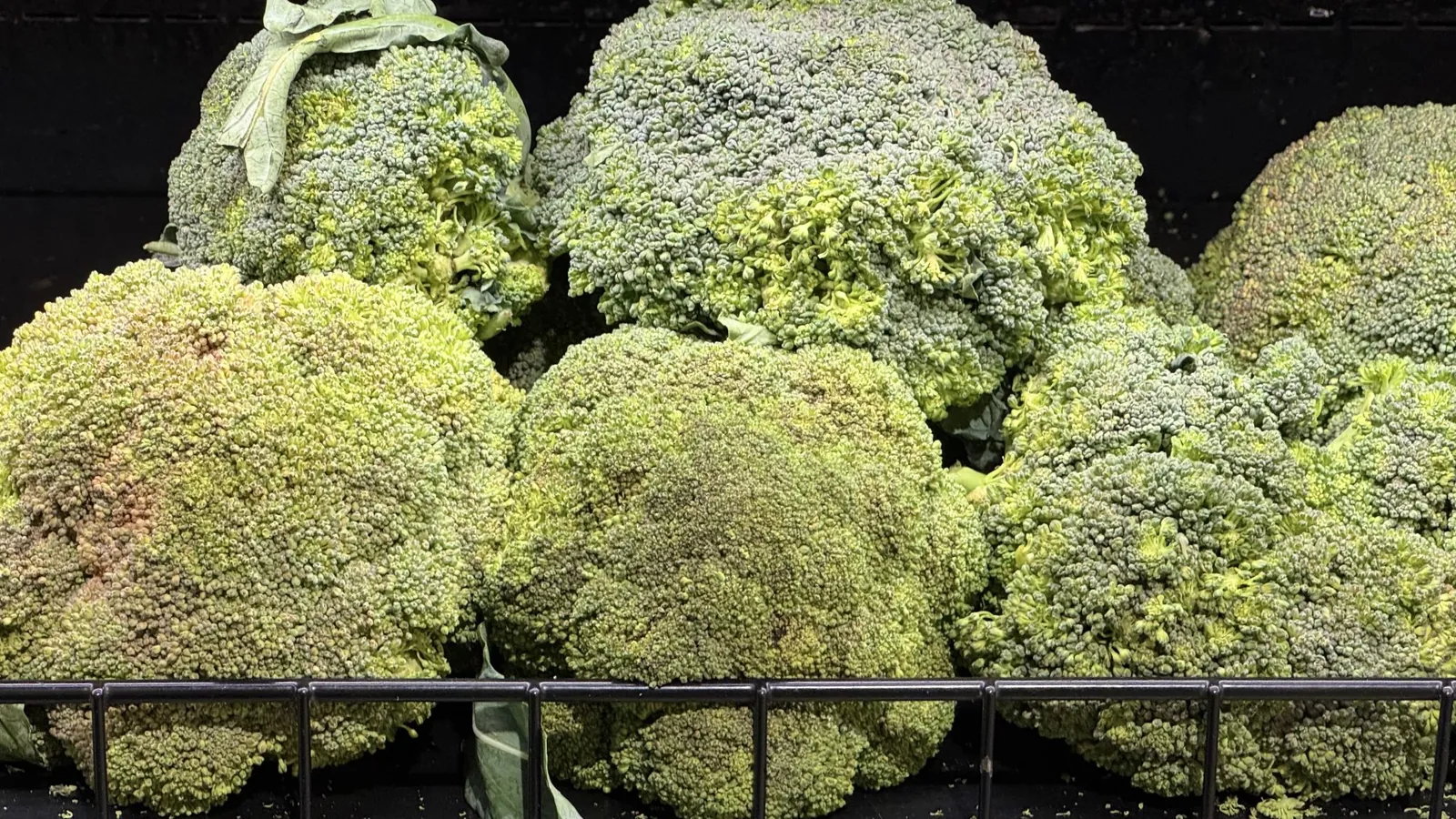
Run through these checks at the store:
- Look at the buds up close. They should be small, tight and packed together, with no gaps.
- Check the color. Deep green, sometimes with a blue or purple tinge on the top, is good. Pale or yellowish patches are not.
- Squeeze the stem. It should be firm and solid. A bendy stem has lost water.
- Look at the cut end. Utah State says it should look fresh and moist. Dry, brown or cracked ends mean the head was cut a while ago.
- Lift it. A heavy head for its size has kept its moisture.
- Smell it. Fresh broccoli smells mild and green. A strong cabbage or sulfur smell is a sign of age.
Purdue also suggests skipping heads with very thick, woody stalks.
Why does broccoli turn yellow?
Broccoli turns yellow because the buds keep developing after harvest. Over several days, the green chlorophyll fades and the tiny buds start opening toward the yellow flowers they would have become in the field. Warm storage speeds that up, which is why a head left in the car or on the counter yellows faster than one kept cold.
A few yellow buds mean the broccoli is past its best, with a stronger, more bitter flavor and a softer texture. Purdue Extension's storage advice is to throw broccoli out once it smells bad, turns yellow or gets slimy. If you find only a small yellow spot on an otherwise firm, good-smelling head, many cooks trim that floret and use the rest right away, but don't buy a head that is already yellowing.
Fresh, tight broccoli also cooks better. It holds its shape and color when you steam it until bright green, while older, looser heads go soft and drab faster.
How does the green bean snap test work?
Pick up one bean and bend it in half. A fresh green bean breaks with a clean, crisp snap, and you can often see beads of moisture at the break. An old bean bends, folds over or tears slowly without snapping. Utah State and Purdue Extension both describe fresh beans as ones that snap easily when bent.

The rest of the check takes a few seconds:
- Color. Bright and even along the whole bean. Purdue says to look for evenly colored, blemish-free beans.
- Surface. Smooth and firm. Wrinkles, soft spots or a leathery skin mean water loss.
- Spots. Skip beans with brown spots, rusty streaks or dark patches. Utah State says to avoid beans with visible blemishes.
- Ends. The tips should look fresh, not dried, black or mushy.
- Shape. Slender and straight, with the seeds inside only faintly visible. Fat beans with big, bulging seeds were picked late and tend to be tough and stringy.
With bagged beans, look through the bag for limp, bent or spotted ones and any wet, slimy patches.
Freshness signs for each vegetable at a glance
| What to check | Asparagus | Broccoli | Green beans |
|---|---|---|---|
| Top or tip | Tightly closed, dark green, maybe a purple tinge | Small, tight, dark green buds | Fresh tips, not dried or black |
| Color | Bright green most of the way down | Deep green, no yellow | Bright and even |
| Feel | Firm stalk that snaps, not bends | Firm stem, heavy for its size | Crisp, snaps cleanly |
| Surface | Smooth, not wrinkled | Compact, no gaps in the head | Smooth, no brown spots |
| Cut end | Moist, not dried or split | Moist, not dry or browning | Not applicable |
| Smell | Mild, grassy | Mild, never sulfur-like | Fresh and green |
| Walk away if | Tips open, yellow or slimy | Yellow buds or bad smell | Limp, bendy or spotted |
What you see in the bin and what it means
| What you see | Likely cause | What to do |
|---|---|---|
| Asparagus tips spreading open | Spears are old or were stored warm | Pick another bunch |
| Wrinkled asparagus stalks | Water loss after harvest | Skip it or plan to cook it today |
| Broccoli with yellow buds | Buds aging and starting to flower | Choose a darker, tighter head |
| Broccoli stem that bends | The head has dried out | Choose a firmer head |
| Green beans that fold instead of snap | Moisture loss, likely several days old | Pick crisper beans from the bin |
| Beans with brown spots | Bruising, chill damage or decay | Leave those beans behind |
| Bulging seeds in the beans | Picked late, tougher pods | Look for slimmer beans |
The same habit works for most produce: look at the part that grows or ripens, then judge the stem or cut end. You'll see it again with the husk and silk on corn and with picking onions and garlic that feel firm and dry.
How long does asparagus last in the fridge?
Fresh asparagus lasts 3 to 4 days in the fridge wrapped in a damp towel, according to Clemson Extension, and Purdue Extension gives up to about 5 days. Clemson notes you can stretch that by standing the spears upright in a glass with the cut ends in clean water, kept in the coldest part of the fridge.
To store asparagus:
- Trim a thin slice off the bottom of each spear so they can drink.
- Stand them in a jar with about an inch of water, like flowers.
- Cover the tops loosely with a plastic bag.
- Change the water when it turns cloudy.
If you have no room for a jar, Utah State suggests wrapping the ends in a damp paper towel and bagging the bunch in the crisper.
How to store green beans and broccoli
For green beans, Purdue Extension says to keep them refrigerated in a plastic bag in the crisper and use them within 5 days. Leave them unwashed and untrimmed until you cook them, since trimmed ends dry out and wet beans can spot.
For broccoli, Utah State Extension says to store it unwashed in an open plastic bag in the fridge for 3 to 5 days. Purdue gives 5 to 6 days in a bag with a damp cloth. Sources differ on washing before storing; we follow Utah State and wash right before cooking, because extra moisture in the bag invites mold. That's the same reasoning behind waiting to wash berries.
| Vegetable | How to store | Fridge time |
|---|---|---|
| Asparagus | Upright in water, or ends in a damp towel in a bag | 3 to 5 days |
| Broccoli | Unwashed, open plastic bag | 3 to 5 days (Purdue says up to 6) |
| Green beans | Unwashed in a plastic bag in the crisper | Up to 5 days |
These are quality windows, not safety deadlines. Unlike packaged foods with a printed best by date, fresh vegetables tell you when they're done: toss anything that turns slimy, moldy or smells sour.
All three also cook better when they're fresh and dry. Pat them well after washing, because wet vegetables steam in the oven, one of the main reasons roasted vegetables come out soggy instead of browned. If you won't get to them within the week, blanch and freeze them. Purdue says frozen broccoli keeps 3 to 4 months.
 Checking tips, buds and the bean snap up close
Freshness cues like a closed tip or a clean snap are easier to recognize once you've seen and heard them. A short video of someone sorting through each vegetable helps you know what to look for.
Asparagus 101-Best Ways to Select and Store Asparagus
By Judi in the Kitchen on YouTube. Their method may vary a little from ours. Watch on YouTube
- Look at the asparagus tips first: tightly closed with a faint purple tinge is fresh, while open or yellow tips mean the spears are past their 3 to 5 day window.
- On broccoli, check for small, tight, dark green buds and a firm stem, and pass on any head showing yellow.
- Listen for a clean snap when a green bean is bent; a bean that folds over has lost moisture and won't keep its full 5 days.