 Cooking Times
How Many Minutes Should You Boil Corn on the Cob Before It Gets Tough?
 By the CookClear writers
Checked against USDA safe temperatures and test kitchen timing
 Clear Answer
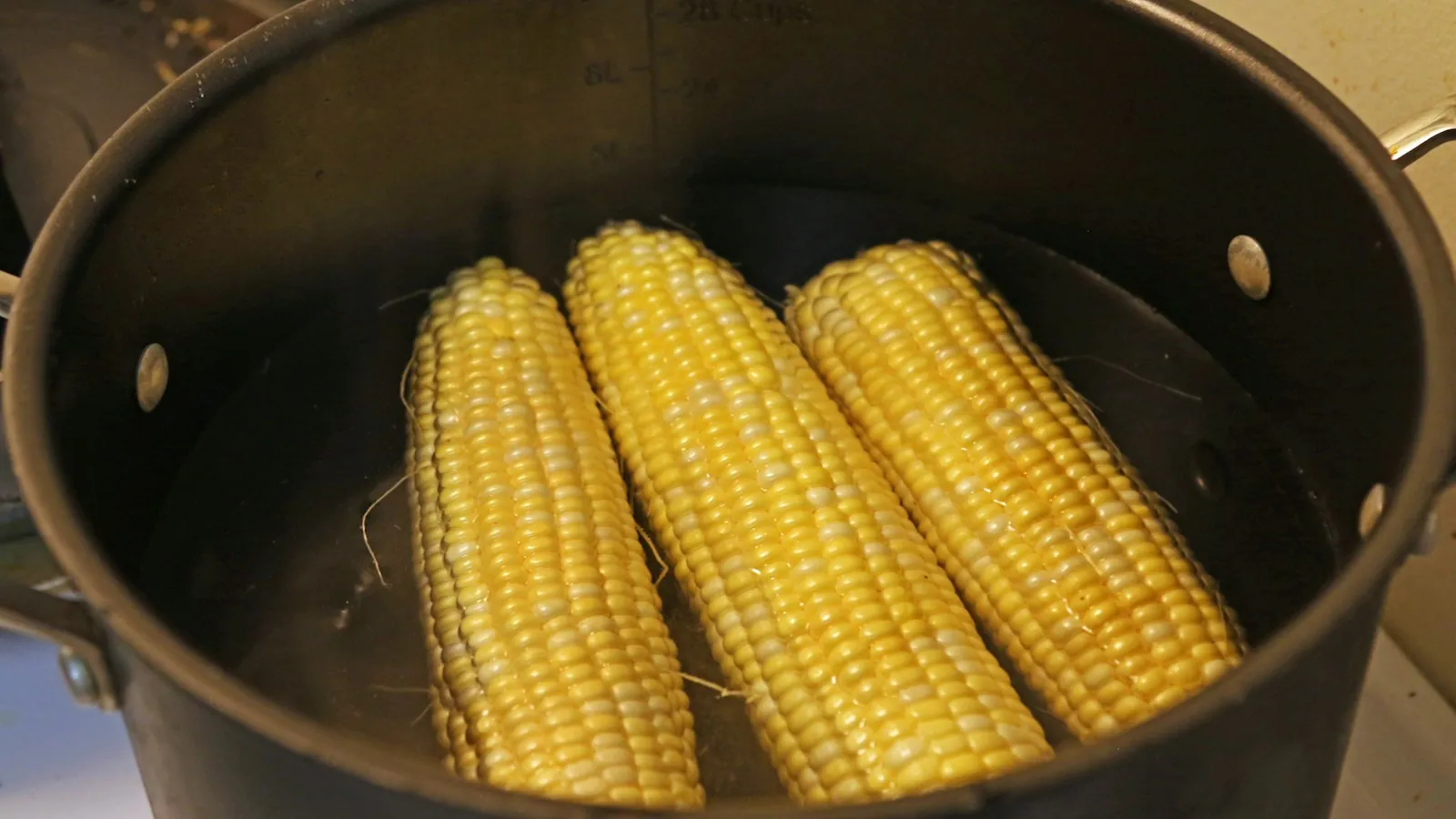
Fresh sweet corn needs only 3 to 5 minutes in boiling water. Around 8 to 10 minutes it starts going downhill, and by 15 minutes the kernels are chewy, starchy, and a little shriveled. Corn that is a few days old or a field variety can take 5 to 7 minutes, but that is the ceiling for most ears.
Why does overcooked corn get tough instead of softer?
It seems backward. Most vegetables, like steamed broccoli or fresh green beans, get softer the longer they cook, and corn does too on the inside. The problem is the outside of each kernel.
 On the menu11 questions
Every kernel is wrapped in a thin skin called the pericarp. That skin is made of cellulose and doesn't soften much in water. Meanwhile, the sweet, juicy filling inside starts to break down and leak out. Long boiling lets the filling lose water and sugar into the pot, so the kernel shrinks while the skin stays put. What you bite into is more skin and less juice, which reads as tough and chewy.
Heat also changes the texture of the filling itself. Testing by America's Test Kitchen found that corn kernels taste best when they reach roughly 150 to 170°F. Below 150°F the starches are still raw and taste chalky. Above 170°F the pectin that holds the kernel together starts to break down, so the inside goes soft and mealy while the skin stays firm. A pot of water at a rolling boil is 212°F, so the kernels blow past that window faster than most people expect.
How long to boil each kind of corn
Not all corn behaves the same. The sugar level, the age of the ear, and whether it was frozen all shift the timing a bit. Start the clock when the water returns to a boil after you add the corn.
| Type of corn | Boil time | Starts getting tough around |
|---|---|---|
| Very fresh sweet corn (picked same day) | 2 to 4 minutes | 8 minutes |
| Supermarket sweet corn (2 to 4 days old) | 4 to 6 minutes | 10 minutes |
| Supersweet varieties (often labeled "extra sweet") | 3 to 5 minutes | 8 to 10 minutes |
| Older ears or starchier field-style corn | 6 to 8 minutes | 12 minutes |
| Frozen whole ears, straight from the freezer | 5 to 8 minutes | 12 minutes |
| Frozen mini cobs (half ears) | 4 to 6 minutes | 10 minutes |
Treat these as ranges. A small, skinny ear cooks faster than a fat one, and a crowded pot takes longer to return to a boil. When in doubt, pull an ear at the low end of the range and check it. Pulling at the low end and checking is a good habit with most cooking times, since ranges beat a fixed number.
How can you tell when corn is done?
You don't need a thermometer, though one helps if you are curious. Look and taste instead.
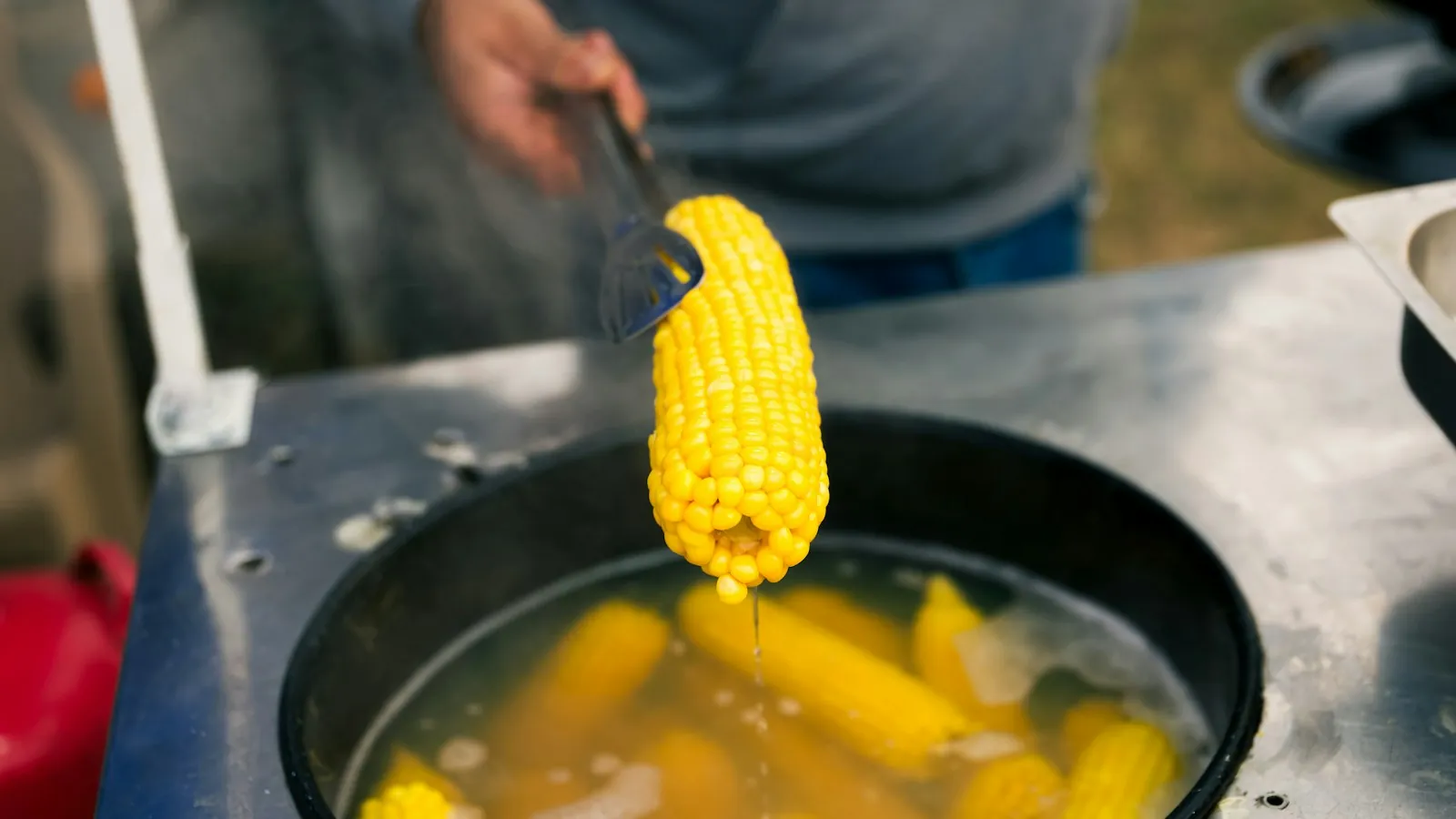
- Color: The kernels turn a brighter, deeper yellow (or a whiter white for bicolor and white corn). Raw corn looks slightly pale and matte.
- Plumpness: Done kernels look full and glossy. If they start to look dimpled or wrinkled, they have gone too far.
- Pierce test: Press a kernel with a fork or your thumbnail. It should burst with milky, sweet juice and give easily.
- Bite: Kernels should pop cleanly with a light snap. A doughy or pasty bite means it is overcooked or the corn was old to begin with.
If you check with an instant-read thermometer, slide the probe between rows of kernels toward the cob. Aim for about 160°F. That sits in the middle of the sweet spot and leaves room for carryover heat while the ear rests on the platter.
A simple method that keeps corn tender
This is the way I boil corn most of the summer. It is quick, and the timing is forgiving enough that you can do it while the burgers finish on the grill.
- Shuck right before cooking. Pull off the husks and as much silk as you can. A dry paper towel rubbed down the ear grabs the stubborn strands.
- Use a big pot. A wide Dutch oven or regular stockpot both work. Plan on about 4 quarts of water for 4 to 6 ears. More water holds its heat better, so the boil comes back quickly once the corn goes in.
- Bring the water to a full boil. Skip the salt for now. A tablespoon or two of sugar is optional and only helps if the corn is old or bland.
- Add the corn and start timing when the boil returns. For fresh supermarket corn, that is usually 4 to 5 minutes.
- Pull one ear and check it. Use tongs. If the kernels look plump and burst when pressed, the batch is done.
- Get it out of the water. Move the ears to a platter right away. Corn left sitting in a pot of near-boiling water keeps cooking.
- Butter and salt at the table. Salt sticks better to buttered kernels than it does in the pot.
Should you salt the water for corn?
The old advice says salt makes corn tough. In practice, the effect is small. A normal amount of salt in the pot won't ruin your corn in 5 minutes, but it also doesn't do much for flavor, because very little salt gets through the kernel skins in that short time.
Salting at the table is simply more effective. A sprinkle of flaky salt over buttered corn tastes saltier and more even than anything you can do in the water. If you like to season the pot anyway, go ahead. Just don't count on it to fix bland corn.
Sugar in the water is a different story. It can help older ears that have already converted some of their sugar to starch. Fresh corn doesn't need it.
Why is my corn tough even when I didn't overcook it?
Sometimes the timer was right and the corn is still chewy. In that case the problem usually started before the pot.
The corn is old. Sweet corn starts turning its sugar into starch the moment it is picked, and the process runs much faster at warm temperatures. An ear that sat on a hot truck or a kitchen counter for a few days will be starchier and tougher no matter how carefully you cook it. Refrigerate corn in its husk and cook it within a day or two if you can.
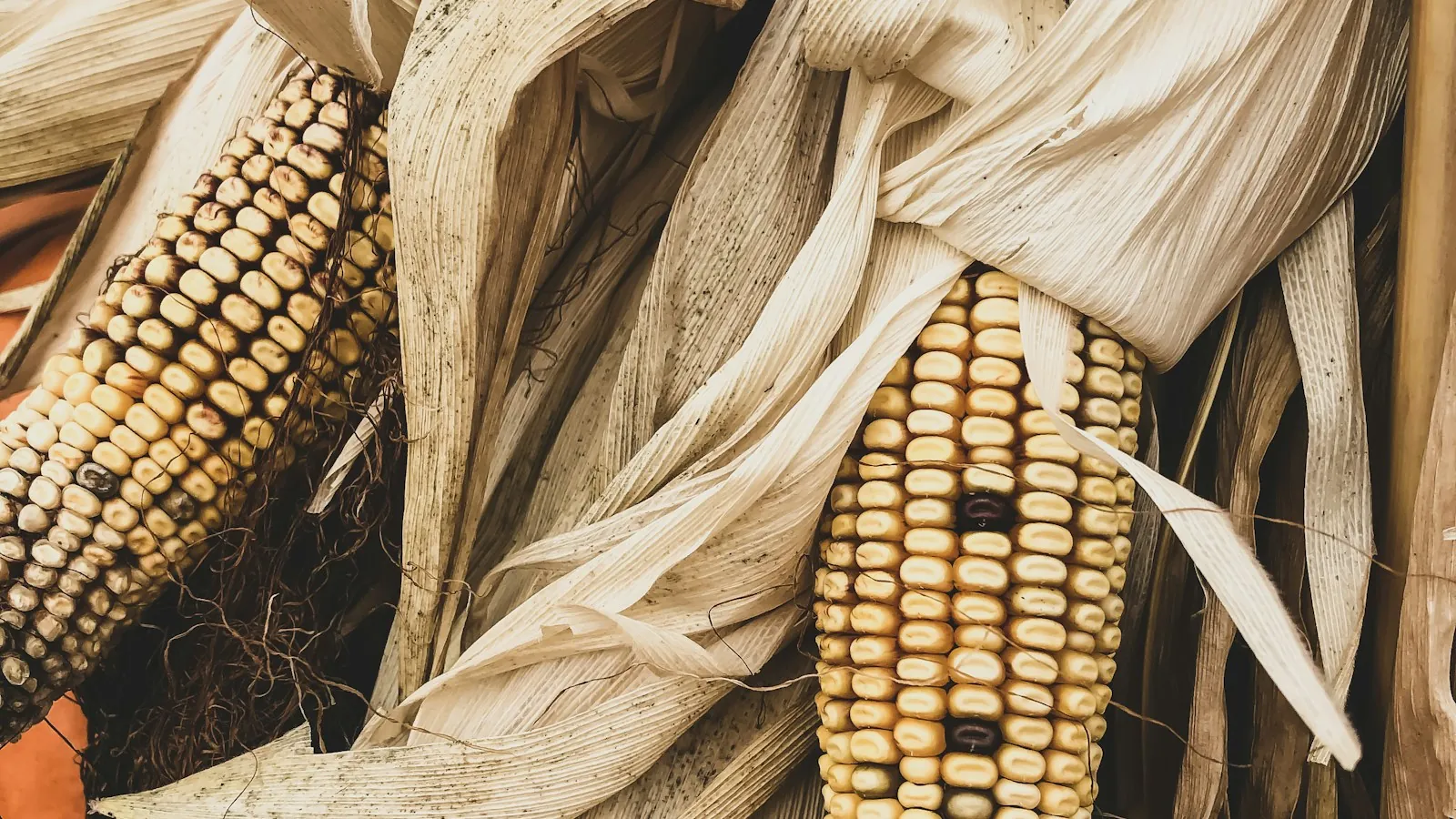
The ears were mature when picked. Corn left on the stalk too long develops thicker kernel skins and a doughy center. You can spot it at the store: the kernels look dented or deeply indented on top, and they feel firm rather than juicy when you press one.
It is the wrong kind of corn. Field corn, the kind grown for animal feed, cornmeal, and ethanol, is a different crop from sweet corn. It occasionally shows up at roadside stands. It will never get tender the way sweet corn does.
The corn sat in hot water. Turning off the burner doesn't stop the cooking if the corn is still in a pot of 200°F water. Fifteen minutes of "keeping it warm" in the pot can do as much damage as fifteen minutes of boiling.
Can you keep boiled corn warm without it getting tough?
Yes, with a gentler approach. If dinner is running late, don't leave the corn in boiling water.
One method that works well comes from America's Test Kitchen. Bring the water to a boil, turn off the heat, add the corn, cover the pot, and let it sit. Because the water starts cooling as soon as the heat is off, the kernels land in that 150 to 170°F range and stay there instead of overshooting. The corn is ready in about 10 minutes and holds well in the covered pot for up to 30 minutes.
Another option is to boil the corn normally, drain it, and wrap the ears in a clean kitchen towel or foil. Set them in a cooler or a covered dish. They'll stay hot for 20 to 30 minutes without cooking further.
Food safety-wise, cooked corn follows the same rule as other cooked food: don't leave it out at room temperature for more than 2 hours (1 hour if it is above 90°F outside, which is common at summer cookouts). Refrigerate leftovers within that window and use them within 3 to 4 days.
Does milk or butter in the water make a difference?
Milk-and-butter corn has a big following online. You add a cup or so of milk and a stick of butter to the boiling water, then cook the corn as usual. The result tastes rich and a bit sweeter, and some people swear it keeps the kernels tender.
It doesn't change how fast corn toughens. The usual timing still applies: 4 to 6 minutes for most ears. What the milk and butter add is flavor, not protection. Fat clings to the outside of the ear, so you get a buttery coating before you even reach for the butter dish. It is worth trying once, especially for corn that is a few days past its peak, but plain water and good butter at the table get you most of the way there.
Is it better to boil corn in the husk?
You can, but it slows things down. Boiling corn with the husk on takes about 8 to 10 minutes because the water has to heat through several layers of leaves first. The husk insulates the kernels, so they are less likely to overcook in the same span of time.
The downside is that peeling a wet, scalding husk is messy, and the silk still clings. Most people find it easier to shuck first and boil for less time. If you want the husk-on flavor, grilling or roasting is where it shines. Microwaving a whole ear in the husk for 3 to 4 minutes is also a neat trick, in the same spirit as microwaving a potato: the silk slides off with the husk once you cut off the stem end.
Quick timing for a crowd
Cooking a dozen ears changes the math a bit. More corn drops the water temperature further, so the pot takes longer to come back to a boil.
- Use the biggest pot you have, ideally 12 quarts or more for 10 to 12 ears.
- Snap long ears in half so they fit under the water without crowding.
- Start timing when the boil returns, not when the corn goes in.
- Cook in two batches if the water takes longer than 5 minutes to recover.
- Expect the total cook time to stay in the 5 to 7 minute range once the water is boiling again.
If you are feeding a big group and can't control the timing, the turn-off-the-heat method is the safest bet. It removes the guesswork, and nobody gets a chewy ear because the grill took longer than planned.
 Does your corn look done before it turns tough?
Plumpness and gloss are hard to judge from a description, and this is a fair place to compare them. Taste of Home also shows several cooking methods, so you can see how the ears differ.
How to Cook Corn on the Cob, 7 Ways I Taste of Home
By Taste of Home on YouTube. Their method may vary a little from ours. Watch on YouTube
- Compare how plump and glossy the kernels look with the 3 to 5 minute window for fresh sweet corn above.
- Notice when the pot returns to a boil, since that is the moment the timer should start.
- Look for any dimpled or wrinkled kernels, the sign the ear has gone past the point of being tender.


