Picking Produce
How Can You Tell an Egg Is Fresh, and Is the Egg Float Test Reliable?
 By the CookClear writers
Checked against USDA grading standards and university extension buying advice
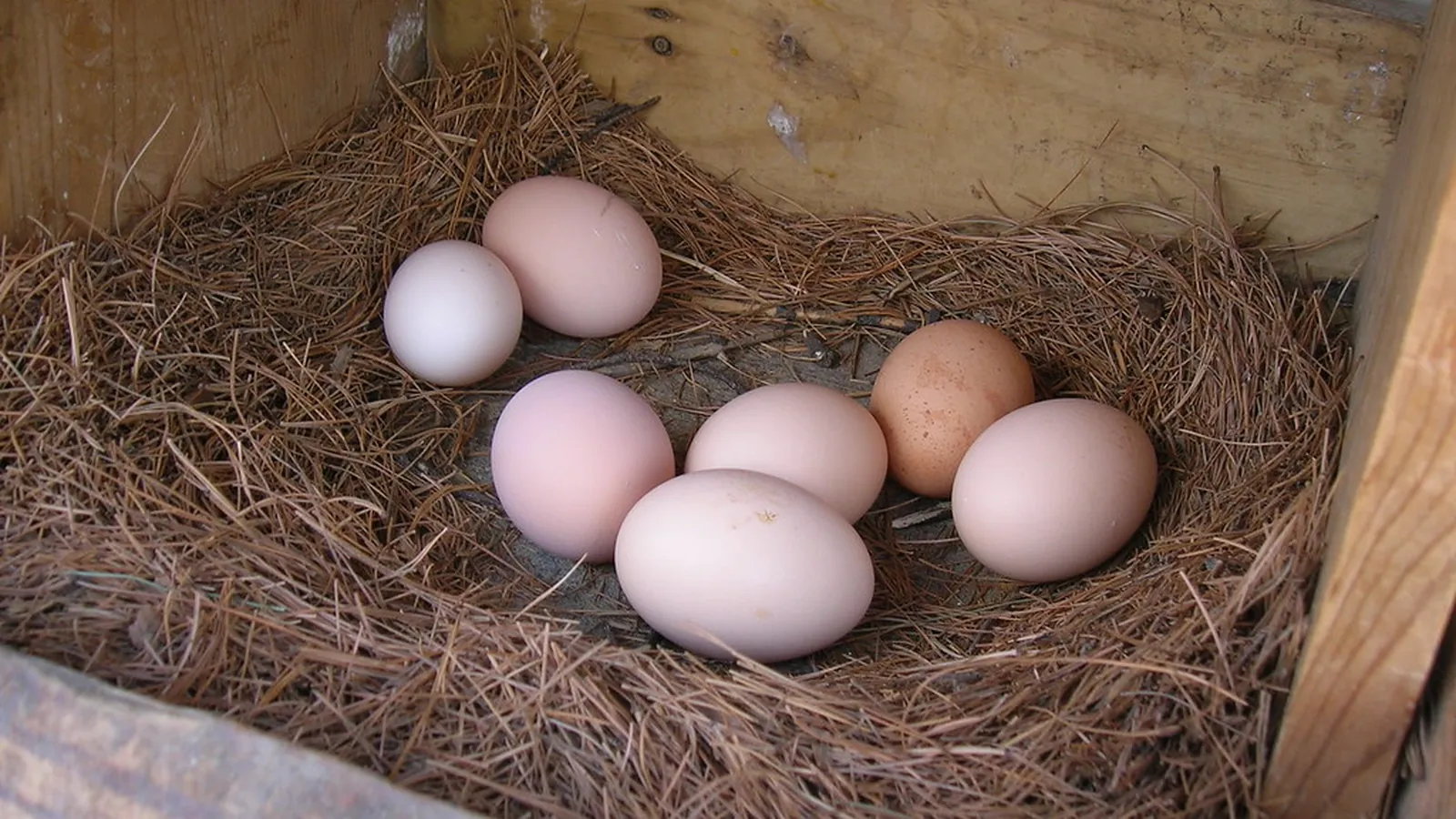
 Clear Answer
The egg float test tells you how old an egg is, not whether it's safe: a fresh egg sinks and lies flat, an older one tilts or stands on end, and a floater has a large air cell from weeks of aging. USDA says a floating egg may still be safe, so crack it into a bowl and check the smell and look before deciding.
Why does an egg float as it gets older?
It comes down to a small pocket of air at the wide end of the shell.
A freshly laid egg is completely full. As it cools from the hen's body temperature, the contents shrink a little and pull the two inner shell membranes apart, usually at the large end. That gap is the air cell. University of Illinois Extension describes it as forming "by contraction of the contents during cooling and by the loss of moisture."
Why the air cell gets bigger
An eggshell is not airtight. It has several thousand tiny pores that let the egg "breathe." Over days and weeks, moisture and carbon dioxide escape through those pores and air takes their place. USDA FSIS notes that an egg can float "when its air cell has enlarged sufficiently to keep it buoyant."
Two things happen at once as the egg ages:
- The air cell grows, so the egg gets lighter for its size.
- The white thins and the yolk flattens, which is the same change graders use to drop an egg from Grade AA toward Grade B.
Cold slows all of this. An egg kept at 40°F or below loses moisture far more slowly than one left on a warm counter, which is why storage matters as much as the date.
What does it mean if an egg floats, tilts or sinks?
Fill a bowl or tall glass with cold water deep enough to cover an egg by an inch or two. Lower the egg in gently with a spoon and watch where it settles.
| What the egg does | Air cell size | What it tells you | What to do |
|---|---|---|---|
| Sinks and lies flat on its side | Small | Very fresh, likely days old | Best for frying and poaching |
| Sinks but tilts up at the wide end | Medium | A week or more old | Fine for any use |
| Sinks and stands on its point | Large | Several weeks old | Good for hard cooking, baking, scrambling |
| Floats to the surface | Very large | Old, quality has dropped | Crack into a bowl and check smell and look |
These ages are rough. How fast an egg loses moisture depends on its shell, the humidity, and how cold it has been kept, so two eggs of the same age can sit a little differently in the water.
Does a floating egg mean it's unsafe to eat?
No. This is where the egg float test gets oversold. USDA FSIS says a floating egg is lower in quality but may still be safe, and University of Illinois Extension says: "If an egg floats in water, that does not mean the egg is unsafe." A large air cell means the egg is old. It says nothing about bacteria.
The reverse is just as important. A fresh egg that sinks flat can still carry Salmonella, because the test can't detect germs inside or on the shell. Safety comes from buying refrigerated eggs with clean, uncracked shells, keeping them at 40°F or below, and cooking them until the white and yolk are firm, or to 160°F in dishes that contain eggs.
How to read an egg carton date
Before you ever fill a bowl, the carton tells you how old the eggs are. Cartons with the USDA grade shield carry a few codes on the end or side, and only one of them is a plain calendar date.
- Plant number. A code starting with "P" followed by numbers identifies the packing plant. It says nothing about freshness.
- Pack date. A three-digit number from 001 to 365 marks the day of the year the eggs were washed, graded and packed. USDA AMS describes it as "the consecutive day of the year." People often call it the Julian date: 001 is January 1, 032 is February 1, and 365 is December 31.
- Sell-by or expiration date. If a USDA-graded carton shows one, it can be no more than 30 days after the pack date. Retailers use it to rotate stock. It isn't a safety cutoff.
That pack date is the most useful number at the store. Subtract it from today's day of the year and you know roughly how long ago the eggs were packed.
Sell-by dates follow state law, and some states don't allow them on eggs at all. Phrases like "best by" and "use by" work differently on other foods, and knowing what a best by date means keeps you from tossing good groceries early.
Grade AA vs Grade A eggs: what are you paying for?
USDA grades describe interior and shell quality at the moment of grading. The grade comes from the egg's weakest factor, and the air cell is one of them. These numbers come from the U.S. standards for shell eggs.
| Grade | Air cell depth | White | Yolk | Where you'll see it |
|---|---|---|---|---|
| U.S. Grade AA | Not over 1/8 inch | Clear and firm | Round, practically free of defects | Common in stores |
| U.S. Grade A | Not over 3/16 inch | Clear, reasonably firm | Practically free of defects | Most common grade sold |
| U.S. Grade B | May be over 3/16 inch | May be thinner, weak and watery | May be flattened and enlarged | Seldom sold at retail; mostly goes to breakers and food makers |
AA and A are nutritionally the same. The difference shows up in the pan: a higher, firmer white spreads less, which matters most when the egg is the whole dish. That's also why poached eggs fall apart more when they're older, since the thin white drifts off as wisps.
Grade and size are separate labels. "Large" refers to weight per dozen, so if a recipe depends on exact amounts, what an egg weighs by size is the number to check.
Grade is a snapshot. A Grade AA egg kept warm for weeks slides toward Grade B quality, so age and storage matter more than the letter on the shield.
How long do raw eggs stay good in the fridge?
USDA FSIS lists raw eggs in the shell at 3 to 5 weeks in the refrigerator, counted from the day you bring them home. University of Illinois Extension gives the same window and adds that the sell-by date will often pass during that time while the eggs are still safe.
| Egg type | Fridge at 40°F or below | Notes |
|---|---|---|
| Raw eggs in the shell | 3 to 5 weeks | Keep in the original carton |
| Raw whites, out of the shell | 2 to 4 days | Covered container |
| Raw yolks, out of the shell | 2 to 4 days | Cover with a little water to stop a skin forming |
| Hard-cooked eggs | About 1 week | Peeled or in the shell |
Store them in the carton on an inside shelf, not in the door. FSIS recommends the coldest part of the fridge, and the door warms up every time you open it. The carton also slows moisture loss.
Don't wash store-bought eggs before storing them. USDA-graded eggs are already washed and sanitized at the plant, and FSIS warns that washing at home can pull water, and anything in it, through the pores. Hard-cooked eggs follow their own clock, and whether hard boiled eggs keep better peeled or in the shell is a separate call from raw storage.
Which eggs to use first for which job
Older eggs aren't worse for everything. Sometimes they're better.
- Fresh eggs (sink flat) have tall yolks and firm whites, the best pick for frying, poaching, and a soft boiled egg with a runny yolk.
- Middle-aged eggs (tilt) work for anything: baking, omelets, or soft scrambled eggs where texture comes from the heat, not the egg's age.
- Older eggs (stand on end) are the best choice for hard cooking. USDA AMS notes that Grade B quality eggs are preferred for hard boiling, and older eggs tend to peel more easily because the larger air cell and thinner white loosen the membrane.
- Floaters that pass the smell check are fine scrambled, baked into a quiche, or mixed into batters, where a runny white won't show.
What are the signs a raw egg has gone bad?
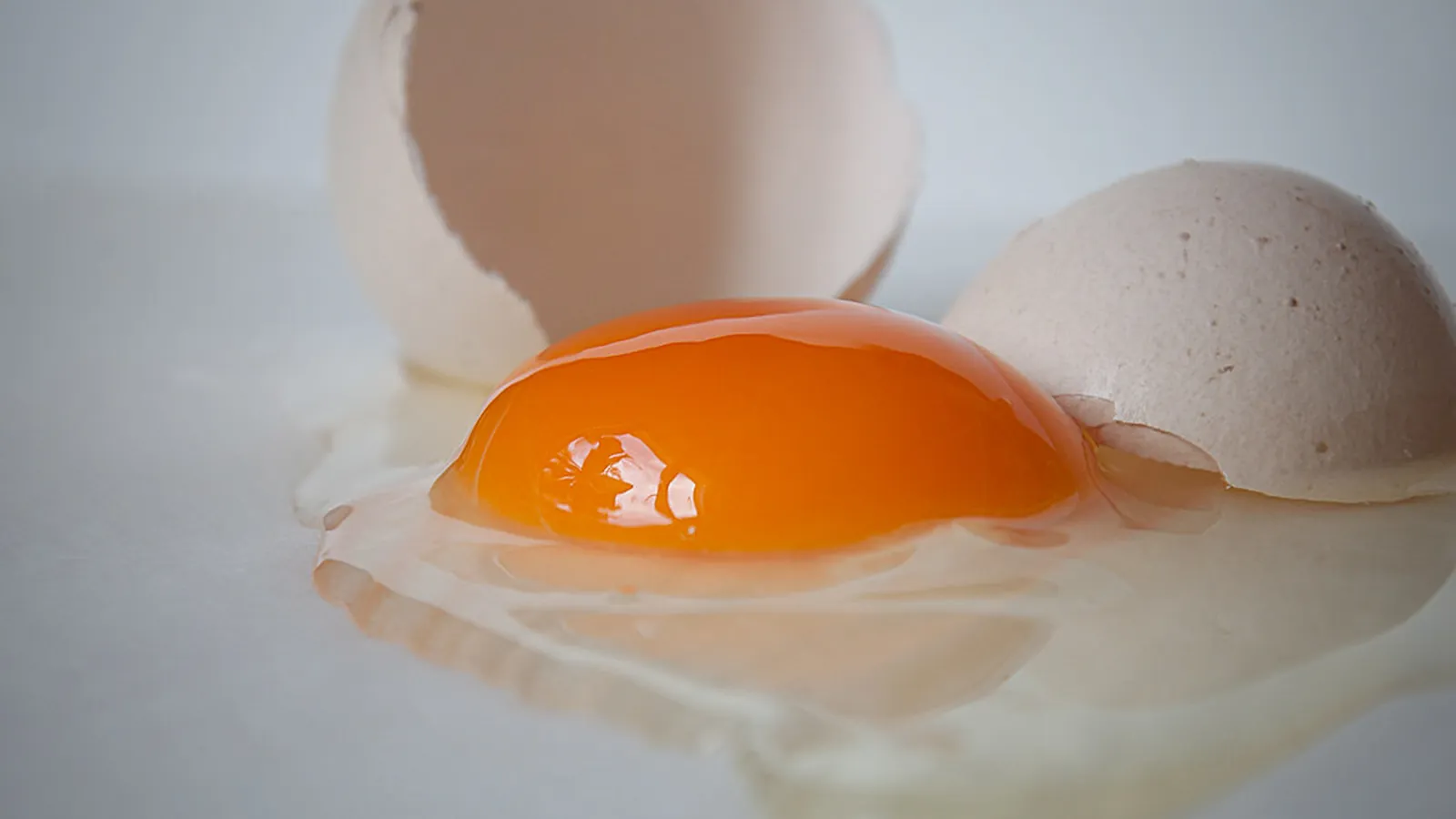
Smell and appearance are better signs than water, according to University of Illinois Extension. Crack any doubtful egg into a small separate bowl, never straight into a batter with other eggs.
| What you see | Likely cause | What to do |
|---|---|---|
| Sulfur or rotten smell, before or after cracking | Spoilage | Throw it out |
| Odd colors such as pink, green or black in the white or yolk | Likely bacterial or mold growth | Throw it out |
| Powdery or slimy spots on the shell | Mold or bacteria on the shell | Throw it out |
| Runny white that spreads wide, flat yolk | Age, normal quality loss | Safe to use if it smells normal |
| Small red or brown spot on the yolk | Blood or meat spot, not spoilage | Lift it out with a spoon and use the egg |
| Cracked or leaking shell from the store | Shell damage | Don't buy; if it cracks at home, use within 2 days |
A flat yolk and watery white are just the aging the float test already showed you. Smell decides.
How to choose eggs at the store
The best freshness check happens before you pay. A few habits make it easy:
- Buy eggs from a refrigerated case, never from an unrefrigerated display.
- Open the carton and check that no shells are cracked, leaking or dirty. Wiggle each egg gently to spot one stuck to the carton.
- Find the three-digit pack date and pick the carton with the highest number.
- Make eggs one of the last things in your cart, and get them home to the fridge quickly, especially in summer.
The same buy-the-freshest habits apply to other perishable proteins, from steak to how fresh fish should look. For fruit, vegetables and more picking produce questions, the same idea holds: check what you can see and smell before you pay.
 Watching fresh and old eggs settle in water
Seeing eggs of different ages side by side makes the sink, tilt and float positions easy to recognize. A short demonstration helps you judge your own carton at a glance.
Egg Freshness Float Test with Chef Dez
By BC Egg on YouTube. Their method may vary a little from ours. Watch on YouTube
- Notice how a fresh egg lies flat on the bottom while an older one tips its wide end up toward a deeper air cell.
- Watch for eggs that stand on their point, the stage that lines up with several weeks in the fridge and the easiest peeling.
- If an egg floats, remember the 3 to 5 week guidance and the smell check matter more than buoyancy.