 Cooking Times
How Many Minutes Does Bacon Need in the Oven to Crisp, Not Burn?
 By the CookClear writers
Checked against USDA safe temperatures and test kitchen timing
 Clear Answer
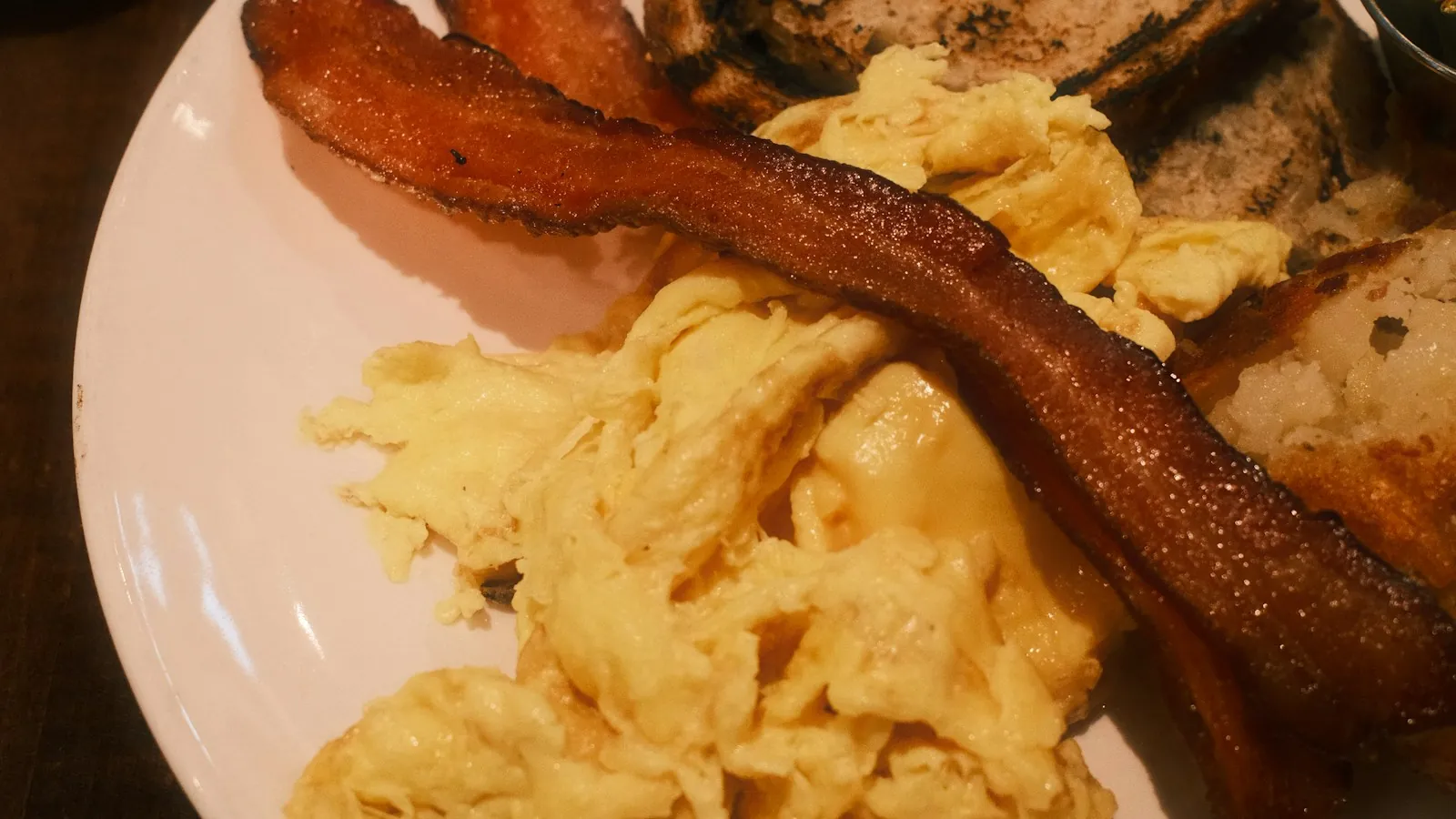
Regular-sliced bacon needs 10 to 15 minutes in a 400°F oven on the middle rack to get crisp, according to America's Test Kitchen's tested method. It's usually cooked through around 10 minutes, and the extra time turns it from chewy to shattering. Thick-cut runs longer, so start checking at 15 minutes and every couple of minutes after.
The short version: temperature, time, and setup
Here is the method that works in most home ovens with the least fuss:
 On the menu12 questions
- Heat the oven to 400°F with a rack in the middle position.
- Line a rimmed baking sheet with aluminum foil. You need the rim, because bacon renders a lot of fat and a flat cookie sheet will spill it onto the oven floor.
- Lay the strips in a single layer. They can overlap slightly, since they shrink as they cook.
- Bake for about 10 minutes, then rotate the pan front to back.
- Keep baking, checking at 12 minutes, until the bacon is browned and crisp. For most packages that lands between 12 and 15 minutes total.
- Move the strips to a paper towel-lined plate to drain.
You don't flip bacon in the oven. The heat in the oven surrounds the strips, so both sides cook without you touching them. That is the main reason people switch from the skillet: no grease splatter on the stove, no standing over the pan, and a whole pound done in one batch. If the oven is also making eggs or potatoes for the same meal, matching cooking times lets everything finish together.
Timing by bacon thickness
Package labels are not standardized, so "thick-cut" from one brand can be noticeably thinner than another. Use these numbers as a starting point, then trust what you see on the pan.
| Bacon type | Oven temp | Start checking | Typical finish | What to watch for |
|---|---|---|---|---|
| Regular sliced | 400°F | 10 minutes | 12 to 15 minutes | Edges go from pale to deep golden; fat turns translucent |
| Center-cut (leaner) | 400°F | 10 minutes | Often near the low end of 10 to 15 | Less fat, so it can tip into dark faster |
| Thick-cut | 400°F | 15 minutes | Usually 15 to 20 minutes | Fat streaks still opaque and white means keep going |
| Turkey bacon | 400°F | Follow package | Varies widely by brand | Very little fat, so it dries out rather than crisps |
The regular-sliced row comes from America's Test Kitchen, and the thick-cut range matches published thick-cut recipes that bake at 400°F for 15 to 20 minutes. The center-cut row is only a rough estimate, because the thickness and fat content vary so much between brands. The first time you try a new package, set a timer for the "start checking" number and look every 2 minutes after that.
Why does bacon go from perfect to burnt so fast?
Bacon is mostly fat and a thin layer of meat. For the first several minutes in the oven, the fat is melting out of the strip, and that liquid fat protects the meat by keeping its temperature in check. Once most of the fat has rendered, the meat has nothing left to buffer it, and it browns quickly.
There is also sugar. Many commercial bacons are cured with sugar, and maple, brown sugar, or honey-cured varieties have more of it. Sugar browns faster than the meat does and goes from caramelized to bitter in a short window. If your package mentions maple or brown sugar, check a minute or two earlier than you would for plain bacon.
Finally, bacon keeps cooking after it leaves the oven, much like resting a steak. The strips are sitting in hot fat on a hot pan, and they continue to firm up for a minute or so on the plate. Pull them when they look one shade lighter than you want and just slightly less rigid. They will crisp the rest of the way as they cool.
Do you preheat the oven for bacon?
Most tested recipes, including America's Test Kitchen's, start the bacon in a fully heated 400°F oven. That gives you a predictable clock: the timing here assumes the oven is already at temperature when the pan goes in.
Some cooks prefer starting bacon in a cold oven and letting it heat up with the oven. The idea is that a slow start renders more fat before the meat begins to brown. It can work well, but the total time depends entirely on how fast your oven preheats, which varies a lot from one oven to the next. If you go that route, plan on watching the pan closely rather than relying on any posted number. For a first attempt or a crowd, preheating is the safer choice.
Foil, parchment, or a wire rack: which gives crispier bacon?
Each setup gives a slightly different texture.
- Foil on a rimmed sheet. This is the tested default. The bacon sits in its own rendered fat, which shallow-fries it. You get even browning, flat strips, and easy cleanup once the fat cools.
- Parchment on a rimmed sheet. Similar to foil, with slightly less sticking. Parchment has a maximum temperature printed on the box, so check that yours is rated for at least 400°F. Do the same check for parchment in an air fryer.
- Wire rack set in a rimmed sheet. The fat drips away from the strips, so the bacon tends to come out drier and a bit leaner, with a more brittle texture. The tradeoff is a rack that takes real scrubbing, and in some ovens the elevated strips cook faster, so watch them.
America's Test Kitchen specifically recommends skipping the rack and cooking the bacon right on the foil. If your bacon comes out crisp but greasy, blot it well on paper towels before reaching for a rack.
Why some strips burn while others are still floppy
Uneven bacon on one sheet almost always comes from the oven. Most ovens have hot spots, usually toward the back or near the heating element. That is the reason for rotating the pan front to back about halfway through. If you are cooking two sheets at once, swap their rack positions at the same time you rotate them.
A few other causes worth checking:
- Crowding. Slight overlap is fine, but strips piled two deep will steam in the middle and burn at the exposed ends.
- Mixed thicknesses. Some packages include a few ragged or extra-thick end pieces. Put those toward the hotter back of the pan or pull the thin ones early.
- A dark pan. Dark metal sheets absorb more heat than shiny aluminum ones, so they brown the underside faster. Shave a couple of minutes off and check early. A sheet that has warped in the oven also browns unevenly.
- An oven that runs hot. If every batch burns at the low end of the time range, your oven may be running hot compared with the dial. An inexpensive oven thermometer will tell you.
How do you know the bacon is done?
Bacon doneness is mostly visual. Look for three things: the meat has turned from pink to a deep reddish brown, the fat has gone from opaque white to translucent and golden, and the bubbling in the pan has slowed down. Lift a strip with tongs. If it holds its shape and only bends slightly, it will be crisp once it cools. If it droops like a ribbon, give it another couple of minutes.
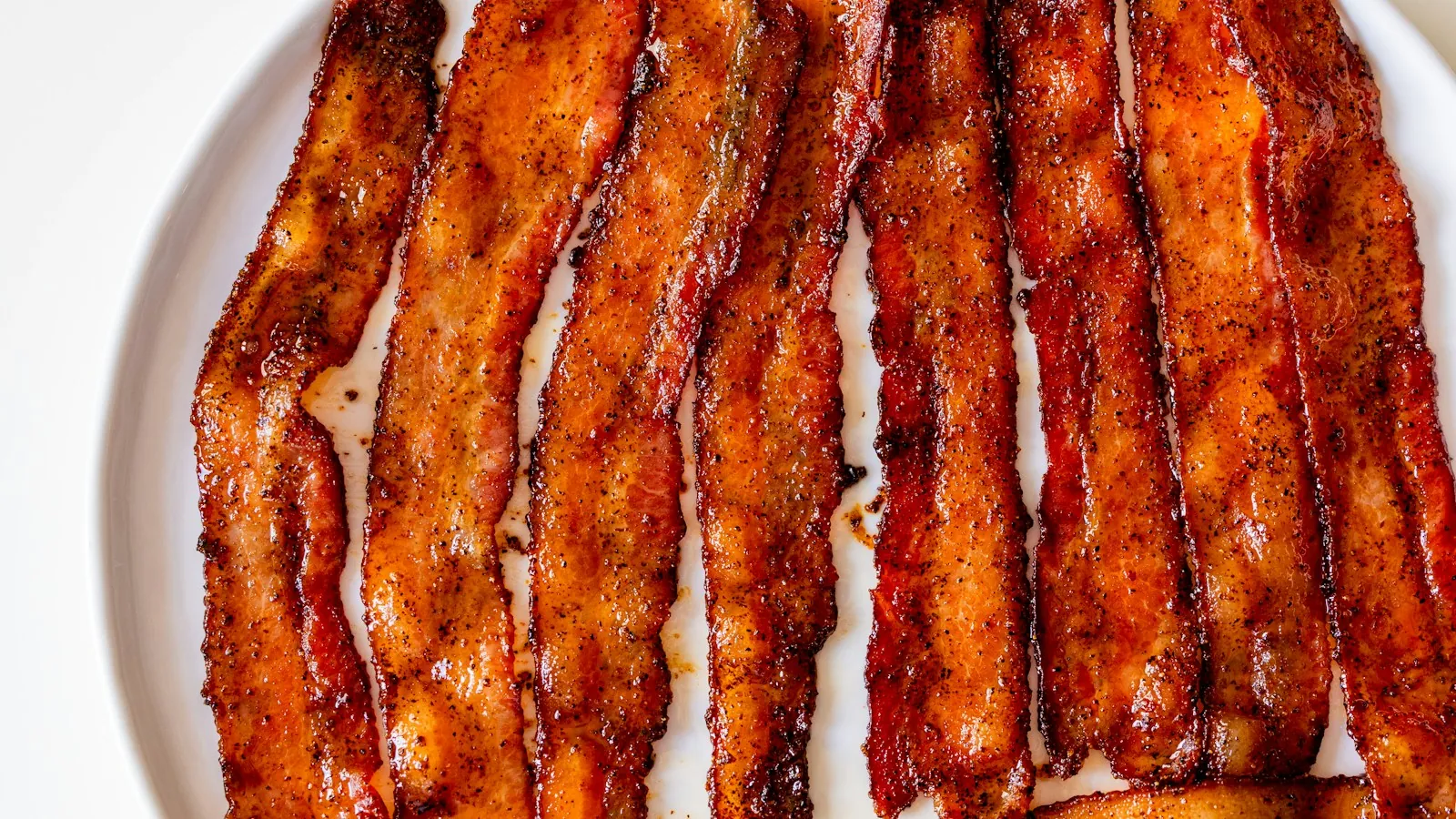
Color alone can fool you on cured meat. The USDA notes that cured bacon can stay pinkish even when it is fully cooked, because of the curing salts. A hint of pink in bacon that is cooked through and crisp is not a safety problem by itself.
The USDA also says to cook bacon completely in one go. Don't partially bake a sheet of bacon, refrigerate it, and plan to finish it later. Partial cooking can leave bacteria that survived but were not killed, and the time in between gives them a chance to grow. If you want bacon ready ahead of time, cook it all the way and reheat it.
Is darker, extra-crispy bacon a health concern?
Bacon is cured with nitrites, and high heat can turn some of those compounds into nitrosamines. The USDA's bacon fact sheet reports that well-done or burned bacon may be more hazardous than less well-done bacon, and that bacon cooked at lower temperatures in testing showed none. Aim for crisp and golden-brown, and throw away strips that come out blackened rather than eating them. The USDA also notes that microwaved bacon forms fewer nitrosamines than fried bacon, if that concerns you.
Can you bake bacon straight from frozen?
Yes. The USDA says it is safe to cook bacon from the frozen state. The catch with the oven is that frozen strips are stuck together in a slab. Put the frozen block on the sheet, bake for a few minutes until the strips loosen, then pull them apart with tongs and spread them out. From there, use the same visual cues. Expect the total time to run longer than fresh bacon.
If you have time to thaw, do it in the refrigerator, in cold water, or in the microwave, never on the counter. Bacon thawed in the fridge can stay there for up to 7 days before cooking. Bacon thawed in cold water or the microwave should be cooked right away. If plans change, the rules for refreezing thawed meat apply to bacon too.
Storing and reheating oven bacon
Baking a full pound is easy, and leftovers are useful for sandwiches, salads, and pasta. Here is how long cooked bacon lasts, per the USDA:
| Bacon | Refrigerator (40°F or below) | Freezer (0°F or below) |
|---|---|---|
| Raw bacon, opened or unopened | 7 days | 4 months |
| Leftover cooked bacon, cooked at home | 4 to 5 days | 1 month |
Freezer times are about quality. Frozen food stays safe indefinitely at 0°F, but the flavor and texture fade over time.
Let the bacon cool, then wrap it in paper towels and store it in an airtight container or zip-top bag. To freeze, lay the strips flat on a sheet until firm, then bag them so they don't freeze into one block. Like any cooked meat, don't leave it sitting out at room temperature for more than 2 hours, the same rule behind how long leftovers keep.
To reheat, the USDA suggests the microwave at about 10 seconds per strip. A few minutes back in a hot oven or a dry skillet also works and brings back more of the crunch.
What to do with the rendered fat
A pound of bacon leaves a good amount of fat on the sheet. Let it cool until warm but still liquid, then pour it through a fine strainer into a jar and refrigerate it. It is excellent for frying eggs, scrambling eggs low and slow, roasting potatoes, or making cornbread.
If you don't want to keep it, let it cool and solidify right on the foil, then fold the foil up and throw it in the trash. Never pour bacon fat down the sink. It hardens in the pipes and causes clogs.
 Spotting crisp bacon before it burns
Bacon goes from pale to burnt in a couple of minutes, and color is hard to judge from words alone. America's Test Kitchen demonstrates the sheet-pan method so the doneness cues are easy to see.
The Easiest and Cleanest Way to Cook Bacon | Today's Special
By America's Test Kitchen on YouTube. Their method may vary a little from ours. Watch on YouTube
- Compare the strips with the 10 minute mark in the timing table, when edges should be moving from pale to deep golden.
- Look at the fat streaks, since translucent fat means the bacon is close and opaque white fat means it needs more time.
- Notice how the foil-lined rimmed sheet holds the rendered fat, and think about when you would rotate the pan front to back.


