Techniques
What Really Happens to Pancakes When You Skip Resting the Batter?
 By the CookClear writers
Checked against test kitchen and food science sources

 Clear Answer
Skip resting the batter and your pancakes still cook through and taste fine, but they tend to come out slightly flatter, a little tougher, and more unevenly browned than pancakes from batter that sat for 5 to 15 minutes. If you are hungry and the griddle is hot, go ahead and cook. If you have ten minutes, the rest is a free upgrade.
What does resting actually do to the batter?
Two things happen while batter sits on the counter. First, the flour finishes absorbing the liquid. Dry starch granules and proteins soak up milk slowly, and a freshly mixed batter still has pockets of flour that have not fully hydrated, even if you can't see them.
Second, the gluten you created while stirring relaxes. Any time you mix wheat flour with liquid, proteins link up into elastic strands. A short rest lets those strands loosen, so the pancake sets up tender instead of springy.
There is a third, smaller effect. Baking powder starts releasing some carbon dioxide as soon as it gets wet, so a rested batter has small bubbles already distributed through it. That gives the pancake a head start on rising once it hits the heat.
How unrested pancakes look and taste different
The differences are modest. Side by side, most people can tell, but nobody will refuse to eat the unrested stack.
| Trait | Cooked right after mixing | Rested 10 to 15 minutes |
|---|---|---|
| Height | Slightly flatter, batter spreads more | A bit taller, holds its shape |
| Texture | Can be chewy or rubbery, especially if overmixed | Softer, more even crumb |
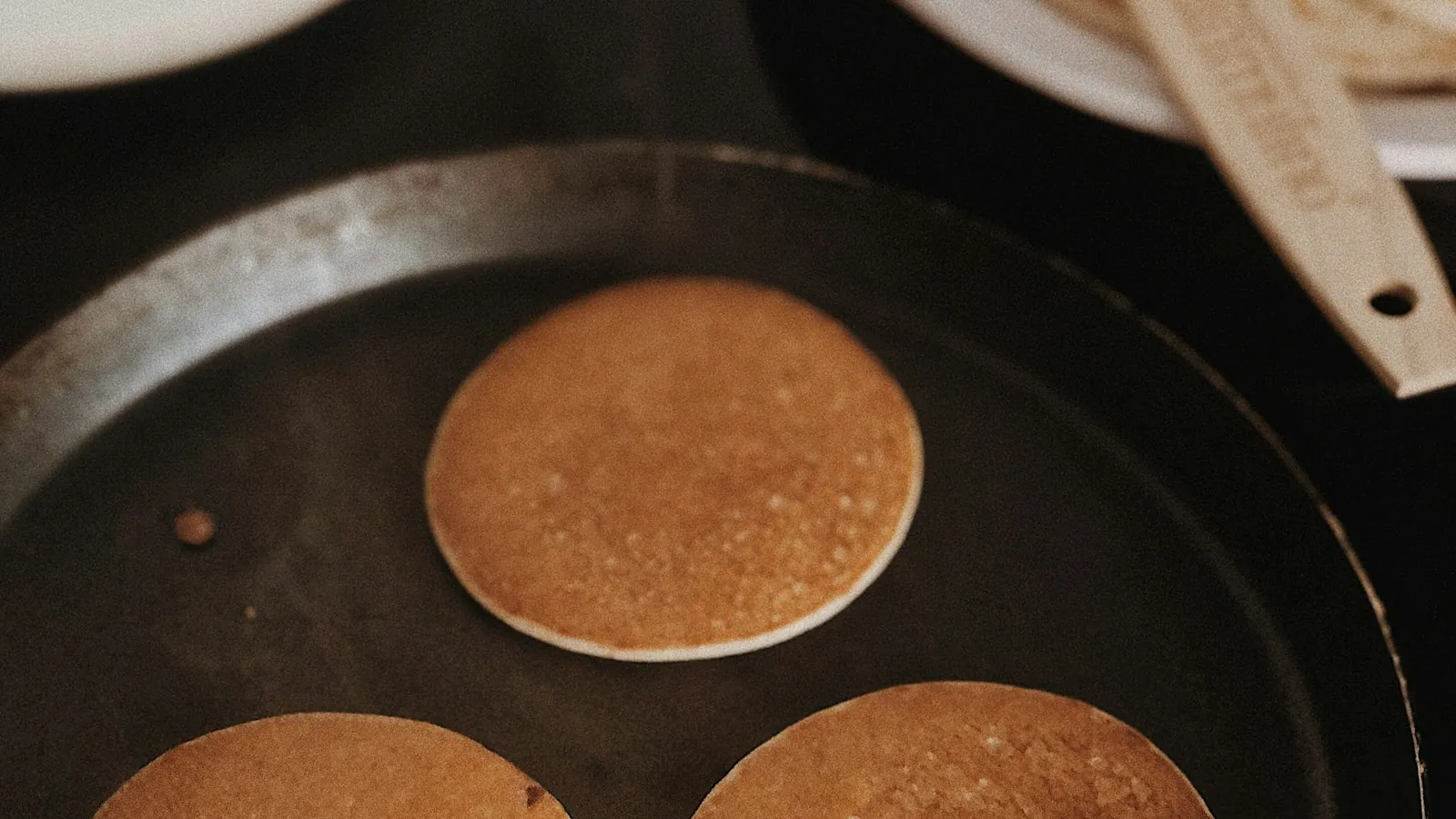
| Browning | Patchy, sometimes speckled | More even golden surface |
| Flavor | Faint raw-flour taste possible | Rounder, fully cooked flavor |
| Batter thickness | Thinner and runnier | Thickens noticeably as flour hydrates |
The thickening is the easiest change to spot. Mix a batter, scoop a ladle, wait ten minutes, and scoop again. The second ladle pours slower and spreads less on the griddle, which is why rested pancakes are often thicker.
Why lumpy batter is fine (and why resting helps it)
Most pancake recipes tell you to stir until just combined and leave the lumps. That advice exists because overmixing builds gluten, and gluten is what makes pancakes tough and chewy.
Resting is what makes those lumps a non-issue. During the rest, liquid works its way into the small clumps of flour, and many of them dissolve on their own. If you skip the rest, you either cook with more lumps (which can leave dry flour pockets) or you whisk harder to smooth them out, which costs you tenderness.
How long should pancake batter rest?
For a standard buttermilk or milk pancake with baking powder, 5 to 15 minutes is the sweet spot. That is about how long it takes to heat a griddle, set the table, and make coffee, so it rarely costs you anything.
Here is a rough breakdown by batter type:
- Baking powder batters (most American pancakes): 5 to 15 minutes. Up to 30 is fine. Much longer and some lift fades.
- Batters leavened only with baking soda and buttermilk: 5 to 10 minutes. Soda reacts with the acid quickly, so long rests flatten the result.
- Whipped egg white batters (soufflé-style): Don't rest at all. Fold in the whites and cook right away, because the foam deflates as it sits.
- Crêpe batter: 30 minutes to overnight in the fridge. Crêpes have no leavening to lose, and the long rest gives a thinner, more tender crêpe that tears less.
- Whole wheat or oat flour batters: 15 to 30 minutes. Bran and oats absorb liquid slowly and benefit from the extra time.
- Yeasted pancakes: Follow the recipe, usually an hour or more, since the rest is the rise.
Can you rest pancake batter too long?
Yes, especially with chemically leavened batters. Baking powder is usually double-acting: it releases some gas when wet and the rest when heated. The wet-stage gas slowly escapes from a batter that sits for hours, so pancakes made from day-old batter tend to be denser and flatter.
Baking soda is even less patient. Once it meets buttermilk or yogurt, most of its reaction happens fast. A soda-only batter that sits for an hour can cook up noticeably flat and may taste slightly soapy if the balance is off.
If your batter has been sitting a while and the pancakes are coming out flat, you can whisk in a small amount of fresh baking powder, about 1/2 teaspoon per cup of flour, and cook right away.
Is it safe to leave pancake batter out on the counter?
For a short rest, yes. Batter made with milk and eggs is a perishable food, so it falls under the same USDA 2-hour rule as other dairy and egg dishes: don't leave it between 40°F and 140°F for more than 2 hours, or more than 1 hour if the room is above 90°F.
A 15-minute rest on the counter is well inside that window. If you want to rest it longer, put it in the fridge.
Refrigerated batter keeps safely for about a day or two. The quality issue (lost lift) usually shows up before any safety issue does, so most cooks get better results by mixing the dry ingredients the night before and adding the wet ones in the morning.
The best way to rest batter without slowing breakfast down
The rest only feels like a delay if you treat it as a separate step. Fold it into the prep you already do:
- Whisk the dry ingredients (flour, sugar, baking powder, salt) in one bowl.
- Whisk the wet ingredients (milk or buttermilk, eggs, melted butter) in another.
- Pour the wet into the dry and stir with a spatula until no dry streaks remain. Stop while it is still lumpy, about 10 to 15 strokes.
- Set the bowl aside and put your griddle or skillet over medium heat. A pan needs 5 to 10 minutes to heat evenly, which matches the rest.
- Use the time to cut fruit, warm syrup, or set plates in a 200°F oven for keeping pancakes warm.
- Test the pan with water drops. They should sizzle and skitter, not vanish instantly or sit there.
- Give the batter one or two gentle folds, not a full stir, then start cooking.
Don't stir the rested batter vigorously. You will knock out the bubbles that formed and rebuild the gluten you just let relax.
Why are pancakes flat or tough even after resting the batter?
If you rested your batter and still got disappointing pancakes, the rest probably wasn't the problem. These cause bigger differences:
| What you see | Likely cause | Fix |
|---|---|---|
| Rubbery, chewy pancakes | Overmixing builds far more gluten than skipping a rest ever would | Stop whisking while some small lumps remain |
| Flat pancakes that barely rise | Old baking powder, which loses strength after about 6 to 12 months once opened | Stir 1/2 teaspoon into 1/4 cup of hot water; it should fizz hard right away |
| Thin, pale pancakes | Pan too cool, so batter spreads before it sets | Medium heat, around 350 to 375°F on an electric griddle |
| Burned outside, gummy center | Pan too hot | Lower the heat a notch |
| Dense, flat stack | Pressing with the spatula squeezes out the air | Leave the pancake alone after flipping |
| Torn or raw-centered pancakes | Flipping too early | Wait until bubbles break and the edges look matte and set, usually 2 to 3 minutes for a 4-inch pancake |
Any of these will affect your stack more than a missed 10-minute rest.
When skipping the rest makes sense
Sometimes cooking immediately gives better pancakes.
Soufflé pancakes and other batters lightened with whipped egg whites should go straight to the pan. Same for batters that rely only on baking soda and a strong acid, where the bubbles are produced fast and lost fast.
Boxed pancake mixes are also forgiving. They are formulated to be cooked right after mixing, and many use leavening blends that hold up either way. A short rest won't hurt them, but skipping it won't hurt much either.
And sometimes the kids are standing at the counter with forks. Cook the pancakes. A slightly flatter pancake with butter and syrup still gets eaten.
What about making pancake batter the night before?
It works, but expect a trade-off. Overnight batter in the fridge will be thick, fully hydrated, and very smooth, which is great for crêpes and decent for yeasted batters. For baking powder pancakes, some lift is gone by morning.
A few ways to handle it:
- Mix dry and wet separately, store the wet mix covered in the fridge, and combine in the morning. You get most of the convenience with full leavening power.
- Hold back the leavening. Mix everything except the baking powder, then whisk it in right before cooking.
- Thin as needed. Overnight batter often gets too thick to spread. Add milk a tablespoon at a time until it pours in a slow ribbon.
- Let cold batter sit out for 10 minutes so it doesn't cool the pan and cook unevenly, staying well under the 2-hour limit.
Cold batter straight from the fridge also tends to brown less evenly, so give the pan an extra minute to come back up to heat between batches.
The short version for busy mornings
If you skip the rest, you get pancakes that are a touch flatter, chewier, and blotchier, with an occasional pocket of dry flour. If you rest for 5 to 15 minutes, you get pancakes that are taller, softer, and more evenly golden. The rest costs you almost no time if you use it to heat the pan, and it matters more for whole grain and crêpe batters than for boxed mixes. Small habits like this add up, and basic kitchen techniques reward the same kind of planning.
 Telling when batter is mixed gently enough
Knowing when to stop stirring is a feel you can pick up faster by watching than by reading. America's Test Kitchen makes a simple from-scratch pancake and shows how gently to mix the batter.
How to Make the Easiest Pancakes Ever
By America's Test Kitchen on YouTube. Their method may vary a little from ours. Watch on YouTube
- Compare how many strokes the batter gets with the 10 to 15 strokes and the lumpy finish recommended above.
- Notice how thick and bubbly the batter looks, and think about how it should thicken noticeably after a 10 to 15 minute rest.
- Watch the pan and the pancake edges, and compare them with the bubbles breaking and matte, set edges described above.