Techniques
Is Resting a Steak Worth It, or Does the Meat Just Get Cold?
 By the CookClear writers
Checked against test kitchen and food science sources
 Clear Answer
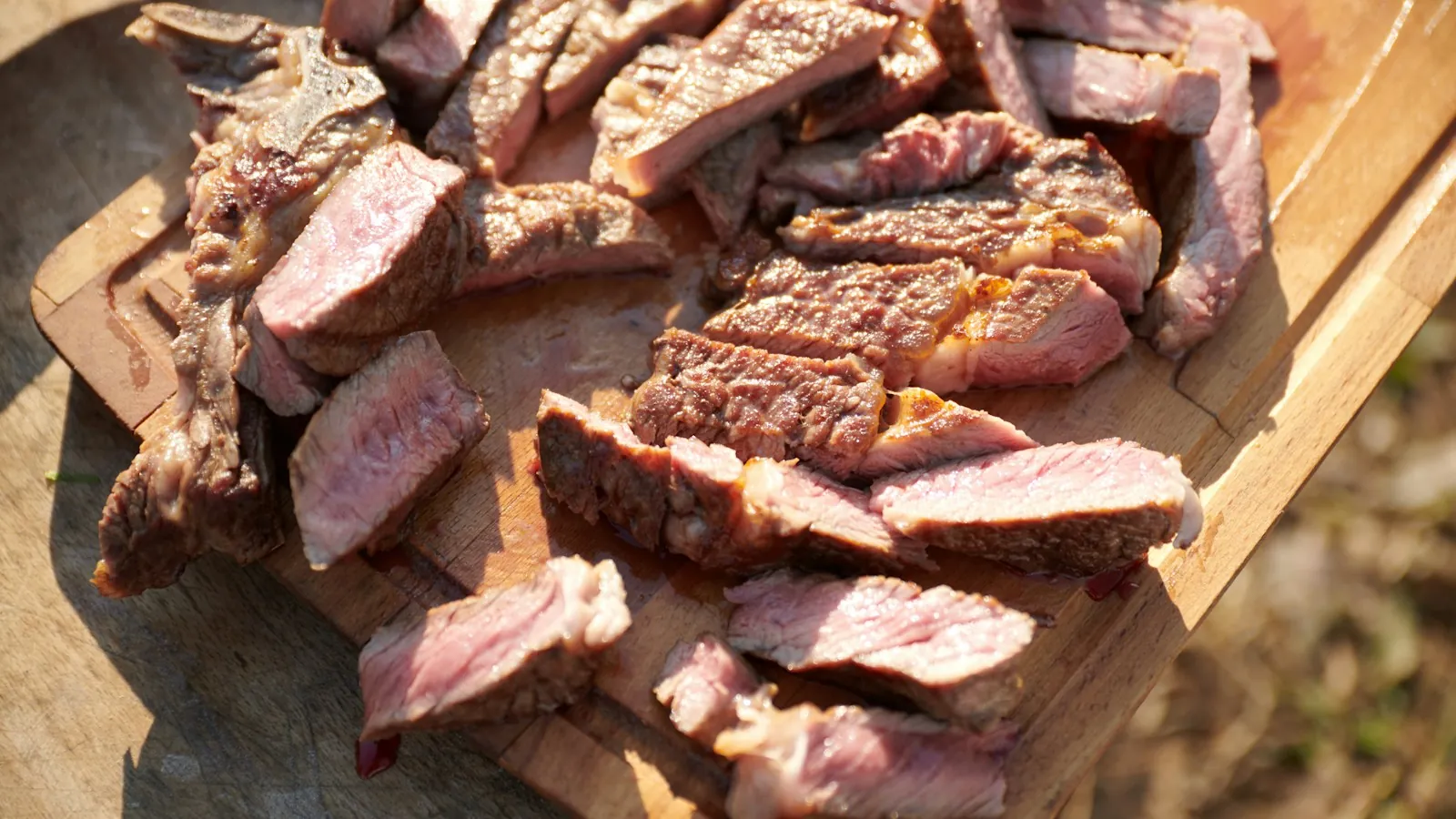
Yes, resting is worth it, and a 5 to 10 minute rest won't leave a normal steak cold. A rested steak loses noticeably less juice when sliced, and residual heat raises the center roughly 3 to 10°F. Much of the benefit comes from the steak cooling slightly, so the rest is really about temperature control.
What actually happens while the steak sits
When a steak comes off a hot pan or grill, the outside is far hotter than the center. Heat keeps moving inward, so the middle keeps climbing for a few minutes. This is carryover cooking, and it is why cooks pull steak a bit before their target.
At the same time, the meat is cooling from the outside in, faster in a thin cut than in a well-marbled 1 1/2 inch steak. Hot muscle fibers have squeezed water toward the center, and that liquid is thin and under a bit of pressure. Cut into it right away and it runs onto the board. Give it a few minutes and the juices thicken slightly as they cool, and the pressure inside drops, so less leaks out when you slice.
The old explanation was that "fibers relax and reabsorb the juices." That is a tidy story, but the more recent testing points mostly at temperature. Food scientist Chris Young compared rested and unrested steaks sliced at the same internal temperature and found juice loss was about the same. In other words, a cooler steak leaks less, and resting is just the easiest way to get there.
How much juice are we talking about?
Enough to see. America's Test Kitchen roasted pork loins to 140°F, then sliced them at different times and measured what ran out. The numbers were averaged over three rounds:
| Rest time | Juice lost when sliced | Change vs slicing right away |
|---|---|---|
| 0 minutes | about 10 tablespoons | baseline |
| 10 minutes | about 4 tablespoons | about 60% less |
| 20 minutes | 2 1/2 tablespoons | about 75% less |
| 30 minutes | 1 tablespoon | about 90% less |
| 40 minutes | 2 teaspoons | about 93% less |
That was a large roast, so a single steak loses far less in absolute terms. The pattern holds, though: the first few minutes do most of the work, and every extra minute after that gives smaller returns. J. Kenji López-Alt ran a similar test on steaks at Serious Eats back in 2009 and saw the same downward curve as rest time went up.
In a blind tasting at Serious Eats, testers compared steaks rested and then sliced at the same temperature as steaks sliced straight away. The rested steak was picked as juicier in only 16 of 30 rounds, which is close to a coin flip. A puddle on the board is easy to see, but your mouth does not always notice the difference once the meat is salted and eaten warm.
Does resting steak make it cold?
Not in 5 to 10 minutes. A 1-inch steak that comes off the heat at around 125°F in the center will still be at or above that a few minutes later because carryover is pushing the center up while the surface cools. The outside drops faster than the middle, but it started much hotter.
Thicker steaks hold heat longer. A 2-inch ribeye or a thick porterhouse can sit 10 minutes and still be hot all the way through. Thin cuts are the ones to watch: a 1/2-inch skirt steak has so little mass that a long rest really can leave it lukewarm.
Things that make steak cold:
- Resting on a cold plate or a stone countertop, which pulls heat from the bottom
- Resting much longer than 10 minutes on a thin cut
- Slicing it all at once and leaving the slices spread out, since thin slices lose heat very fast
- Serving it on room-temperature plates in a cold kitchen
A warm plate fixes most of that. Run plates under hot water or put them in a 200°F oven for a few minutes before you cook.
How long to rest different cuts
A good rule of thumb for how long to rest a steak is about 5 minutes for thin and average steaks, and closer to 10 for very thick ones. You do not need the "half the cooking time" formula some people use. That makes sense for roasts but is overkill for a steak that spent 8 minutes in a pan.
| Cut and thickness | Rest time | Expected carryover rise |
|---|---|---|
| Skirt, flank, hanger (1/2 to 3/4 inch) | 2 to 3 minutes | 2 to 3°F |
| Strip, ribeye, sirloin (1 inch) | 5 minutes | 3 to 5°F |
| Thick ribeye, porterhouse (1 1/2 to 2 inches) | 8 to 10 minutes | 5 to 10°F |
| Reverse-seared thick steak | 0 to 2 minutes | very little |
| Tri-tip or small roast | 10 to 15 minutes | 5 to 10°F |
Carryover depends on how hot your cooking surface was. A steak seared over a ripping-hot grill has a steeper heat gradient and rises more than one cooked gently. Use these as starting points and check with a thermometer the first few times.
When to pull the steak off the heat
Since carryover adds a few degrees, pull the steak a little before your target. These are the common doneness targets most cooks use, with a pull temperature that assumes a 1-inch steak and a 5-minute rest:

- Rare: pull at 115 to 120°F, rests up to about 120 to 125°F.
- Medium-rare: pull at 125°F, rests up to about 130 to 135°F.
- Medium: pull at 135°F, rests up to about 140 to 145°F.
- Medium-well: pull at 145°F, rests up to about 150 to 155°F.
- Well-done: pull at 155°F, rests up to 160°F or more.
For food safety, the USDA recommends cooking whole cuts of beef, like steaks and roasts, to 145°F followed by a 3-minute rest. Many people eat steak below that, because bacteria on a whole steak live mainly on the surface, and the sear handles the outside. That is your call to make. Ground beef is different: it needs to reach 160°F, because grinding spreads surface bacteria all through the meat, and resting does not change that number.
Does resting ruin the crust?
A little, yes. As the steak sits, moisture from inside migrates toward the surface and steam softens that crisp, browned crust you worked for. Tenting it tightly with foil makes this worse because it traps the steam right against the surface.
A few ways around it:
- Skip the foil for steaks. A 5-minute rest uncovered will not cost you meaningful heat.
- Rest the steak on a wire rack set over a plate so the bottom does not sit in its own juices and go soggy.
- If the crust softens, give it 20 to 30 seconds per side back in a very hot pan right before slicing.
- Save the juices that collect on the plate and pour them over the sliced steak. They are seasoned and full of flavor, so do not throw them out.
Some cooks flip the order entirely and rest the steak before the final sear.
Do reverse sear and sous vide steaks need a rest?
If you cook a thick steak low and slow first (in a 225 to 275°F oven, or in a sous vide bath) and then sear it hard at the end, there is very little need to rest it afterward. The interior is already an even temperature from edge to edge, and the quick sear only heats a thin outer layer. Carryover is small, and there is not much of a pressure difference to push juices out.
With these methods, the "rest" effectively happens during the slow stage. Many cooks let the steak sit 5 to 10 minutes between the oven and the sear so the surface dries a bit, then sear and serve right away with the crust at its best. Cooks who use this approach, including Kenji López-Alt, have long said this is the main case where skipping the post-sear rest is fine.
Better ways to keep slices juicy
Resting helps, but it is only one piece. If you want a steak that tastes juicy, these matter just as much or more:
- Do not overcook it. A steak at 155°F has squeezed out far more water than one at 130°F, and no rest can put it back. A $15 instant-read thermometer does more for juiciness than any rest time.
- Salt early or right before cooking. Salting 40 minutes to overnight ahead lets the salt dissolve into the meat, season it deeply, and help it hold onto moisture. If you cannot salt that far ahead, salt right before it hits the pan.
- Slice against the grain. Short muscle fibers feel tender and release juice as you chew, which reads as juicy. Long fibers feel stringy and dry even when they are not.
- Slice only what you will eat right away. Whole steak stays hot and moist much longer than slices.
- Use the board juices. Spoon them back over the slices, or swirl them into a pan sauce with a knob of butter.
The short version for weeknight cooking
If you are cooking a regular 1-inch strip or ribeye in a skillet, pull it 5°F before your target, set it on a warm plate or rack for 5 minutes, uncovered, then slice against the grain and pour the plate juices over the top. The steak stays hot and the crust stays crisp.
If dinner is late and everyone is hungry, cutting right away will not ruin anything. You will see more juice on the board and the center may end up a few degrees cooler than intended, since it did not get to finish climbing. Account for that by cooking it a few degrees further in the pan. Reading the temperature rather than the clock is the habit behind most stovetop and grill techniques.
 Testing whether a rested steak stays juicier
Juice on the cutting board and the temperature inside the meat are hard to picture without seeing them measured. Chris Young cooks steaks both ways with a probe thermometer.
Proof Resting Doesn't Keep Meat Juicy
By Chris Young on YouTube. Their method may vary a little from ours. Watch on YouTube
- Watch the thermometer reading as the steak sits, and compare it with the 3 to 10°F carryover rise listed above.
- Compare how much juice ends up on the board for the rested and unrested steaks.
- Notice that temperature, more than the rest itself, is the variable being tested, as the section on what happens while the steak sits explains.