Techniques
Why Does Gravy Get Lumpy, and Can You Fix It Without Starting Over?
 By the CookClear writers
Checked against test kitchen and food science sources
 Clear Answer
Yes, you can fix lumpy gravy without starting over: blend it with an immersion blender for about a minute or pour it through a fine strainer, then simmer a couple of minutes to check the thickness. Lumps form when flour or starch meets liquid unevenly, so each clump gels on the outside and seals dry powder inside.
What causes the lumps?
Flour and cornstarch thicken because their starch granules soak up water and swell when heated. That swelling turns thin drippings into gravy, but it happens fast and starts at the surface.
When a spoonful of dry flour lands in hot liquid, the starch on the outside of that little pile hydrates and gels almost immediately. That gel forms a skin around the flour still inside, and water can't get past it. You end up with a pocket of raw, dry powder wrapped in paste. No amount of simmering will break it open on its own.
In practice, three habits account for most lumpy batches. Dry flour dumped straight into hot liquid clumps on contact. Stock poured into a roux all at once breaks the paste into floating islands, because the fat is what keeps the flour grains apart. And a slurry mixed with hot liquid starts gelling in the cup before it ever reaches the pan. Walking away from the whisk during the first minute after liquid meets starch finishes the job, which is how you come back from basting the turkey to dumplings.
Is it lumps, or something else?
Not every texture problem is a starch lump, and the fix depends on what you're looking at. A quick look and a taste will tell you. Cheese sauces have their own version, a grainy, broken texture.
| What you see | What it probably is | Best fix |
|---|---|---|
| Small soft beads that burst with a dusty, raw taste | Flour lumps with dry flour inside | Blend or strain, then simmer 2 to 3 minutes |
| Translucent, jelly-like blobs | Cornstarch or another starch that gelled before dispersing | Blend or strain; whisking alone rarely works |
| Rubbery flat shreds | Skin from gravy that sat uncovered | Strain; cover or stir next time |
| Bits of brown meat or onion | Fond and drippings, not lumps | Leave them, or strain if you want it silky |
| Grainy, slightly sandy texture | Flour not cooked long enough after thickening | Simmer a few more minutes, whisking |
| Greasy beads on top, thin underneath | Fat separating, not lumps | Whisk hard, or skim fat and rethicken |
If you can't tell, crush one with the back of a spoon against the side of the pan. A true starch lump smears into a paste with dry powder in the center.
How do you fix lumpy gravy right now?
The best method depends on what's in your kitchen and how much time you have. They run here from fastest and most reliable to last resort.
- Immersion blender. Take the pan off the heat, tilt it so the gravy pools to one side, and blend the gravy with the immersion blender's head fully submerged for 30 to 60 seconds. Keeping the blade under the surface stops it from whipping in air. In a side-by-side test by The Kitchn, this method won, with smooth gravy in about a minute with almost no cleanup. It also breaks up the lumps instead of throwing them away, so the gravy keeps all its thickening power.
- Countertop blender or food processor. Same idea, more dishes. Let very hot gravy cool for a few minutes, fill the jar no more than halfway, and vent the lid with a towel over it so steam can escape. A countertop blender tends to make the gravy foamy, but the bubbles settle if you let it rest for several minutes.
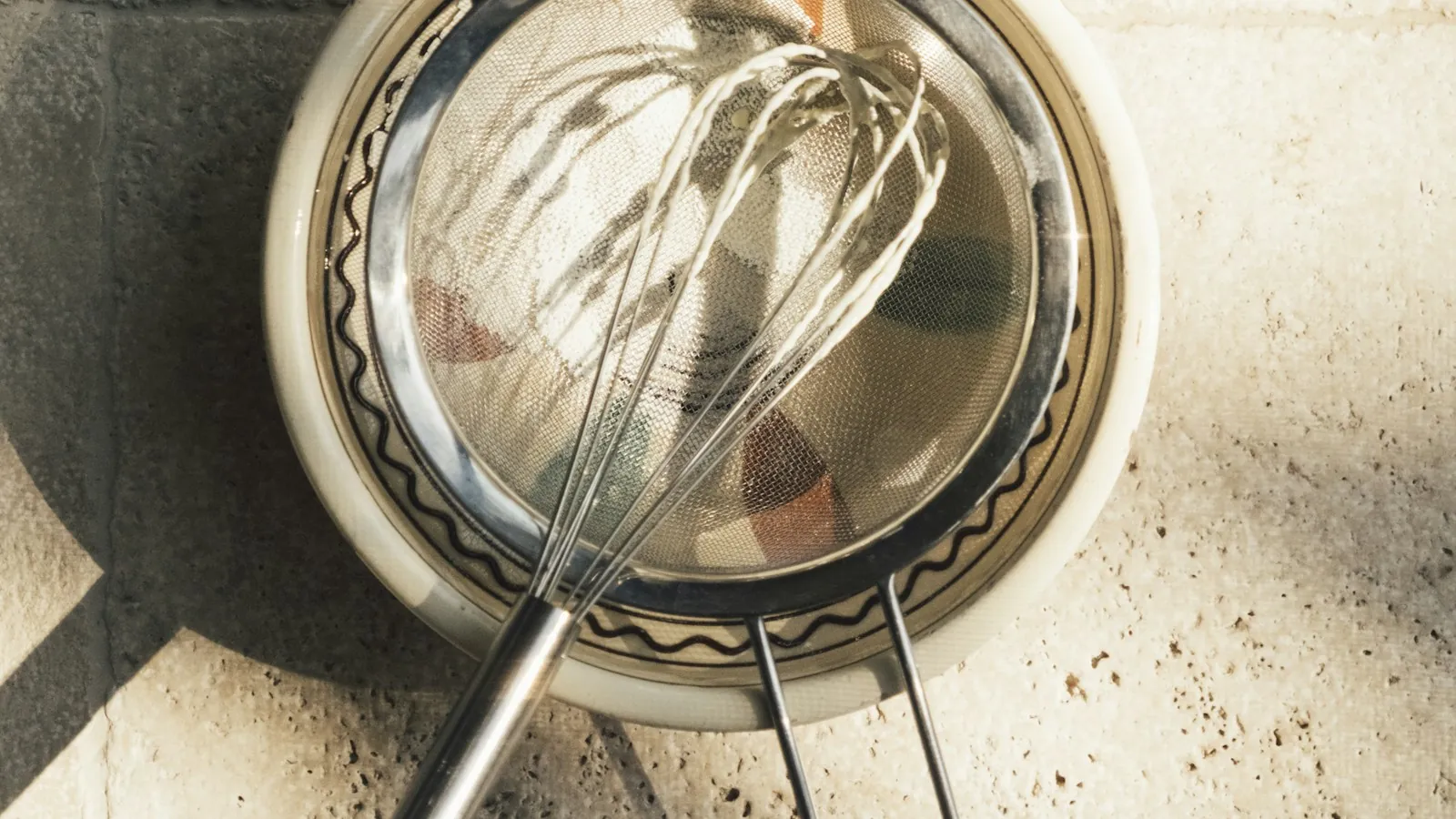
- Fine-mesh strainer. Set it over a bowl or measuring cup and pour the gravy through, pressing gently with a spoon or ladle. This gives very smooth results and also catches any skin or overcooked bits. The trade-off is that you're tossing the flour trapped in the lumps, so the gravy usually comes out a bit thinner.
- Hard whisking. For a few small lumps, a vigorous whisk against the bottom of the pan over medium heat can work. For a gravy full of lumps, it mostly pushes them around. The Kitchn found whisking the least effective of the methods it tried.
After any of these, return the gravy to the pan and bring it to a gentle simmer for 2 to 3 minutes. That reheats it, cooks out any raw flour taste released from broken lumps, and shows you the final thickness, since gravy thickens as starch finishes swelling.
My gravy got thin after straining. Now what?
Thin gravy is the most common follow-up problem, and you can fix it without creating a new batch of lumps. When you strain, you remove some of the flour, so the gravy may end up looser than you wanted.
The safe way to add thickening back is to disperse the starch before it touches hot liquid. Two options work well for lump-free results:
- Cold slurry. Whisk 1 tablespoon of flour into about 3 tablespoons of cold water or cold stock in a small cup until no dry streaks remain. With the gravy at a steady simmer, pour it in a thin stream while whisking. Simmer 2 to 3 minutes and check.
- Kneaded butter. Mash equal parts soft butter and flour into a paste with a fork. Whisk it into the simmering gravy in small pieces, letting each one melt before adding the next. The butter coats the flour the same way a roux does, so it spreads out before it swells.
Add a little at a time. Gravy keeps thickening for a minute or two after each addition, and it thickens more as it cools on the plate. Aim for a gravy that's slightly looser in the pan than you want it at the table.
Does it matter if you used flour or cornstarch?
The cause of lumps is the same for both, but they behave a little differently once lumps form. Flour lumps are opaque, beige, and taste pasty in the middle. Because flour has protein and other material along with starch, the lumps are fairly soft and break down well in a blender.
Cornstarch lumps look glassy and slick, more like little jelly beads. They form faster, because cornstarch thickens quickly once it hits a simmer. They also respond well to blending or straining, but a whisk alone almost never gets them out. If you're out of cornstarch, flour or arrowroot as a substitute can thicken gravy too, and each one needs to be added slowly.
Cornstarch thickened gravy can thin out again if you blend or whisk it too hard for too long, because vigorous agitation breaks down the swollen starch. Blend just until smooth, not for minutes.
How to keep gravy from getting lumpy next time
Rescue methods work, but prevention takes about the same amount of effort. A few habits make lumpy gravy rare.
Cook the roux before adding liquid. Stir the flour into the melted fat and cook, whisking, for about 3 to 5 minutes for a light golden roux. This coats every bit of flour in fat and cooks off the raw taste. A darker roux adds flavor but thickens less, so you need a bit more of it.
Add liquid gradually. Pour in roughly a third of the stock and whisk until completely smooth before adding more. America's Test Kitchen recommends whisking out any lumps before adding more liquid; once the base is smooth, the rest of the stock blends in easily.
Don't stress about stock temperature. You'll hear that stock must be cold, or must be hot, to prevent lumps. When America's Test Kitchen tested hot, room temperature, and cold broth, they found no difference in the finished gravy. Gradual pouring and steady whisking matter far more.
Use the right tool. A flat whisk or a balloon whisk reaches the corners of a roasting pan or skillet where flour hides. If you're making gravy from a roast chicken's drippings, deglaze those corners first. A wooden spoon can't break up a clump the way whisk wires do.
Shake the slurry. For a slurry, put the flour or cornstarch and cold liquid in a small jar with a lid and shake hard for 15 to 20 seconds. It disperses better than stirring with a fork.
Consider instant flour. Low-protein "instant" flour (sold as Wondra in the US) is made to dissolve quickly in cold or hot liquid without clumping. Many cooks keep a canister of Wondra flour around just for gravy.
Cover or stir while holding. If the gravy has to wait, keep it covered on low heat or stir it every few minutes so no skin forms.
Can lumpy gravy be fixed ahead of time or after it cools?
Yes. Gravy made a day or two early, while the turkey thaws in the fridge, often looks lumpy or set straight from the fridge, because the starch firms up as it cools. That's normal. Rewarm it slowly, whisking, and add a splash of stock if it's too thick, and an opened carton of broth is fine for that if it's within 3 to 4 days. If real lumps remain, blend or strain it just as you would fresh gravy.
Food safety still applies while you're working on it. USDA advises using leftover gravy, like most leftovers, within 3 to 4 days in the refrigerator and bringing reheated gravies and sauces to a rolling boil before serving. Plan your rescue so the gravy ends with that boil, then turn it down and keep it hot until it goes to the table.
Quick decision: which fix should you use?
When dinner is on the table in five minutes, pick based on what you have:
- Immersion blender in a drawer: use it. Fastest and keeps all the thickening.
- Only a strainer: strain, then add a small slurry if it comes out thin.
- A handful of lumps and nothing else: whisk hard over medium heat for a minute or two and leave the last spoonful, where stray lumps settle, in the pan.
- Grainy instead of lumpy: simmer 3 to 5 more minutes, whisking; the flour just isn't fully cooked.
In nearly every case the gravy is still good. Lumps only affect texture, so starting over almost never makes sense. The same calm approach, fix first and restart only if you must, applies to most cooking techniques.
 What a rescued lumpy gravy should look like
Smoothness and thickness are visual judgments, and the speed of a rescue is easier to appreciate on screen. Everyday Food shows a quick fix for smoothing out a lumpy gravy.
How to Quickly Fix Lumpy Gravy - Kitchen Conundrums with Thomas Joseph
By Everyday Food on YouTube. Their method may vary a little from ours. Watch on YouTube
- Compare the lumps in the pan with the table above to tell flour lumps from jelly-like starch lumps or skin.
- Notice how the gravy looks after the fix, then remember the 2 to 3 minute simmer that cooks out raw flour.
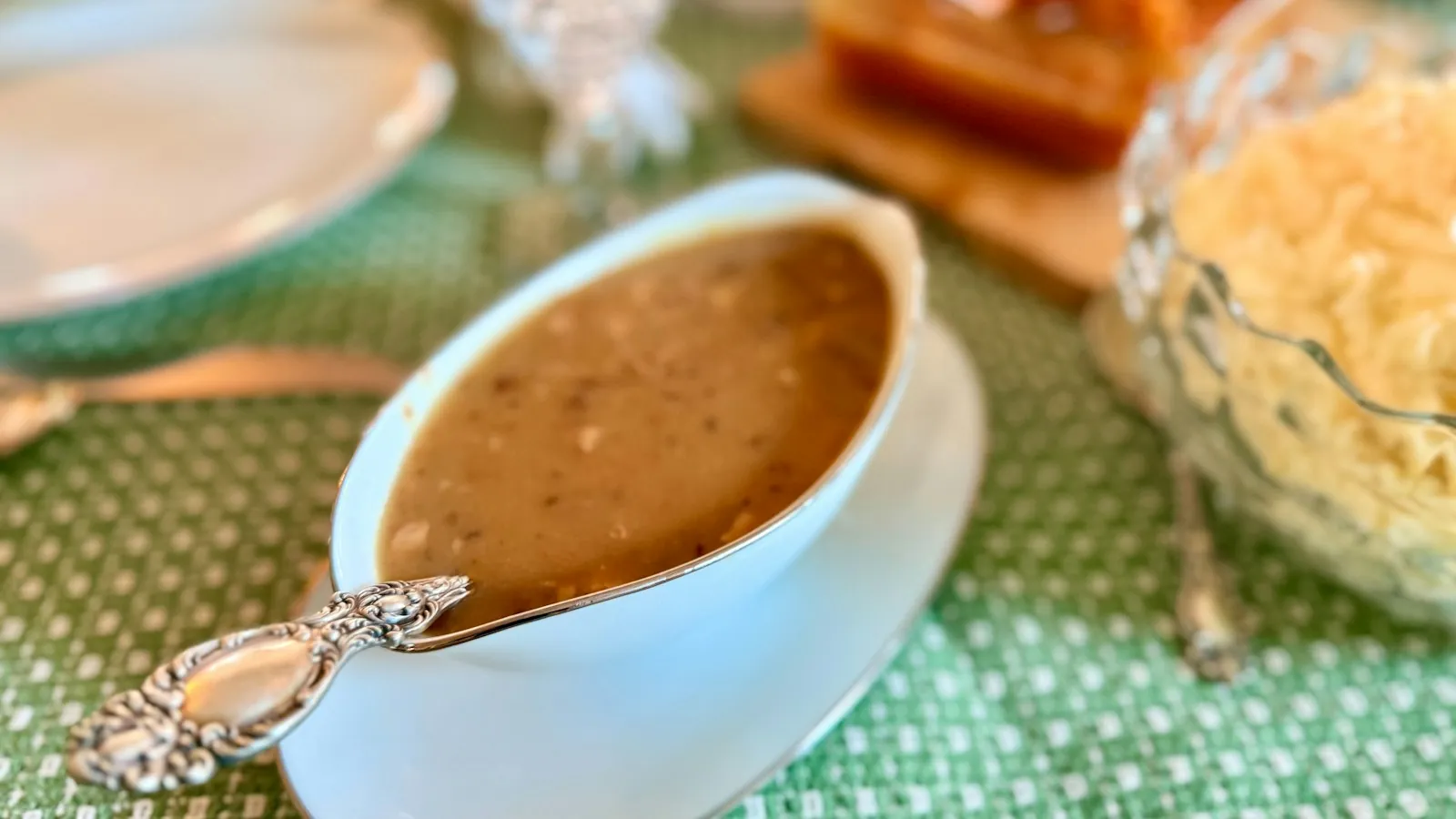
- Look at the final thickness, since gravy keeps thickening after each addition and again as it cools on the plate.