Home / Measurements & Conversions
 Measurements & Conversions
Why Are There 3 Teaspoons in a Tablespoon, and When Is Close Enough?
 By the CookClear writers
Checked against US standard measures, NIST conversions and test kitchen weights
 Clear Answer
There are 3 teaspoons in a tablespoon, both in US kitchens and in metric ones, where a teaspoon is 5 mL and a tablespoon is 15 mL. Exactness counts most for baking soda, baking powder, yeast and salt, where a small slip changes rise or flavor, and very little for vanilla, spices or oil.
The one big exception is Australia, where a tablespoon holds 20 mL, or 4 teaspoons.
Where does the 3 to 1 ratio come from?
The US customary system builds kitchen volumes on the fluid ounce. A tablespoon is half a fluid ounce, and a teaspoon is a third of a tablespoon. Stack them up and you get a tidy ladder: 3 teaspoons make a tablespoon, 2 tablespoons make a fluid ounce, and 16 tablespoons make a cup, which is how tablespoons in a cup add up to 48 teaspoons.
 On the menu10 questions
Metric spoons kept the same 3 to 1 relationship and rounded the sizes to 5 mL and 15 mL, which is why a US recipe and a Canadian or European one can share spoons without any fuss.
How many mL is a teaspoon in the US?
A US customary teaspoon is about 4.93 mL and a US tablespoon is about 14.79 mL, according to the USDA's school food buying conversion table. A fluid ounce comes to about 29.57 mL.
For nutrition labels, the FDA rounds those to 5 mL per teaspoon and 15 mL per tablespoon (and 240 mL per cup). Many US spoon sets are marked with both.
The gap between 4.93 and 5 mL is under 2 percent. No home cook will ever taste or see that difference, even in baking. The gaps only grow at cup size, where a US cup and a metric cup start to differ.
Teaspoon to tablespoon conversion chart
Use this teaspoon to tablespoon conversion chart when you halve a recipe. Volumes use the standard 5 mL teaspoon and 15 mL tablespoon.
| Teaspoons | Tablespoons | Milliliters (metric spoons) | Fluid ounces (US) |
|---|---|---|---|
| 1/4 tsp | 1/12 tbsp | 1.25 mL | about 0.04 fl oz |
| 1/2 tsp | 1/6 tbsp | 2.5 mL | about 0.08 fl oz |
| 1 tsp | 1/3 tbsp | 5 mL | 1/6 fl oz |
| 1 1/2 tsp | 1/2 tbsp | 7.5 mL | 1/4 fl oz |
| 2 tsp | 2/3 tbsp | 10 mL | 1/3 fl oz |
| 3 tsp | 1 tbsp | 15 mL | 1/2 fl oz |
| 4 1/2 tsp | 1 1/2 tbsp | 22.5 mL | 3/4 fl oz |
| 6 tsp | 2 tbsp | 30 mL | 1 fl oz |
| 12 tsp | 1/4 cup (4 tbsp) | 60 mL | 2 fl oz |
| 48 tsp | 1 cup (16 tbsp) | 240 mL | 8 fl oz |
The cup row uses the 240 mL nutrition label figure. A strict US customary cup is about 236.6 mL, which is close enough that no recipe will notice.
A few handy shortcuts come out of the chart:
- Half a tablespoon is 1 1/2 teaspoons, so you can measure it with a teaspoon and a half teaspoon.
- A third of a tablespoon is exactly 1 teaspoon, which makes thirds of a recipe easier than they look.
- Halving 1 teaspoon gives 1/2 teaspoon; halving 1/4 teaspoon gives 1/8 teaspoon, which many sets include as a "pinch" spoon. Tiny named amounts like a pinch, dash or smidgen fall under that.
Is an Australian tablespoon 20 mL?
Yes. The Australian tablespoon 20 mL standard means one Australian tablespoon holds 4 teaspoons, not 3. The Australian teaspoon is still 5 mL, so only the tablespoon differs. Most other metric countries use the 15 mL tablespoon.
That extra 5 mL is a third more than a US tablespoon. In a stew it will not matter. In a recipe that calls for 2 tablespoons of baking powder, or 1 tablespoon of salt, it can.
To handle recipes that cross borders:
- Check where the recipe comes from. Australian magazines, cookbooks and food sites usually assume the 20 mL tablespoon.
- If you are using US or 15 mL spoons for an Australian recipe, measure each tablespoon as 1 tablespoon plus 1 teaspoon.
- If you have Australian spoons and a US recipe, measure each tablespoon as 3 teaspoons instead of using the big spoon.
- Look for a gram amount in the recipe. When one is given for leaveners, salt or yeast, weigh it and skip the spoon question.
Which small errors actually change a bake?
Errors scale with how much work an ingredient does per gram. Baking soda, baking powder, yeast and salt are used in tiny amounts and have a big job, so a quarter teaspoon too much or too little can show up clearly. Flavorings and fats are more forgiving.
| Ingredient | Typical amount | What a small error does | How careful to be |
|---|---|---|---|
| Baking soda | 1/2 to 1 tsp | Too much: soapy or metallic taste, dark color, coarse crumb. Too little: dense, flat | Very careful, level spoon |
| Baking powder | 1 to 2 tsp | Too much: rises then sinks, bitter edge. Too little: heavy, tight crumb | Very careful, level spoon |
| Table salt | 1/4 to 1 tsp | Too much is easy to taste in sweets and bread | Careful, level spoon |
| Yeast | 1 to 2 1/4 tsp | Changes rise time more than the final loaf | Moderately careful |
| Vanilla extract | 1 to 2 tsp | Slightly more or less flavor | Relaxed |
| Ground spices | 1/2 to 2 tsp | Flavor shift you can adjust next time | Relaxed |
| Oil, honey, juice | 1 tsp to several tbsp | Little effect at spoon scale | Relaxed |
Leaveners work by chemistry. Baking soda needs a matching amount of acid, and extra soda with nothing to react with leaves that soapy taste. Knowing what baking soda and powder each do shows why these two get the most careful spoon in the drawer.
Salt needs care for a different reason: it is easy to taste, and in bread it also slows yeast and tightens gluten. That is the same reason recipe writers often ask for unsalted butter in baking, so they control the total salt.
How much does a teaspoon of salt weigh?
It depends on the salt, which is why a teaspoon of one kind is not a teaspoon of another. King Arthur Baking's ingredient weight chart lists these figures per tablespoon, and the teaspoon numbers are a third of each:
- Table salt: 18 grams per tablespoon, about 6 grams per teaspoon.
- Morton kosher salt: 16 grams per tablespoon, about 5 grams per teaspoon.
- Diamond Crystal kosher salt: 8 grams per tablespoon, about 2.7 grams per teaspoon.
A teaspoon of table salt carries about twice the salt of a teaspoon of Diamond Crystal, so if a recipe says "1 teaspoon kosher salt" and you use table salt, cut the amount roughly in half and taste. Going the other way, you may need nearly double.
The same chart lists baking powder at 4 grams per teaspoon and baking soda at 3 grams per half teaspoon. Those amounts are small enough that a home scale reading in 1 gram steps can't measure them well, which is one place where measuring spoons still beat the scale. For larger amounts of flour and sugar, though, weighing instead of using cups is the bigger upgrade.
Heaping vs level teaspoon: how much difference is there?
Unless a recipe says otherwise, every spoon measurement means level. Fill the spoon, then sweep the flat back of a knife across the top so the powder sits flush with the rim.
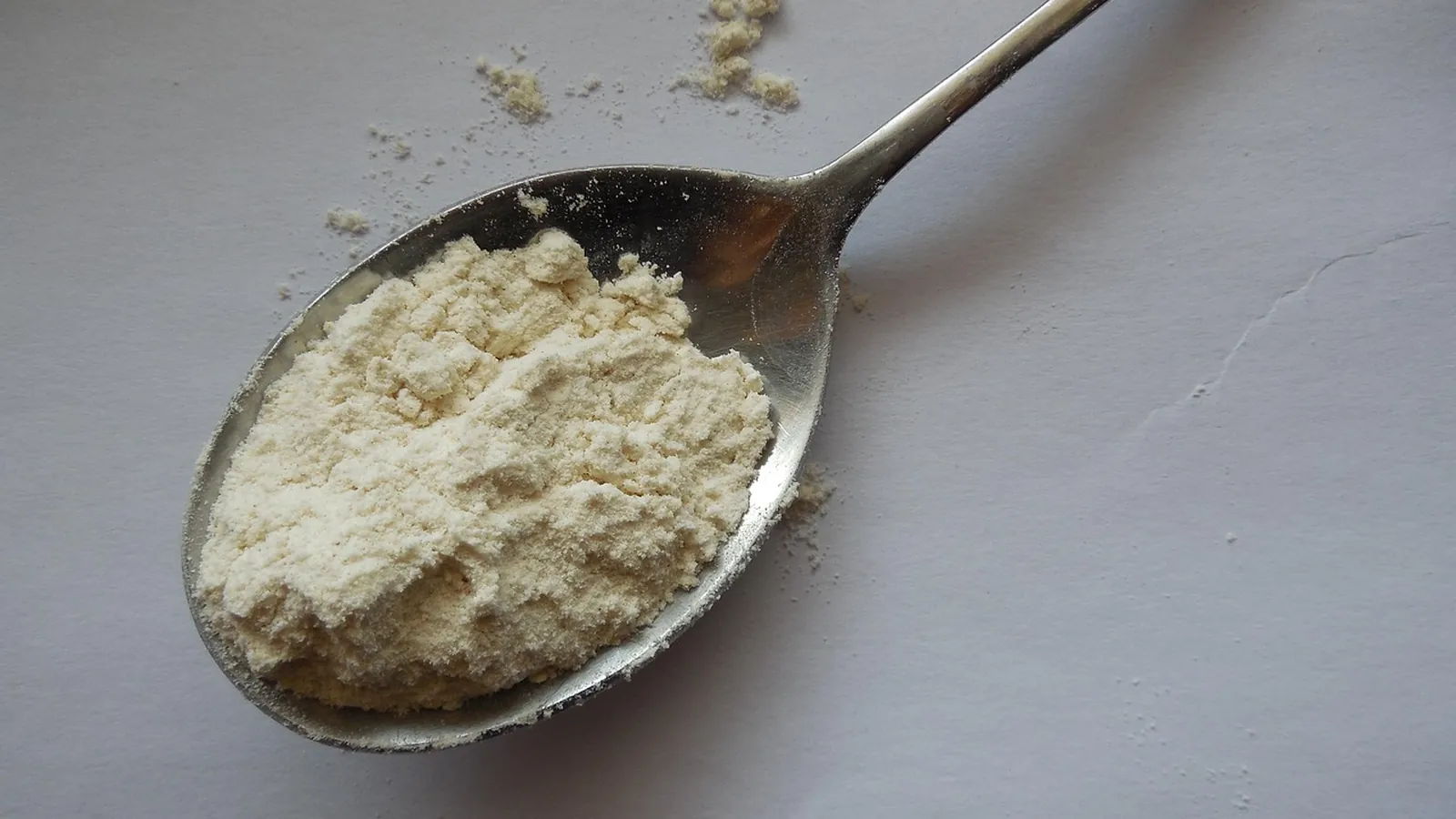
A rounded or heaping teaspoon has no fixed size. How much extra it holds depends on the powder and on your hand, and with fine powders like baking soda a generous heap can add a good fraction of a teaspoon on top. That is fine for cinnamon in oatmeal but not for leaveners.
A few habits keep spoon measurements honest:
- Stir baking powder and baking soda in the can before measuring, since they settle and clump.
- Dip and sweep for powders; pour liquids to the brim over a separate bowl, not over the batter.
- Use a spoon that matches the amount. Two level half teaspoons equal one level teaspoon, but three "about a third" scoops do not.
Why did my cookies taste soapy after I doubled the recipe?
Usually it is the math. When you scale a recipe, the small fractions are the easiest amounts to get wrong.
| What you see | Likely cause | Fix |
|---|---|---|
| Soapy or metallic taste, brown speckles | Too much baking soda, often a tablespoon used for a teaspoon | Recheck abbreviations: lowercase "t" or "tsp" is teaspoon, "T" or "tbsp" is tablespoon |
| Cake domed, then sank in the middle | Too much baking powder | Measure level, and do not round up when halving |
| Bread or cookies taste much too salty | Table salt used where the recipe meant kosher | Use about half the volume of table salt, or weigh by grams |
| Bland, flat cookies | Too little salt or leavener after halving | Halve carefully: half of 3/4 tsp is 3/8 tsp, or 1/4 tsp plus 1/8 tsp |
| Australian recipe turned out heavier or saltier than expected | Mixed up 15 mL and 20 mL tablespoons | Use 1 tbsp plus 1 tsp per Australian tablespoon |
When you mix your own blends, the 3 to 1 ratio is what keeps things even. A homemade self rising flour adds baking powder by the teaspoon to each cup of flour, so a tablespoon slipped in by mistake triples it.
When can you stop worrying about exact spoons?
Most savory cooking forgives you. A slightly heaped teaspoon of cumin or a tablespoon of olive oil poured by eye will not change a pot of chili. Taste and adjust as you go.
Herbs fall in this relaxed group too. Swapping dried herbs for fresh uses rough ratios anyway, and the result depends more on how fresh the jar is than on a perfect level spoon.
A quick way to decide:
- Is it a leavener, yeast or salt in something baked? Measure level, and weigh if grams are given.
- Is it a flavoring in a baked good? Measure, but a little over or under is fine.
- Is it anything in a stovetop dish you can taste before serving? Eyeball it and adjust.
The same level-spoon habit carries over to cups, ounces and grams, so most measurements and conversions get easier once spoons feel automatic.
 Watching 3 level teaspoons fill a tablespoon
Seeing a spoon leveled is the fastest way to understand why "1 teaspoon" means a flat top, not a mound. A short demonstration of measuring spoons in use makes the 3 to 1 ratio easy to picture.
How many teaspoons in a tablespoon
By Easy Peasy Deals on YouTube. Their method may vary a little from ours. Watch on YouTube
- Count how many level teaspoons it takes to fill the tablespoon; it should be 3, or 4 with a 20 mL Australian spoon.
- Notice how much powder a heaped spoon carries above the rim compared with a leveled one, the extra that matters for baking soda and salt.
- Look for the mL markings on the spoons, 5 mL for a teaspoon and 15 mL for a tablespoon.


