 Cooking Times
How Many Minutes Per Side Should Burgers Grill for a Juicy Medium?
 By the CookClear writers
Checked against USDA safe temperatures and test kitchen timing
 Clear Answer
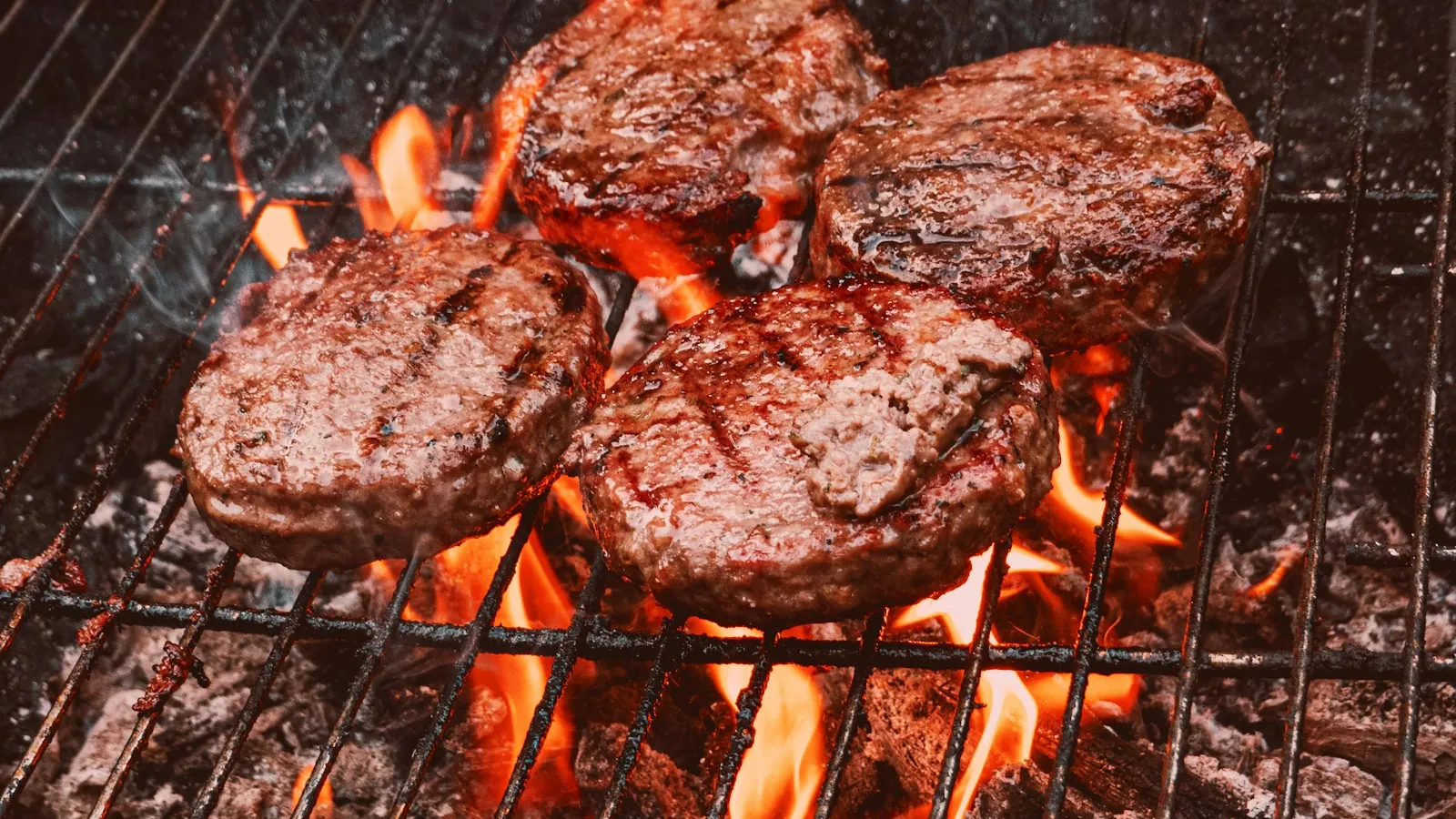
A 5-ounce beef patty grilled over high heat (450 to 500°F) takes about 3 minutes per side to reach a cook's idea of medium, around 145°F inside. The USDA, though, recommends cooking ground beef to 160°F, which takes longer and leaves no pink. Use the times to plan, and a thermometer to decide when you are done.
Those two numbers, 145°F and 160°F, settle most of the "medium burger" question. One is about texture and taste, the other about safety. You get to choose, but know what each one means when you do.
What the per-side times look like at every doneness
Here is a working chart for a 5-ounce patty about 1 inch thick on a grill preheated to 450 to 500°F. The doneness temperatures are the ones restaurant cooks commonly use for beef. The last row is the federal food-safety number.
 On the menu11 questions
| Doneness | Approx. time per side | Internal temp | What it looks like |
|---|---|---|---|
| Rare | About 2 minutes | 125°F | Red, cool center |
| Medium rare | About 2.5 minutes | 135°F | Warm red to deep pink center |
| Medium | About 3 to 3.5 minutes | 145°F | Pink, warm, juicy center |
| Medium well | A bit longer than medium | 155°F | Faint pink, firmer |
| USDA recommended | About 4 to 4.5 minutes; confirm with thermometer | 160°F | No pink, fully cooked |
Treat every time in that table as a starting point, because cooking times of any kind are estimates. Your grill's real heat, the patty's thickness, and its fat content will all move the clock, so go by the thermometer column.
Why does the USDA say 160°F when steak can be 145°F?
The USDA and FoodSafety.gov list 160°F as the safe minimum temperature for ground beef, with no separate rest time. Whole beef steaks get a lower bar: 145°F, followed by a rest of at least 3 minutes. That gap confuses a lot of people.
On a whole steak, bacteria mostly live on the surface. A hot sear kills what is on the outside, and the inside was never exposed. Grinding changes that. The surface of the meat, bacteria and all, gets mixed through the entire patty. The center of a burger is no cleaner than its outside, so the center needs to get hot enough to be safe.
That is why a pink-centered burger carries more risk than a pink-centered steak, even though they look similar on the plate. Kids, older adults, pregnant people, and anyone with a weakened immune system are the ones who should stick firmly to 160°F.
So can you still grill a medium burger?
Plenty of people do, and plenty of restaurants serve them. If you want a burger at 145°F, here is what to weigh:
- The risk is real but not uniform. It depends on where the meat came from and how it was handled. Pre-packaged ground beef from a big processing plant combines meat from many sources.
- Grinding your own lowers the odds. If you buy a whole chuck roast and grind it yourself right before cooking, the inside of the patty was mostly interior muscle until minutes ago. This is the usual approach of cooks who like a pink burger.
- Know who you are feeding. Medium for yourself is a personal call. Medium for a toddler at a cookout is not a good idea.
Some cooks split the difference. They pull burgers from the grill at 150 to 155°F because the patty keeps climbing a little after it comes off the heat. That gets you close to the USDA line with a bit more moisture. If you want to be sure you have hit 160°F, check again after a short rest rather than assuming carryover will get you there.
How do you get a juicy burger at 160°F?
A burger cooked to 160°F does not have to be dry. Most of the juiciness in a burger comes from fat, not from pink meat. A few choices make a big difference:
- Pick beef with enough fat. Lean patties, under 15% fat, cook faster and dry out sooner. A higher-fat blend gives you more margin at well-done temperatures.
- Handle the meat lightly. Form patties gently and stop as soon as they hold together. Overworked ground beef cooks up tight and springy, the same rule as for tender meatballs.
- Season the outside right before grilling. Salt mixed deep into the meat ahead of time can make the texture sausage-like.
- Set up two heat zones. Sear over the hot side, then move the patties to the cooler side to finish. The outside stops charring while the center catches up.
- Leave them alone. Flip once or twice, and never press down with the spatula. Every press squeezes fat and juice into the fire.
- Pull and check. Take the burgers off when the thermometer reads 160°F in the thickest part.
A two-zone fire is the single most useful trick on this list. Over direct high heat the whole time, a 160°F burger tends to end up burnt outside before it is done inside.
What changes the timing?
The per-side times assume a 5-ounce patty and a properly hot grill. Change any of these and the timing changes with it.
Thickness and weight
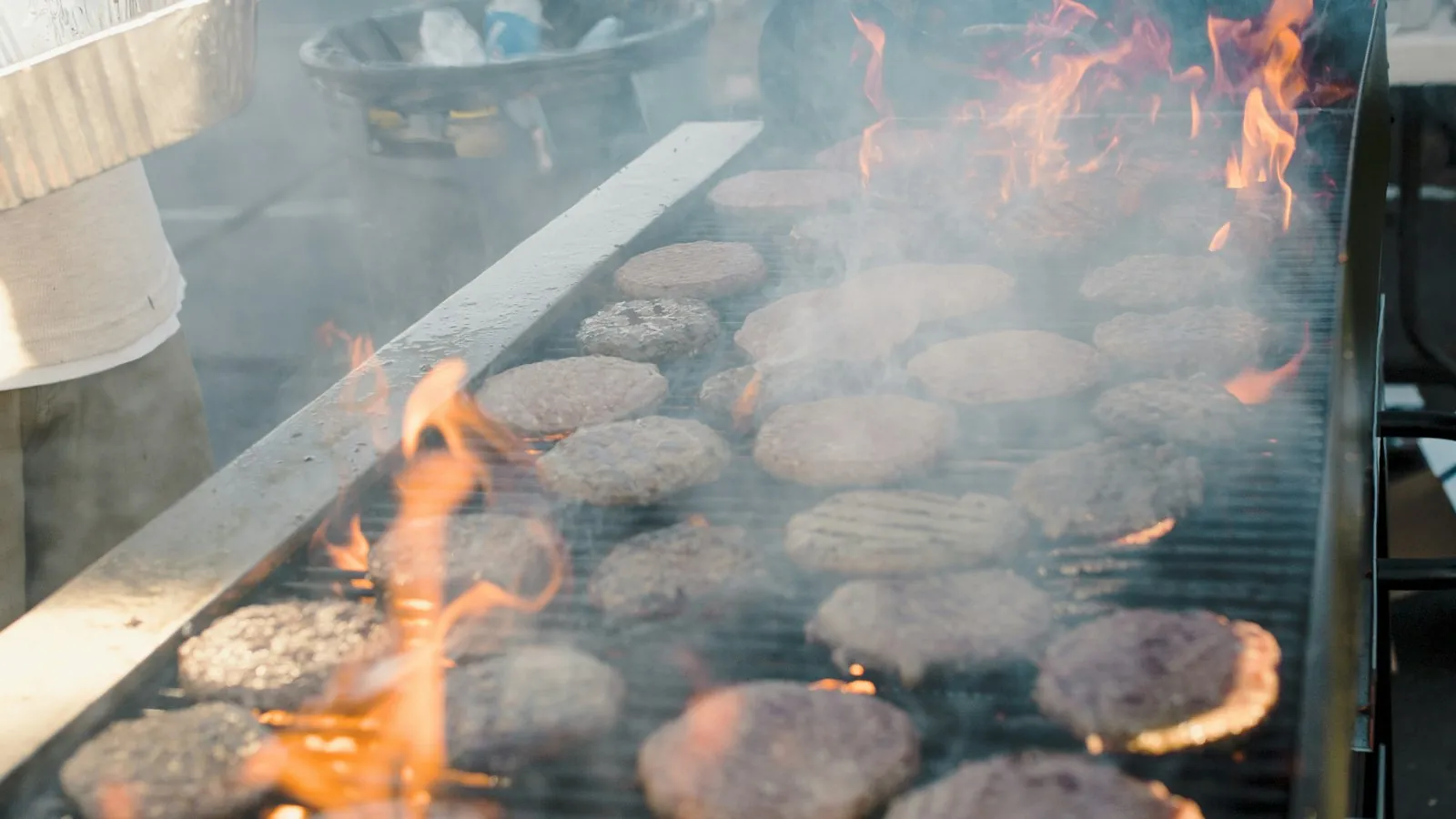
Thin patties cook fast and thick ones take longer. Weight alone, whether you portion by the ounce or by eye, does not tell you much, since a wide, flat 6-ounce patty may cook faster than a tall 5-ounce one. Press the patties to an even thickness so the edges and center finish together.
Fat content
Lean beef cooks faster. Patties under 15% fat can overshoot medium quickly, so start checking them early. Fattier blends also cause more flare-ups, which is another good reason to have a cooler zone to move to.
Grill heat
Every time in the chart assumes a grill at 450 to 500°F. A grill that is still warming up, a windy day, or opening the lid constantly will all slow things down. Preheat fully before the meat goes on, and give gas grills enough time with the lid closed to heat the grates.
Starting temperature
Patties straight from the fridge take a little longer than ones that sat out briefly. Do not leave raw ground beef out for long to "take the chill off." Keep the time short and stay within the 2-hour rule for perishable food.
How can you tell burger doneness without cutting into it?
You mostly can't. Color is a poor signal for burgers. Ground beef can brown inside before it is safe, and some patties stay a little pink even after reaching 160°F. That is why the USDA tells you to use a food thermometer rather than your eyes.
Visual cues still help you know when to start checking:
- The outside has a deep brown crust.
- The patty has shrunk and firmed up noticeably.
- Juices on the surface are shifting from red toward clear or tan.
When you see those signs, slide an instant-read thermometer in from the side, aiming for the very center of the thickest patty. Going in from the top often punches through to the grate and gives you a false high reading.
Should you flip burgers once or several times?
Both work. Flipping once makes the clock easy to follow: about 3 minutes, flip, about 3 minutes, check. It also gives you clean grill marks, which some people care about.
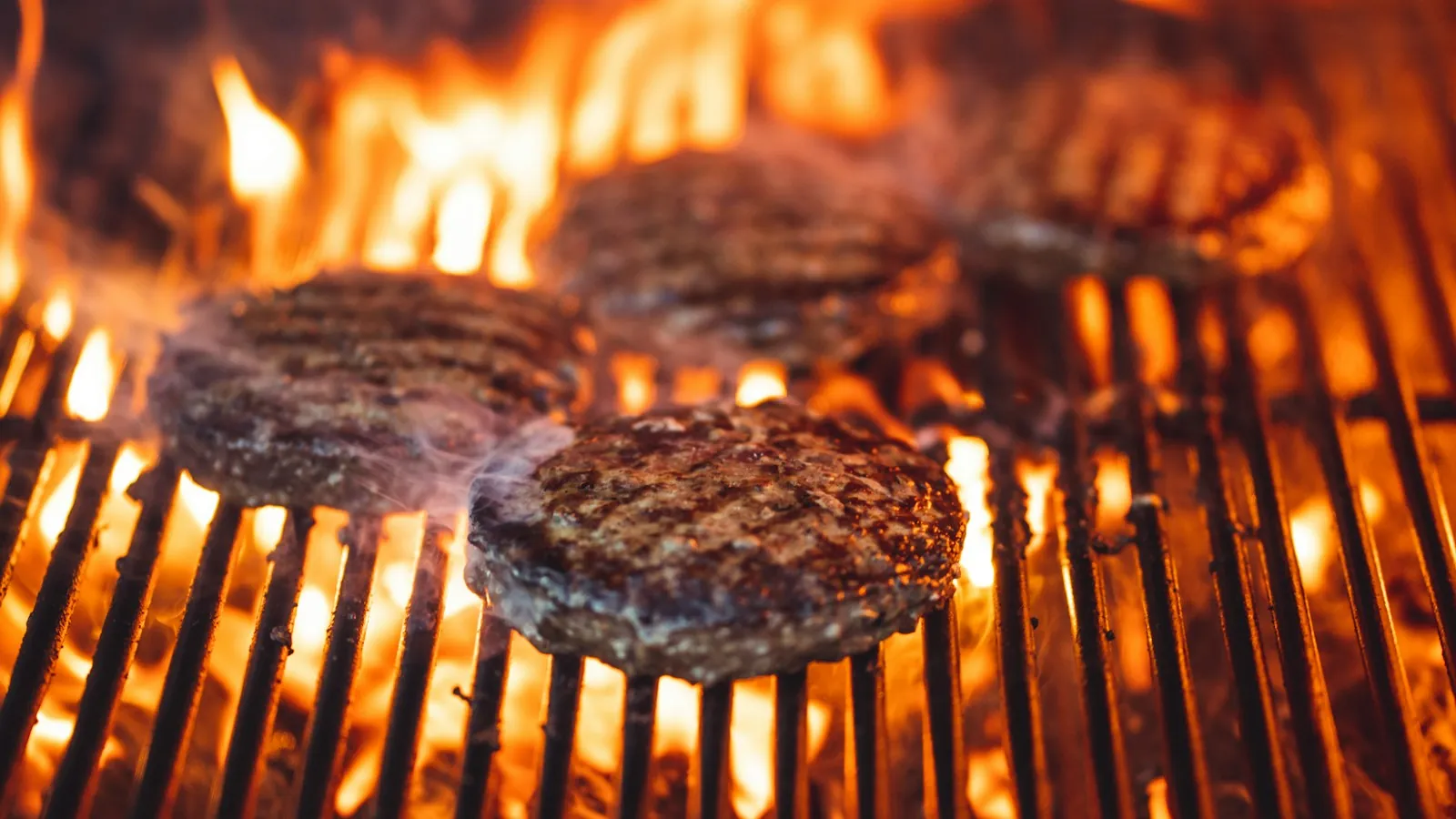
Flipping more often, every minute or so, cooks the patty a little more evenly because neither side sits on the heat long enough to overcook. The total time is similar. The one thing to avoid is fidgeting with the burger before it releases from the grate. A patty that sticks when you try to lift it usually needs a little more time to form a crust.
When should cheese go on burgers?
Add cheese (even cheese from the freezer) during the last minute or so of cooking, after the final flip. Close the lid to trap heat and melt it. If your burgers are finishing on the cooler side of a two-zone fire, that is a good place for the cheese to melt without the bottom burning.
Toast the buns on the grill at the same time, cut side down. They take very little time, so watch them closely. A pot of boiled corn on the cob is ready in about the same span, and ears picked that morning taste sweetest.
Do burgers need to rest?
The USDA chart sets no rest time for ground beef the way it does for steaks, because 160°F is the safe number on its own. Still, a short rest while you build the buns does no harm. The temperature may rise a few degrees more, and the patty will be a little less likely to spill juice the moment you bite.
If you pulled your burgers early at 150 to 155°F expecting carryover, the rest is not optional. Check the temperature again before serving.
Quick reference for a medium burger
Here is the short version to keep by the grill:
- Preheat to 450 to 500°F, with a cooler zone set up.
- For a 5-ounce patty, figure about 3 minutes per side for 145°F (medium).
- For the USDA's 160°F, plan on more time and finish on the cooler side.
- Use a thermometer in the center of the thickest patty.
- Add cheese in the last minute, lid closed.
- Serve the pinker burgers only to adults who know what they are eating.
 Reading burger doneness on the grill
Color and sizzle tell you a lot about a patty, and both are hard to judge from a chart. Seeing the heat setup and the flip timing makes the minutes in the table easier to trust.
How To Grill Burgers
By Weber Grills on YouTube. Their method may vary a little from ours. Watch on YouTube
- Compare how the patty looks at each stage with the doneness table, especially the pink center at 145°F and no pink at 160°F.
- Notice how the grill is arranged with a cooler zone, since that is where the advice says to finish a patty.
- Watch how often the patty is flipped and compare it with the once-or-several-times advice above.


