Home / Measurements & Conversions
 Measurements & Conversions
What Really Changes When You Double or Halve a Recipe at Home?
 By the CookClear writers
Checked against US standard measures, NIST conversions and test kitchen weights
 Clear Answer
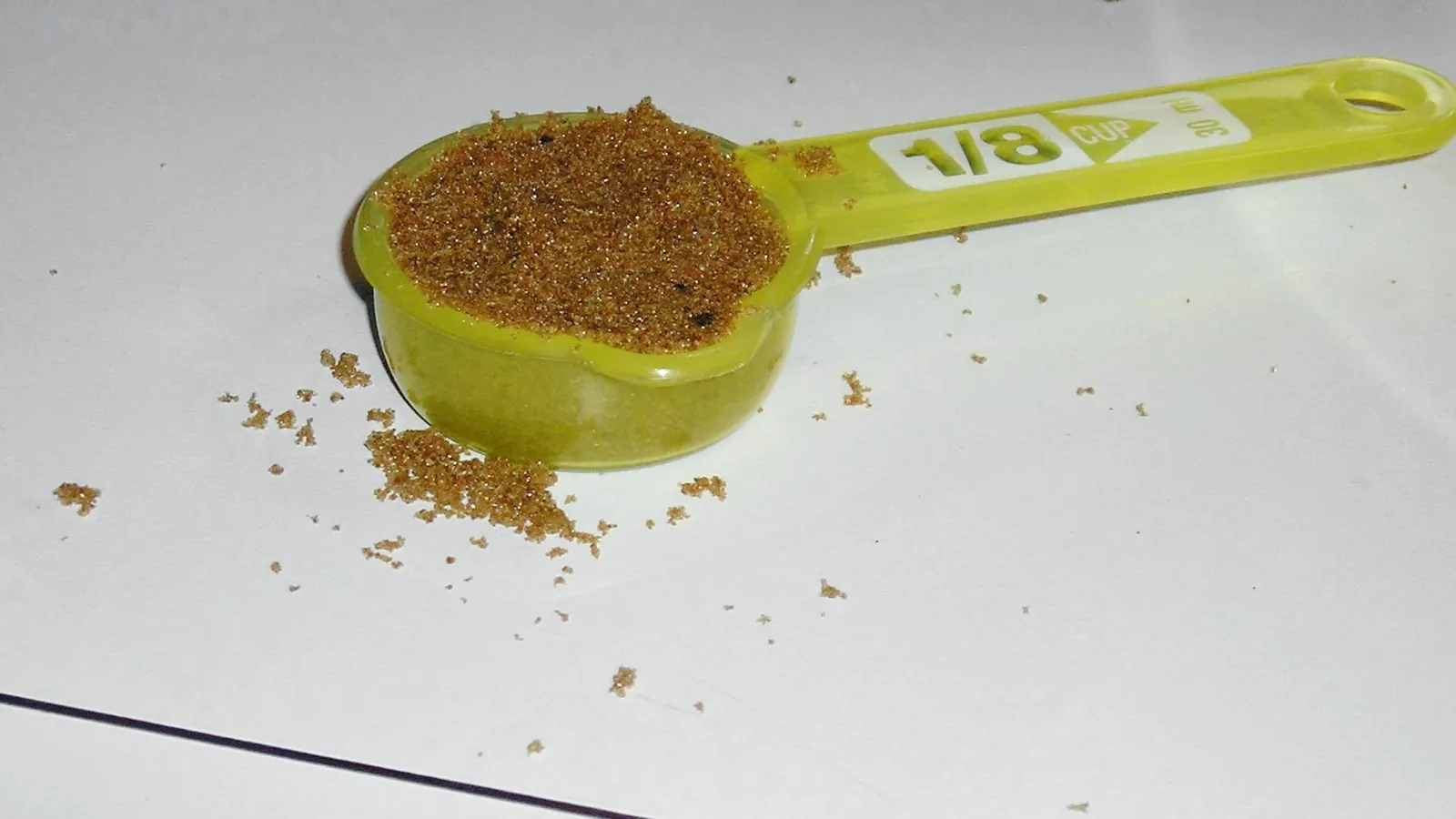
To double or halve a recipe, multiply every ingredient by 2 or by 0.5, then convert awkward results into units you can measure, like 2 tablespoons plus 2 teaspoons for half of 1/3 cup. Salt, spices, pan size, cooking time and evaporation don't follow the math exactly, so adjust those by eye, taste and thermometer.
What is a recipe scaling factor, and how do you use it?
A recipe scaling factor is the number you multiply every ingredient by. Divide the servings you want by the servings the recipe makes. A recipe for 4 that you want to serve 8 has a factor of 2. Want 2 servings from that same recipe, and the factor is 0.5. Want 6, and it's 1.5.
Here is the method that keeps mistakes out:
- Work out the factor: new servings divided by original servings.
- Rewrite the whole ingredient list with the new amounts before you touch a bowl.
- Convert odd results into real measurements. 1 1/2 times 3/4 cup is 1 1/8 cups, which you measure as 1 cup plus 2 tablespoons.
- Switch to grams where you can. Halving 213 grams is easy; halving 1 cup plus 1 tablespoon is not. A quick reference to convert cups to grams makes the rest of the list simple.
The conversions underneath all of this are fixed: 1 cup is 16 tablespoons, and 1 tablespoon is 3 teaspoons. Once you know how many tablespoons fit in a cup, almost any fraction breaks down into spoons you own.
How do you halve awkward amounts like 1/3 cup or 3/4 cup?
Thirds and three-quarters are where halving gets annoying, because no standard cup set has a 1/6 or 3/8 cup. The fix is to drop down to tablespoons and teaspoons.
| Original amount | Half | Double |
|---|---|---|
| 1 cup | 1/2 cup | 2 cups |
| 3/4 cup | 1/4 cup + 2 tbsp (6 tbsp) | 1 1/2 cups |
| 2/3 cup | 1/3 cup | 1 1/3 cups |
| 1/2 cup | 1/4 cup | 1 cup |
| 1/3 cup | 2 tbsp + 2 tsp | 2/3 cup |
| 1/4 cup | 2 tbsp | 1/2 cup |
| 1 tbsp | 1 1/2 tsp | 2 tbsp |
| 1 tsp | 1/2 tsp | 2 tsp |
| 1/2 tsp | 1/4 tsp | 1 tsp |
| 1/4 tsp | 1/8 tsp | 1/2 tsp |
| 1 large egg (about 50 g) | about 25 g, beaten | 2 eggs |
| 3 large eggs (about 150 g) | 1 egg + about 25 g beaten egg | 6 eggs |
Spoon math follows US customary definitions, where 1 cup is 16 tablespoons and 1 tablespoon is 3 teaspoons. Egg weights follow the King Arthur Baking ingredient weight chart, which lists a large egg at 50 grams out of the shell.
Half of 1/3 cup
Half of 1/3 cup is 2 tablespoons plus 2 teaspoons. A third of a cup is 5 1/3 tablespoons, so half of that is 2 2/3 tablespoons, and 2/3 of a tablespoon is 2 teaspoons.
Half of 3/4 cup
Half of 3/4 cup is 6 tablespoons, which most people measure as 1/4 cup plus 2 tablespoons. It's a clean number because 3/4 cup is 12 tablespoons.
What about half an egg?
Crack the egg into a small bowl, beat it until the white and yolk are fully mixed, then pour off half. By weight that's about 25 grams. Eyeballing works for pancakes, but in a small cake, weigh half an egg on a scale. When a recipe calls for 3 eggs and you're halving, use 1 whole egg plus half of a second.
For tiny amounts like 1/8 teaspoon, a pinch or a smidgen set is easier than trying to split a 1/4 teaspoon by eye.
Which ingredients shouldn't you scale exactly?
Most ingredients scale in a straight line. A few don't, and they're the ones that ruin a doubled batch.
- Salt. Taste perception doesn't double the way volume does. When doubling soups, stews and sauces, a common cook's habit is to add about 1 1/2 times the salt, taste near the end, and add the rest only if it needs it. Treat this as a rule of thumb. In baking, scale salt fully, since it also affects texture and yeast.
- Strong spices and heat. Cayenne, chili flakes, cloves, smoked paprika and fresh chiles can turn harsh at full double. Start around 1 1/2 times and build up.
- Leavening in big batches. For a straight double at home, scale baking soda, baking powder and yeast fully. Past a double, many bakers make separate batches instead of one giant one, because a huge bowl of batter mixes unevenly and waits longer before it hits the oven.
- Liquid for reducing. Braising liquid, pan sauces and anything simmered uncovered lose water through their surface. Double the volume in a pot that's only slightly wider and you get less evaporation per cup, so the sauce ends up thinner. Hold back about a quarter of the added liquid and add it if needed.
Halving works the same way in reverse. A halved sauce in the original large pan reduces fast and can scorch, so drop to a smaller pan or lower the heat.
Do you double the cooking time when you double a recipe?
No. Cooking time depends on how thick the food is and how heat moves through it, not on how much food there is in total. Four chicken breasts take about as long to bake as two, as long as they sit in one layer and aren't crowded. Two loaves of bread in the oven take about the same time as one.
Time does change in two situations:
- Deeper food. Doubling a casserole into the same pan makes it twice as deep, and the center can take far longer to heat through. Use a bigger pan or two pans instead.
- Crowded pans. A doubled batch of roasted vegetables piled into one sheet pan steams instead of browning. Split it across two pans.
When you halve a recipe, check early. A halved casserole in a smaller pan of the right size may bake in close to the same time, but a halved batter spread thin in the original pan can finish 10 to 15 minutes sooner. Check by the recipe's doneness cue (a toothpick, an internal temperature, a jiggle) rather than the clock. If your bakes are always off in both directions, your oven may run hot.
How do you pick the right pan size when scaling?
Pan size is where scaling often goes wrong. Batter depth decides how a cake or bar bakes, so match pan area to the scaling factor. Area is length times width for square and rectangular pans, and 3.14 times the radius squared for round ones.
| Pan | Area (square inches) | Fits |
|---|---|---|
| 8x8 inch square | 64 | Half of a 9x13 recipe |
| 9x9 inch square | 81 | A little more than half of a 9x13 |
| 9 inch round | about 64 | Half of a 9x13 recipe |
| 8 inch round | about 50 | Slightly less than half of a 9x13 |
| 9x13 inch rectangle | 117 | About double an 8x8 or 9 inch round |
| 18x13 inch half sheet | 234 | Double a 9x13 recipe, but much shallower |
Halving a 9x13 recipe leaves about 58 square inches of batter, so an 8x8 square or a 9 inch round is the natural fit, with batter slightly thinner than the original. Doubling an 8x8 brownie recipe gives 128 square inches of batter, so a 9x13 pan works but runs a little deeper and may need a few extra minutes. If you own neither, several pans can stand in for a 9x13 once you compare their areas.
Can you double a cake recipe, or is baking different?
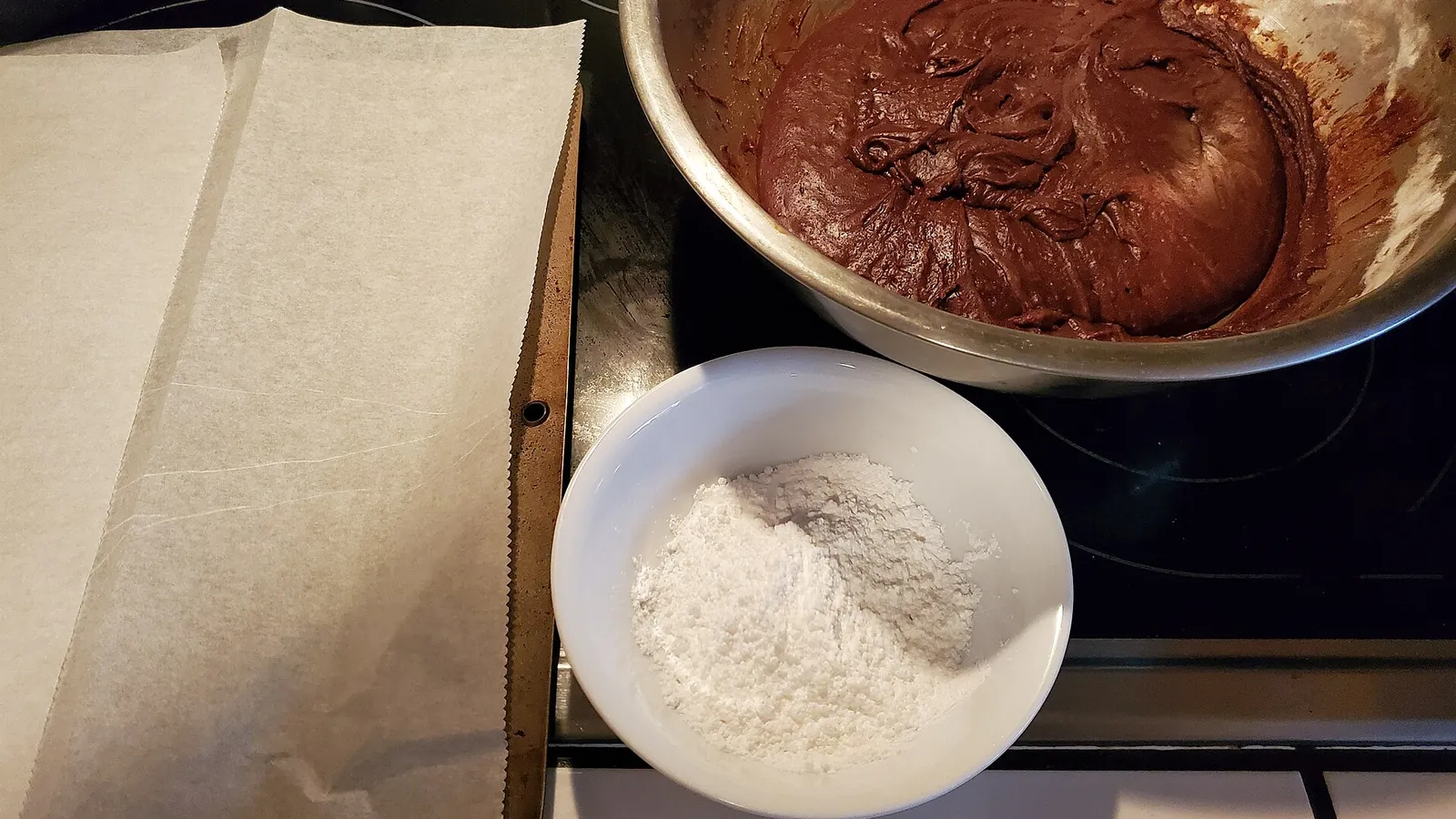
You can double a cake recipe, but baking is less forgiving than stovetop cooking, so measure carefully and keep the pans the same size. It's safest to mix the doubled batter and divide it between two of the original pans, so each one bakes exactly as the recipe intended.
Cooking and baking scale differently for a few reasons:
- Chemistry vs. taste. In a stew, you taste and correct as you go. In a cake, flour, fat, sugar, eggs and leavening are balanced as ratios, and you can't fix them once the pan is in the oven.
- Measuring error grows. A cup of flour can vary by tens of grams depending on how it's filled. Double that error and a cake turns dry. A scale removes most of it, which is one reason a kitchen scale beats measuring cups for scaled baking.
- Mixer capacity. A doubled cookie or bread dough may overflow a home stand mixer bowl or strain the motor. Two batches back to back is often faster than one overloaded one.
Cookies are the easiest baked good to double: same dough, same scoop size, same time per sheet, just more sheets.
Why did my doubled recipe come out wrong?
If a scaled recipe flopped, match what you saw to the likely cause.
| What you see | Likely cause | Fix |
|---|---|---|
| Doubled soup or stew tastes too salty | Salt scaled fully while less liquid reduced | Add unsalted liquid, and next time start at 1 1/2 times the salt |
| Doubled casserole cold in the middle | Same pan, twice the depth | Use a larger pan or split into two |
| Halved cake thin, dry and overbaked | Half the batter spread in the original pan | Use a pan with about half the area and check early |
| Doubled sauce thin and watery | Less surface area for evaporation | Simmer longer uncovered or hold back some liquid |
| Doubled cookies spread or taste flat | One ingredient was missed in the math | Write out the full scaled list before mixing |
| Doubled chili too hot | Chiles and cayenne scaled fully | Add more of the base ingredients and start spices lower next time |
Scaling factors other than 2 and 1/2
The same method works for any factor. To make 1 1/2 times a recipe, multiply by 1.5: 1 cup becomes 1 1/2 cups, and 1/3 cup becomes 1/2 cup. To make a third of a recipe, multiply by 0.33: 1 cup becomes 1/3 cup, and 1 tablespoon becomes 1 teaspoon.
Small spoon amounts are where people trip up, and most thirds problems get easier once you know how many teaspoons are in a tablespoon: three. For grams, ounces or metric cups, the same factor applies after you use the measurements and conversions charts to switch units.
 Halving 1/3 cup and splitting an egg, step by step
Seeing a halved measurement next to the original makes the spoon math click faster than reading it. Look for the beaten egg being split by weight, since that's the measurement most people guess at.
How do you double (or half) a recipe? Cookie Recipe Task
By Katherine Bianchi on YouTube. Their method may vary a little from ours. Watch on YouTube
- Half of 1/3 cup lands at 2 tablespoons plus 2 teaspoons, so count spoons rather than eyeballing a partly filled cup.
- A beaten large egg weighs about 50 grams, so half should read close to 25 grams on a scale.
- Half of 3/4 cup is 6 tablespoons, the same as 1/4 cup plus 2 tablespoons.