Picking Produce
Which Signs Show a Pineapple Is Ripe, and Can a Green One Be Sweet?
 By the CookClear writers
Checked against USDA grading standards and university extension buying advice
 Clear Answer
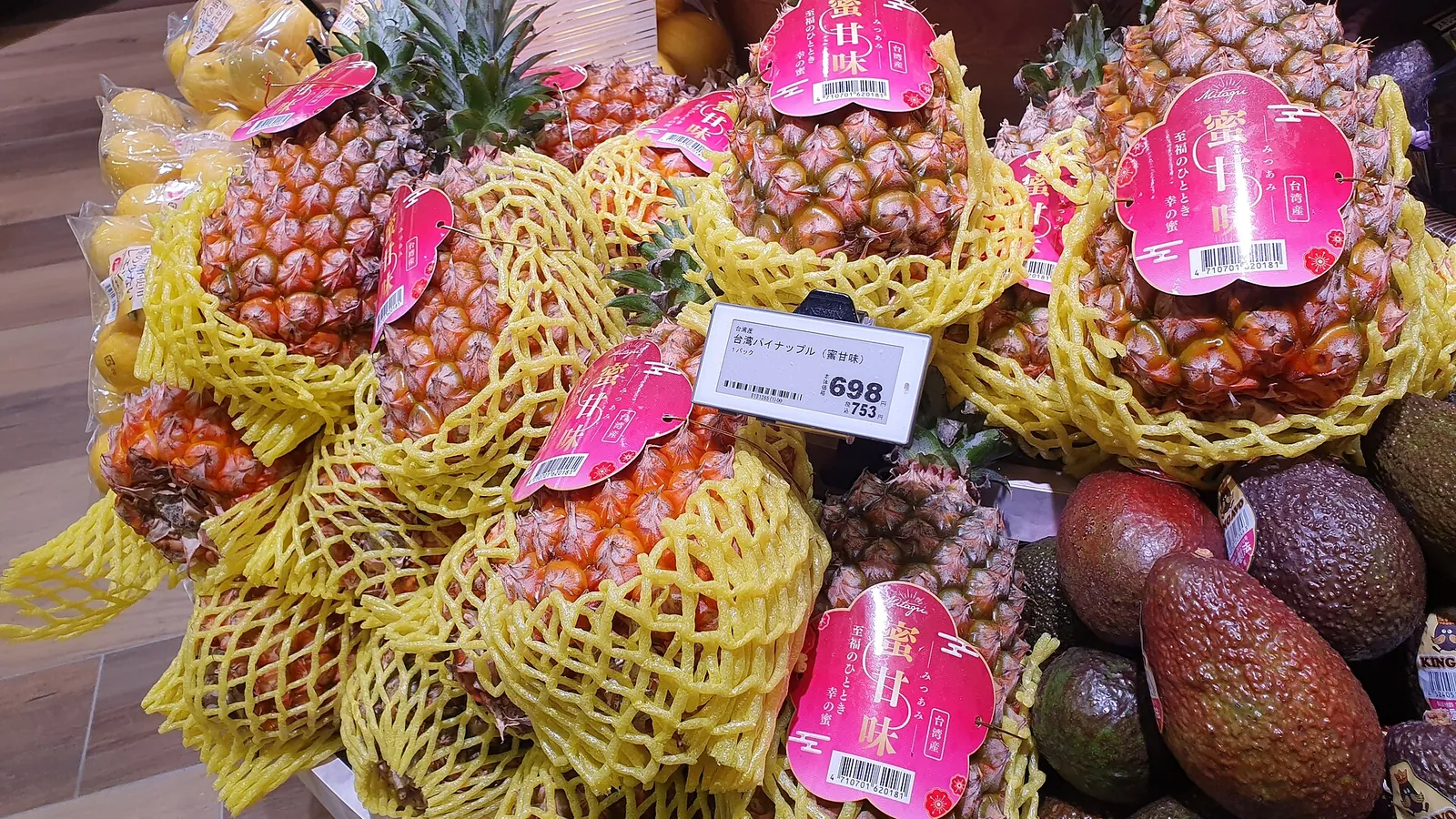
You can tell a pineapple is ripe when the base has a light, sweet smell, the fruit feels heavy for its size, and the shell gives slightly when you press it. Color is not a reliable sign: growers pick at 12 to 14 percent sugar or higher, and a green shell can hold fruit that sweet.
What should a ripe pineapple smell like?
Turn the pineapple over and sniff the bottom, where the stem was. A ripe one smells faintly sweet and tropical right at the base. Dole's own advice points to the base, and the Food Hero program from Oregon State University Extension gives the same tip: a sweet scent at the bottom is good.
Dole notes that pineapples ripen from the bottom up, so the sugar, and the smell, sit most heavily near the base.
Two smells mean you should put it back:
- No smell at all. Often a cold fruit straight from a chilled display. Let it sit a few minutes in your hand, or try another.
- A strong, sour or boozy smell. Dole says a scent that is too strong means the fruit has started to ferment. Food Hero calls a sour smell a sign of overripeness.
Why weight and give tell you more than looks
Pick up two pineapples of about the same size and keep the heavier one. Food Hero's selection tips say to choose fruit that feels heavy for its size and firm without being hard.
The weight test has a real basis. University of Hawaii postharvest material notes that translucent pineapples, the ones whose flesh has turned juicy and glassy, tend to be heavier. That same translucent flesh has a higher sugar to acid ratio and lower acidity, which is what tastes sweet.
Then press the shell with your thumb, about halfway up the side. Dole says a good pineapple "gives slightly when pressed." A rock-hard shell suggests fruit picked early, and a soft spot that stays dented is a bruise or overripe flesh.
Look at the eyes too, the hexagon-shaped segments on the skin. Dole's growers say the flatter those mounds, the riper the fruit. The same press-and-weigh habit carries over to other fruit, and it is a big part of how you pick a ripe mango too.
Can a green pineapple be ripe?
Yes. A green pineapple can be fully ripe and sweet, and a gold one can be bland. Dole states plainly that color is not a sign of ripeness, because the shift from green to gold depends on growing conditions as much as on sugar.

The University of Hawaii notes that shell color is not a reliable sign of sweetness and that a little yellowing does not mean the fruit is unripe. Industry storage guidance adds that pineapples can carry more than 12 percent soluble solids even when the shell is lighter in color. Growers often harvest when only about one eighth of the shell has turned yellow, because fully yellow fruit ships poorly.
Some varieties stay greener than others, and many store pineapples are bred to color up gold. Treat color as a minor clue at best. A yellow base with a green top is common and fine, and Food Hero mentions a yellowish lower half as a good sign.
The one color cue worth trusting is the leaves. Fresh green leaves suggest a fresher fruit. Dry, brown leaves suggest an old one.
Does pulling a leaf from a pineapple work?
No, and this one is a myth. The idea is that if a center leaf pulls out easily, the pineapple is ripe. Dole calls the leaf test a myth on its own site, and a Dole spokesperson told reporters it is "not a reliable measure."
No source ties leaf grip to sugar in the flesh, and a loose leaf is more likely to come from an old, dried-out crown, which points to fruit that has sat too long.
Skip the tug and use the base smell, the weight, and the press test. Those connect to what is happening inside the fruit.
Does pineapple ripen after picking?
No. A pineapple does not get sweeter after it is harvested. UC Davis postharvest specialist Adel Kader noted that pineapples hold no significant starch at harvest, so there is nothing to convert into sugar later. That is why growers pick when the fruit reaches a minimum of 12 to 14 percent soluble solids, measured with a refractometer.
What does change on the counter:
- The shell can turn more yellow, especially near the base.
- The flesh can soften slightly and get juicier.
- The aroma gets stronger as the fruit ages.
- Acidity can drop a little, which can make it taste milder.
None of that adds sugar. UC Davis notes that ethylene, the gas that ripens bananas, only causes a slight loss of green color in pineapple and has no real effect on internal quality. Putting a green pineapple in a bag with bananas does nothing for flavor.
Contrast that with an avocado, which is picked hard and ripens on your counter, or a cantaloupe, where the vine slip matters because the melon stops sweetening once cut from the vine. Pineapple is in the second group. Sweetness is set in the field.
| Sign | What a ripe pineapple shows | Reliable? | What the sources say |
|---|---|---|---|
| Smell at the base | Light, sweet, tropical | Yes | Dole, Food Hero (OSU Extension) |
| Weight | Heavy for its size | Yes | Food Hero; UH notes juicy fruit is heavier |
| Give | Slight give when pressed, no soft spots | Yes | Dole, Food Hero |
| Eyes | Flatter, fuller mounds | Fairly | Dole growers |
| Leaves | Fresh and green | For freshness only | Food Hero |
| Shell color | Green to gold | No | Dole, University of Hawaii |
| Leaf pulls out easily | Nothing useful | No, myth | Dole |
| Sits on counter longer | Softer and more yellow, not sweeter | No | UC Davis |
How to tell if a pineapple is overripe
An overripe pineapple tells on itself if you know where to look. Use this table at the store or before you cut one that has been sitting for a few days.
| What you see | Likely cause | What to do |
|---|---|---|
| Sour, vinegary or boozy smell | Fermentation has started | Skip it, or cut and taste a piece before using |
| Wet, dark or moldy base | Fruit is breaking down from the bottom | Do not buy it |
| Soft spots that stay dented | Bruising or overripe flesh | Pass, or trim generously if it is already home |
| Dry, brown crown leaves | Old fruit | Choose another with green leaves |
| Leaking juice or cracked skin | Overripe or damaged | Do not buy it |
| Brown, water-soaked flesh near the core after cutting | Chilling injury from cold storage | Trim it off; the rest is usually fine to eat |
Postharvest guidance says pineapple held at 32°F to 39°F can suffer chilling injury, and the internal browning often shows up only after the fruit warms back up. Commercial storage stays at 45°F or above for that reason. If you see translucent, brownish flesh near the core on an otherwise good fruit, the cold chain is the likely cause, and you can cut it away.
How long can a whole pineapple sit on the counter?
Food Hero advises keeping a whole pineapple at room temperature for 2 to 3 days, or refrigerating it in a plastic bag for up to 5 days. Dole's advice is simpler: eat a ripe pineapple as soon as you can.
Leaving it on the counter will not sweeten it, so the only reason to wait is your schedule. If you bought it ripe on the weekend, plan to cut it within a couple of days. The same counter-or-fridge thinking applies to tomatoes on the counter, where cold changes texture more than safety.
How to store cut pineapple
Cut pineapple keeps 3 to 4 days in the fridge in an airtight container. Food Hero says up to 4 days, and Dole's guidance as reported puts it at up to 3. Aim for 3 to be safe on texture and flavor.
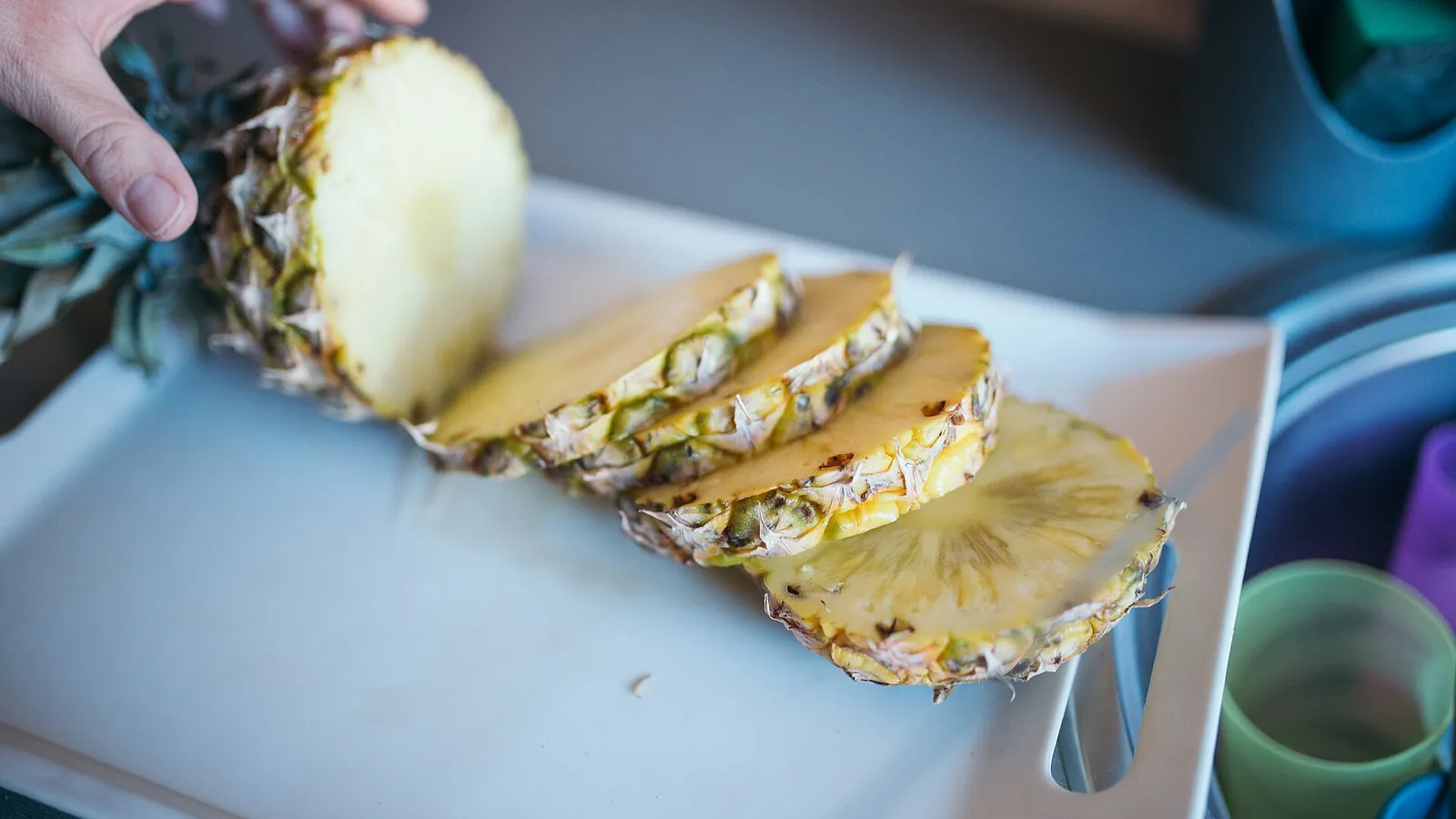
To keep cut pineapple at its best:
- Wash the outside of the whole fruit before cutting, so the knife does not drag anything from the shell into the flesh. The same idea is behind when you wash berries before storing.
- Cut off the crown and base, slice away the shell, and remove the eyes and woody core.
- Pack the pieces in a sealed container with their juice.
- Refrigerate within 2 hours of cutting.
- Eat the oldest pieces first and toss any that smell fermented or feel slimy.
Commercial fresh-cut pineapple can last 7 to 14 days at 32°F to 41°F, but that comes from controlled processing and packaging. Treat the date on a store container as the limit, and if you are unsure what that label means, it helps to know how a best by date differs from a safety deadline.
For longer storage, freeze it. Food Hero suggests spreading pieces on a baking sheet until firm, then moving them to an airtight freezer container and using them within 6 months for best quality. It is the same tray-freeze method that works when you freeze ripe bananas for later.
Which pineapple to grab when you are in a hurry
When you have a minute in the produce aisle, run through this short checklist:
- Fresh, green leaves on the crown
- A light, sweet smell at the base, not a sour one
- Heavier than others of the same size
- Slight give when pressed, with no soft or wet spots
- Flatter eyes, especially near the bottom
- Any shell color from green to gold
If two pass every test, take the heavier one. More tips for picking produce follow the same pattern: trust smell, weight, and feel over color, and know which fruit keeps ripening at home and which does not.
| Storage | Where | How long | Source |
|---|---|---|---|
| Whole | Counter | 2 to 3 days | Food Hero (OSU Extension) |
| Whole | Fridge, in a plastic bag | Up to 5 days | Food Hero (OSU Extension) |
| Cut | Fridge, airtight | 3 to 4 days | Food Hero; Dole |
| Cut | Freezer | Up to 6 months for best quality | Food Hero (OSU Extension) |
 Checking a pineapple's base, weight and eyes in person
Smell and give are hard to put into words, so watching someone handle a pineapple helps the cues click.
How to Tell if a Pineapple is Ripe
By Howcast on YouTube. Their method may vary a little from ours. Watch on YouTube
- Notice whether the person sniffs the base, where a ripe pineapple should smell light and sweet, not sour.
- Watch how much the shell gives under a thumb, since you want a slight give with no soft spots.
- Check the shell color of the fruit being cut, and remember a green shell can still hold 12 percent sugar or more.