Home / Measurements & Conversions
 Measurements & Conversions
What's the Easy Way to Remember the Cups in a Quart, Pint and Gallon?
 By the CookClear writers
Checked against US standard measures, NIST conversions and test kitchen weights
 Clear Answer
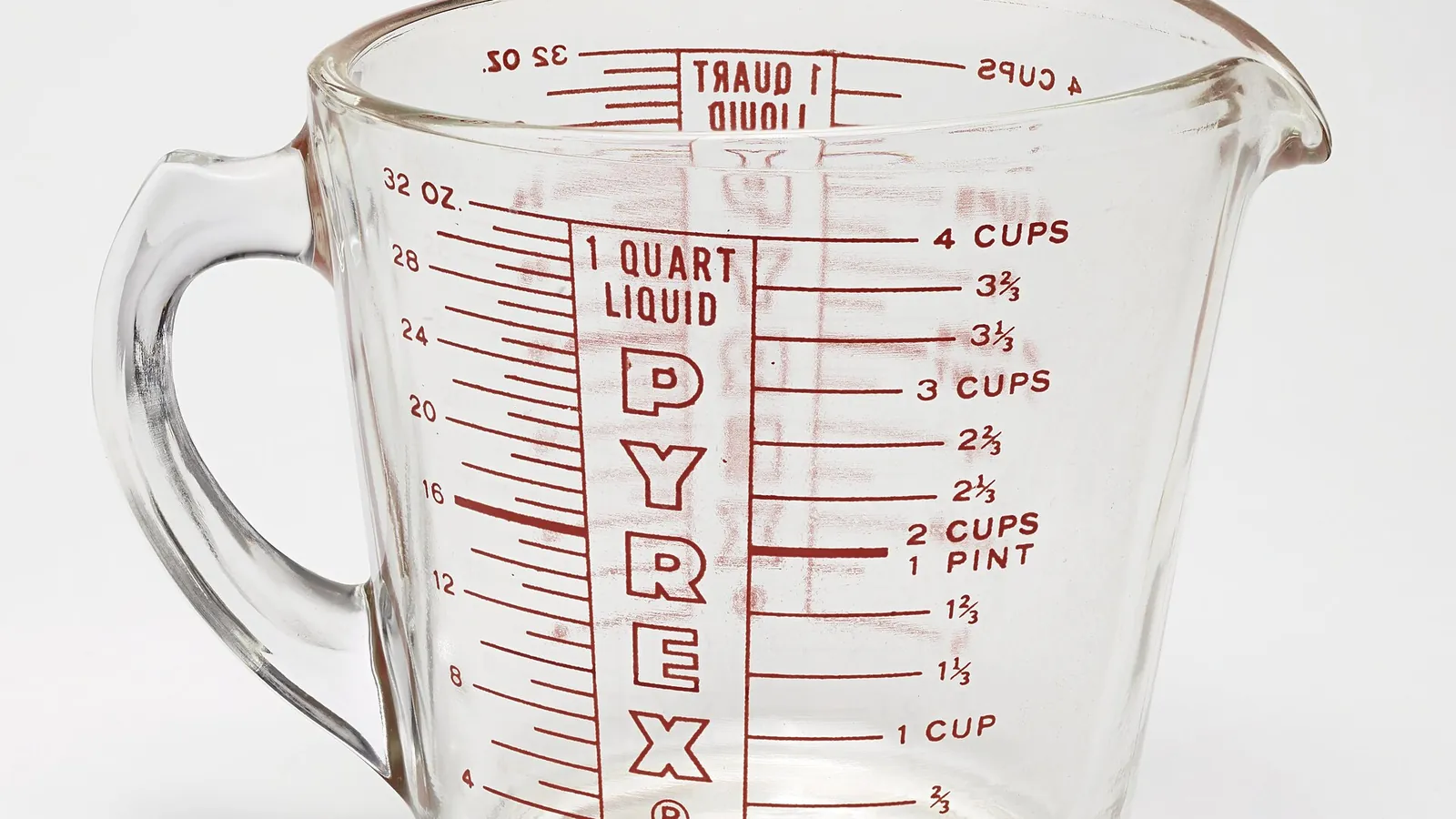
There are 4 cups in a quart, 2 cups in a pint and 16 cups in a gallon, using US liquid measures. Each step up doubles or quadruples: 2 cups make a pint, 2 pints make a quart and 4 quarts make a gallon, which works out to 8, 16, 32 and 128 fluid ounces.
Those numbers hold for any liquid in an American recipe: water, stock, milk, juice or oil. The trouble starts with British recipes, canning jars sold by fluid ounces and nutrition labels that round a cup to 240 milliliters.
How does the cup, pint, quart and gallon chain work?
US liquid volume is built on one simple ladder. Every unit is a whole number of the next smaller one, so you only need to remember three links:
- 2 cups make 1 pint.
- 2 pints make 1 quart.
- 4 quarts make 1 gallon.
Multiply up the ladder and everything else falls out. A quart is 2 pints of 2 cups, so 4 cups. A gallon is 4 quarts of 4 cups, so 16 cups. A half gallon, the size of most milk and orange juice cartons, is 8 cups.
The fluid ounce sits under the cup. One cup is 8 fluid ounces, which is why a pint is 16 ounces, a quart is 32 and a gallon is 128. If you ever need to go smaller than a cup, the same habit continues: there are 16 tablespoons in a cup, so a quart holds 64 tablespoons.
The full US liquid conversion table
Every step fits in one table, with metric added. The milliliter figures come from the exact US definitions (1 US fluid ounce is 29.57 milliliters), rounded for kitchen use.
| US measure | Cups | Fluid ounces | Pints | Quarts | Metric (approx.) |
|---|---|---|---|---|---|
| 1 cup | 1 | 8 | 1/2 | 1/4 | 237 mL |
| 1 pint | 2 | 16 | 1 | 1/2 | 473 mL |
| 1 quart | 4 | 32 | 2 | 1 | 946 mL |
| 1/2 gallon | 8 | 64 | 4 | 2 | 1.89 L |
| 1 gallon | 16 | 128 | 8 | 4 | 3.79 L |
| 2 gallons | 32 | 256 | 16 | 8 | 7.57 L |
A few handy fractions also come up a lot in recipes:
- 1/4 gallon is 1 quart, or 4 cups.
- 1 1/2 quarts is 6 cups, a common slow cooker and casserole size.
- 3 quarts is 12 cups, a typical saucepan or small Dutch oven.
- 1/2 pint is 1 cup, which is how cream and some berries are sold.
How many cups in a gallon, and how many pints in a quart?
A gallon holds 16 cups, 8 pints or 4 quarts. A quart holds 2 pints. Those two questions cover most of the shopping math, since milk comes in gallons and half gallons, broth often comes in quart cartons and cream comes in pints and half pints.
Working backward is just as useful. If a recipe needs 10 cups of liquid, that is 2 1/2 quarts, so one quart carton will leave you short and three will leave you some extra. If you are making a gallon of iced tea, you need 16 cups of water, minus whatever space the ice takes up.
Is a UK pint bigger than a US pint?
Yes. A British imperial pint is about 568 milliliters, while a US liquid pint is about 473 milliliters. That makes the imperial pint roughly 20 percent larger, a little over 2 1/3 US cups instead of 2.
The imperial pint has 20 fluid ounces instead of 16, and that outweighs its slightly smaller fluid ounce (28.4 milliliters versus 29.6).
| Unit | US liquid | UK imperial | In US cups (imperial) |
|---|---|---|---|
| Pint | 473 mL (16 US fl oz) | 568 mL (20 imperial fl oz) | About 2.4 |
| Quart | 946 mL | 1.14 L | About 4.8 |
| Gallon | 3.79 L | 4.55 L | About 19.2 |
For a sauce or soup, a 20 percent difference in liquid usually just means a slightly thinner or thicker pot. For bread, custard or anything baked, it can matter. If an older British, Irish or Australian recipe calls for "1 pint of milk," measure about 2 1/3 US cups, or simply weigh out 568 grams if you have a scale.
The cup itself is not universal either. Australia and much of the world use a 250 milliliter metric cup, slightly larger than the US cup, and the difference between a US cup and a metric cup is small but adds up over 4 or 5 cups.
What about the 240 milliliter cup on nutrition labels?
You may notice that nutrition labels and some recipe sites use 240 milliliters for a cup instead of 236.6. That is not a mistake. The FDA tells food companies to use 1 cup = 240 mL and 1 fluid ounce = 30 mL when listing serving sizes, a rounded figure that makes labels easier to read.
For cooking, the difference is under 2 percent per cup and does not matter. If you also convert liquids by weight, a cup of water weighs close to 240 grams either way, and the ounces in a cup question gets tricky only when people mix up fluid ounces with weight ounces.
Quart to liter conversion for recipes
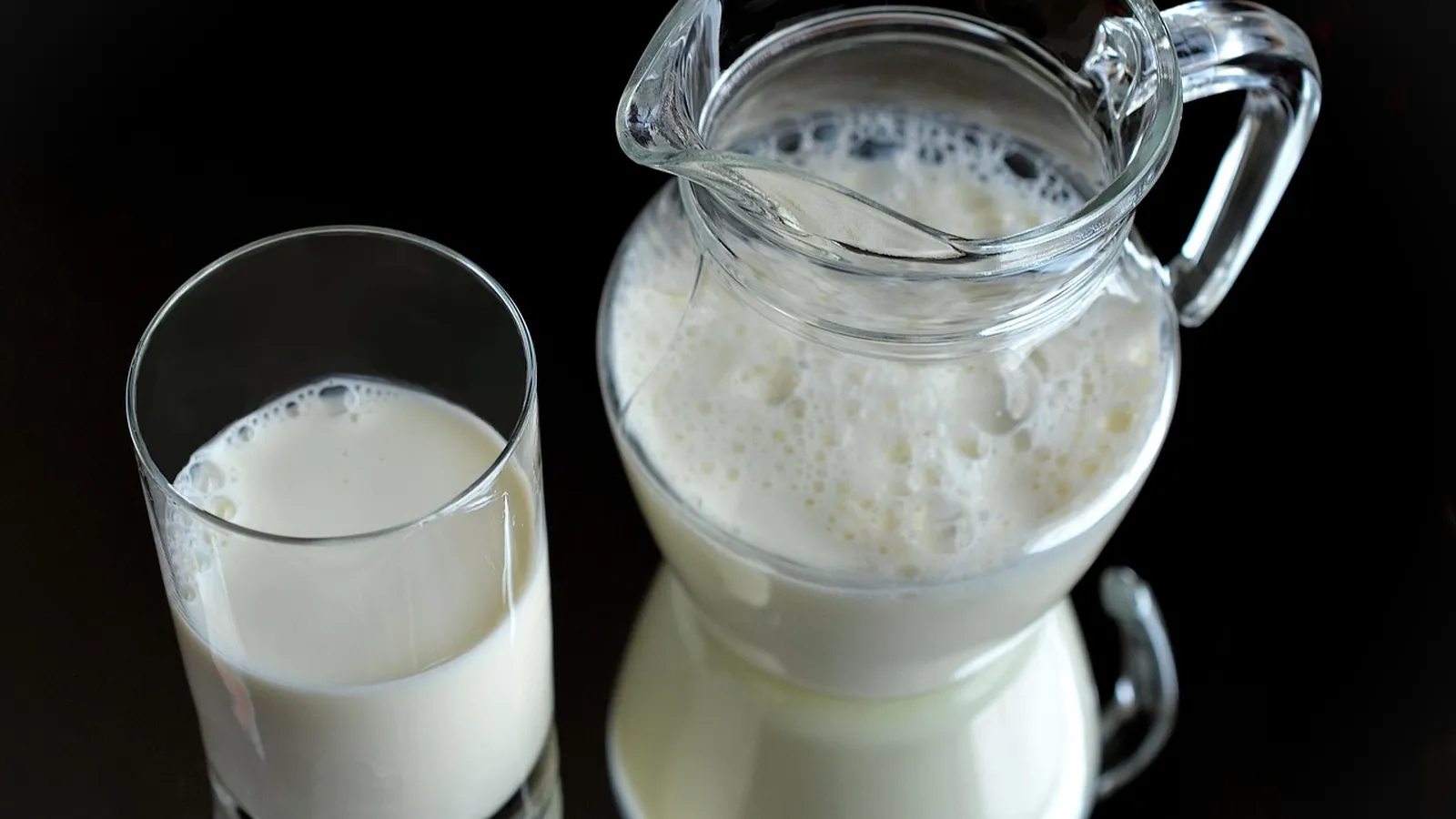
A US quart is 946 milliliters, just under a liter. A liter is about 4.2 US cups, or 1.06 quarts. For almost every kitchen job, you can treat a quart and a liter as the same amount and nobody will taste the difference.
Where it helps to be more careful:
- Scaling up. Four liters is about 4.2 quarts, so a 4 liter European stock recipe will overflow a 4 quart pot.
- Pot and appliance sizes. A "6 quart" slow cooker or Instant Pot holds about 5.7 liters total, and the usable fill line sits lower than that.
If you cook from both systems a lot, a kitchen scale for liquids saves a lot of conversion. One milliliter of water weighs one gram, so 946 grams of water is a quart, and stock and milk are close enough for cooking.
How many cups in a quart jar or a pint jar?
A quart canning jar holds 4 cups (32 fluid ounces), a pint jar holds 2 cups (16 ounces) and a half-pint jar holds 1 cup (8 ounces). A half-gallon jar holds 8 cups.
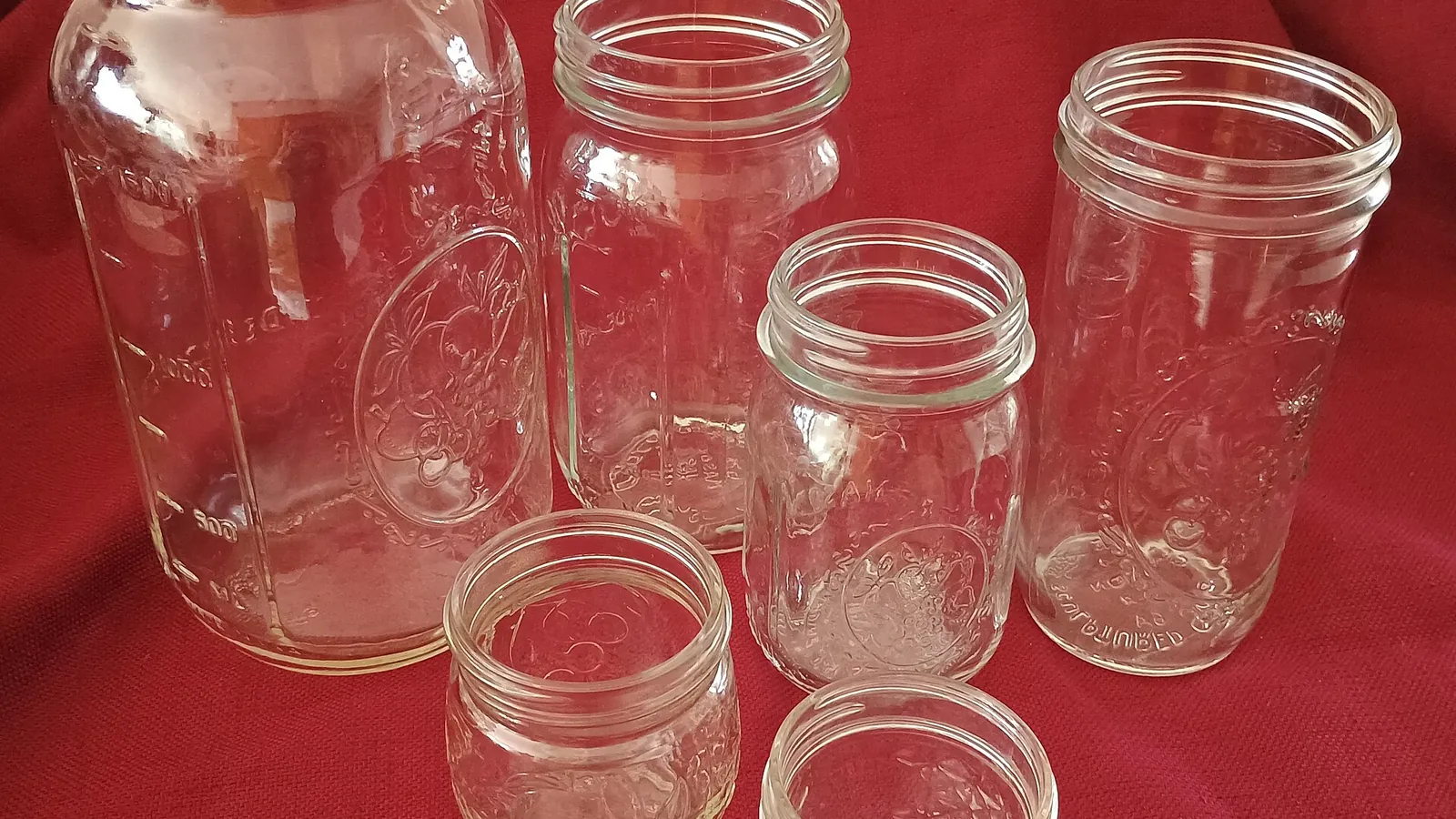
In practice you rarely fill a jar to the top, so a quart jar of soup or stock holds a bit less than 4 cups. For freezing liquids, Penn State Extension recommends leaving headspace for expansion:
- Wide-mouth pint: 1/2 inch
- Wide-mouth quart: 1 inch
- Narrow-mouth pint: 3/4 inch
- Narrow-mouth quart: 1 1/2 inches
That gap is why a "quart" of frozen stock in a jar usually measures closer to 3 1/2 cups. Plan for it when you label jars.
For home canning, follow a tested recipe for the specific jar size. Processing times are set for half-pints, pints or quarts, and moving soup or stock into a bigger jar is not a safe swap even if the volume math works.
How much stock or soup do you need, in quarts?
For soup, think of a quart as about 4 servings of 1 cup each, or 2 to 3 bowls if soup is the whole meal. A gallon pot of soup gives you about 16 cups, enough for a family dinner plus several lunches.
Rough planning figures for liquid in a recipe:
- Chicken or vegetable soup for 4. Plan on 6 to 8 cups of broth, which is 1 1/2 to 2 quarts.
- A pot of chili or stew. Usually 1 to 2 quarts of liquid, since the meat and beans add bulk.
- Homemade stock. Starting with about a gallon of water usually gives 2 to 3 quarts of finished stock after simmering and straining.
- Risotto for 4. About 1 1/2 quarts of hot broth, or 6 cups, added a ladle at a time.
When you simmer a homemade broth, how long the soup simmers changes how much liquid is left, so measure at the end rather than trusting the starting volume.
Plan for leftovers too. Once a carton is open, opened chicken broth does not keep long in the fridge, so freezing it in 1 cup or 1 pint portions means you only thaw what a recipe calls for. Many cooks freeze broth in pint jars because 2 cups is exactly what a lot of sauces and pan gravies need.
Why is my quart of stock coming up short?
When the math says you should have 4 cups and the measuring cup disagrees, the cause is usually one of these.
| What you see | Likely cause | Fix |
|---|---|---|
| A quart jar only fills 3 1/2 measuring cups | Headspace left in the jar, or the jar was not filled to the rim | Count a filled freezer jar as about 3 1/2 cups and label it that way |
| A British recipe turns out too dry or too stiff | Recipe used imperial pints (568 mL) and you measured US pints (473 mL) | Measure 2 1/3 US cups per imperial pint, or use milliliters |
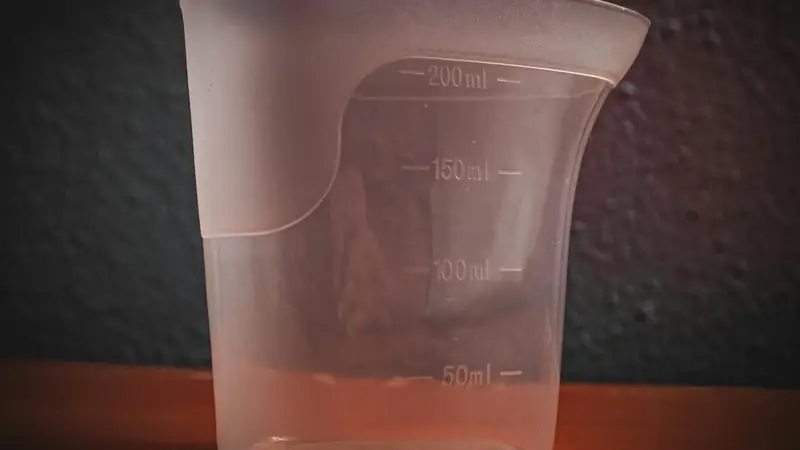
| A dry measuring cup reads differently from a liquid one | Dry cups are hard to fill to the brim with liquid without spilling | Use a clear liquid measuring cup and read it at eye level on the counter |
| Your 4 liter recipe overflows a 4 quart pot | A liter is a little larger than a quart | Choose a pot one size up, or cut the liquid by about 5 percent |
| Converted label amounts don't match | Label cups use 240 mL, true US cups are 236.6 mL | Ignore the difference for cooking; it is under 2 percent |
Do these numbers work for dry ingredients too?
For water, stock, milk and other liquids, yes. For flour, sugar and other dry ingredients, the cup count stays the same, but the amount you get changes a lot depending on how you fill the cup. A quart of flour is still 4 cups by volume, but the weight can vary by 20 percent or more, which is why bakers convert cups to grams instead.
There is also a separate US dry measure system, where a dry pint is about 551 milliliters. You only run into it at the farmers market, where berries and cherry tomatoes are sold in "pint" baskets. In a recipe, a pint of liquid always means the 16 ounce liquid pint. Unless a recipe says otherwise, assume US liquid definitions for your other measurements and conversions too.
 Seeing 4 cups fill a quart
Volume is easier to remember once you have watched the cups go in. A short demonstration of pouring cups into pint, quart and gallon containers makes the chain hard to forget.
How to Measure Cups, Pints, Quarts, and Gallons
By Miacademy & MiaPrep Learning Channel on YouTube. Their method may vary a little from ours. Watch on YouTube
- Count the cups going into the quart container and check that it stops at 4, or 32 fluid ounces.
- Notice how 2 pints fill the same quart, and how 4 quarts line up with a 16 cup gallon.
- Look at whether the containers are filled to the brim or to a line, which explains why a filled jar can hold a little more or less than its label.