Food Storage
Will Maple Syrup Go Moldy If You Don't Refrigerate the Opened Jug?
 By the CookClear writers
Checked against USDA and FDA food safety guidance
 Clear Answer
Yes, opened maple syrup needs to be refrigerated, where it keeps for about a year. Left in the pantry, it can grow mold or ferment, and maple experts now say moldy syrup should be thrown out rather than rescued. Unopened bottles are fine in a cool, dark cupboard, so the fridge rule only starts once you break the seal.
That surprises a lot of people, because syrup seems as shelf-stable as honey, but the two are made very differently.
Why pure maple syrup spoils when honey doesn't
Pure maple syrup is a single-ingredient food. It's sap boiled down until it reaches at least 66 percent sugar by weight (66° Brix), which is the legal minimum density in maple-producing states like Maine. There are no preservatives added.
Sixty-six percent sugar is a lot, but it isn't enough to stop every microbe. Honey runs much drier, with less free water for mold to use. Peanut butter is similar, which is why most jars can stay in the pantry. Maple syrup has just enough water that certain molds and yeasts can get a foothold, especially at room temperature once air and stray drips have gotten into the bottle.
Every time you open the cap, you introduce air, airborne mold spores, and sometimes crumbs or a bit of butter from a pancake-soaked spoon. A sealed, hot-packed bottle from the producer is effectively sterile. An opened one is not.
Cold slows all of that down dramatically.
How long does maple syrup last, opened and unopened?
Here's how the common storage scenarios shake out, based on guidance from America's Test Kitchen, Maple from Canada, and university extension maple specialists.
| How it's stored | Approximate shelf life | Notes |
|---|---|---|
| Unopened, glass bottle, cool dark cupboard | Several years | Glass blocks oxygen best; syrup may slowly darken |
| Unopened, plastic jug, cool dark cupboard | Up to about 2 years | Oxygen slowly passes through plastic and dulls flavor |
| Opened, refrigerated | About 1 year | Keep the cap tight and the rim clean |
| Opened, at room temperature | Not recommended | Mold or fermentation can show up unpredictably |
| Opened, frozen | Indefinitely | Won't freeze solid; best in small glass jars |
The "about a year" figure for opened syrup in the fridge is a quality estimate, much like a printed best by date, not a hard deadline. If it looks, smells, and tastes right after 13 months, it's probably fine. If it shows any of the spoilage signs described later at month four, it's done.
Note what isn't on that chart: a safe number of weeks for opened syrup in the pantry. Nobody credible gives one, because it depends on how warm your kitchen is, how often the bottle gets opened, and what found its way inside. Other opened staples follow similar logic, so check their storage times instead of guessing.
Signs your maple syrup has gone bad
Spoiled maple syrup usually tells you clearly. Check for these before pouring:
- Mold on the surface. It often shows up as a whitish, grayish, or greenish film or fuzzy spots floating on top, sometimes on the inside of the neck or under the cap.
- A sour, fruity, or boozy smell. That's fermentation. Yeast has started eating the sugar, and America's Test Kitchen says fermented syrup should go too.
- Bubbles or foam that weren't there before, or a cap that hisses when opened. That's gas from fermentation.
- Off taste. Flat, sour, or musty flavors in place of that clean caramel-maple taste.
What isn't spoilage: syrup that has gotten darker over time, and crunchy sugar crystals around the cap or at the bottom. Darkening is a slow quality change, mostly from oxygen. Crystals form when a little water evaporates and sugar comes out of solution. Neither is a safety problem.
Can you skim the mold off maple syrup and reboil it?
You used to be told yes. Old-school advice was to skim the mold off, bring the syrup back to a boil, strain it, and carry on. You'll still see that recommended online, sometimes with a reheating temperature attached.
Maple experts have walked that back. Mark Isselhardt, the maple specialist at University of Vermont Extension, put it bluntly on Ask Extension: throw the syrup out. He notes that reheating and skimming used to be the recommendation, but it isn't anymore.
The reason is a 2014 University of Maine study, cited by both America's Test Kitchen and UMaine Extension. It found that some molds that grow in maple syrup produce mycotoxins. Those toxins are not destroyed by boiling, so even if you kill the mold and strain out every visible bit, the toxins it left behind can stay in the syrup.
If you see mold, the whole container goes. Don't pour off the top and use the rest. Mold you can see on the surface often has invisible growth and byproducts throughout the liquid.
If you buy a sealed bottle and find mold the first time you open it, contact the producer. Small sugarhouses in particular want to know, since it can point to a problem in their bottling process, and most will replace it.
Pure maple syrup vs. pancake syrup
All of this applies to real maple syrup. The bottles labeled "pancake syrup" or "table syrup" are a different product, usually built on corn syrup with added flavoring and preservatives such as sodium benzoate or sorbic acid.
Those preservatives are there specifically so the bottle can sit in a pantry after opening. Read the label: most pancake syrups say nothing about refrigeration, and some say refrigeration is optional. If yours does say "refrigerate after opening," follow it.
A quick way to tell what you have:
- Look at the ingredient list. Pure maple syrup lists one ingredient: maple syrup.
- Check the name. Real syrup is labeled "maple syrup" or "pure maple syrup," often with a grade like Grade A Golden or Grade A Dark.
- Look for preservatives. If you see sodium benzoate, potassium sorbate, or sorbic acid, it's pancake syrup and pantry storage is fine.
Blends, such as "maple-flavored syrup" with some percentage of real maple mixed in, fall in between. Go by the label, and when in doubt, refrigerate. It costs nothing.
The best way to store opened maple syrup
The fridge does most of the work, but a few habits help your syrup last the full year and taste better while it does.
- Wipe the rim and threads. Sticky residue on the neck is where mold likes to start, and it glues the cap shut. A damp paper towel after each use takes five seconds.
- Close the cap tightly. A good seal keeps out spores and stops the syrup from slowly drying and crystallizing. It also keeps it from picking up fridge odors.
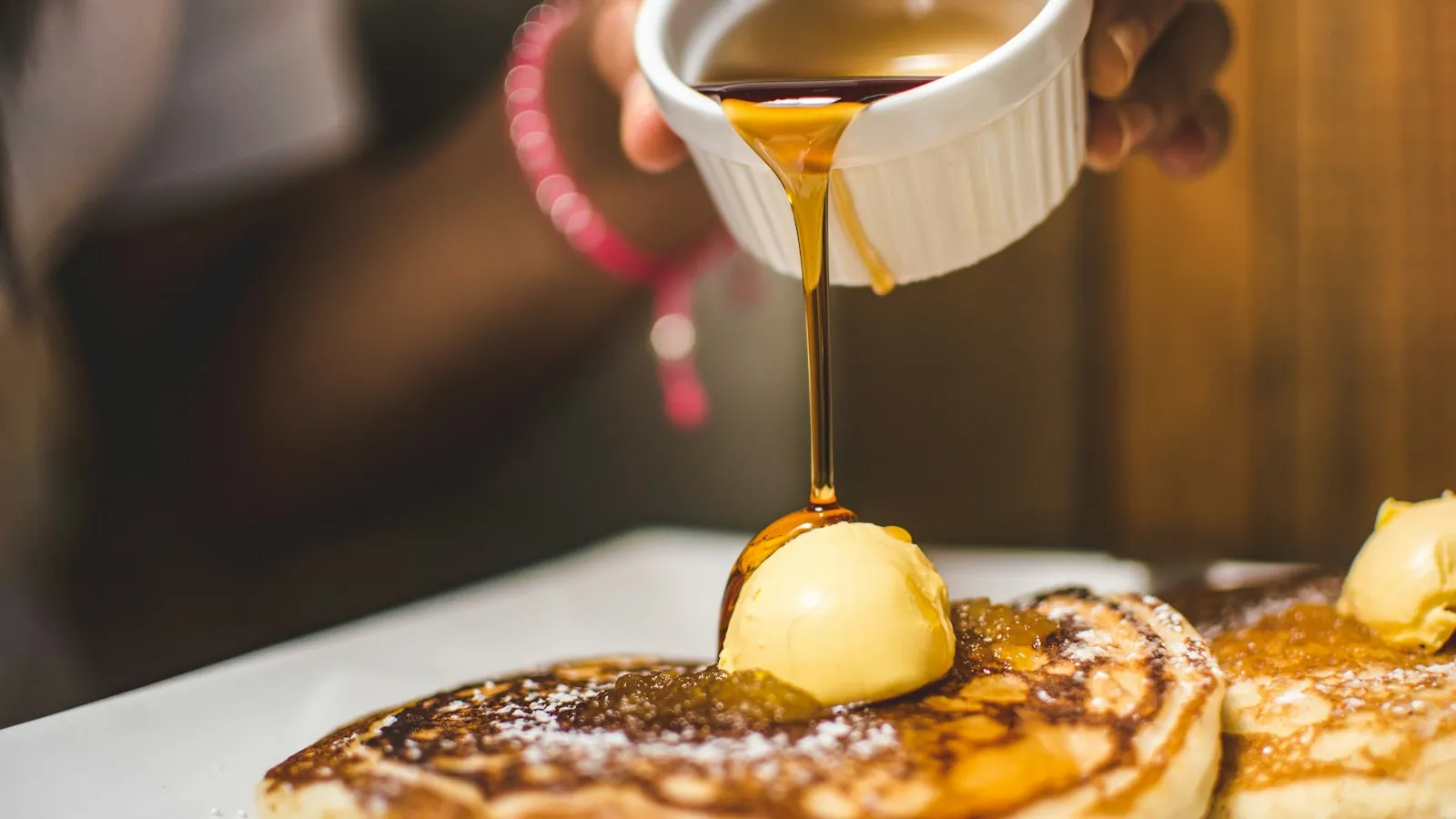
- Don't double-dip. Pour syrup into a small pitcher or ramekin for the table rather than dipping a buttery spoon or fork into the bottle.
- Move plastic jugs into glass for long storage. If you bought a big jug and it'll take you more than a year to finish, decant some into clean glass jars. Oxygen slowly works through plastic and darkens the syrup.
- Freeze the surplus. Extra syrup can go into the freezer in small glass jars, with some headspace at the top. Because of all that sugar, it stays slushy rather than freezing solid, so you can spoon out what you need.
For bulk buyers, opening a quarter-quart jar at a time means the rest stays sealed and frozen until you're ready for it.
Dealing with cold, thick syrup
The one real downside of refrigerating maple syrup is that cold syrup pours slowly and cools your stack of fresh pancakes. That's easy to fix.
- Warm just what you need. Pour a serving into a small saucepan over low heat or into a microwave-safe pitcher and heat it briefly in short bursts. Warm syrup tastes sweeter and more aromatic anyway. A teaspoon also makes a decent stand-in for vanilla in baking.
- Pull it out early. Take the portion you'll use out of the fridge about an hour before breakfast.
- Use a water bath. Set the closed bottle in a bowl of warm tap water while the griddle heats.
Try not to repeatedly warm the whole bottle and put it back. Cycling the full container between warm and cold adds condensation inside the neck, which is exactly the kind of extra moisture you're trying to avoid.
If sugar crystals have built up around the cap, run the closed bottle neck under warm water for about a minute. The crystals soften and the cap comes free. Crystals at the bottom of a jar can be dissolved by gently warming that portion. Gentle warmth also helps brown sugar that has gone hard.
What about maple syrup left out overnight?
If you left an opened bottle of pure maple syrup on the counter overnight, or even for a few days, you don't need to throw it out. This isn't like cooked food left out, where the 2-hour rule applies. The risk with syrup is mold and fermentation developing over time, not fast bacterial growth.
Check it the way you would any syrup: look at the surface and under the cap, smell it, and taste a little. If it's clean, put it back in the fridge and carry on.
What you want to avoid is a habit of leaving it out. A bottle that lives in a warm cupboard for months after opening is the classic setup for a moldy surprise. People who say "I've never refrigerated syrup and it's always been fine" often go through a bottle quickly, which shortens the window for anything to grow.
Does it matter if the bottle is glass, plastic, or a tin?
For opened syrup in the fridge, container type matters less than temperature and a clean, tight cap. For long-term storage of unopened syrup, it matters more.
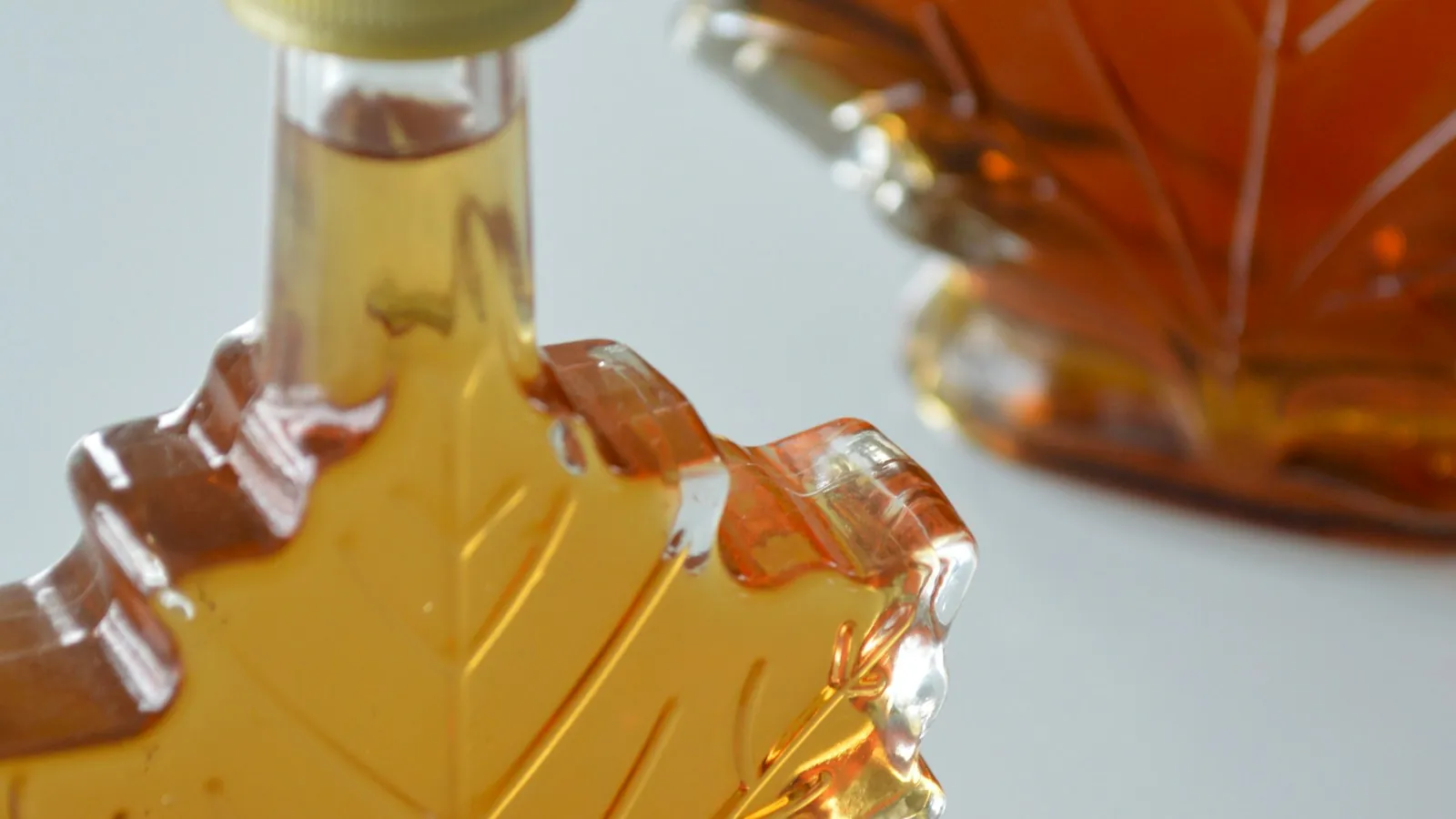
Glass is the best barrier. It doesn't let oxygen through, so syrup in sealed glass holds its color and flavor for years. Plastic jugs are fine for syrup you'll use within a year or two, but over time oxygen passes through and the syrup darkens and tastes flatter. Decorative tins are mostly for gifts and shorter storage; once opened, transfer the syrup to a glass jar before refrigerating, since a tin is hard to reseal well.
None of these containers turn into a safety risk on their own. The difference is mostly quality: how bright and maple-forward the syrup tastes when you finally open it.
A quick note on maple products beyond syrup
Maple cream (sometimes called maple butter) and soft maple sugar candy have different storage needs than syrup. Maple cream is especially prone to separating and is usually best kept in the fridge. Hard maple sugar is drier and more stable at room temperature in an airtight container. If a producer gives specific storage instructions on the label, those beat any general rule.
 Why pure maple syrup needs the fridge after opening
Watching sap turn into syrup shows why the finished product has no preservatives beyond its own sugar. Martha Stewart visits a Vermont sugarhouse to follow the process.
Martha Stewart Makes Real Vermont Maple Syrup From Tree to Table | Maple Cream and Maple Candy
By Martha Stewart on YouTube. Their method may vary a little from ours. Watch on YouTube
- Keep the 66 percent sugar minimum in mind as sap becomes syrup, since that density is high but does not stop mold.
- Look at the clarity and color of the finished syrup, then compare it with the spoilage signs above such as a film on top.
- Notice that syrup is a single ingredient, which is why the label check above finds nothing else in the jar.