Home / Measurements & Conversions
 Measurements & Conversions
No 9x13 Pan? Which Substitute Fits, and How Does Bake Time Change?
 By the CookClear writers
Checked against US standard measures, NIST conversions and test kitchen weights
 Clear Answer
Two 8 inch or 9 inch square or round pans are the best 9x13 pan substitute, because a 9x13 holds about 14 to 15 cups and covers 117 square inches, and two of those smaller pans land close to both. Keep the batter about as deep as the recipe intended, then start checking thinner bakes early and give deeper ones extra time.
How many cups does a 9x13 pan hold?
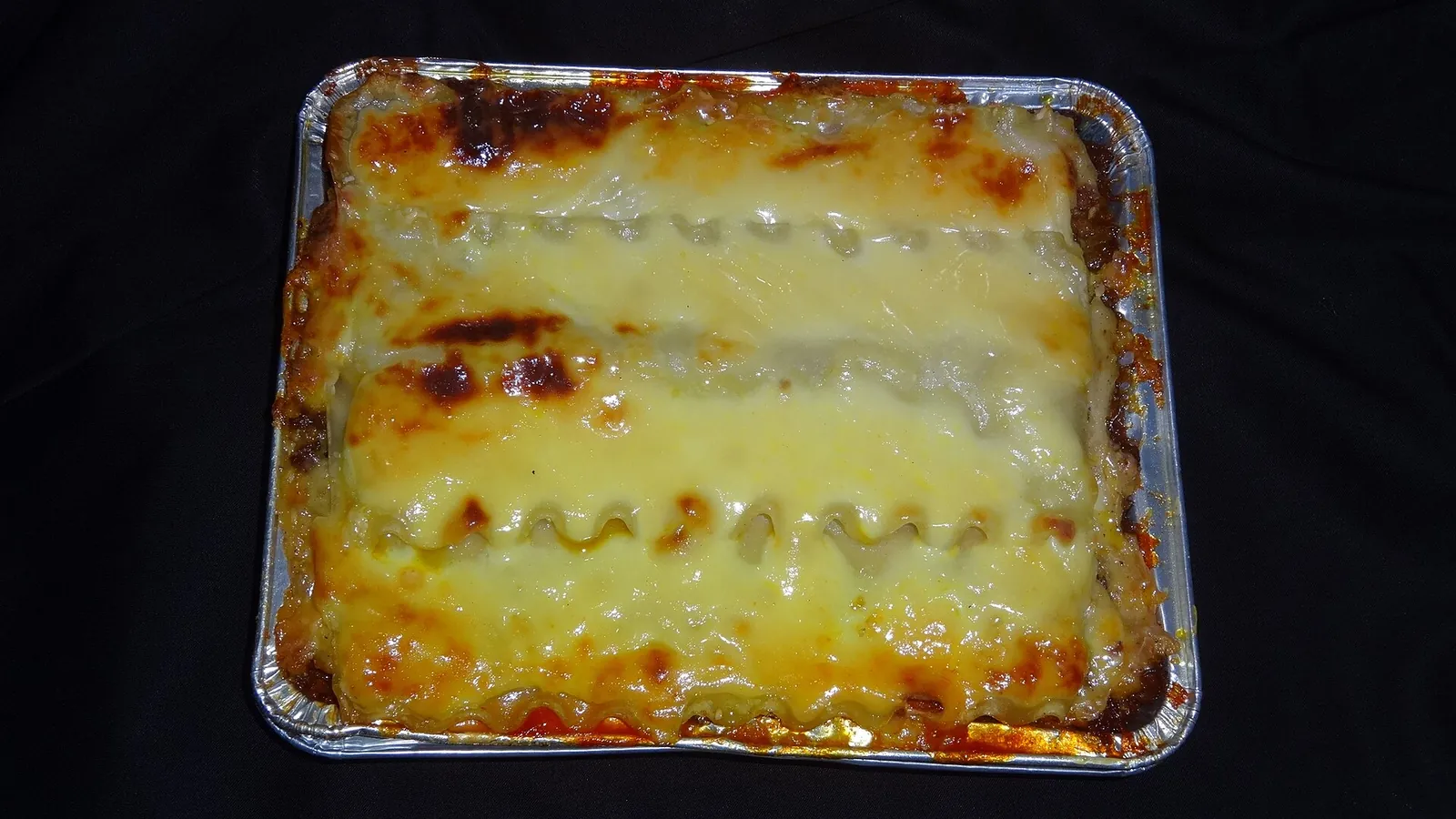
A standard 9 x 13 x 2 inch pan holds 14 to 15 cups when filled to the brim, according to recipe resizing sheets from Kansas State University and University of Nebraska Extension. That is the number to compare against when you are looking at another pan.
If you do the straight math, 9 x 13 x 2 inches is 234 cubic inches, and a US cup is 14.4375 cubic inches (a US gallon is defined as 231 cubic inches). That works out to about 16 cups. Real pans hold less than the math says because their sides slope inward and their corners are rounded. Expect most pans to hold roughly 10 percent less than a box of the same outer size.
You almost never fill a pan to the brim anyway. King Arthur Baking puts the batter for a standard 9x13 cake at about 6 cups, which sits under an inch deep in that pan. Brownies, bar cookies and sheet cakes run thin. Casseroles and lasagna fill it much higher.
The quickest way to know what your own pan holds is to fill it with water, one measured cup at a time. Write the number on a strip of tape on the bottom. If the cup math feels fuzzy, the cups, quarts and gallons relationships make it easy to measure in bigger jumps: a quart is 4 cups.
Which pans have the same area and volume as a 9x13?
Area tells you how thick the batter will sit. Volume tells you whether it will overflow. Look at both.
These areas follow King Arthur Baking's pan size chart. The brim volumes are calculated from each pan's stated size, so treat them as the most a pan with straight sides could hold; a real pan holds a little less.
| Pan | Area (sq in) | Brim volume, calculated (cups) | Share of a 9x13 recipe |
|---|---|---|---|
| 9 x 13 x 2 inch rectangle | 117 | About 16 (14 to 15 in real pans) | Full recipe |
| Two 9 x 2 inch rounds | 127 | About 17.6 total | Full recipe, slightly thinner |
| Two 8 x 8 x 2 inch squares | 128 | About 17.8 total | Full recipe, slightly thinner |
| Two 8 x 2 inch rounds | 100 | About 14 total | Most of the recipe, fill no higher than two-thirds |
| 10 x 15 x 1 inch jelly roll | 150 | About 10.4 | Thin bakes only |
| 13 x 18 x 1 inch half sheet | 234 | About 16.2 | Full recipe at half the depth |
| 9 x 9 x 2 inch square | 81 | About 11.2 | About two-thirds |
| 11 x 7 x 2 inch rectangle | 77 | About 10.7 | About two-thirds |
| 8 x 8 x 2 inch square | 64 | About 8.9 | About half |
| 9 x 2 inch round | 64 | About 8.8 | About half |
| 9 x 5 x 3 inch loaf | 45 | About 9.4 | Not a good swap for thin batters |
A 9x13 has about 45 percent more area than a 9 inch square, and twice as much as an 8 inch square or a 9 inch round. That is why half a 9x13 recipe fits an 8 inch square almost exactly.
Can you use two 8 inch pans instead of a 9x13?
Yes. Two 8 inch square pans give you 128 square inches, which is about 9 percent more floor than a 9x13. Your batter will sit a touch thinner, so it bakes a few minutes faster.
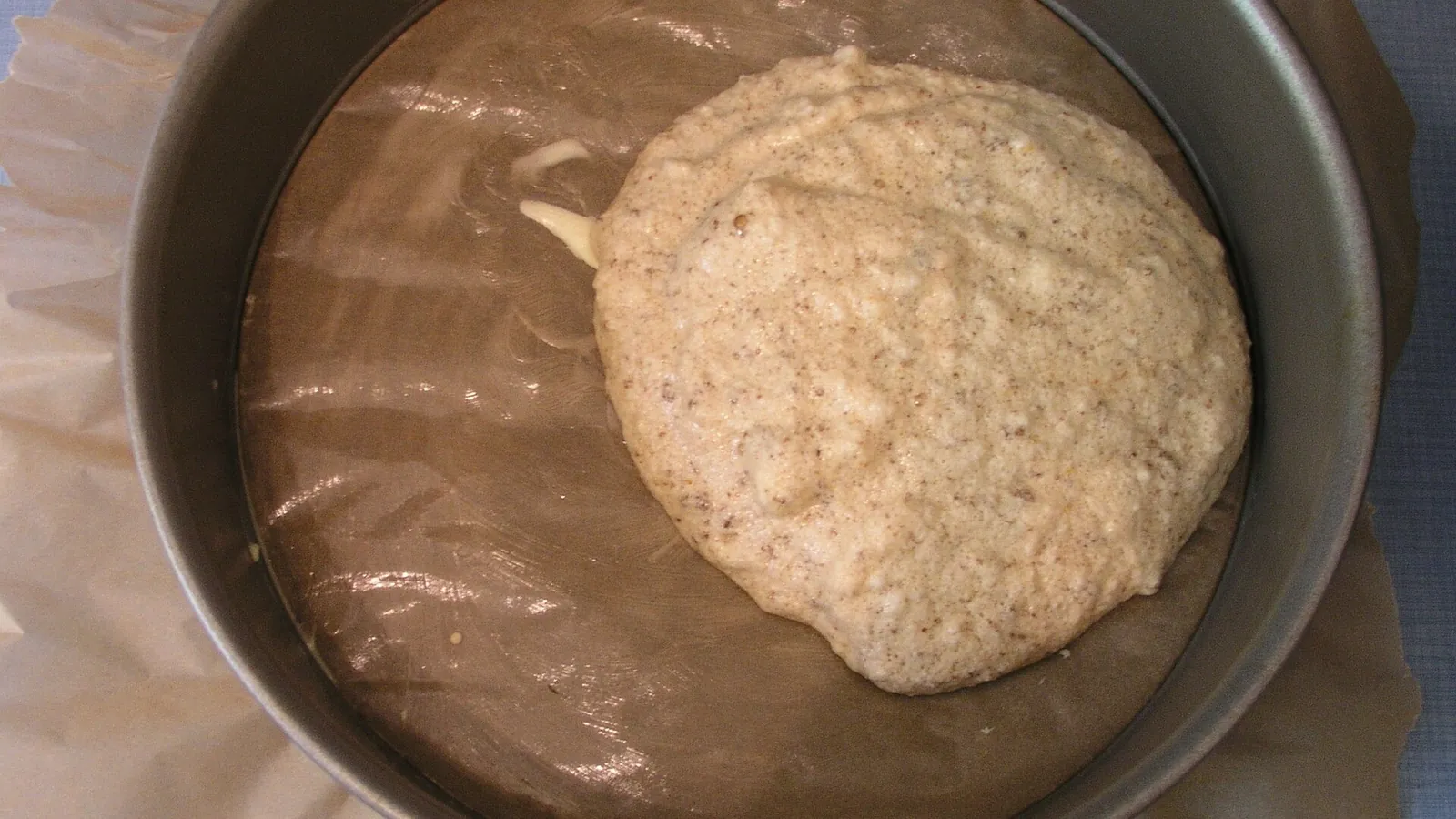
Two 8 inch round pans are the one combination that runs short. They give about 100 square inches, which King Arthur Baking puts at roughly 9 percent less space than a 9x13. The batter will be deeper, so it needs more time. With a cake that rises a lot, leave a cup or so of batter out and bake it as cupcakes.
Two 9 inch rounds are the classic swap for layer cakes. At about 127 square inches, King Arthur Baking says they give roughly 10 percent more room than a 9x13, close enough that most sheet cake recipes move over without changes except for the time.
To split batter evenly between two pans:
- Set both pans on a kitchen scale, one at a time, and note the weight of each empty pan.
- Pour about half the batter into the first pan.
- Weigh both again and move batter until the weights match.
- Spread each one flat, all the way into the corners, so the edges do not bake ahead of the middle.
- Set the pans on the same rack with at least an inch between them and the oven walls.
Can a 9x13 recipe go in a 9x9 or 8x8 pan?
Only part of it. A 9x9 pan has about 81 square inches, so a full 9x13 recipe would sit roughly 45 percent deeper. Brownies get fudgy in the middle and dry on the edges, and a cake can dome and crack or spill over.
You have two clean options. Bake two-thirds of the batter in the 9x9 and use the rest for a few muffins. Or make a smaller batch to begin with. Halving a 9x13 recipe fits an 8x8 square or a 9 inch round, and this is the exact pan pairing that Kansas State and Nebraska Extension recommend for half recipes. The math for scaling a recipe in half is simple for most ingredients, with eggs being the one that needs a little thought.
Going the other way works too. To bake a 9x9 recipe in a 9x13, King Arthur Baking suggests increasing the ingredients by 50 percent.
Can a 9x13 recipe go in a sheet pan?
A half sheet pan (about 13 x 18 inches inside) has 234 square inches, exactly twice the area of a 9x13. A single 9x13 recipe spread across it bakes at half the depth. That is great for thin sheet cakes and bar cookies you want chewy at the edges, and it cuts the bake time a lot, often close to half.
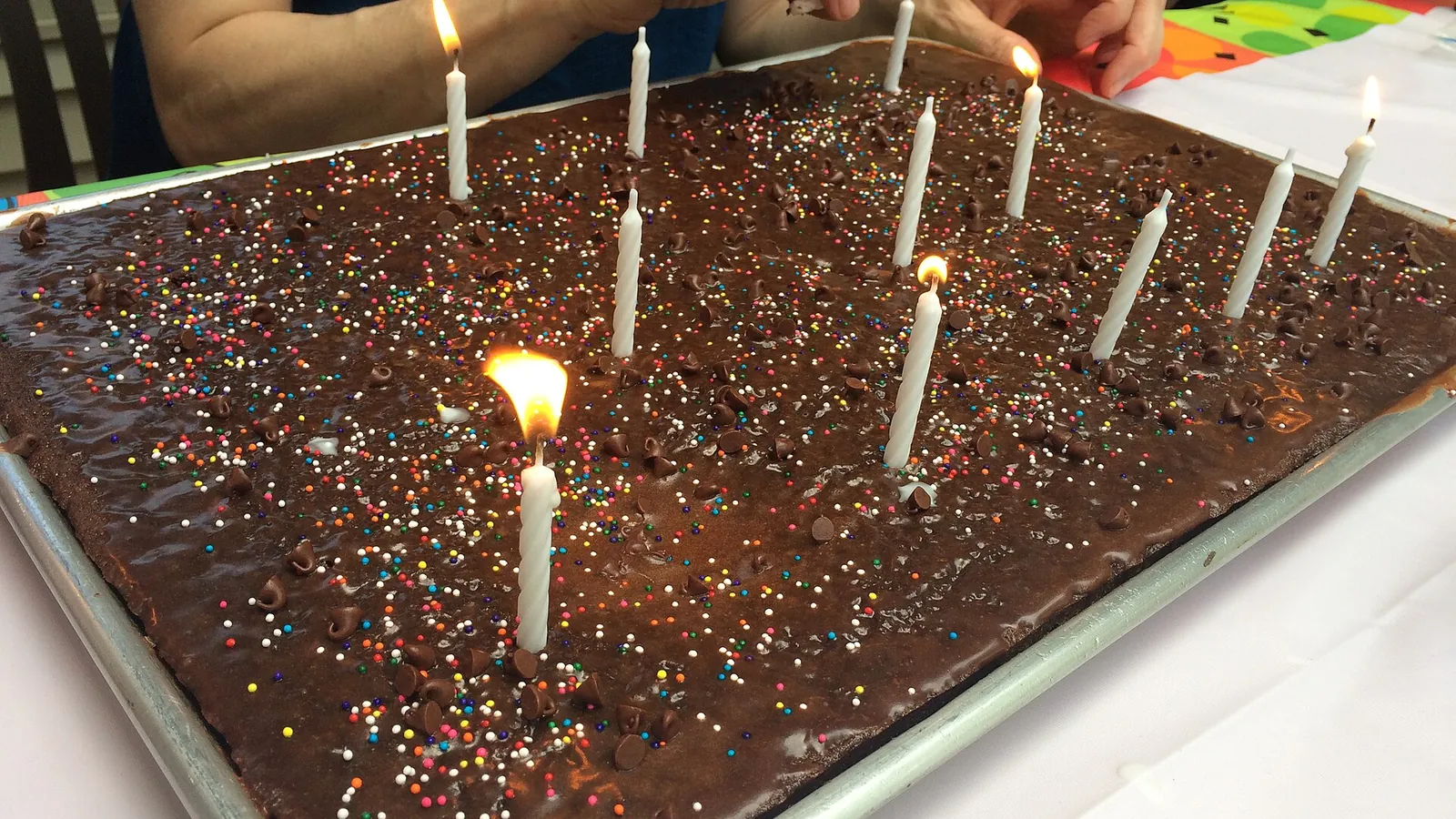
Most of the time you want the same thickness as the original, which means doubling the recipe for a half sheet. That is how bakeries make large sheet cakes.
A few things to keep in mind with sheet pans:
- The sides are only about 1 inch tall, so anything that rises or bubbles needs plenty of headroom. Lasagna and deep casseroles do not belong in one.
- Thin, wide pans can buckle when cold batter hits a hot rim, and why baking sheets warp comes down mostly to heating unevenly.
How does pan depth change bake time?
Heat moves in from the bottom, sides and top of the pan, so the deciding factor is how far the heat has to travel to reach the center. A batter that is half as deep cooks through much faster. A batter that is deeper takes longer, and the outside can overbake before the middle sets.
Kansas State's resizing sheet suggests starting to check smaller amounts at about half the original time, then adding time as needed. Treat that as the first check, then keep going in short intervals.
- Thinner batter (bigger pan or less batter). Keep the same oven temperature. Start checking at about half to two-thirds of the original time.
- Same depth (two 8 inch squares or two 9 inch rounds). Keep the temperature. Start checking a few minutes early, since smaller pans and slightly thinner batter both speed things up.
- Deeper batter (smaller pan or a casserole dish). King Arthur Baking says to bake slightly longer, possibly at a lower temperature. Dropping the oven about 25°F, as you would for glass, gives the center time to catch up before the edges dry out.
- Tube or Bundt pan. King Arthur Baking puts a 10 cup Bundt at about 30 percent longer than a 9x13, and a 12 cup Bundt at 15 to 20 percent longer.
Check doneness the way the recipe describes: a toothpick that comes out with moist crumbs for brownies, a spring back in the center for cake, bubbling at the edges and a hot middle for casseroles. For egg dishes and casseroles with meat, a quick instant read thermometer reading in the center is more reliable than the clock.
If your oven itself is off, every one of these times will be too. An oven that runs hot can scorch the edges of a deep pan long before the middle sets.
Glass or metal pan: does the temperature change?
It does. When you use a glass pan in place of a metal one, Kansas State and Nebraska Extension both say to lower the oven temperature by 25°F. Glass heats slowly but holds heat well, and it lets radiant heat through, so edges and bottoms brown faster. Kansas State applies the same 25°F drop to dark metal pans.
Keep glass away from sudden temperature jumps. A cold glass dish going into a blazing oven, or under a broiler, can crack, and glass baking dishes under the broiler carry real risk. If you convert recipes for a fan oven, also note that convection baking temperatures usually drop by their own amount, separate from the glass adjustment. Make one change at a time so you know which one helped.
Why did my bars come out raw in the middle after a pan swap?
Raw centers are the most common result of swapping in a smaller or deeper pan without changing anything else. Here is what you might see after a substitution.
| What you see | Likely cause | Fix |
|---|---|---|
| Center wet, edges dry and dark | Pan too small, batter too deep | Lower the oven 25°F, bake longer, or move some batter to a second pan |
| Thin, dry and overbaked at the original time | Pan too big, batter too shallow | Start checking at half the time, or scale the recipe up |
| Batter ran over the edge | Pan filled past about two-thirds | Measure the pan with water first; bake extra batter separately |
| Bottom and edges very brown | Glass or dark pan at full temperature | Lower the oven 25°F |
| Two pans finished at different times | Uneven batter split or crowded rack | Weigh the batter into each pan; leave space around each one |
Compare areas before you pour, and keep the measurements and conversions charts handy for pan volumes and oven temperatures.
 Splitting one 9x13 batch between two smaller pans
Seeing batter divided and leveled makes it easier to judge depth by eye before you trust the timer.
Never Ruin a Cake Again: Simple Pan Conversion Guide
By The Singing Baker on YouTube. Their method may vary a little from ours. Watch on YouTube
- How deep the batter sits in each pan, compared with the under 1 inch you get from about 6 cups in a 9x13.
- Whether the batter reaches the corners evenly, since two 8 inch squares add only about 9 percent more floor than one 9x13.
- When the bake gets checked, since thinner batter in two pans usually finishes several minutes before the original time.