Cooking Times
For Tender, Bright Green Broccoli, How Long Should It Steam?
 By the CookClear writers
Checked against USDA safe temperatures and test kitchen timing
 Clear Answer
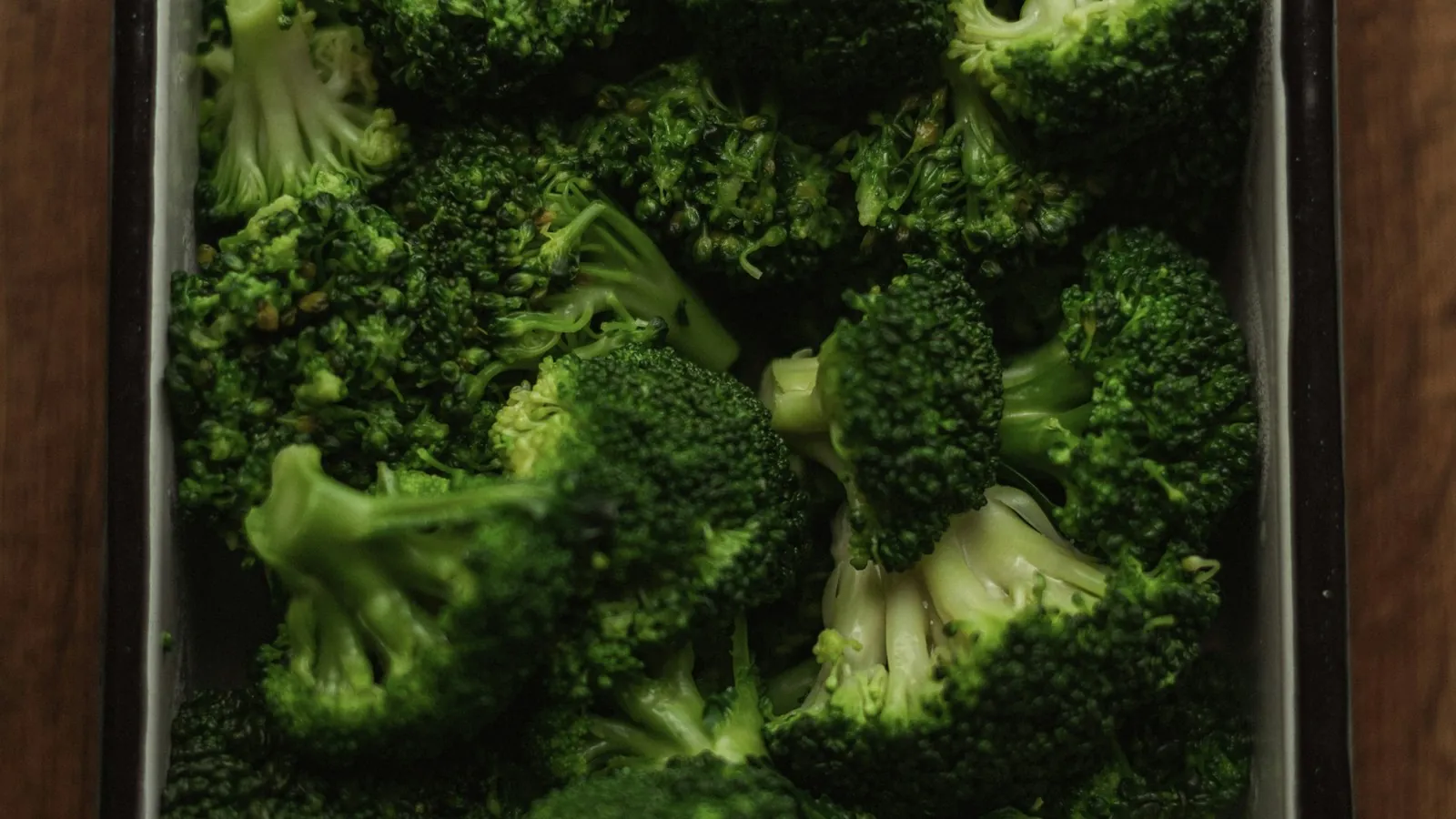
Steam broccoli florets cut to about 1.5 inches for 4 to 5 minutes over boiling water, counted from when the lid goes on, until a fork slides into the stem with light resistance and the color is still vivid green. Small florets of about 1 inch need closer to 3 minutes. Past 7 or 8 minutes, the color slides toward olive and the texture goes soft.
Those numbers line up with tested sources. America's Test Kitchen steams 1.5 pounds of fresh, tight-budded broccoli for 4.5 to 5 minutes until "just tender," and the cookware brand Misen calls for 3 minutes on smaller florets. University of Kentucky extension material gives 6 to 8 minutes, which is the soft, fully cooked end of the range. Where you stop inside that window is a matter of taste, but the bright green stage lives at the shorter end.
Steaming times by floret size and texture
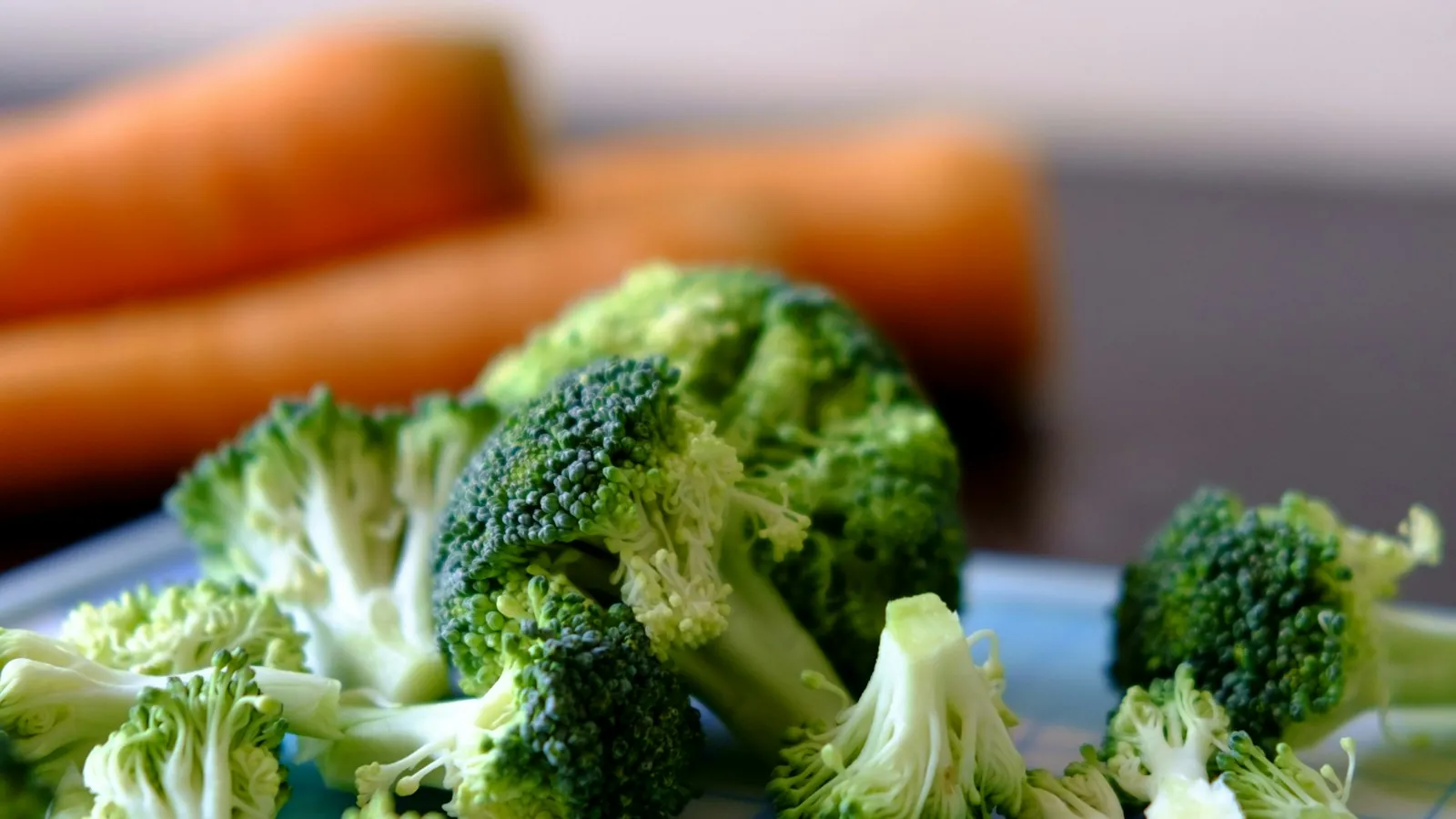
A big 3-inch floret with a thick stem takes far longer than a bite-size piece, and a pot full of mixed sizes cooks unevenly. Cut everything to roughly the same size and the clock becomes reliable.
| Piece size | Crisp-tender (bright green) | Tender (still green) | Soft (fading color) |
|---|---|---|---|
| Small florets, about 1 inch | 2.5 to 3 minutes | 3.5 to 4 minutes | 5 to 6 minutes |
| Medium florets, about 1.5 inches | 3.5 to 4 minutes | 4.5 to 5 minutes | 6 to 8 minutes |
| Large florets, 2 to 2.5 inches | 5 minutes | 6 minutes | 8 minutes or more |
| Peeled stems, sliced 1/4 inch | 3 to 4 minutes | 4.5 to 5 minutes | 6 minutes |
| Whole spears with long stems | 5 to 6 minutes | 7 minutes | 8 minutes or more |
Treat the table as a starting point, as with any chart of cooking times. Your stove, your pot, and how much broccoli you pile into the basket all shift the result by a minute either way, so start checking about a minute before the target.
Why broccoli goes from bright green to drab olive
The green in broccoli comes from chlorophyll. Raw broccoli looks a bit dull because tiny pockets of air in the tissue scatter light and mute the color. In the first minute or two of heat, that air gets pushed out and the florets turn a brighter, almost glowing green. That's the color you're aiming to hold.
Keep cooking and the chlorophyll starts to break down. Heat and acid knock the magnesium out of the center of the chlorophyll molecule, turning it into a compound called pheophytin, which is olive brown. Vegetables release some of their own acids as they cook, so the longer the broccoli sits in the heat, the more that shift builds. Food chemistry writers at Ricardo Cuisine note that green vegetables cooked for 5 to 7 minutes keep their chlorophyll fairly well, while around 10 minutes in boiling water turns them olive.
A minute or two of extra steam does more damage to the color than anything else you could do.
How to steam broccoli on the stovetop
You don't need special equipment. A pot with a lid and a collapsible steamer basket is the standard setup, but a metal colander set inside a wide pot works too.
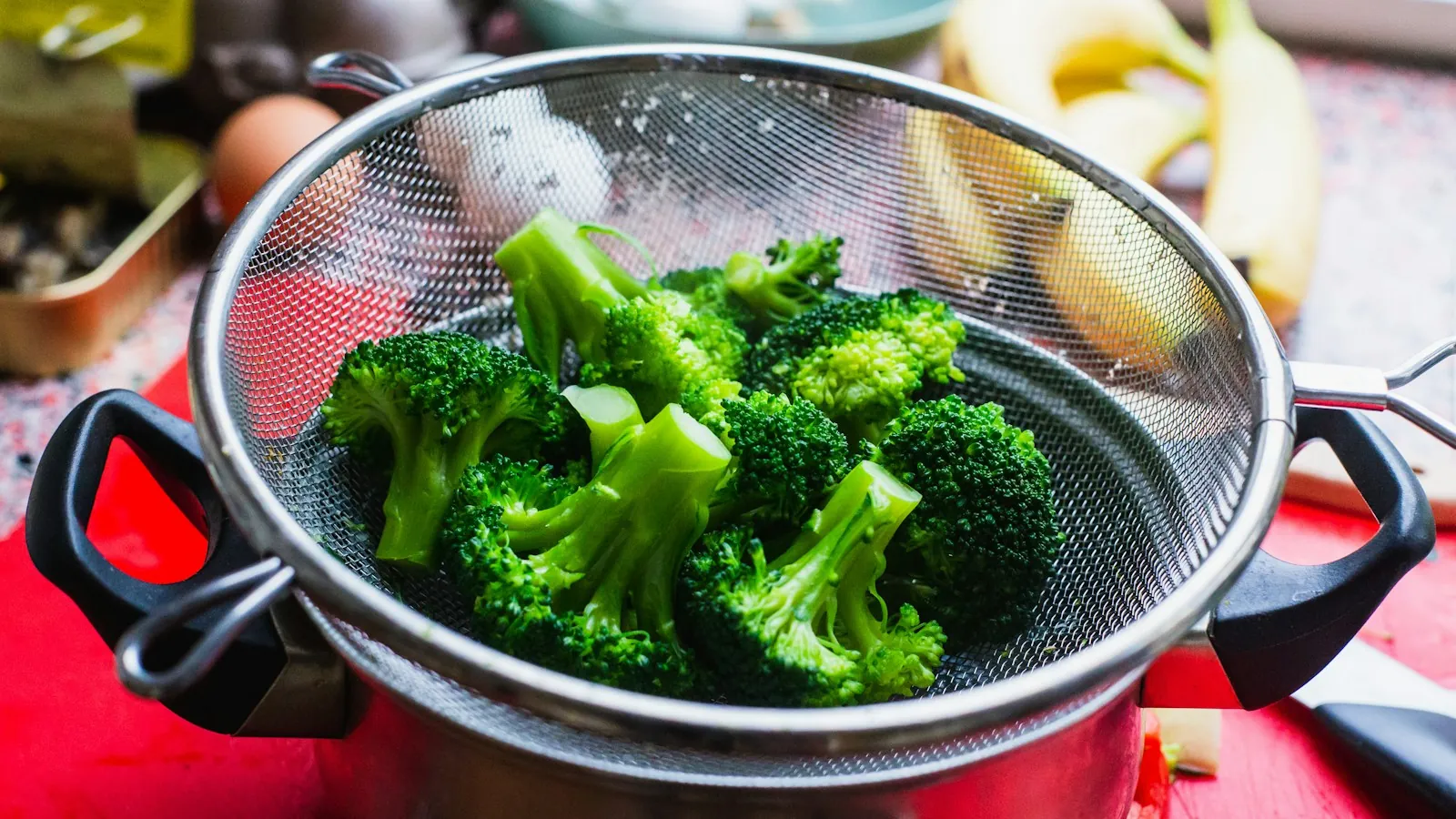
- Prep the broccoli. Rinse it, then cut the crown into florets about 1.5 inches across. Peel the tough outer skin from the stalk with a vegetable peeler and slice the tender core into 1/4-inch coins.
- Add water. Pour about 1 inch of water into the pot. The basket should sit above the water, not in it, or the bottom layer boils instead of steaming.
- Boil first. Bring the water to a full boil over high heat with the lid on before the broccoli goes in. Starting in cold water adds unpredictable minutes.
- Load and cover. Add the broccoli in a single, loose layer if you can, cover, and start your timer right away. Turn the heat to medium-high so it keeps a steady steam without boiling dry.
- Check early. At 3.5 minutes, poke a stem with a paring knife or fork. It should go in with slight resistance. If it's still firm, give it another 30 to 60 seconds.
- Get it out of the heat. Lift the basket out immediately. Broccoli left sitting in a hot, covered pot keeps cooking.
For a full pound or more, you may need to stir the florets once halfway through so the top layer gets the same heat as the bottom. Work fast; every time you lift the lid, steam escapes.
What does properly steamed broccoli look and feel like?
The clock gets you close, and these checks finish the call:
- Color: a deep, saturated green, brighter than when it went in. Any yellow or gray tint at the edges means it went too far.
- Stem texture: a knife slides in with a little resistance, like cutting into a firm ripe pear. No resistance at all means soft.
- Florets: the little buds stay tight and intact. If they start crumbling off when you move them, they're overcooked.
- Smell: mild and fresh. A strong sulfur smell, like old cabbage, shows up as broccoli overcooks and its sulfur compounds break down.
- Taste: pull one piece and bite it. It's the most reliable test there is, the same way you'd check pasta for doneness.
If you're serving it right away, take it off when it's a touch firmer than you want. It will keep softening for a minute or so from its own heat.
Should you shock steamed broccoli in ice water?
Only if you aren't eating it right away. An ice bath stops the cooking fast and locks in the color, which helps when you're steaming ahead for a salad, a crudité platter, meal prep, or a dish you'll reheat later.
Fill a large bowl with ice and cold water before you start steaming. Move the broccoli straight from the basket into the bath, leave it just until it's cool all the way through (a minute or two for florets), then drain and pat it dry. Leaving it in the water much longer than that just makes it waterlogged.
For broccoli going straight to the table, skip the ice. You'll lose the warmth you wanted, and a quick transfer to a serving bowl stops the carryover cooking well enough.
Does lemon juice or salt keep broccoli green?
Lemon juice does the opposite while it's cooking. Acid speeds up the chlorophyll breakdown, so lemon, vinegar, or a vinaigrette added early will turn broccoli olive faster. Add acid at the table, right before serving, and if you're out of lemons, a lemon juice substitute behaves the same way. The same goes for make-ahead salads: dress broccoli at the last minute, or it will dull in the fridge within hours.
Salt doesn't do much for the color either way. It's still worth seasoning, but sprinkle it on the cooked broccoli where you can taste it rather than in the steaming water, where most of it never touches the vegetable.
You'll sometimes see advice to add a pinch of baking soda to cooking water. It does make broccoli look greener, because the alkaline water protects chlorophyll. The catch is that it also weakens the cell walls, so the broccoli turns mushy fast. Precise timing gets you the color without that trade-off.
Can you steam broccoli in the microwave instead?
Yes, and it's quick. Put the florets in a microwave-safe bowl with a few tablespoons of water, cover with a microwave-safe plate or lid, and cook on high for about 3 to 4 minutes. University of Kentucky extension material lists 3 to 4 minutes covered for crisp-tender broccoli.
Microwave power varies a lot between models, which is also why microwaved potato times swing so much, so check at 2.5 minutes the first time and note what works for yours. Let it stand covered for 30 seconds, then carefully lift the lid away from you, since the trapped steam is hot. Drain any water left in the bowl so the broccoli doesn't keep cooking in it.
Steaming vs boiling broccoli: which keeps it greener?
Both can give you bright green broccoli if the timing is right. Boiling in a big pot of water is a little faster, since water transfers heat more efficiently than steam, and the large volume of water dilutes the acids the broccoli releases.
Steaming has its own advantages. The broccoli doesn't get waterlogged, it holds onto more flavor, and it keeps more of its water-soluble vitamins, especially vitamin C, because it isn't sitting in water that gets poured down the drain. For a weeknight side dish, steaming is also less fuss: an inch of water boils in a couple of minutes, compared with waiting on a full pot. If you'd rather have browned edges, roasting works too, as long as you avoid the usual soggy roasting mistakes.
If you boil, use plenty of water and keep it at a hard boil, the same as for corn on the cob. Food Network Kitchen boils florets for 2 to 3 minutes for crisp-tender; give larger pieces a minute more.
How to store and reheat steamed broccoli
Get leftovers into the fridge within 2 hours of cooking, the standard USDA rule for perishable food. Pat the broccoli dry, put it in a shallow airtight container, and plan to eat it within 3 to 4 days, the usual window for cooked leftovers.
Reheating is where most of the color is lost, since you're stacking more heat on top of the first round. A few ways to keep it from going drab:
- Undercook on purpose. If you know you're cooking for leftovers, pull the broccoli about a minute early and shock it in ice water.
- Re-steam briefly. Thirty to 45 seconds in a steamer basket is enough to warm through.
- Toss it in a hot pan. A minute in a skillet with a little oil or butter (add garlic late, since garlic turns bitter fast) warms it and adds some browning.
- Microwave covered in short bursts. Use 30-second intervals and stop as soon as it's hot.
Why does my steamed broccoli cook unevenly?
Three things usually cause it. The first is uneven cutting: a 3-inch floret and a 1-inch floret in the same basket will never finish together. Trim the big ones down, and cut thick stems into thinner coins.
The second is crowding. A heaping mound in a small basket means the bottom layer cooks hard while the top barely warms. Use a wider pot, steam in two batches, or stir once halfway through.
The third is a pot that wasn't fully boiling when the broccoli went in, or a lid that doesn't fit well. Without a steady, contained cloud of steam, the timing falls apart. Wait for a rolling boil, and if the lid rattles loose, set a heavy pan on top or seal the gap with a sheet of foil.
 Spotting the right moment to pull steamed broccoli
Bright green fades to olive within a minute or two, which is hard to judge from a timing table. Simply Recipes shows the basket setup and the color change as it happens.
How to Perfectly Steam Broccoli Every Time
By Simply Recipes on YouTube. Their method may vary a little from ours. Watch on YouTube
- Watch how the water level sits below the basket, matching the 1 inch of water and the full boil before the broccoli goes in.
- Compare the green of the florets as they come off the heat with the deep, saturated green that signals they are done.
- Notice how uniform the floret sizes are, since mixed sizes are the main reason a basket cooks unevenly.