 Cooking Times
At What Temperature and Time Do Meatballs Cook Through in the Oven?
 By the CookClear writers
Checked against USDA safe temperatures and test kitchen timing
 Clear Answer
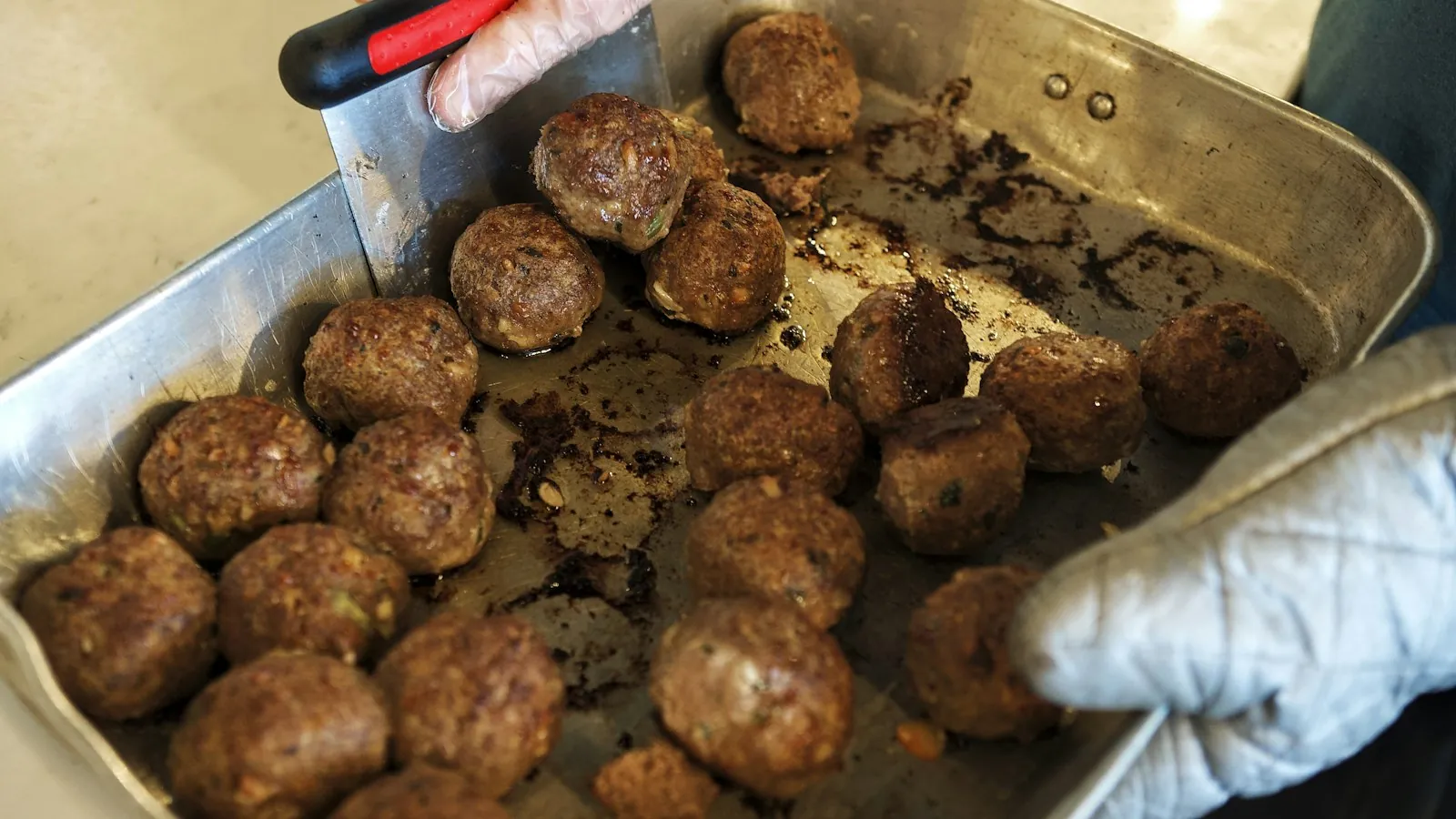
Bake meatballs at 400°F: 2-inch meatballs take about 15 minutes, while smaller meatballs or crowded pans can stretch that to 20 or 25 minutes. They are cooked through at 160°F in the center for beef, pork, veal, or lamb, and 165°F for chicken or turkey. Pull them the moment they hit that number and they stay juicy.
Why the clock alone lets you down
Recipe times for baked meatballs are all over the place, and there's a reason. The time depends on four things at once: the size of each ball, the oven temperature, how cold the meat was going in, and how much room the pan gives each one.
 On the menu11 questions
A batch rolled straight from the fridge onto a crowded sheet behaves very differently from a batch that sat out for 15 minutes on a roomy pan. Ovens also run hot or cool by a surprising margin. So treat any time, including the ones given here, as the point where you start checking.
Meatballs are small, though. A thermometer reading takes five seconds, and checking two or three of the biggest ones tells you about the whole tray.
Typical times by oven temperature
These figures come from tested recipes and are a starting point. Check the largest meatball first, and if your recipe gives Celsius, 400°F is about 200°C.
| Oven temp | Meatball size | Typical bake time | Source of the figure |
|---|---|---|---|
| 350°F | not specified | close to 30 minutes | Food Lovin' Family |
| 400°F | 1 inch | 20 to 25 minutes | Food Lovin' Family |
| 400°F | 2 inches | about 15 minutes | America's Test Kitchen |
| 450°F | not specified | 15 to 20 minutes | Joshua Weissman |
You'll notice the 1-inch time at 400°F is longer than the 2-inch time from ATK. Recipes really do differ that much. ATK uses a hot, middle-rack setup and a panade-rich mix, while other recipes pack meatballs tighter on the pan. Both reach 160°F in the end, which is why you should trust the thermometer over the chart.
What temperature is best for juicy meatballs?
400°F is the sweet spot for most home cooks. It's hot enough to brown the outside before the inside overcooks, and gentle enough that you have a few minutes of leeway.
At 350°F the meatballs cook more evenly edge to center, but they barely brown and take close to half an hour. They come out pale and a little steamed, which is fine if they're headed straight into a pot of sauce anyway.
At 425°F to 450°F you get the best crust and the fastest cook. The trade-off is a narrower window: a couple of extra minutes can take a meatball from just done to dry, especially with lean meat. Use the higher heat when you want browned meatballs to serve on their own, and watch them closely.
What dries a meatball out (and what doesn't)
Overcooking does most of the damage. Ground meat squeezes out juice as its proteins tighten, and that squeezing speeds up quickly once the center climbs past the safe temperature. A meatball pulled at 160°F and one left in until it hits 180°F look almost identical from the outside. The second one is noticeably drier inside.
A few other things stack the odds against you:
- Very lean meat. 93 percent lean ground turkey or extra-lean beef has little fat to keep things moist. A blend that includes some pork, or a less lean beef, is more forgiving.
- Overmixing. Working the mix too hard makes it dense and springy, and dense meatballs feel drier even at the right temperature. Mix only until it comes together.
- No panade or binder. A starch soaked in milk holds moisture inside the meatball while it cooks. Out of breadcrumbs? Oats, crackers or soaked bread can hold meatballs together just as well.
- Packing them tight. Squeezing the mix hard while rolling compresses the meat. Roll with a light touch and slightly wet hands.
What doesn't dry them out much is baking instead of frying. Oven meatballs can be every bit as juicy as pan-fried ones, as long as you pull them on time.
How to bake meatballs so they come out right
This method works for most beef, pork, or mixed meatballs.
- Heat the oven to 400°F with a rack in the middle position. Give it the full preheat; a cool oven stretches the time and dries the outside before the inside catches up.
- Line a rimmed sheet pan with parchment or foil. The rim catches the fat that renders out. A light coat of oil on the parchment helps the bottoms brown.
- Portion evenly. A cookie scoop or a tablespoon measure keeps every ball the same size, which means they all finish at the same time. Uneven sizes are the most common reason half a tray is dry and half is underdone.
- Space them out. Leave about an inch between meatballs so hot air reaches every side. Crowding makes them steam rather than brown.
- Bake and start checking early. For 2-inch meatballs at 400°F, start checking around 12 minutes. For smaller meatballs or a crowded pan, start around 15.
- Take the temperature of the biggest one. Push an instant-read thermometer into the center from the side. Pull the tray at 160°F for beef, pork, veal, or lamb, or 165°F for chicken or turkey.
- Move them out of the hot pan if you're not serving right away. The pan keeps cooking them on the bottom.
Do meatballs need to be flipped?
Not usually. At 400°F on a lined pan, the tops brown from the oven's heat and the bottoms brown from contact with the pan. Flipping halfway gives a more even color, but it also means opening the oven, which lets heat out and adds time.
If you want browning all the way around, a better trick is a wire rack set inside the sheet pan. Air reaches the bottoms, the fat drips away, and you don't have to touch them. They may brown a little less underneath without direct pan contact, but they cook more evenly.
A quick run under the broiler for the last minute or two is another way to get color on top, especially at lower oven temperatures. Stay right there; the broiler goes from browned to scorched fast.
Is it safe if they're still a little pink?
Color is not a reliable sign of doneness with ground meat. USDA guidance is clear on this point: some ground meat browns before it reaches a safe temperature, and some stays pink after it's fully cooked. Only a thermometer tells you.
The safe minimum internal temperatures, per FoodSafety.gov, are:
- Ground beef, pork, veal, lamb, and sausage: 160°F
- Ground chicken and turkey: 165°F
- Mixed meatballs that include any poultry: go to 165°F
- Reheated leftover meatballs: 165°F
Unlike a pork chop left slightly pink or a steak resting after cooking, ground meat has no rest time listed. That's because grinding spreads any bacteria from the surface all the way through the meat, so the center has to reach the full temperature.
Can you bake meatballs partway and finish them in sauce?
Yes, and it's one of the best ways to keep them tender. Bake at 400°F just until the outsides are browned and they hold their shape, usually 10 minutes or so for medium meatballs. Then drop them into simmering sauce to finish cooking.
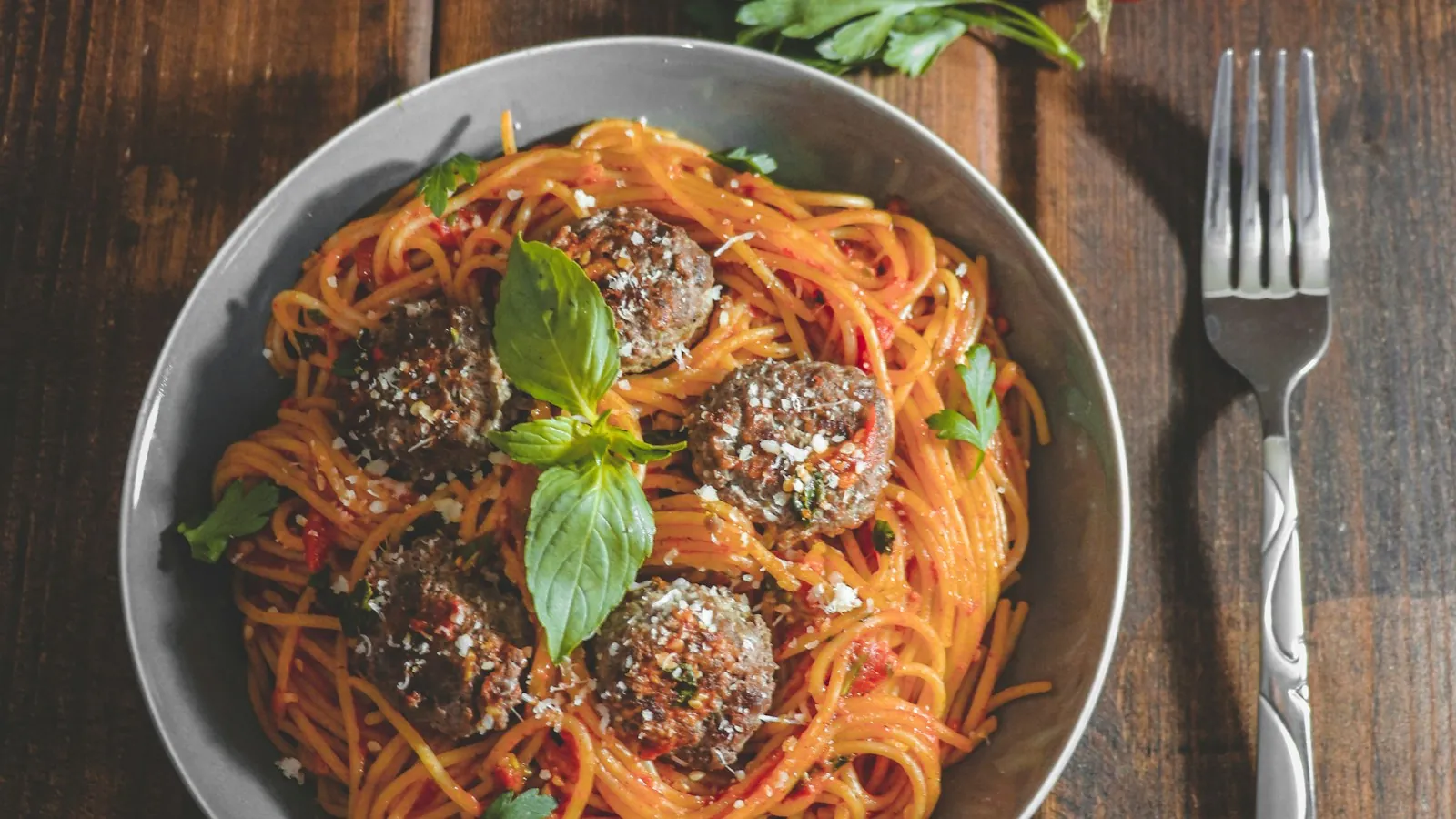
The sauce cooks them gently, so they're much harder to overcook, and they soak up flavor along the way. America's Test Kitchen's easiest-ever meatballs skip the oven entirely and cook raw in covered, simmering sauce for 15 to 18 minutes.
Two things to keep in mind. First, the sauce needs to stay at a real simmer, not just warm. Second, check one meatball with a thermometer before serving, since a cold pot of sauce can take longer to bring them up than you expect.
Baking time for frozen meatballs
Homemade meatballs that you baked fully, cooled, and froze only need reheating. Bake them from frozen on a lined pan at 350°F to 400°F, or simmer them in sauce, until the center reaches 165°F. Expect it to take longer than the original bake since you're starting below freezing.
Raw meatballs frozen before cooking can go straight into the oven too, but they'll take noticeably longer than fresh, and the outside can overbrown before the middle is done. Use a moderate oven and check the temperature rather than relying on any fixed time.
For store-bought frozen meatballs, follow the package directions, since those times are set for that product's size and whether it's fully cooked or raw. Whatever the brand, check the center the same way you would with any of the other cooking times.
How long cooked meatballs keep
Cooked meatballs follow the usual leftover rules. Get them into the fridge within 2 hours of coming out of the oven, since bacteria multiply fastest between 40°F and 140°F.
| Where | How long | Notes |
|---|---|---|
| Fridge, cooked | 3 to 4 days | Same window for meatballs in sauce |
| Freezer, cooked | 2 to 6 months | Safe longer at 0°F; quality fades over time |
| Fridge, raw mix | 1 to 2 days | Counts from when the meat was ground or bought |
To freeze, cool the meatballs, spread them on a sheet pan until firm, then bag them. They won't stick together, and you can pull out only what you need.
 What oven-baked meatballs look like when they are ready
Browning is easy to see but hard to judge by words alone, and size and spacing change how a tray looks. Donal Skehan shapes and bakes a batch you can compare against your own.
The BEST Baked Meatballs!
By Donal Skehan on YouTube. Their method may vary a little from ours. Watch on YouTube
- Compare how evenly the meatballs are portioned with the advice to use a scoop so every ball finishes at the same time.
- Look at the spacing on the pan and decide whether it matches the inch of room recommended for browning instead of steaming.
- Notice the surface color of the finished meatballs, then remember that only a 160°F reading in the center confirms they are done.


