Home / Measurements & Conversions
 Measurements & Conversions
What's the Right Amount of Pasta Per Person, and How Much Dry Rice?
 By the CookClear writers
Checked against US standard measures, NIST conversions and test kitchen weights
 Clear Answer
Plan on 2 ounces (56 grams) of dry pasta per person, the serving size printed on most US pasta boxes, and bump that to 3 to 4 ounces when pasta is the whole meal. For rice, figure about 1/4 cup dry per person as a side and 1/3 cup for a main, since rice roughly triples as it cooks.
Where does the 2 ounce pasta serving come from?
The 2 ounce figure is a labeling number. The FDA sets a reference amount for plain pasta at 55 grams dry (140 grams cooked), and manufacturers round that to 2 ounces, or 56 grams, on the Nutrition Facts panel. Barilla's own portion advice uses the same 2 ounces per person as its rule of thumb.
 On the menu11 questions
That makes a 1 pound box exactly 8 label servings, since there are 16 ounces in a pound. Barilla says a 2 ounce serving of most of its long and short shapes cooks up to about 1 cup.
A label serving works well for a side next to chicken or fish, or for a child's plate. For an adult eating a bowl of spaghetti and meatballs, 2 ounces often looks thin.
Should a main dish get more pasta than a side?
Yes. The label serving is sized for a side or a light portion, so scale up when pasta carries the meal. These amounts are kitchen guidance built on the 2 ounce label figure, so adjust for your own crowd.
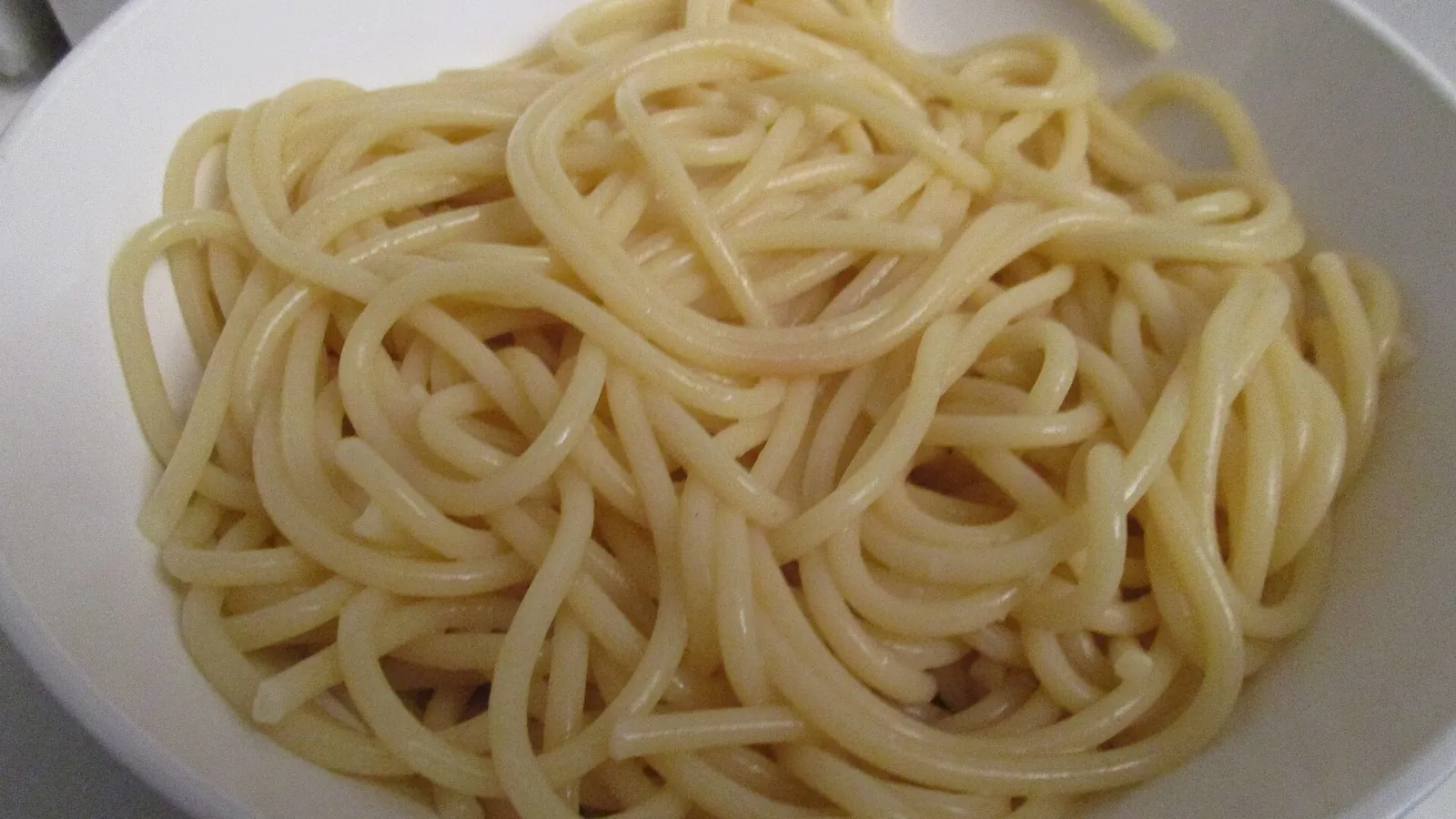
- Side dish or small plate: 2 ounces dry, about 1 cup cooked.
- Main dish with a hearty sauce: 3 ounces dry, about 1 1/2 cups cooked.
- Main dish with a light sauce or big appetites: 4 ounces dry, about 2 cups cooked.
Rich sauces like a meaty ragù or a cheesy bake let you stay near 3 ounces. Olive oil and garlic or a simple tomato sauce leave people hungrier, so 4 ounces is safer.
If you are also serving meat alongside, you can lean toward the lower end. Planning the meat per person and the pasta together keeps you from making two full main portions for each guest.
How many servings in a pound of pasta?
A standard 16 ounce box gives you 8 servings at the label size, 5 at 3 ounces, and 4 at 4 ounces. For cooked volume, Barilla lists a full box of its spaghetti at about 8 1/2 cups cooked, and New Mexico State University's food yield sheet puts 1 pound of spaghetti at 9 to 10 cups cooked.
Many boxes in stores are now 12 ounces instead of 16, so check the net weight before you count servings. A 12 ounce box makes 6 label servings, or 3 to 4 main dish servings.
How do you measure spaghetti without a scale?
Long pasta is awkward in a measuring cup, so most cooks measure it by the width of the bundle. Barilla sizes a 2 ounce portion of its regular spaghetti, linguine and fettuccine at a bundle about 2 1/8 inches around. That works out to roughly 2/3 inch across, close to the width of a US dime.
A few ways to get there without weighing:
- Use a dime. Gather spaghetti into a tight round bundle and hold the end next to a dime. When the bundle matches the coin, you have about one 2 ounce serving.
- Use a quarter for two. A quarter is just under 1 inch wide, and a bundle that size holds about twice the pasta of a dime-wide bundle, so think of it as 2 servings or one generous main.
- Use the box. A 1 pound box of spaghetti is 8 servings, so half the box is 4 servings and a quarter of it is 2.
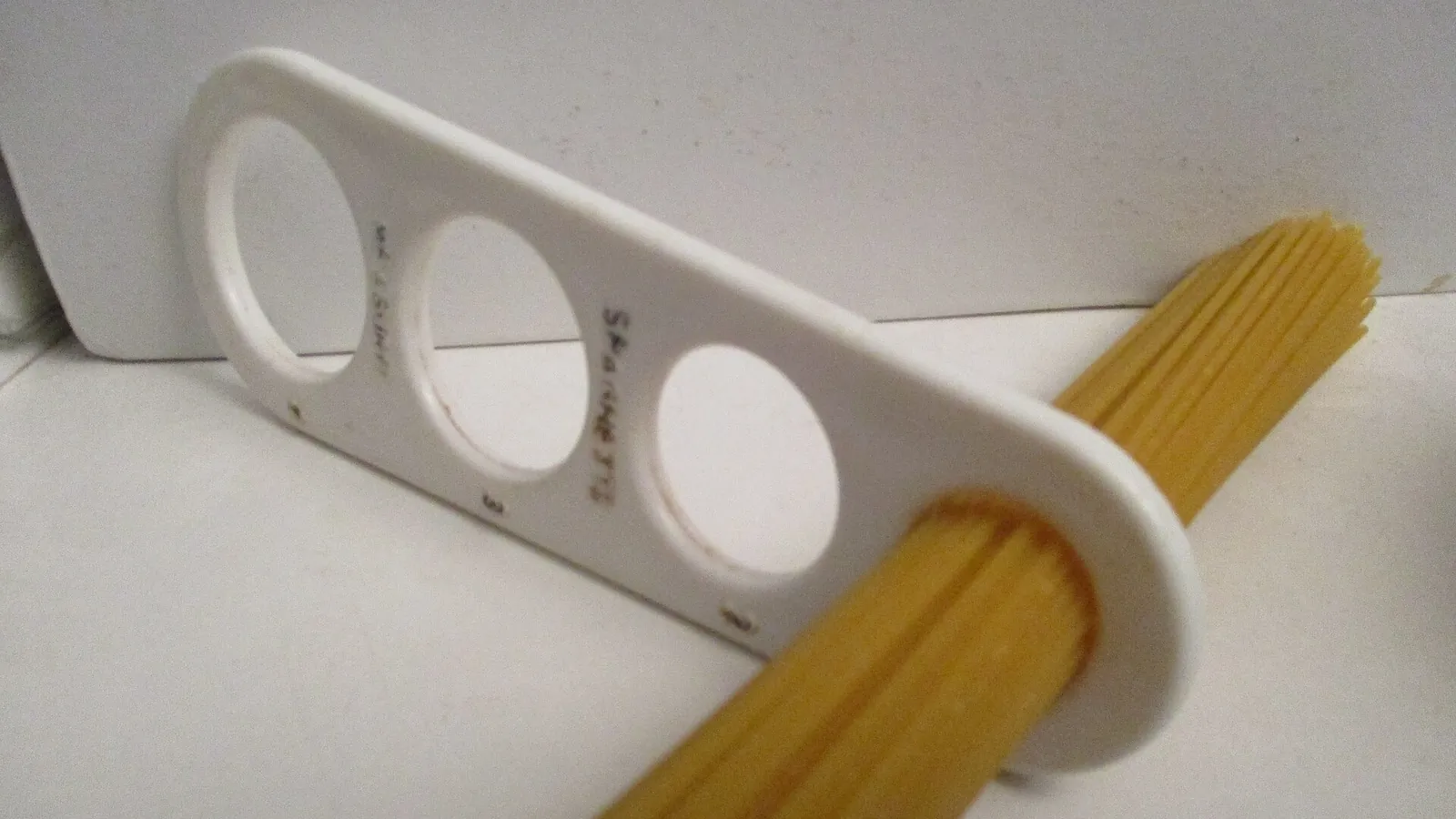
- Use a spaghetti measure. These flat tools have holes sized for 1 to 4 portions.
- Use a scale. Set the pot or a bowl on a kitchen scale, press tare and add pasta until you hit 56 grams per person.
Thicker or different products change the bundle. Barilla lists its gluten free spaghetti at 2 1/4 inches around per serving and its Protein+ and whole grain thin spaghetti at 2 1/2 inches, so the dime trick fits regular semolina spaghetti best.
How much short pasta is 2 ounces in a measuring cup?
Short shapes fit a measuring cup, but the cup amount changes with the shape because of the air between pieces. These figures come from Barilla's serving charts for its Blue Box line.
| Shape | Dry cups per 2 oz serving | Cooked cups per serving |
|---|---|---|
| Elbows or macaroni | 1/2 cup | About 1 1/8 cups |
| Rotini | 1/2 cup | About 1 cup |
| Penne rigate | 2/3 cup | About 1 1/4 cups |
| Ziti | 2/3 cup | About 1 1/4 cups |
| Farfalle (bow ties) | 3/4 cup | About 1 1/4 cups |
| Rigatoni | 3/4 cup | About 1 1/4 cups |
| Medium shells | 3/4 cup | About 1 1/8 cups |
| Orzo | 1/3 cup | About 4/5 cup |
| Ditalini | 1/3 cup | About 1 1/4 cups |
Other brands cut shapes a little differently, so treat these as close estimates. When you need exact amounts, weigh the pasta. Weighing also makes it easier to double or halve a recipe without guessing at fractions of a cup.
How much rice per person should you cook?
For plain rice as a side, plan about 1/4 cup dry per person. For a main dish where rice is the base, like a rice bowl or curry, plan about 1/3 cup dry per person.
The 1/4 cup figure tracks the label. The FDA reference amount for plain grains such as rice is 45 grams dry (140 grams cooked), which lands near 1/4 cup of dry white rice, and many US rice bags list 1/4 cup dry as one serving. The 1/3 cup main dish amount is kitchen guidance, not a labeling figure.
Two quick rules make the math easy:
- 1 cup dry rice feeds about 4 people as a side, or 3 as a main.
- For each extra person, add 1/4 cup for a side or 1/3 cup for a main.
Cooking extra is rarely a waste. Leftover rice is the base for fried rice, and you can freeze cooked rice in portions for later.
How much does rice expand when cooked?
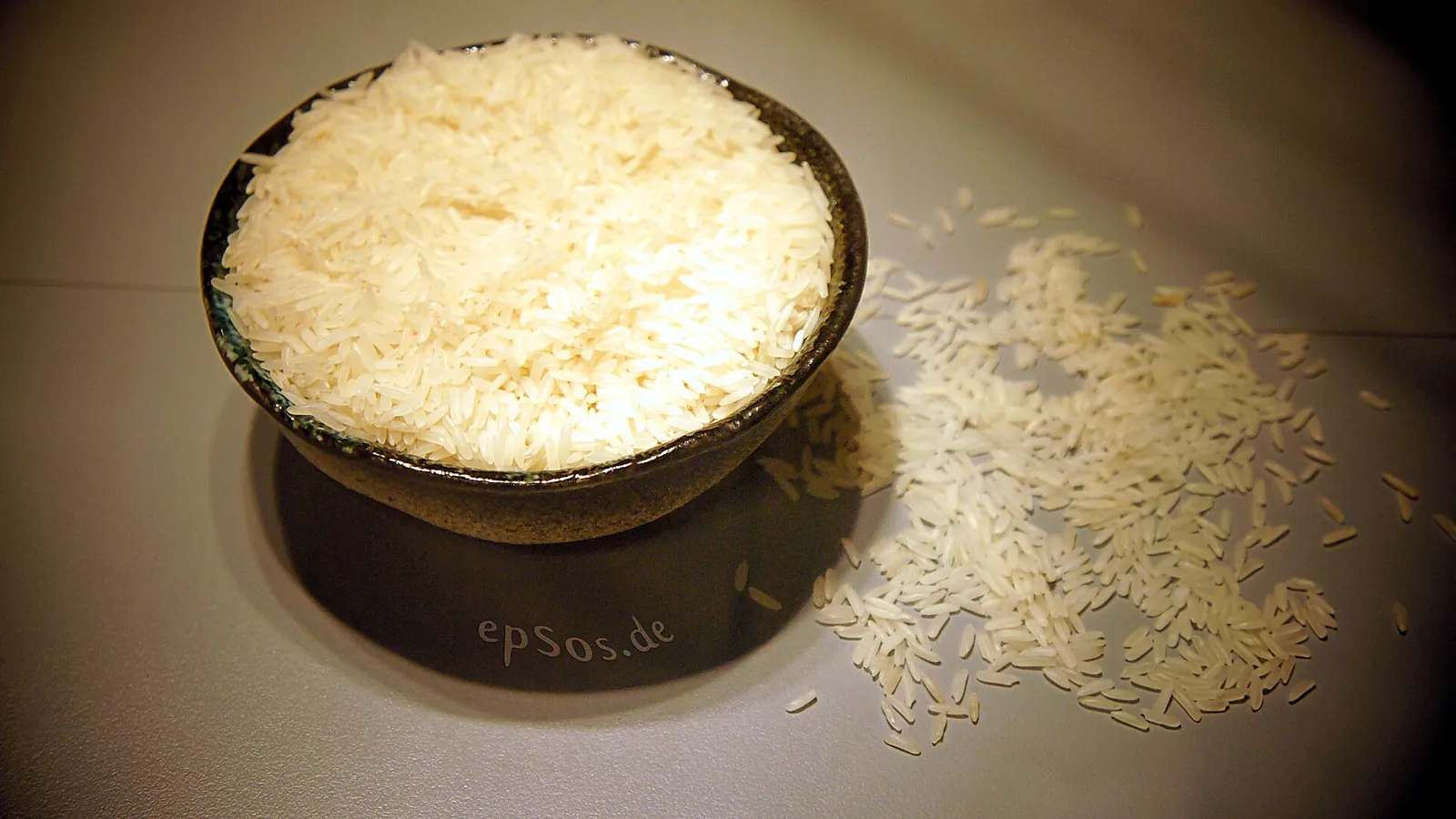
Plain long grain white rice roughly triples. New Mexico State University lists 1 cup of uncooked regular or brown rice as 3 cups cooked, and a University of Wisconsin Extension rice fact sheet gives about 3 cups for regular milled rice and about 3 1/2 cups for parboiled and brown rice. Sources vary a little because grain type, pot and water amount all change the result, so these figures use the 3 to 1 ratio.
| Rice type | Dry amount | Approximate cooked yield | Source |
|---|---|---|---|
| Regular long grain white | 1 cup | About 3 cups | NMSU, UW Extension |
| Brown | 1 cup | 3 to 3 1/2 cups | NMSU, UW Extension |
| Parboiled | 1 cup | About 3 1/2 cups | UW Extension |
| Instant (precooked) | 3/4 cup | About 1 1/3 cups | NMSU |
Instant rice is the outlier. It is already cooked and dried, so it grows much less; follow the box.
So 1/4 cup dry white rice gives you about 3/4 cup cooked, and 1/3 cup dry gives you about 1 cup cooked. If your rice comes out short on volume or still hard in the center, the water ratio or the lid is usually to blame, and crunchy rice can often be saved with a little more steam.
How much pasta and rice for different numbers of people?
This chart scales the side and main amounts. Pasta is in dry ounces and rice in dry cups. Round up when you are feeding teenagers or serving few other dishes.
| People | Pasta, side (dry) | Pasta, main (dry) | Rice, side (dry) | Rice, main (dry) |
|---|---|---|---|---|
| 1 | 2 oz | 3 to 4 oz | 1/4 cup | 1/3 cup |
| 2 | 4 oz | 6 to 8 oz | 1/2 cup | 2/3 cup |
| 4 | 8 oz (half a 1 lb box) | 12 to 16 oz | 1 cup | 1 1/3 cups |
| 6 | 12 oz | 18 to 24 oz | 1 1/2 cups | 2 cups |
| 8 | 16 oz (1 lb box) | 1 1/2 to 2 lb | 2 cups | 2 2/3 cups |
| 10 | 20 oz | 1 7/8 to 2 1/2 lb | 2 1/2 cups | 3 1/3 cups |
| 12 | 1 1/2 lb | 2 1/4 to 3 lb | 3 cups | 4 cups |
For cup and pound math beyond this chart, the ounces in a pound rule of 16 is all you need for pasta, and a set of kitchen measurement conversions handles the rest.
Pasta and rice for a crowd: what changes?
Big batches need a little planning beyond simple multiplication.
- Use a bigger pot or two pots. Pasta needs room to move. Cooking 2 pounds in one ordinary pot drops the water temperature and leaves clumps. Keep how much water for pasta in proportion as the batch grows.
- Count the other dishes. At a buffet with salads, bread and a meat, the side column usually covers it.
- Cook rice in more than one batch. A home rice cooker or pot has a limit. Two medium batches cook more evenly than one overfilled one.
- Plan for leftovers on purpose. Chill leftovers within 2 hours and use them within a few days, the same as other cooked leftovers.
Why did I run out of pasta even though I used the chart?
When the pot comes up short, one of these is usually the reason.
| What you see | Likely cause | Fix |
|---|---|---|
| Plates looked half full | You cooked the 2 oz label serving for a main | Use 3 to 4 oz per person when pasta is the meal |
| Box ran out sooner than expected | The box was 12 oz, not 16 oz | Check the net weight before counting servings |
| Spaghetti bundle seemed right but fed fewer | Bundle was loose, or a thicker spaghetti | Squeeze the bundle tight and check the brand's size |
| Rice yield was lower than 3 cups per cup | Instant rice, or water cooked off too fast | Follow the box for instant rice and keep the lid on |
| Short pasta cup measure fell short | Shape packs loosely, like farfalle | Measure by weight or use the shape chart |
Pasta also keeps swelling until it is done, so learn the signs of al dente pasta before you judge the pot.
 Seeing a 2 ounce pasta portion and rice yield in real life
A portion that looks small dry can surprise you once it is cooked, and seeing it happen makes the numbers stick.
How Much Pasta Should I Cook?
By Chef Dez on YouTube. Their method may vary a little from ours. Watch on YouTube
- How thin a 2 ounce bundle of dry spaghetti looks, about 2 1/8 inches around, compared with the cooked cup it makes.
- Whether 1 cup of dry rice fills about 3 cups once it is cooked and fluffed.
- How a 1/4 cup side portion of dry rice compares with a 1/3 cup main portion on the plate.


