Home / Measurements & Conversions
 Measurements & Conversions
What Does a Cup of Sugar Weigh in Grams for White, Brown and Powdered?
 By the CookClear writers
Checked against US standard measures, NIST conversions and test kitchen weights
 Clear Answer
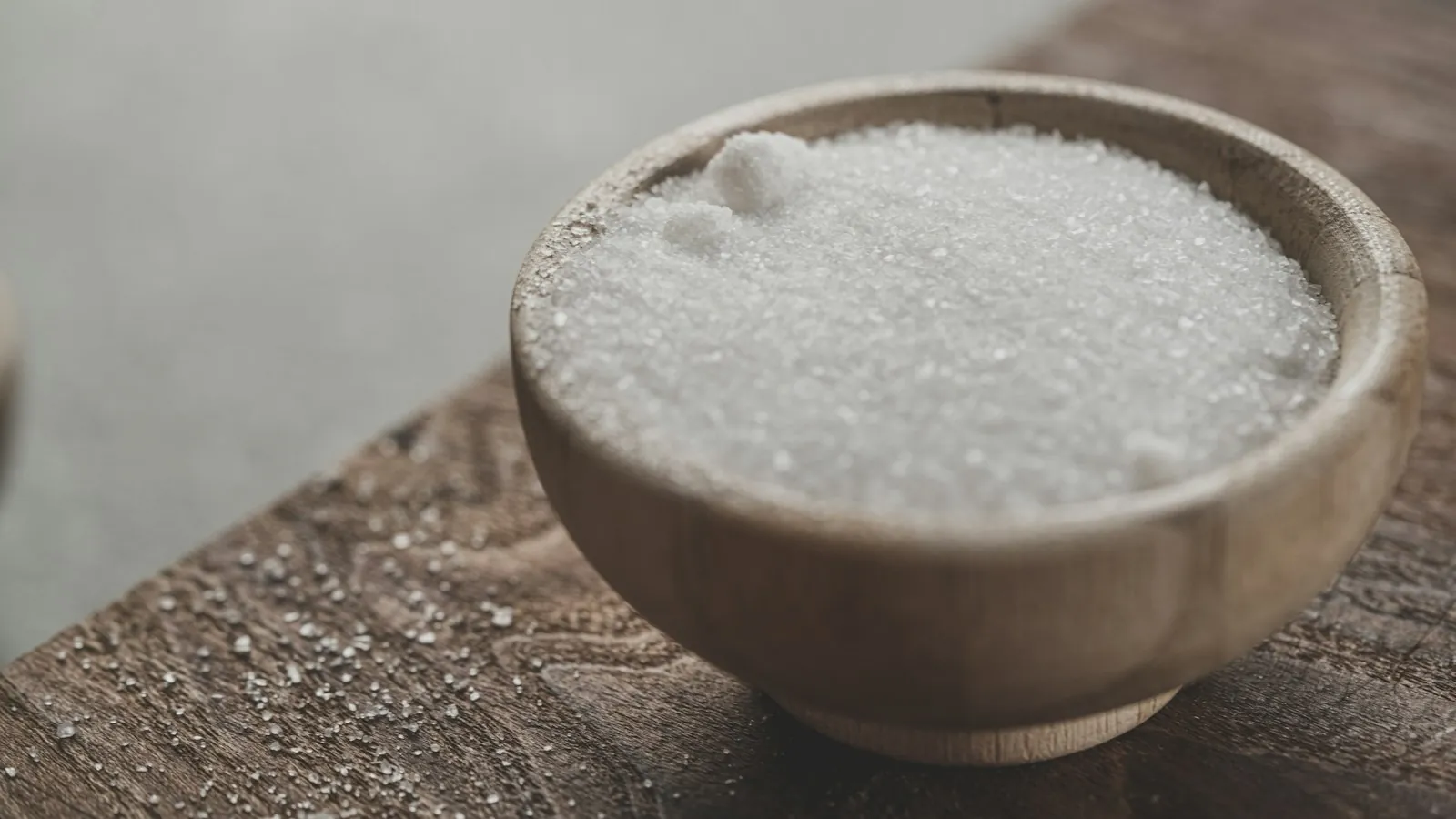
A cup of granulated white sugar weighs about 198 grams (7 ounces), according to the King Arthur Baking ingredient weight chart. A packed cup of light or dark brown sugar weighs about 213 grams, and a cup of unsifted powdered sugar comes in much lighter at about 113 grams, so the type of sugar changes the number a lot.
Those three figures cover most baking. The other numbers, from turbinado to honey, also come from King Arthur's chart unless noted, because it is one of the most widely used weight references for American home recipes.
How many grams are in a cup of each kind of sugar?
Sugar crystals come in different sizes and moisture levels, and that is what changes the weight of a cup. Fine, dry granulated sugar settles into a fairly dense cup. Brown sugar carries molasses and gets pressed down, so it weighs more. Powdered sugar is ground into a fluffy powder full of air, so it weighs far less.
| Sugar (1 cup) | Grams | Ounces | Notes |
|---|---|---|---|
| Granulated white sugar | 198 | 7 | Spooned or scooped, then leveled |
| Light brown sugar, packed | 213 | 7 1/2 | Pressed firmly into the cup |
| Dark brown sugar, packed | 213 | 7 1/2 | Same weight as light per King Arthur |
| Powdered (confectioners') sugar, unsifted | 113 | 4 | Spooned in, not packed |
| Turbinado (raw) sugar | 180 | 6 3/8 | Large, dry crystals leave air gaps |
| Demerara sugar | 220 | 7 3/4 | Coarse and slightly moist |
| Superfine (caster) sugar | 190 | 6 3/4 | Listed as Baker's Special Sugar |
King Arthur lists light and dark brown sugar on one line at the same weight. Dark brown has more molasses, but at the cup level the difference is too small to change a recipe, so one number works for both.
The same method for converting cups to grams applies to nearly every dry baking ingredient.
How much does a cup of brown sugar weigh if you don't pack it?
Less, and by a fair amount. The 213 gram figure assumes the cup is packed, which is how almost every American recipe means it even when the word "packed" is missing. Packed brown sugar should hold the shape of the cup when you tip it out, like a sandcastle.
A loosely spooned cup of brown sugar has no published standard weight on King Arthur's chart, and the number swings with humidity and how soft the sugar is. That is the main reason brown sugar is one of the best ingredients to weigh. If the bag has turned into a brick, soften the brown sugar first, because hard lumps will not pack evenly and the cup will come up light.
To measure brown sugar by volume as consistently as you can:
- Break up any lumps with your fingers or a fork.
- Spoon the sugar into a dry measuring cup.
- Press it down firmly with the back of the spoon or your fingers.
- Keep adding and pressing until it is level with the rim.
- Tip it out. It should hold together in a cup shape.
What do powdered sugar grams per cup look like, sifted or unsifted?
Powdered sugar grams per cup depend heavily on air. King Arthur lists a cup of unsifted confectioners' sugar at 113 grams. USDA nutrition data puts a cup of unsifted powdered sugar at 120 grams, so expect a range of about 113 to 120 grams depending on the source. Here we follow King Arthur's 113 grams, since that is the chart most baking recipes are written against.
Sifted powdered sugar weighs less per cup, because sifting adds air between the particles. King Arthur's chart does not give a sifted weight, and published figures vary. That makes a difference when a recipe says "1 cup powdered sugar, sifted" versus "1 cup sifted powdered sugar."
Should you measure sifted or unsifted powdered sugar first?
The word order in the recipe tells you which one the writer meant:
- "1 cup powdered sugar, sifted" means measure first, then sift. You get the full unsifted weight, about 113 grams.
- "1 cup sifted powdered sugar" means sift first, then spoon the fluffy sugar into the cup. You get noticeably less sugar.
With a scale, the question goes away. Weigh the grams the recipe gives, then sift if you want a smooth glaze or frosting. If you run out entirely, you can make powdered sugar at home in a blender, then weigh it the same way.
How many grams are in smaller amounts of sugar?
Most recipes do not call for a full cup. A cup holds 16 tablespoons by US customary definition, so dividing the King Arthur cup weights gives the smaller amounts. Each tablespoon is simply 1/16 of the cup weight.

| Amount | Granulated (g) | Brown, packed (g) | Powdered, unsifted (g) |
|---|---|---|---|
| 1 tablespoon | 12 | 13 | 7 |
| 1/4 cup | 50 | 53 | 28 |
| 1/3 cup | 66 | 71 | 38 |
| 1/2 cup | 99 | 107 | 57 |
| 2/3 cup | 132 | 142 | 75 |
| 3/4 cup | 149 | 160 | 85 |
| 1 cup | 198 | 213 | 113 |
These are calculated from the 1 cup weights and rounded to the nearest gram. For a teaspoon or two of sugar in a sauce or dressing, measuring spoons are fine; a home scale that reads in 1 gram steps cannot do much better at that size.
How many cups of sugar in a pound?
A pound is 453.6 grams, so the answer changes with the type of sugar:
- Granulated sugar: about 2 1/4 cups per pound (453.6 divided by 198).
- Packed brown sugar: about 2 1/8 cups per pound (453.6 divided by 213).
- Unsifted powdered sugar: about 4 cups per pound (453.6 divided by 113).
That is handy at the store. A 4 pound bag of granulated sugar holds roughly 9 cups, while a 2 pound bag of powdered sugar holds about 8 cups. Brands settle differently in the bag, so treat these as close estimates.
Why does my cup of sugar weigh more or less than 198 grams?
If you set a cup of sugar on a scale and the number is off, one of these is usually the reason.
| What you see | Likely cause | Fix |
|---|---|---|
| Granulated sugar reads well over 198 g | Cup was tapped or shaken, settling the crystals | Fill without tapping, then sweep level |
| Brown sugar reads well under 213 g | Sugar was spooned in loosely or has hard lumps | Break up lumps and press firmly |
| Powdered sugar reads well over 113 g | Cup was scooped from a packed bag | Stir the bag, spoon in gently, level |
| Turbinado looks like a full cup but weighs about 180 g | Big crystals leave air gaps | Expected; weigh if swapping for granulated |
| Weights drift from one cup to the next | Measuring cup brand or cup size varies | Use one set of cups, or switch to grams |
The cup size varies too. A US customary cup is 236.6 milliliters, while the cup used on US nutrition labels is rounded to 240 milliliters, and a metric cup is 250 milliliters. If you bake from Australian or UK recipes, a "cup" of sugar may be a few percent more than an American one.
Can you swap turbinado or demerara for granulated sugar by the cup?
You can, but the cups are not equal. A cup of turbinado weighs about 180 grams, so swapping it cup for cup leaves you about 18 grams short of granulated sugar. Demerara runs the other way, at about 220 grams per cup.
For cookies, muffins and quick breads, that gap rarely matters, and the coarse crystals give a nice crunch on top. In cakes and other delicate batters, swap by weight instead: use 198 grams of turbinado for each cup of granulated sugar. Big crystals also dissolve more slowly, which can affect how much cookies spread. Sugar is one of the factors behind cookies that spread flat, along with butter temperature and flour.
What are honey grams per cup, and what about maple and corn syrup?
Liquid sweeteners are much heavier than sugar by the cup, because a liquid fills the cup with no air gaps. King Arthur lists honey grams per tablespoon rather than per cup, and syrups by the half cup, so the cup figures here are multiplied out from the chart.
| Sweetener | King Arthur listing | Per cup (g) |
|---|---|---|
| Honey | 21 g per tablespoon | About 336 |
| Maple syrup | 156 g per 1/2 cup | About 312 |
| Corn syrup | 312 g per cup | 312 |
| Molasses | 85 g per 1/4 cup | About 340 |
A few points to keep in mind:
- A cup of honey weighs about 70 percent more than a cup of granulated sugar, so the two never trade evenly by volume. Switching from sugar to honey also means cutting back other liquids and lowering the oven a little.
- Weighing sticky syrups directly into the bowl saves you from scraping a measuring cup.
- Opened real maple syrup keeps longest when you store the jug in the fridge.
Is it better to weigh sugar or use cups?
For granulated sugar, cups are reasonably reliable because the crystals do not compress much. Brown sugar and powdered sugar are where a scale pays off, since packing and sifting can move the weight by a lot. If you bake often, a kitchen scale makes these questions disappear: you tare the bowl and pour until you hit the number.
The same logic applies to flour, which is even more sensitive, and it is worth knowing how many grams in a cup of flour your recipes expect. More conversions for butter, liquids and spoons sit together under measurements and conversions.
 Weighing a cup of each sugar on a scale
Seeing three cups of sugar land on a scale makes the gap between them obvious in a way a chart cannot. A short demonstration of measuring and weighing sugar helps you check your own technique.
How To Soften & Properly Measure Brown Sugar | Baking 101 Video: Quick, Easy Tips & Tricks
By The Lindsay Ann on YouTube. Their method may vary a little from ours. Watch on YouTube
- Look at how a level cup of granulated sugar compares with the 198 gram figure from King Arthur's chart.
- Notice how firmly brown sugar is pressed, since a properly packed cup should land near 213 grams.
- Compare how fluffy powdered sugar looks next to granulated, which is why a cup weighs only about 113 grams.