Home / Measurements & Conversions
 Measurements & Conversions
How Many Milliliters Is a Cup, and Is the US Cup vs Metric Cup Gap Real?
 By the CookClear writers
Checked against US standard measures, NIST conversions and test kitchen weights

 Clear Answer
No, they are not the same: a US customary cup holds 236.6 mL, while a metric cup holds 250 mL, about 6 percent more. US nutrition labels round the cup to 240 mL, and Japan uses a smaller 200 mL cup. For most cooking the gap is too small to notice, but in baking it can add up.
Which cup a recipe means depends mostly on where it was written, so the country of the cookbook is your first clue.
How many mL in a US cup, exactly?
The US customary cup is defined as 8 US fluid ounces, which works out to 236.5882 mL. Almost everyone rounds that to 236.6 mL, and many cup and jug markings round it again to 237 mL.
One cup is 1/16 of a 128 fluid ounce US gallon, or half a pint. In the cups, quarts and gallons ladder it goes 2 cups to a pint, 2 pints to a quart, and 4 quarts to a gallon.
A US cup also holds 16 tablespoons and 48 teaspoons. A US fluid ounce is about 29.6 mL, so the familiar 8 fluid ounces in a cup lands right at that 236.6 mL figure.
What is the 240 mL cup on nutrition labels?
The FDA uses a rounded "legal" cup for nutrition labeling. Under 21 CFR 101.9, a cup on a Nutrition Facts panel means 240 mL, a tablespoon means 15 mL, a teaspoon means 5 mL, and a fluid ounce means 30 mL.
The FDA nutrition label cup exists to make serving sizes tidy in metric. When a carton of milk says "1 cup (240 mL)," it is using that labeling cup. Your kitchen cup still holds 236.6 mL, and the 3.4 mL difference is less than a teaspoon.
Is a metric cup bigger than a US cup?
Yes. A metric cup is 250 mL, which is 13.4 mL (a little under 1 tablespoon) more than a US cup. In percentage terms, the metric cup is about 5.7 percent larger.
The metric cup is the standard in Australia, New Zealand, and Canada, along with several other countries that measure by volume but think in milliliters. A recipe from any of those places that says "1 cup" almost always means 250 mL.
Older Canadian cookbooks sometimes used an imperial cup of about 227 mL, so check old ones for a note on measures.
Every cup size side by side
This table shows each common cup and how it compares with the US customary cup most American recipes assume.
| Cup | Milliliters | Where you see it | Compared with a US cup |
|---|---|---|---|
| US customary cup | 236.6 mL | American recipes and measuring cups | Same |
| US legal (label) cup | 240 mL | Nutrition Facts panels | About 1.4 percent larger |
| Metric cup | 250 mL | Australia, New Zealand, Canada | About 5.7 percent larger |
| Older Canadian imperial cup | About 227 mL | Some older Canadian cookbooks | About 4 percent smaller |
| Older British breakfast cup | About 284 mL (half an imperial pint) | Some vintage British recipes | About 20 percent larger |
| Japanese cup | 200 mL | Japanese recipes and measuring cups | About 15 percent smaller |
| Japanese rice cup (gō) | About 180 mL | Rice cookers and rice scoops | About 24 percent smaller |
Figures follow FDA labeling rules for the 240 mL cup and standard unit definitions for the rest. The older British cup varied from book to book, so treat that row as approximate.
What about a UK cup measurement?
The UK has no official cup today; British recipes are written in grams and milliliters. When a modern UK recipe does say "cup," it usually means the 250 mL metric cup or was written with US cups in mind, so check the conversions the writer gives.
Vintage British recipes are trickier. Some used a "breakfast cup" usually read as half an imperial pint, about 284 mL; others meant whatever cup was on the shelf, so make a test batch first.
Japanese cup measurement and the rice cup
The Japanese cup measurement is 200 mL, noticeably smaller than either the US or metric cup. Japanese measuring cups are marked to 200 mL for "1 cup," and Japanese recipes are written around that size.
Rice is a separate unit. The small scoop that comes with a rice cooker holds one gō, about 180 mL, and rice cooker water lines are marked for that scoop. If you measure rice with a US cup and then fill water to the cooker's line for that many "cups," you put in about 30 percent more rice than the water line expects, and the rice comes out firm or underdone. Use the scoop that came with the cooker, or stick to one cup for rice and water if you cook rice on the stove.
When you follow a Japanese recipe with US cups, scale down. A Japanese cup is about 0.85 of a US cup, so 1 Japanese cup is roughly 3/4 US cup plus 1 1/2 tablespoons.
How do you tell which cup your measuring cup is?
Check these in order:
- Look for printed milliliters next to the 1 cup mark. A line at 236, 237, or 240 mL means a US cup. A line at 250 mL means a metric cup. A cup labeled 200 mL is Japanese.
- Check the spoons in the same set. Australian sets often include a 20 mL tablespoon, while US and most metric sets use about 15 mL.
- Test with a scale. Set an empty dry cup on a scale, tare it, and fill it level with cool water. About 237 grams means a US cup; about 250 grams means metric. Water weighs 1 gram per milliliter, which makes this test simple.
Using Australian recipes with US cups
When using Australian recipes with US cups, the tablespoon causes more trouble than the cup.
An Australian tablespoon is 20 mL, which equals 4 teaspoons. A US tablespoon is about 14.8 mL, or 3 teaspoons. That is a gap of about 35 percent per spoonful, much larger than the cup difference. For baking soda, baking powder, salt, gelatin, or yeast, that can change the result.
Here is how to adjust a recipe written in Australian measures:
- Cups: Add about 1 tablespoon per cup if the ingredient is structural, like flour or liquid in a cake. For soups and stews, use the US cup as is.
- Tablespoons: Use 1 US tablespoon plus 1 teaspoon for every Australian tablespoon.
- Teaspoons: Leave them alone. Australian and US teaspoons are both about 5 mL.
- Butter: Australian recipes usually give butter in grams, so weigh it or count sticks of butter at 113 grams each.
How much does the cup difference add up in a recipe?
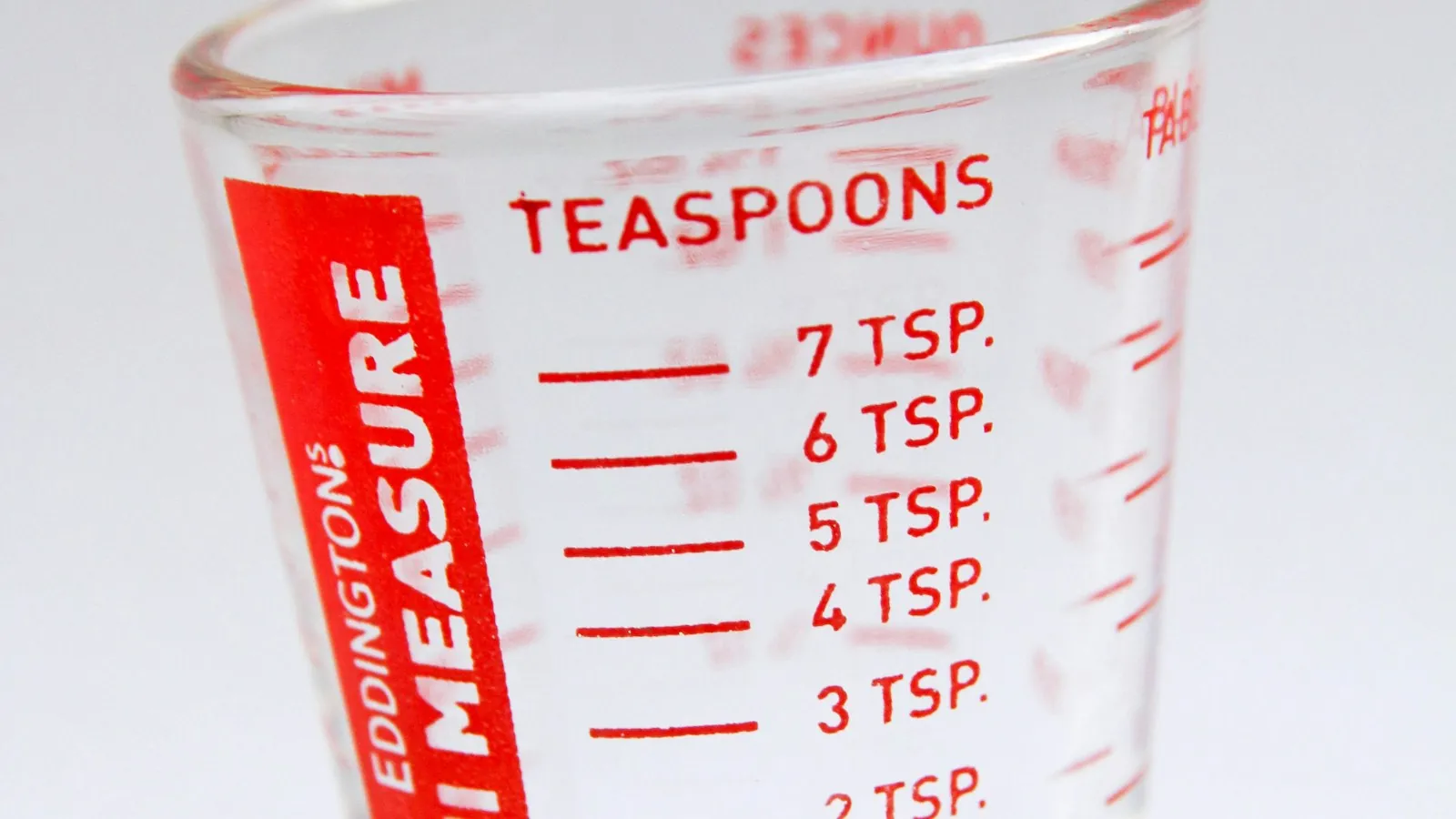
The 13.4 mL gap per cup is small, but it multiplies. This table shows how the US cup vs metric cup difference grows as a recipe gets bigger.
| Amount | US cups | Metric cups | Difference |
|---|---|---|---|
| 1/2 cup | 118 mL | 125 mL | 7 mL (about 1 1/2 teaspoons) |
| 1 cup | 237 mL | 250 mL | 13 mL (a scant tablespoon) |
| 2 cups | 473 mL | 500 mL | 27 mL (about 2 tablespoons) |
| 3 cups | 710 mL | 750 mL | 40 mL (about 2 3/4 tablespoons) |
| 4 cups | 946 mL | 1,000 mL | 54 mL (about 3 1/2 tablespoons) |
For a flour amount spooned and leveled at King Arthur Baking's 120 grams per US cup, the same scoop in a metric cup would hold roughly 127 grams. Over 3 cups that is about 20 extra grams, enough to make a cake a touch drier.
When does the difference between cups actually matter?
For most savory cooking, it does not. A soup, stew, or pot of beans will not notice a 6 percent change in liquid.
It starts to matter in a few situations:
- Baking with a lot of flour. Breads, cakes, and cookies with 3 or more cups of flour can turn dry or dense if every cup runs 6 percent large.
- Recipes that mix measures. Trouble starts when you measure flour in metric cups but leveners in US teaspoons, or the reverse. The ratio between them shifts.
- Japanese recipes. A 15 percent gap is enough to change a sauce, a batter, or a rice dish.
- Leaveners and salt in Australian recipes. The 20 mL tablespoon causes far more trouble than the cup.
My Australian cake came out dry and flat. What went wrong?
| What you see | Likely cause | Fix |
|---|---|---|
| Cake dry and crumbly | Flour measured by scooping, or a heavier cup than the writer used | Spoon and level, or weigh the flour using the recipe's grams |
| Flat cake, weak rise | Baking powder measured with a US tablespoon instead of a 20 mL tablespoon | Add 1 teaspoon per tablespoon of leavener |
| Batter thicker than the photos | Liquid measured in US cups, about 6 percent short | Add about 1 tablespoon of liquid per cup |
| Too salty or too sweet | Recipe was converted twice, once by the writer and once by you | Check whether the cup amounts were already given in US measures |
| Rice crunchy in the cooker | US cup of rice with the cooker's gō water lines | Use the 180 mL scoop that came with the cooker |
If a recipe gives both grams and cups, use the grams. That removes the cup question entirely, and a cups to grams conversion works the same in every country.
Should you just weigh ingredients instead?
For baking, weighing is the cleanest answer, since a gram is a gram in Sydney, Tokyo, and Chicago. Flour is the ingredient where this pays off most. A cup of flour can vary by 30 grams or more depending on how it is filled, which dwarfs the 13 mL gap between US and metric cups. Knowing the grams in a cup of flour for each kind you bake with lets you skip the cup problem and the scooping problem at once.
A scale earns its place for anyone who bakes from recipes written abroad, and the trade-offs of a kitchen scale vs measuring cups mostly come down to how often you bake. For quick reference on spoons, the tablespoons in a US cup add up to 16, which helps when you need to add or remove a scant tablespoon to move between cup sizes.
When a recipe gives only cups and you are not sure which cup it means, read the writer's other recipes, check their country, and look for a measures note. Those clues settle most cases, and keeping a few measurements and conversions taped inside a cabinet door saves you from looking them up mid-recipe.
 Seeing a US Cup and a Metric Cup Filled Side by Side
A side-by-side pour shows how small the gap looks for one cup and how it builds over several.
Equipment Expert's Top Pick for Liquid Measuring Cups
By America's Test Kitchen on YouTube. Their method may vary a little from ours. Watch on YouTube
- Notice how close the US cup's 236.6 mL fill line sits to the metric cup's 250 mL line, a gap of less than 1 tablespoon.
- Watch how the difference grows over several cups, reaching about 40 mL by 3 cups.
- Look for milliliter markings on each cup, since a line at 237 or 240 mL means a US cup and 250 mL means metric.