 Kitchen Tools
Does a Kitchen Scale Really Bake Better Than Your Measuring Cups?
 By the CookClear writers
Checked against manufacturer instructions and test kitchen reviews
 Clear Answer
Yes, if you bake even a few times a month. A "cup" of all-purpose flour can weigh anywhere from about 120 grams to 160 grams depending on how you fill it, and that 30 percent swing is the difference between a tender cake and a dry one. For everyday cooking like soups, stir-fries, and braises, your measuring cups are fine and a scale is a nice extra, not a need.
The longer answer depends on what you cook, how often, and how much you care about getting the same result twice.
Why a cup of flour isn't really a cup
Measuring cups measure volume, and flour is a compressible powder. Scoop the cup straight into the bag and you pack the flour down. Spoon it in gently and level it, and you get much less.
 On the menu10 questions
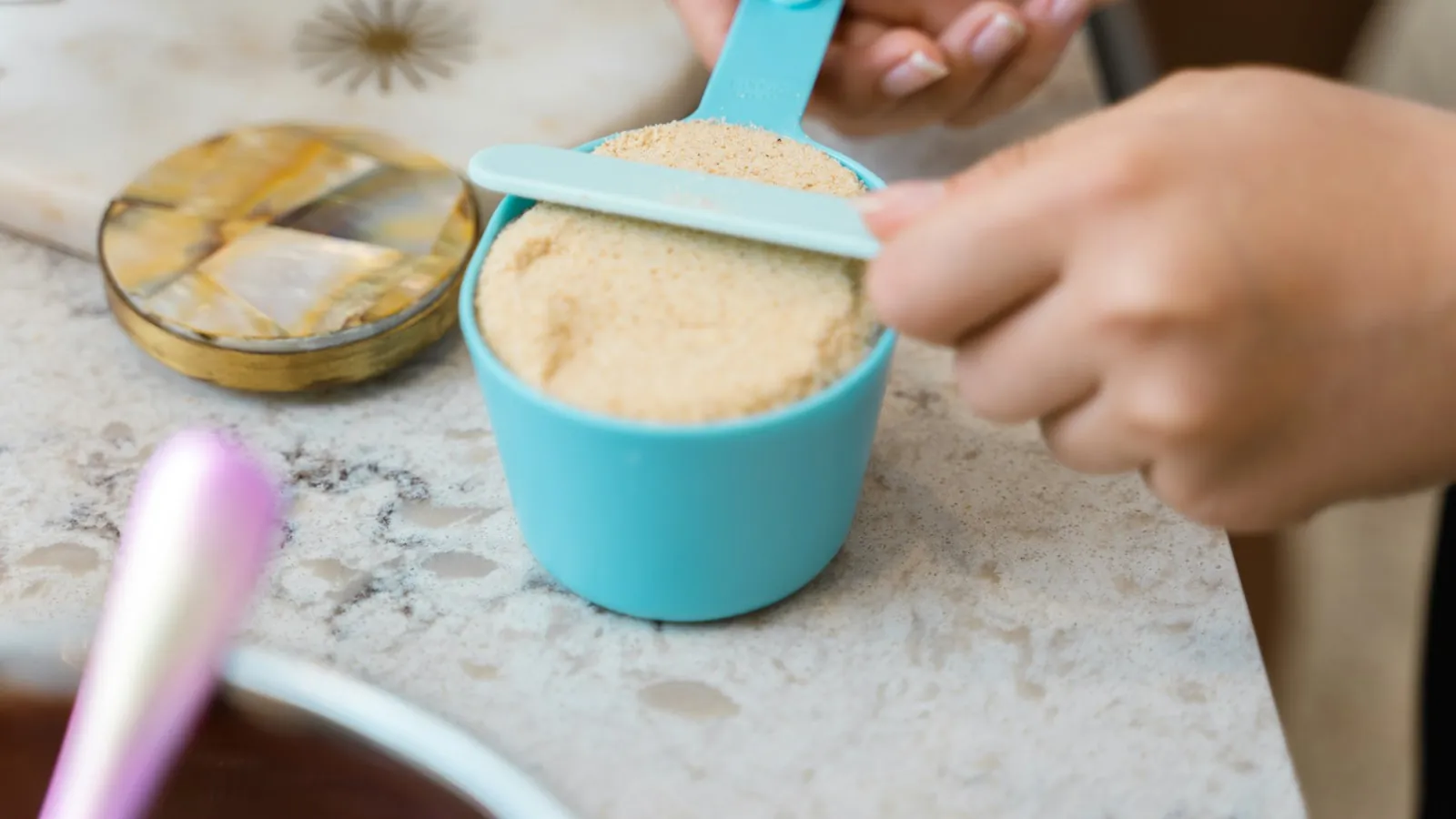
King Arthur Baking puts a properly fluffed, spooned, and leveled cup of all-purpose flour at about 120 grams. A densely packed cup can hold up to 160 grams. That means a recipe calling for 3 cups could get anywhere from 360 to 480 grams of flour, a gap of almost a full extra cup.
The other problem is that recipe writers don't all agree on what a cup weighs. Some develop recipes at 125 grams per cup, some at 130, some at 140. When a recipe gives grams, you skip that whole debate and use exactly what the writer used.
Which ingredients swing the most by volume
Not every ingredient is equally fussy. Liquids are very consistent in a cup, while powders, chunky items, and anything sticky are not. This table shows where a scale earns its counter space.
| Ingredient | Typical weight per cup | How much it varies by volume | Scale worth it? |
|---|---|---|---|
| All-purpose flour | About 120 g (spooned) | High: 120 to 160 g | Yes, biggest payoff |
| Cocoa powder | About 85 g | High, packs and clumps | Yes |
| Brown sugar | About 213 g (packed) | High, depends on how hard you pack | Yes |
| Granulated sugar | About 198 g | Low to moderate | Helpful |
| Rolled oats, chopped nuts | 90 to 120 g | Moderate, air gaps | Helpful |
| Butter | 227 g (2 sticks) | Low if you use stick markings | Only for odd amounts |
| Honey, peanut butter | 300+ g | Low accuracy, sticks to the cup | Yes, for cleanup |
| Water, milk | About 240 g | Very low | No |
Weights are approximate and follow common baking references. In general, the drier and fluffier the ingredient, the more a scale helps. Hardened brown sugar is the extreme case, so soften it first and it packs normally.
What a scale fixes that cups can't
Consistency is the main win, and weighing helps in a few other ways too.
- Your bakes come out the same every time. If your chocolate chip cookies spread flat one week and puff the next, inconsistent flour is the usual suspect.
- You wash fewer dishes. Set the bowl on the scale, press tare, add flour, press tare, add sugar. One bowl, no stack of cups and spoons.
- Sticky ingredients stop being annoying. Weighing honey, molasses, or peanut butter straight into the bowl means nothing is left clinging to a measuring cup.
- Scaling recipes gets easy. Halving 210 grams is 105 grams. Halving 3/4 cup plus 2 tablespoons takes a minute of head math and a guess.
- European and professional recipes open up. Many bread, pastry, and international recipes are written only in grams, and converting them back to cups reintroduces the error you were trying to avoid.
- Portioning gets even. Dividing dough into equal rolls or splitting batter between two cake pans is a matter of reading a number, which means everything bakes in the same time.
When your measuring cups are good enough
Plenty of cooking is forgiving. A soup with 1 cup of diced firm onion or 1.2 cups tastes the same. Rice is a ratio, and as long as you use the same cup for rice and water, the ratio holds. If it still comes out underdone, crunchy rice has other causes.
Cups are perfectly fine for:
- Liquids like water, stock, milk, and oil (use a clear liquid measuring cup and read it at eye level)
- Stovetop cooking, sauces, soups, stews, and braises
- Rice, grains, and pasta water
- Quick breads and pancakes from recipes you've made many times and like as-is
- Recipes that only give cup amounts, since the writer tested them that way
If you rarely bake, a scale will mostly sit in a drawer. That's a fair reason to skip it.
Can you get accurate results with measuring cups alone?
You can get close if you're careful and consistent. The spoon and level method gets you near the 120 gram mark for all-purpose flour, which is what many modern recipes expect.
To measure flour by volume as accurately as possible:
- Stir or whisk the flour in its container to loosen it.
- Spoon flour into a dry measuring cup until it mounds over the top. Don't tap or shake the cup.
- Sweep a straight edge, like the back of a knife, across the rim to level it.
- Never scoop the cup directly into the bag, which can add 20 to 40 grams per cup.
Even done well, this method drifts by several grams per cup from person to person and day to day. That's fine for muffins. It causes trouble with macarons, bread hydration, or a delicate sponge cake where a few percent changes the texture.
Is a kitchen scale really that much more accurate?
For dry ingredients, yes. Most home digital scales read in 1 gram increments, so your flour lands within a gram or two of the target. Compare that with the 40 gram spread you can get from a cup of flour depending on technique.
Small amounts are where home scales get less useful. A teaspoon of baking soda weighs around 5 to 6 grams, and a 1 gram resolution scale can't tell 5.4 grams from 5.6 grams. For leaveners, salt, and spices under about 10 grams, measuring spoons are usually just as good, and many bakers keep using them even after switching to weight for everything else.
Salt is a special case. Different brands of kosher salt weigh very different amounts per teaspoon because of crystal size, so if a recipe gives salt in grams, weighing it is the more reliable route, as long as the amount is large enough to register.
What to look for in a kitchen scale
You don't need anything fancy; like most kitchen tools, a basic model does the job. A basic digital scale handles nearly every home baking job. Check for these features before buying:
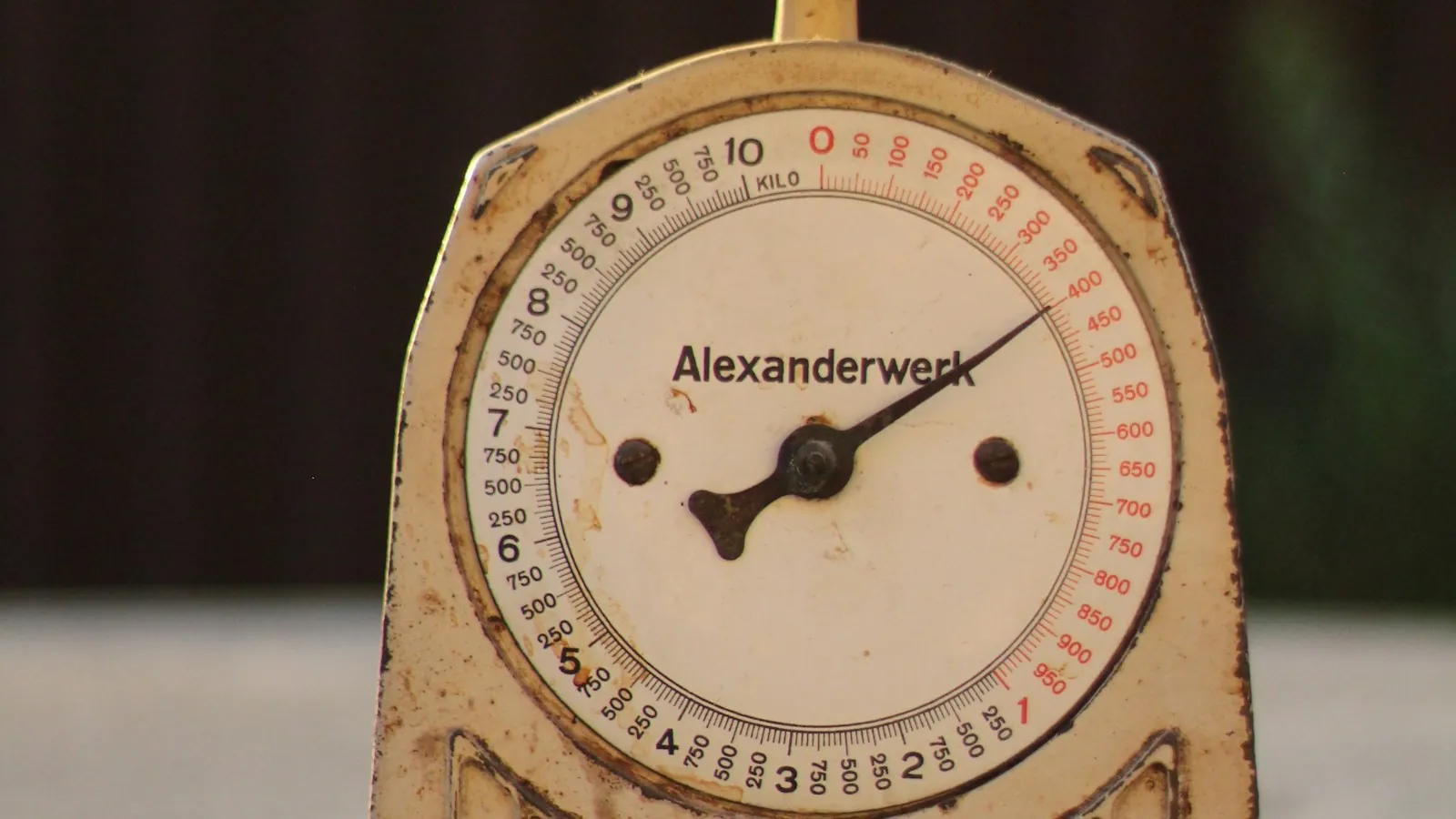
- Tare button. Resets to zero with a bowl on top. Every digital scale should have this, but make sure it's easy to press.
- Grams and ounces, with 1 gram increments. Avoid scales that only read in 2 or 5 gram steps.
- Capacity of at least 5 kg (about 11 pounds). That covers a heavy mixing bowl (or a stand mixer bowl) plus a big batch of bread dough.
- A flat platform big enough for your bowl. If the bowl hides the display, you'll be peeking underneath. A pull-out or raised display solves this.
- No aggressive auto-off. Some scales shut down after 60 seconds, which can wipe out your tare halfway through a recipe. Look for a longer timer or a way to disable it.
- Easy to wipe clean. A flat glass or stainless top beats one with seams where flour collects.
Most scales run on AAA or coin batteries, or recharge by USB. Either works; just keep spares around if it uses disposable batteries.
How to start using one without converting everything
You don't need to toss your measuring cups or rewrite your recipe box. Start small.
Pick the one or two baked goods you make most often and weigh the flour the next time, using 120 grams per cup of all-purpose flour as a starting point (or the weight the recipe's writer specifies, if they say). Write the gram amounts on the recipe card. If the result is better than usual, you've found your answer. If it's the same, your volume technique was already solid.
Next, look for recipes that already list grams. Many baking sites, bread books, and test kitchens print both. When grams are given, follow them and ignore the cups.
Keep measuring spoons for leaveners like baking soda, extracts, and spices. Use a liquid measuring cup or the scale for water and milk, since 1 milliliter of water weighs 1 gram, which makes the switch painless for liquids.
Who gets the most out of a scale
The people who notice the biggest difference tend to fall into a few groups:
- Regular bakers, especially of bread, cookies, cakes, and pastry
- Sourdough and bread makers, where hydration is a percentage of flour weight and cups simply don't work
- Anyone tracking portions or nutrition, since food labels list serving sizes in grams
- Coffee drinkers who want the same brew ratio every morning
- Cooks who work from international recipes written in metric, where a metric cup holds 250 ml
If you see yourself in that list, a scale is one of the cheapest upgrades you can make to your results. If you mostly cook savory dishes on the stove and bake twice a year, your measuring cups are doing their job, and you can safely spend the counter space on something else.
 Scooping, spooning, and weighing flour compared
The gap between a scooped cup and a spooned one is hard to feel until you see the flour heaped up. King Arthur Baking shows the three ways of measuring flour so you can judge the difference.
How to Measure Flour
By King Arthur Baking Company on YouTube. Their method may vary a little from ours. Watch on YouTube
- Compare how packed the scooped flour looks with the fluffed, spooned, and leveled cup that sits near 120 grams.
- Notice the stir, spoon, and sweep steps, and match them with the numbered method for measuring flour by volume above.
- Watch the tare button in use, which lets you add several ingredients to one bowl without washing extra cups.


