Food Storage
Can You Freeze Cheese, and Which Types Hold Up Once They Thaw?
 By the CookClear writers
Checked against USDA and FDA food safety guidance

 Clear Answer
Hard and semi-hard cheeses like cheddar, Swiss, Gouda, Monterey Jack, provolone, and low-moisture mozzarella freeze best, especially if you plan to cook with them. Fresh, wet, or creamy cheeses such as ricotta, cottage cheese, and cream cheese turn grainy or crumbly. Frozen cheese stays safe at 0°F, so the question is how you'll use it after it thaws.
Why does freezing change cheese at all?
Cheese is a web of milk protein holding water and fat. When it freezes, the water forms ice crystals that push through that web and tear it. On thawing, the water doesn't all slip back where it was, so the cheese can end up drier, more crumbly, or slightly weepy.
The more water a cheese has, the more damage those crystals can do. That's why a dry, aged cheddar barely notices the trip, while ricotta separates into curds and liquid. Freezing point varies too: cottage cheese freezes at about 29.8°F, while cheddar doesn't freeze solid until about 8.8°F, because its lower water content and higher salt keep the remaining liquid from freezing as easily.
Speed matters. The University of Wisconsin's Center for Dairy Research puts the rule simply: freeze cheese as quickly as possible and thaw it as slowly as possible. Fast freezing makes smaller crystals, and slow thawing gives the moisture time to settle back into the cheese.
Cheese by cheese: what survives and what doesn't
Here's how common cheeses hold up, grouped by how they behave after thawing.
| Cheese | How it freezes | Best use after thawing |
|---|---|---|
| Cheddar, Colby, Monterey Jack | Well. Slightly more crumbly, may not slice cleanly | Melting, casseroles, mac and cheese, grating |
| Swiss, Gouda, Edam, provolone, Muenster | Well | Melting, sandwiches (hot), sauces |
| Low-moisture mozzarella (block or shredded) | Very well | Pizza, baked pasta |
| Parmesan, Pecorino Romano (wedges) | Well, though rarely needed | Grating into hot food |
| Brie, Camembert | Fair. Interior can get pasty or grainy | Baked brie, melting |
| Fresh goat cheese | Fair to good | Crumbling, baking, spreading |
| Feta, blue cheese | Fair. Crumbles more | Salads, dressings, cooking |
| Fresh mozzarella | Poor if frozen in its brine | Cooked dishes only |
| Cream cheese, mascarpone | Poor. Turns crumbly and grainy | Baking, cooked sauces |
| Ricotta, cottage cheese | Poor. Separates, turns watery | Lasagna, baked dishes |
| Queso fresco, paneer | Poor | Cooked dishes only |
A good mental shortcut: if you'd happily grate it, it will freeze. If you'd spread it with a knife or eat it with a spoon, expect a texture change.
Do the hard cheeses really come out the same?
Close enough that most people can't tell, especially in cooked food. America's Test Kitchen froze extra-sharp cheddar, Brie, fresh goat cheese, and Pecorino Romano for six weeks, then tasted them against never-frozen samples. Tasters found them essentially identical, and the frozen cheddar melted normally. If a sauce made with it turns gritty, the cause is usually heat, as in any grainy cheese sauce.
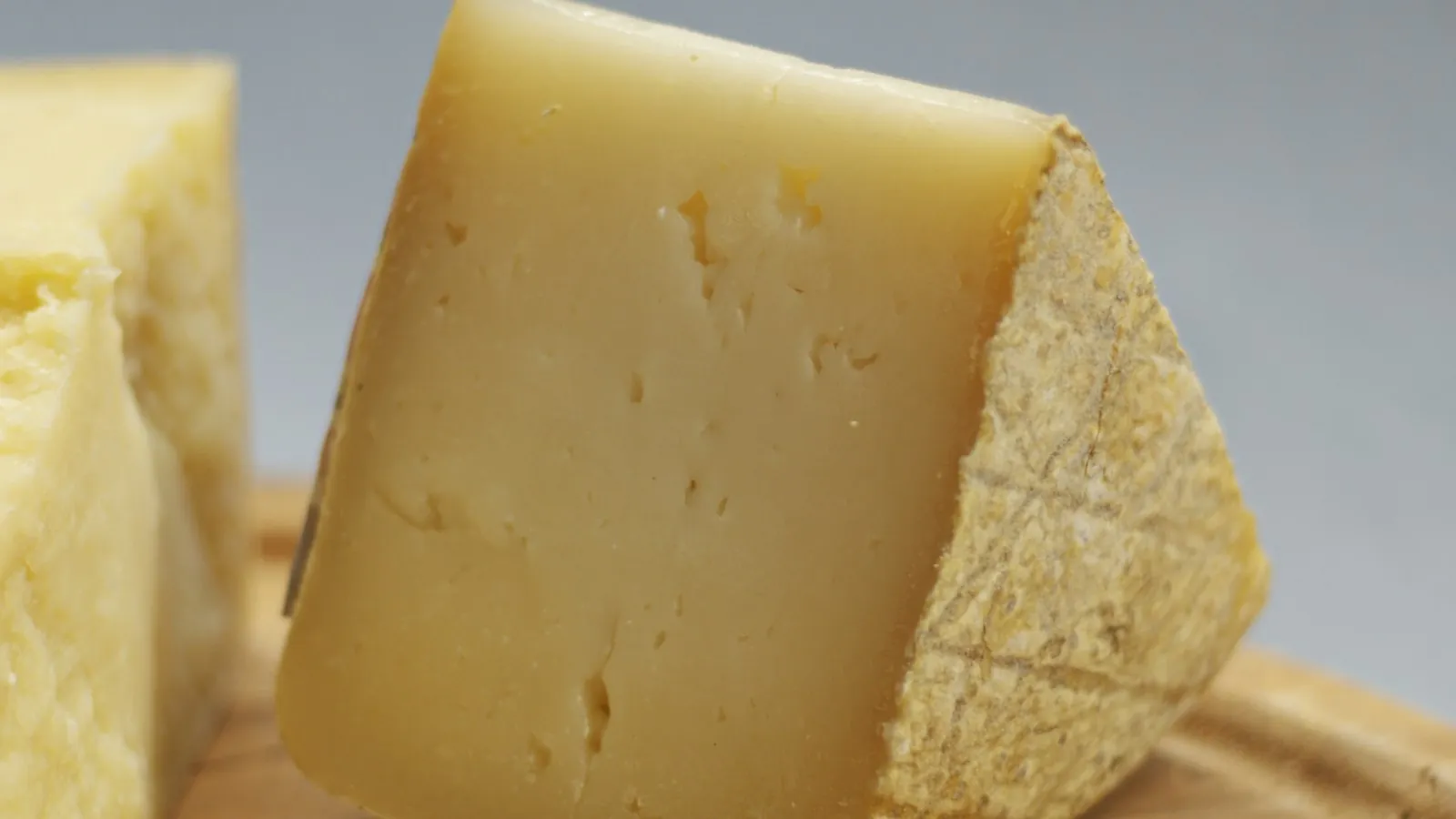
The main change you might notice is in slicing. Thawed block cheddar tends to crack or crumble at the edges when you try to cut thin, neat slices for a cheese board. That's the reason the Center for Dairy Research notes that frozen cheddar commonly goes into cooked dishes rather than onto platters.
Pre-sliced cheese has a similar issue. With so much surface area, slices can turn brittle and break when you peel them apart. They still melt fine on a grilled burger or grilled cheese.
Can you freeze shredded cheese and mozzarella?
Shredded cheese is one of the easiest things to freeze, and you don't even need to thaw it for most uses. Scatter it straight from the bag over a homemade pizza, a casserole, or a pan of nachos going into the oven. The anti-caking starch on store-bought shreds helps keep them from freezing into one solid lump.
Low-moisture mozzarella freezes especially well. The Center for Dairy Research lists it among the best cheeses for freezing and notes it can be held for a long time. They also observed that frozen shredded mozzarella tends to melt a little less but stretch a little more. On a home pizza, that's hardly a drawback.
Fresh mozzarella is different. If you freeze a ball still sitting in its liquid, it comes out spongy and wet. If you must freeze it, drain it, pat it dry, wrap it tightly, and plan to use it in a baked dish rather than a caprese salad.
Why soft and fresh cheeses don't freeze well
Cream cheese, ricotta, cottage cheese, and mascarpone are high in moisture and have a delicate, smooth structure. Ice crystals break that structure, and when they melt, the water separates out. You get a grainy, crumbly, or watery result that looks like it has curdled.
The flavor is usually fine, and the cheese is safe. It just won't spread smoothly on a bagel or look right in a fresh dessert. Where it still works:
- Cream cheese: beat it smooth with a mixer and use it in cheesecake, frosting, dips you'll bake, or a pan sauce.
- Ricotta: stir it into a lasagna filling, baked ziti, or stuffed shells, where the cheese gets mixed and cooked anyway.
- Cottage cheese: drain off any liquid and use it in baked casseroles or pancakes.
- Mascarpone: use it in a cooked sauce or baked filling rather than tiramisu.
Feta and blue cheese sit in the middle. They freeze without turning watery, but they become more crumbly. That's fine if you were going to crumble them over a salad or into a dressing anyway. The Center for Dairy Research also notes that blue mold can shift slightly toward green after freezing, which is a color change, not a sign of spoilage.
Skip the freezer for soft-ripened cheeses you want to serve whole on a board. A thawed Brie can bake beautifully, but the interior can turn pasty, and it won't have the same creamy, runny center at room temperature.
How to freeze cheese so it holds up best
Most texture problems come from slow freezing, big pieces, and air exposure. A little prep fixes most of that.
- Cut blocks into small portions. UC Master Food Preservers recommend chunks of half a pound or smaller. Smaller pieces freeze faster, which means smaller ice crystals, and you only thaw what you need.
- Wrap tightly. Press plastic wrap directly against every surface, then put the wrapped pieces in a zip-top freezer bag with the air pressed out. A vacuum sealer is even better.
- Shred or grate before freezing if you'll cook with it. Freeze shreds in a bag laid flat, then shake it after an hour or so to keep them loose.
- Label with the type and date. Frozen cheese all looks alike after a couple of months.
- Freeze at 0°F or colder, in the coldest part of the freezer. Keep it away from the door, where temperatures swing every time you open it.
- Avoid repeated thaw cycles. The Center for Dairy Research specifically warns that the temperature cycling in self-defrosting freezers can hurt texture over time, so use cheese steadily rather than leaving it in for a year.
Never freeze cheese mixed with other things (like a cheese spread with herbs or a dip) and expect it to behave like plain cheese. Added ingredients change how it freezes, often for the worse.
How long can cheese stay in the freezer?
At a steady 0°F, cheese stays safe indefinitely. Quality is what slips over time, mainly from drying and freezer burn.
| Type | Suggested freezer time for best quality |
|---|---|
| Hard and semi-hard blocks (cheddar, Swiss, Gouda) | Up to 6 months |
| Shredded cheese | 3 to 4 months |
| Softer cheeses (Brie, goat cheese) | Up to about 6 months, best used sooner |
These figures come from UC Master Food Preservers. America's Test Kitchen gives a more conservative 2 months for well-wrapped cheese if you care about serving it close to its original state. A useful middle ground: aim to use shreds within 3 months and blocks within 6.
Grated Parmesan and Pecorino in a tub already last a long time in the fridge, so freezing them is rarely worth the freezer space unless you buy in bulk.
The right way to thaw it
Thaw cheese in the refrigerator, never on the counter for hours. Slow thawing lets the moisture work its way back into the cheese and keeps it out of the 40 to 140°F danger zone.
Plan on roughly 7 to 8 hours per pound in the fridge, so a half-pound block is usually ready by the next morning if you move it before bed. Shredded cheese needs about 24 to 48 hours in the fridge if you want it fully thawed for something like a cold sandwich, though again, you can usually cook with it frozen.
If you have the time, let thawed block cheese sit in the fridge, still wrapped, for a few extra days before you use it. The Center for Dairy Research notes that commercial producers often allow around a week for moisture to redistribute through the cheese. At home, even a day or two helps the texture.
Keep in mind that cheese keeps aging once it's thawed. Use it within the time you'd normally use an opened block from the fridge, and don't refreeze it (meat has its own refreezing rules).
When is freezing worth it?
Freezing makes the most sense in a few situations:
- You bought a big block of cheddar or mozzarella on sale and won't finish it before it molds.
- You have leftover shredded cheese from a recipe and no plan for it this week.
- You want a stash of pizza or casserole cheese ready to go.
- You have half a tub of ricotta and know you'll make lasagna within a month or two.
It makes less sense for a nice wedge of aged Gouda or a soft cheese you bought to serve on a board. Those are better bought in smaller amounts and eaten fresh. A tightly wrapped hard cheese can last weeks in the fridge anyway, so use the freezer as a backup. Storage times differ for each food, so check fridge and freezer limits before you stock up.
 What properly wrapped frozen cheese looks like
Wrapping and portion size decide how cheese comes out of the freezer, and both are easier to copy after seeing them. Laura Fuentes of MOMables shows the whole routine.
How to Freeze Cheese & Thaw It Out
By MOMables - Laura Fuentes on YouTube. Their method may vary a little from ours. Watch on YouTube
- Compare the portion sizes with the advice to freeze chunks of half a pound or smaller.
- Notice how tightly the wrap presses against the cheese and how the air gets pushed out of the bag.
- Look at how shredded cheese is laid flat in a bag, which helps it stay loose as it freezes.