Techniques
What Makes Cheese Sauce Grainy or Split, and Can You Rescue It?
 By the CookClear writers
Checked against test kitchen and food science sources
 Clear Answer
Cheese sauce turns grainy or greasy because it got too hot, and the cheese's proteins tightened into little curds and squeezed out their fat. Keeping the sauce below about 170°F, choosing young, moist cheeses over aged ones, and giving the cheese some help from starch or an emulsifying salt prevents nearly every case. Pre-shredded bagged cheese and too little liquid are the other usual suspects.
A split sauce is rarely ruined, and you can usually pull it back together in a minute or two.
What is happening when cheese breaks?
Cheese is an emulsion held in place by a protein net. The main protein, casein, is bound together by calcium into a mesh, and that mesh traps tiny droplets of fat and pockets of water. As long as the mesh stays relaxed, the fat and water stay mixed and the cheese melts into something smooth.
Heat changes that balance in stages. The milk fat in cheese starts to soften and melt at around 90°F. A cheese like cheddar melts and flows at roughly 150°F. Push much past that, and the casein proteins start bonding to each other more tightly, the way meat firms up as it cooks.
When the proteins tighten, two things happen at once. They clump into small, firm bits that feel sandy on your tongue (that is the grainy texture), and they squeeze out the fat they were holding (that is the oil slick). A grainy sauce and an oily sauce are the same failure, just seen from different sides.
The most common causes, side by side
Most broken sauces come down to one or two of these. Like most technique problems, it is easiest to solve by matching the symptom to its cause. Match what you see in the pot to the likely cause.
| What you notice | Likely cause | What to change next time |
|---|---|---|
| Sauce was smooth, then went sandy as it bubbled | Too hot; the sauce boiled after the cheese went in | Add cheese off the heat or on low, and never let it boil again |
| Pools of orange oil on top | Proteins tightened and released fat | Lower heat, add a splash of liquid, use an emulsifier |
| Gritty from the start, even on low heat | Aged, dry cheese (extra-sharp cheddar, Parmesan) | Blend with a young melting cheese |
| Powdery, slightly gluey texture | Pre-shredded cheese with anti-caking starch or cellulose | Grate cheese from a block |
| Thick, stringy, and clumping around the whisk | Too little liquid for the amount of cheese | Add warm milk a little at a time |
| Sauce tastes sharp and splits fast | Acid (wine, lemon, tomato) added without enough starch or emulsifier | Add acid at the end, or use a melting salt |
| Lumps of unmelted cheese | Cheese added all at once in big pieces | Add finely grated cheese in handfuls |
Why does the type of cheese matter so much?
Age is the big factor. As cheese ages, it loses moisture and its proteins become more rigid and broken down. That is why Parmesan holds its shape in the oven while mozzarella turns into a pool. Aged cheeses taste great, but they melt reluctantly and break easily under heat.
Young, high-moisture cheeses melt the most willingly. Good choices include:
- Young or mild cheddar
- Monterey Jack
- Colby
- Young Swiss
- Young Gouda
- Fontina
- Mozzarella (very stretchy, so use it as part of a blend)
- American cheese, which melts perfectly because it already contains emulsifying salts
You can keep the flavor by building the sauce on a good melter and use the aged cheese as seasoning. A mix of two parts young cheddar or Jack to one part extra-sharp cheddar or Gruyère gives you depth without the grit. Parmesan works best stirred in at the very end, in small amounts.
Is pre-shredded cheese really the problem?
Often, yes. Bagged shredded cheese is coated with an anti-caking agent, usually potato starch, cornstarch, or powdered cellulose, so the shreds do not stick together in the package. Some of that coating dissolves into the sauce and can leave it dull, slightly powdery, or gluey.
Pre-shredded cheese is also frequently a drier, lower-moisture style, which melts less smoothly. Grating your own from a block takes a couple of minutes and makes a noticeable difference. Blocks also freeze well for cooking. Use the small or medium holes of a box grater: finer shreds melt faster, so they spend less time in the heat.
How hot should a cheese sauce get?
Lower than most people think. A useful working ceiling is 170°F. The cheese only needs to reach the point where it melts and flows (around 150°F for cheddar), and anything far beyond that only tightens the proteins.
A flour-based sauce (a béchamel) has to simmer to cook out the raw flour taste and thicken properly. That part needs real heat. The cheese does not. Once the béchamel is thick, take the pan off the burner, wait a minute, and then add the cheese. The residual heat of the sauce is plenty to melt it.
If you have an instant-read thermometer, check it once. A sauce that is steaming but not bubbling is usually in a safe range. If you see bubbles breaking the surface after the cheese is in, it is too hot.
A method that keeps cheese sauce smooth
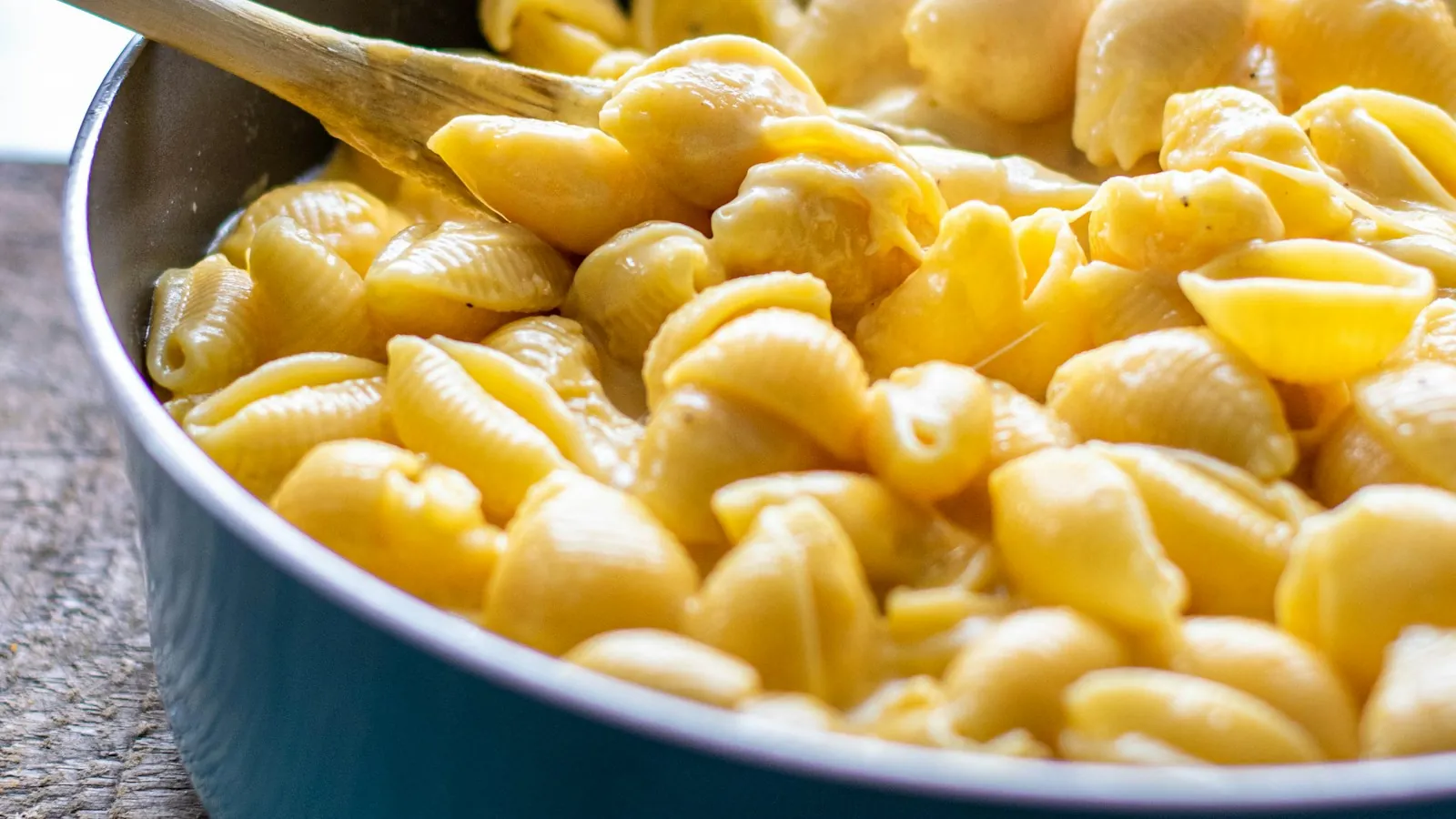
This works for a classic béchamel-based cheese sauce (also called Mornay) for mac and cheese, vegetables, or gratins.
- Grate the cheese from a block and let it sit out while you make the base, so it is not fridge-cold when it hits the sauce. Cold cheese needs more time in the heat to melt.
- Make the roux. Melt butter over medium heat, whisk in an equal amount of flour, and cook for a minute or two until it smells toasty but has not browned.
- Add warm milk gradually, whisking constantly, until smooth. Warm milk blends in with fewer lumps than cold.
- Simmer the base until it coats the back of a spoon and the floury taste is gone. This is the only stage that should bubble.
- Take the pan off the heat. Let it stop bubbling completely.
- Add the cheese in handfuls, stirring until each addition is mostly melted before adding the next. If the sauce cools too much to melt the last of it, set the pan back on the lowest heat for a few seconds at a time.
- Season at the end. Add mustard, hot sauce, or any acidic ingredients once the cheese is fully melted.
- Serve or hold it warm, never hot. If you need to keep it, leave it over very low heat or in a covered pan off the burner, stirring now and then.
Besides thickening, starch granules get in between the proteins and physically keep them from clumping, which is why a sauce with a roux is much more forgiving than one made from cheese and milk alone.
Can you rescue a cheese sauce that already split?
Usually. Start by taking it off the heat right away, because more heat only makes it worse. Then try these, in order:
- Whisk in a splash of cold liquid. A tablespoon or two of cold milk or cream drops the temperature and gives the emulsion more water to work with. Whisk hard.
- Add a starch slurry. Stir a teaspoon of cornstarch into a tablespoon of cold milk, whisk it into the sauce, and warm it very gently, just until it thickens a bit.
- Add a slice or two of American cheese. Its built-in emulsifying salts help pull the fat and protein back together.
- Use an immersion blender. For an oily sauce, a few seconds of blending can re-emulsify the fat. It is less effective on sandy, curdled bits.
- Add a pinch of sodium citrate. This is the most reliable fix. Dissolve it in a little warm milk first, then whisk it in.
If the sauce is badly curdled, with obvious cottage-cheese-like lumps, it may not come fully smooth again. At that point, blending is your best shot, and the texture will still be fine baked into a casserole where nobody sees it.
What does sodium citrate do, and how much do you use?
Sodium citrate is an emulsifying salt, the same kind of ingredient that makes processed cheese and Velveeta melt so smoothly. It pulls calcium out of the casein mesh and raises the pH slightly, which loosens the proteins so they disperse into the liquid instead of clumping. With it, you can melt even a sharp, aged cheddar into a perfectly glossy sauce with no flour at all.
The amount is small. A common target is 2 to 3 percent of the total weight of the cheese plus the liquid. For a rough idea of the proportions:
| Use | Liquid per 100 g cheese | Sodium citrate per 100 g cheese |
|---|---|---|
| Thick queso or dip | 35 to 85 ml | about 2.7 to 4.1 g |
| Thinner sauce for mac and cheese or fondue | 85 to 120 ml | about 3.7 to 5.6 g |
Too much can make the sauce taste salty or slightly sour and turn it oddly dense, so weigh it with a small kitchen scale rather than guessing with spoons. Dissolve the sodium citrate in the liquid (milk, water, or beer), warm it, then add the cheese a handful at a time over low heat.
If you do not want to buy it, American cheese is the shortcut. America's Test Kitchen builds a stovetop mac and cheese on this idea: 4 ounces of American cheese melted with 4 ounces of extra-sharp cheddar stirred in off the heat. The American cheese brings the emulsifiers, and the cheddar brings the flavor. Weigh those ounces, since a cup of shredded cheese holds far less than 8 ounces by weight.
Four more ways to split a cheese sauce
Acid added too early. Wine, beer, lemon juice, or tomato can make casein clump faster, especially without flour in the sauce. Fondue gets away with wine (a nonalcoholic stand-in for wine is another option) because it is usually stabilized with cornstarch. If you are adding acid, add it last, or use a starch or emulsifier.
Too much cheese, not enough liquid. Melted cheese on its own is just hot cheese. It needs liquid to become a sauce. If the sauce turns into a stringy mass that wraps around your whisk, it needs more warm milk.
Reheating on high. Leftover cheese sauce and mac and cheese break easily when reheated fast. Warm them on low heat with a splash of milk, stirring often, or microwave at reduced power in short bursts, stirring between each.
Low-fat cheese. Reduced-fat cheeses tend to melt into a rubbery, grainy texture because they have less fat to keep the proteins apart. Full-fat versions are far more cooperative. Thin dairy curdles in soup for similar reasons, which is why heavy cream substitutes in soup lean on a roux.
 What does a smooth cheese sauce look like when it comes together?
Grainy, greasy and glossy sauces are easiest to tell apart by eye, especially while the cheese melts. Chef Jean-Pierre makes a classic sauce, so you can compare his stirring and heat with this method.
Bechamel and Mornay (Cheese) Sauce
By Chef Jean-Pierre on YouTube. Their method may vary a little from ours. Watch on YouTube
- Notice whether the pan is off the heat and no longer bubbling when the cheese goes in.
- Watch how the cheese is added in handfuls and stirred until mostly melted before the next addition.
- Compare the glossy, coating texture of the sauce with the sandy or oily look of a broken one.