Picking Produce
Is There a Reliable Way to Pick Ripe Peaches and Nectarines?
 By the CookClear writers
Checked against USDA grading standards and university extension buying advice
 Clear Answer
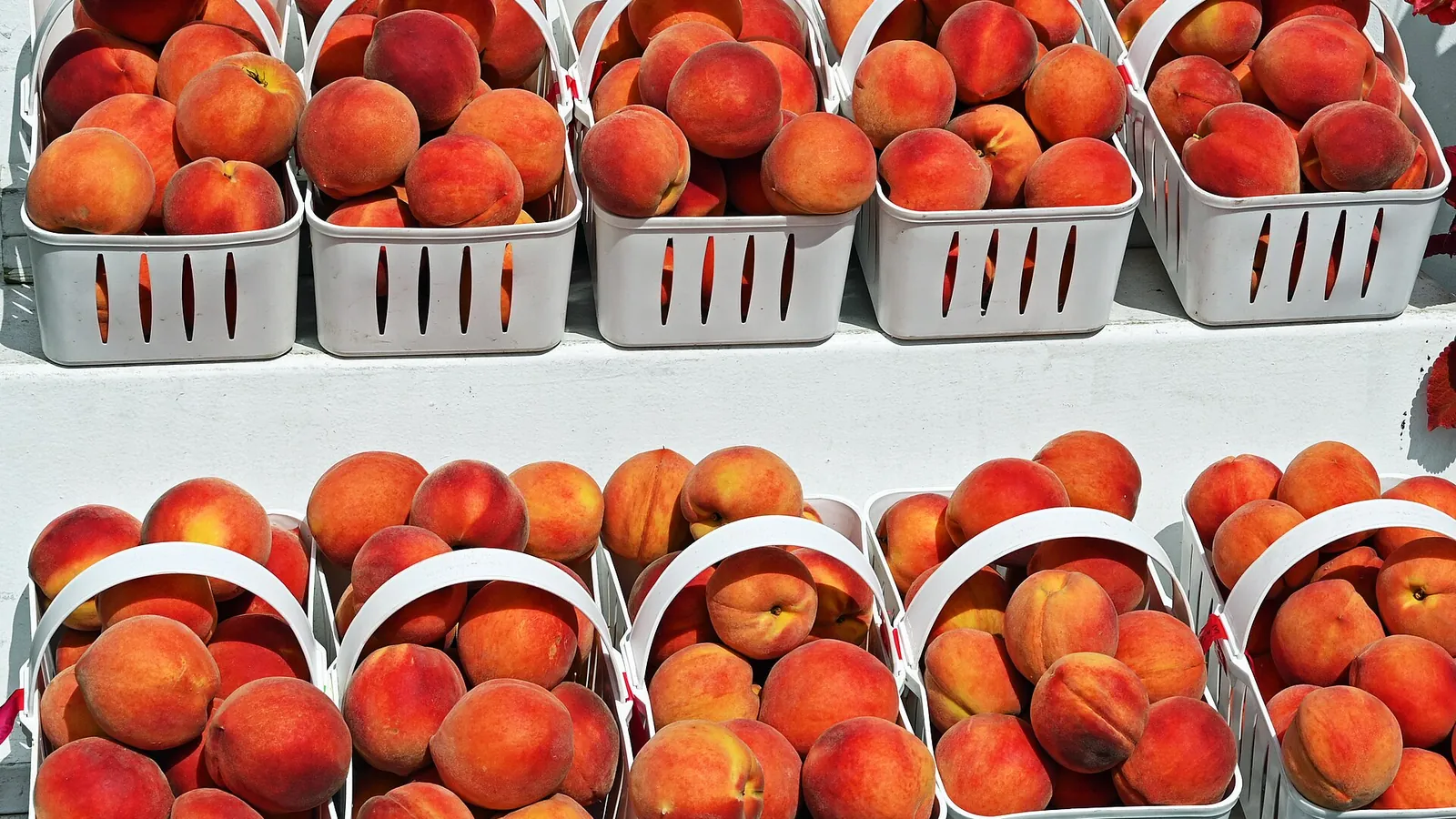
To pick ripe peaches, check 3 things: a creamy gold or yellow background color with no green, a sweet, fruity smell at the stem end, and a slight give when you press gently with your palm near the shoulder. The red blush tells you almost nothing. Firm fruit with good color will soften at home in 3 to 4 days.
What does peach background color tell you?
Peach background color, often called ground color, is the base color of the skin under and around the red blush. It is the single best clue to whether the fruit was picked mature enough to ripen well.
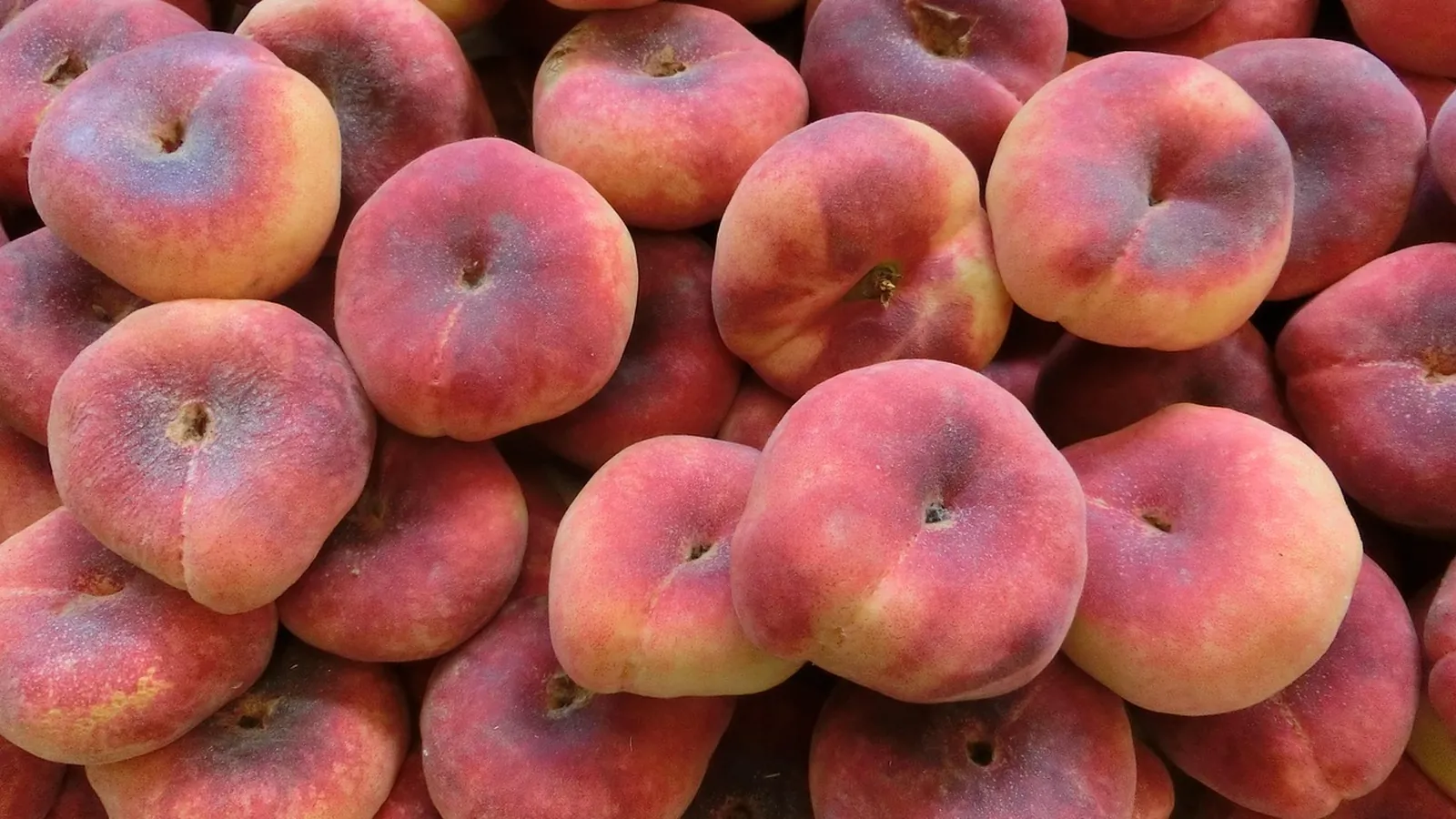
Growers in California use ground color to decide when to harvest, according to the UC Davis Postharvest Technology Center. As a peach matures on the tree, that base color shifts from green to yellow.
How much red a peach shows depends mostly on the variety and how much sun that side of the fruit got. University of California Cooperative Extension says the rosy blush is not a reliable sign of ripeness, and Clemson Cooperative Extension says a red blush "does not necessarily mean the fruit is ripe."
Here is how to read the color in the bin:
| Ground color | What it means | Buy it? |
|---|---|---|
| Creamy gold to deep yellow | Picked mature, will ripen fully | Yes |
| Light yellow with a faint green tint | Close to mature, may ripen a little flat | If nothing better |
| Green, especially near the stem | Picked too early | No |
| Brownish or dull with wrinkles | Old or dried out | No |
| White to cream (white-fleshed types) | Normal base color for white peaches | Yes, judge by smell and give |
Why should you avoid green ground color?
A peach with green ground color was picked before it matured, and that is the one problem home ripening cannot fix. Peaches do not get sweeter after harvest because they have no starch reserve to turn into sugar. UC Cooperative Extension notes that a peach picked green may get juicier as it softens, but it will not get sweeter.
Green peaches also tend to shrivel and turn tough instead of ripening, according to the same extension sheet. UMass Extension describes green shades around the stem as "a sign they were picked too early."
A firm peach with gold ground color is a better buy than a soft one with green.
How soft should a ripe peach feel?
A ripe peach yields to gentle pressure. UC Cooperative Extension says peaches are ready to eat when they give under gentle palm pressure, and Clemson says to choose fruit that is firm or gives slightly when you are buying.
Press with your whole palm, not your fingertips, and check the shoulder near the stem. That area tends to soften early, so a little give there tells you the fruit is on its way. Peaches bruise easily, and a thumb dent today is a brown spot in two days.
For a sense of scale, UC Davis researchers measure ripeness with a penetrometer. Fruit at 2 to 3 pounds of force is rated "ready to eat," and consumers tend to like fruit that tests below 6 to 8 pounds. If the peach feels like a ripe avocado that gives slightly, it is ready today. If it feels like a baseball, it needs a few days.
Does a ripe peach have a smell?
Yes, and smell is one of your most useful checks. Both Clemson and UC Cooperative Extension list a strong, sweet, fruity fragrance as a sign of ripeness. Hold the peach up to your nose at the stem end. A ripe one smells like a peach from a few inches away.
No smell usually means underripe or long cold storage; a fermented smell means overripe. The same sniff test works when you choose a ripe tomato or a melon: aroma follows flavor.
How to tell if a nectarine is ripe
A nectarine is a peach without the fuzz, so you check the same 3 signs: golden or cream ground color with no green, a sweet smell, and a slight give near the stem. Because the skin is smooth and often deep red, the ground color can be harder to spot. Look for yellow or cream streaks between the red, especially on the underside.
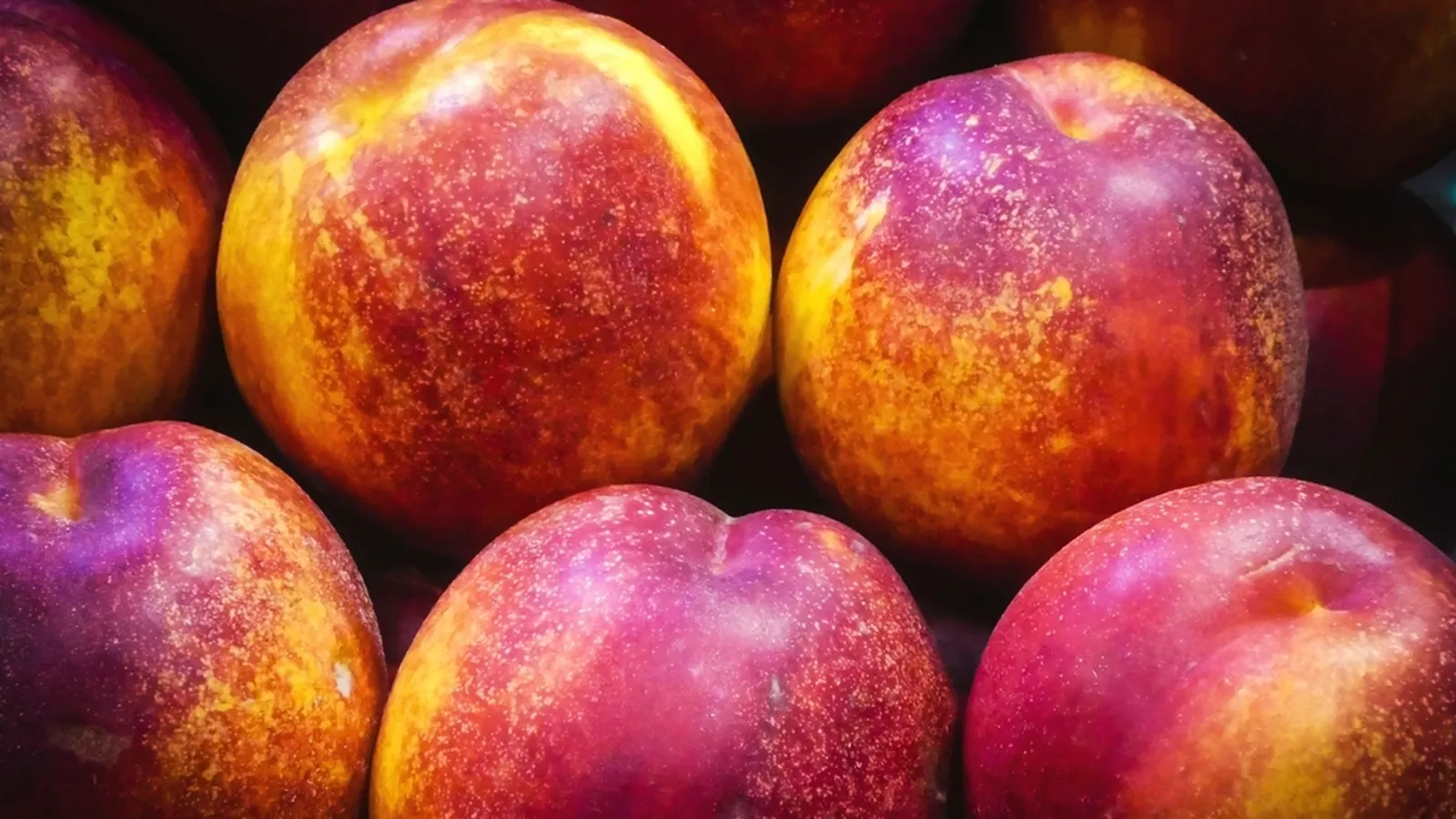
Nectarines often feel a little firmer than peaches at the same stage of ripeness, so do not wait for them to turn soft. Gentle give at the shoulder and a strong smell are enough.
How to ripen peaches in a paper bag
If you bring home firm peaches with good ground color, a paper bag is the easiest way to finish them. UC Cooperative Extension says firm peaches with good ground color will ripen and soften in 3 to 4 days at room temperature in a loosely closed bag.
- Choose fruit with gold or cream ground color. Green peaches will soften in the bag but stay bland.
- Put the peaches in a paper bag in a single layer, stem side down, with a little space between them.
- Fold the top over loosely. The bag holds in ethylene while letting moisture escape.
- Keep the bag on the counter at room temperature. Clemson Cooperative Extension says to keep ripening peaches above 51°F.
- Check every day. Smell the bag and press the shoulders gently. Most will be ready in 3 to 4 days.
- Move ripe peaches to the fridge if you can't eat them right away.
Skip plastic bags, which trap moisture. A ripe banana or apple tossed in the bag adds more ethylene, the same trick used to ripen a mango faster.
In hot weather, UC Davis notes that Rhizopus rot, a fast gray mold, can develop on ripe fruit held at 68°F to 77°F.
Why are my peaches mealy?
The usual answer to "why are my peaches mealy" is chilling injury. When peaches and nectarines sit too long at cool but not cold temperatures, the flesh loses its ability to soften normally. It turns dry, grainy and woolly instead of juicy.
The UC Davis Postharvest Technology Center puts the danger range at 36°F to 46°F, which researchers call the "killing temperature zone." Damage builds fastest around 41°F. That range overlaps most home refrigerators, which should run at 40°F or below. Commercial packers avoid the problem by holding fruit at 30.5°F to 32°F, just above freezing, which a home fridge cannot do reliably.
UC Davis lists these chilling injury symptoms:
- Mealiness or woolliness. Soft flesh that feels dry and grainy, with little juice.
- Leatheriness. Firm, dry flesh that never softens properly.
- Internal browning. Brown flesh, often around the pit.
- Flesh bleeding. Red streaks spreading from the pit, which look odd but do not change the taste.
- Flavor loss. Researchers found flavor fades about 5 days before visible symptoms show up.
Chill damage shows up only after the fruit ripens, so a peach can look perfect at the store and still turn mealy on your counter.
At home, never refrigerate a peach until it is ripe. Clemson warns that chilling unripe fruit can cost flavor, texture and moisture and cause discolored flesh. Once ripe, the fruit is no longer in its sensitive stage, so a few days cold is fine. Tomatoes have a similar cold sensitivity, which is why tomatoes on the counter usually taste better than fridge tomatoes.
What went wrong with my peaches?
When peaches disappoint, the symptom usually points to one cause.
| What you see | Likely cause | Fix next time |
|---|---|---|
| Soft but dry, grainy flesh | Chilling injury in storage | Ripen fully before chilling; buy from farm stands when possible |
| Soft but bland and sour | Picked with green ground color | Skip fruit with any green at the shoulders |
| Stays hard, then shrivels | Picked immature or chilled while firm | Choose gold ground color; keep on the counter |
| Brown flesh near the pit | Chilling injury or overripe | Eat sooner; keep unripe fruit out of the fridge |
| Brown soft spots on the skin | Bruising from squeezing or stacking | Press with your palm; ripen in a single layer |
| Gray fuzzy mold within a day | Rhizopus rot on ripe fruit in a warm room | Refrigerate ripe peaches; check the bag daily |
How long do ripe peaches last in the fridge?
Clemson Cooperative Extension says ripe peaches keep 3 to 5 days in the refrigerator in a plastic bag.
Wait to wash them until just before eating, the same approach that keeps unwashed berries lasting longer. Rinse under cool running water and rub gently. For the best flavor, both Clemson and UC Cooperative Extension suggest letting chilled peaches come back to room temperature before you eat them.
Cut peaches brown quickly. Clemson suggests a little lemon or orange juice on the slices, the same acid trick that helps keep cut avocado green for a short while.
Clingstone vs freestone peaches: which should you buy?
Every peach and nectarine falls into one of these groups based on how tightly the flesh grips the pit:
- Clingstone. The flesh holds tight to the pit, so you cut it away in wedges. Clemson notes these are usually early-season fruit and are best for cooking and canning. Most commercial canned peaches are clingstone.
- Freestone. The flesh pulls cleanly away from the pit when you twist the halves. These are the easiest for eating fresh, slicing for desserts, baking and freezing.
- Semi-freestone. A cross between the two, with a pit that comes out with a little effort. Use them like freestones.
Sources differ on which type is juicier. UMass Extension describes clingstones as smaller and juicier and freestones as firmer, while other extension sheets do not rank them. Ripeness and handling affect juiciness far more than pit type, so judge ripeness by ground color, smell and give, then pick the pit type based on how you plan to use the fruit.
Season timing varies by region. Clemson lists South Carolina peaches from May through August, and UMass Extension gives July through September as peak in New England.
How many peaches do you need?
Clemson Cooperative Extension says 1 pound of fresh peaches equals 2 to 4 medium peaches, about 2 cups sliced or 1 1/2 cups pureed.
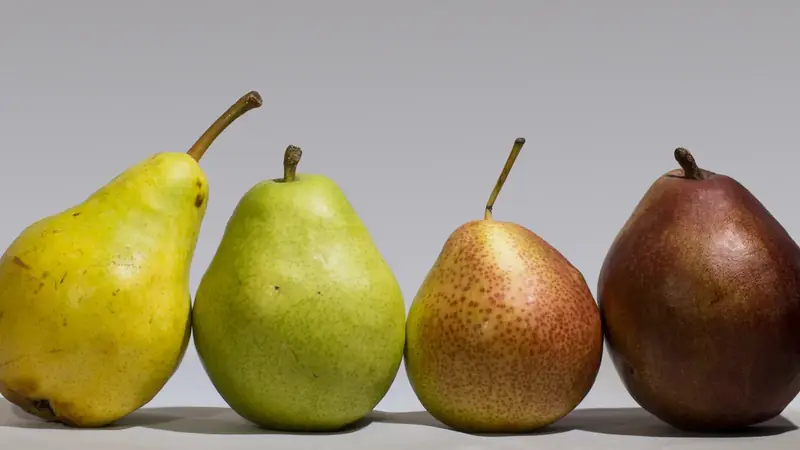
Buy a mix: a few soft, fragrant peaches for tonight and firm, gold ones for the paper bag. The same staggered approach works when you check pears for ripeness, another fruit that finishes ripening off the tree. Most other summer fruit follows the same produce picking tips: smell and gentle give first, blush last.
 Checking ground color, smell and give by hand
Seeing someone sort peaches makes the difference between ground color and blush much easier to spot. A short video of the checks in action shows what a slight give feels like and where to look for green.
How to pick perfect peaches, plums and nectarines 🍑 | ABC Australia
By ABC Australia on YouTube. Their method may vary a little from ours. Watch on YouTube
- Look at the skin around the stem and between the red patches for creamy gold, and pass on any fruit showing green there.
- Notice the palm press near the shoulder, which should give slightly, close to the 2 to 3 pound "ready to eat" range.
- Watch for firm fruit headed into a loosely closed paper bag, which needs 3 to 4 days at room temperature to soften.