 Cooking Times
What Are the Signs Pasta Is Al Dente Before You Even Take a Bite?
 By the CookClear writers
Checked against USDA safe temperatures and test kitchen timing
 Clear Answer
Pasta is al dente when you cut a piece in half and see a thin, pinpoint dot or ring of paler, opaque pasta in the very center. Start checking 2 minutes before the low end of the box time, and check once more about 60 seconds later if needed.
Why the box time is your starting point, not your answer
Box times are a decent estimate, but they assume a full rolling boil, plenty of water and sea-level conditions. Your stove, pot size and how much the water temperature dropped when you added the pasta all shift the number by a minute or two.
 On the menu10 questions
Most brands print a range, such as "9 to 11 minutes." The low end is usually close to al dente for pasta you'll finish in sauce. The high end leans toward fully tender. Treat the first number as the moment to start paying attention, and set your timer 2 minutes before it.
Brand makes a difference too. Bronze-die pasta with a rough, chalky surface often runs a minute or so longer than its smooth, mass-market cousin, and thick shapes have a wider window between "chalky" and "soft" than thin ones.
What al dente looks like when you cut a piece
The cut test is the most reliable visual check, and it takes about 10 seconds. Fish out one piece with tongs or a slotted spoon, set it on a cutting board, and slice it crosswise with a sharp paring knife.
As it cooks, the cut end changes like this:
| What the cut end shows | What it means | What to do |
|---|---|---|
| Wide, bright white or chalky center, about a third of the width | Underdone, still raw starch | Check again in 2 minutes |
| A thin white ring or small dot, roughly the size of a pinprick | Al dente | Drain now if finishing in sauce, or give it 30 to 60 more seconds if serving plain |
| Uniform color all the way through, no visible core | Fully cooked, past al dente | Drain right away |
| Swollen, translucent edges, surface looks slick and soft | Overcooked | Drain and sauce quickly; it won't firm back up |
For tubes like penne and rigatoni, look at the wall of the tube rather than a center dot. You want a faint, thin line of paler pasta running through the middle of the wall.
For flat shapes like fettuccine or lasagna sheets, the core shows up as a thin pale stripe through the cross-section. The same rule applies: thin line means al dente, no line means done.
Other signs you can read without tasting
A few other cues tell you when to bother cutting in the first place. None is precise on its own, but together they narrow the window so you only need one or two real checks.
- Color: Dry pasta starts out a deep golden yellow and slightly translucent. As it hydrates, the outside turns paler and more opaque. When the surface looks evenly matte and lighter, you're within a couple of minutes.
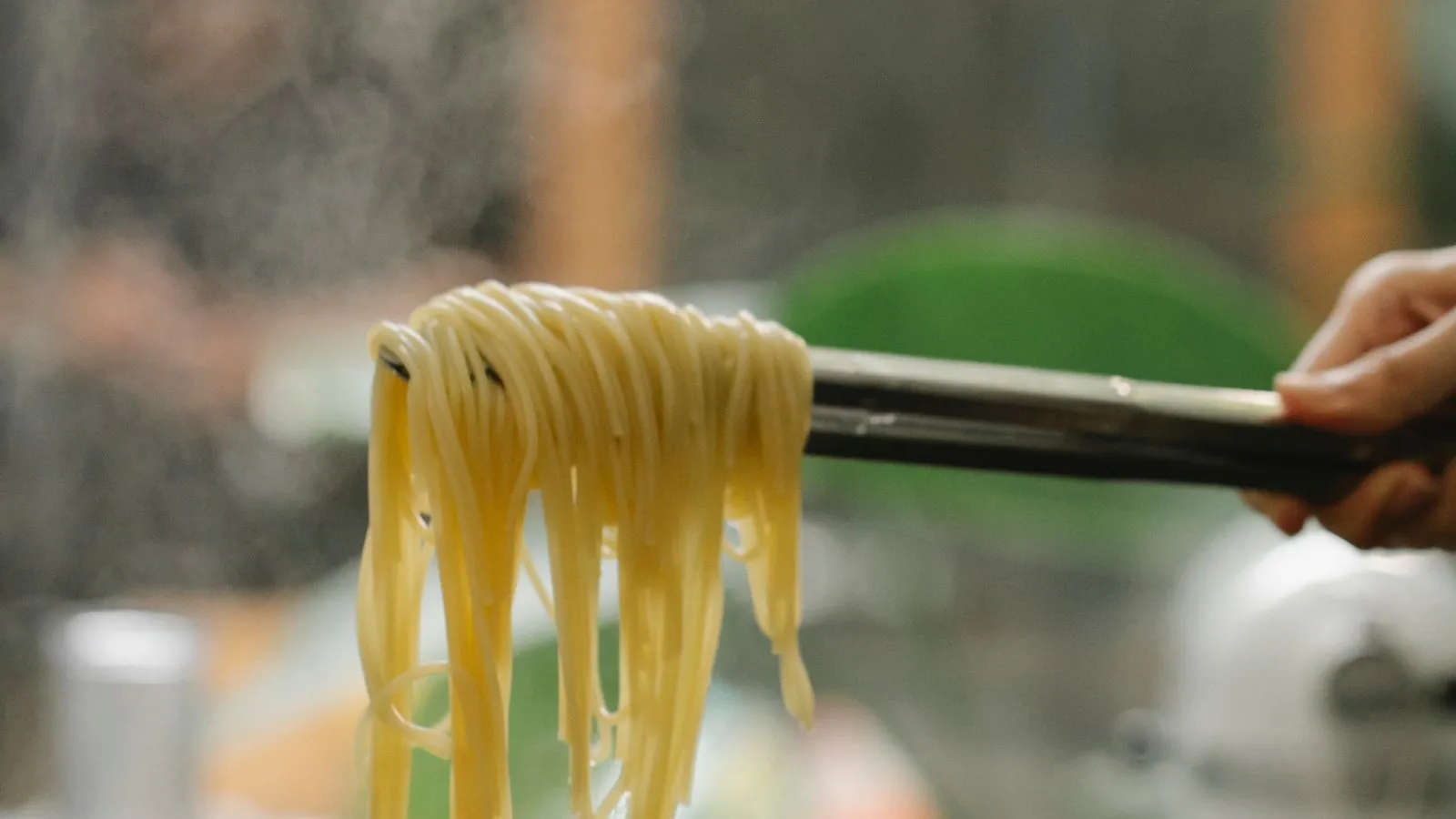
- Flexibility: Lift a strand of spaghetti on a fork. Underdone pasta stays fairly stiff and sticks out straight. Al dente pasta drapes but still holds a gentle curve with some spring. Overcooked pasta hangs limp and flat.
- Size: Pasta roughly doubles in volume as it cooks. Shapes that look plump and noticeably larger than when they went in are getting close.
- Floating: Many short shapes start rising toward the surface as they cook. It's a loose hint, since a vigorous boil tosses everything around anyway.
What about throwing spaghetti at the wall?
The idea is that cooked spaghetti sticks to the wall and raw spaghetti falls off. It does work, sort of, but it tells you the wrong thing. Pasta gets sticky from surface starch long before the center is cooked, and it keeps sticking well after it's overdone.
A strand that sticks could be underdone, al dente or mushy, so skip it and save yourself the cleanup.
How to check it in practice, step by step
- Bring at least 4 quarts of water to a full rolling boil for 1 pound of pasta, and salt it (about 1 tablespoon of kosher salt is a common starting point).
- Add the pasta, stir for the first minute so pieces don't stick together, and return it to a boil.
- Set a timer for 2 minutes before the lowest time on the box. Walk away and prep your sauce. If you're using a jar, check how long opened sauce keeps.
- When the timer goes off, pull one piece and cut it. Note the size of the pale core.
- If the core is still wide, set the timer for 1 more minute. If it's a thin dot or line, it's ready to drain.
- Before draining, scoop out about 1 cup of the cooking water. You'll want it for the sauce.
With this approach you usually cut two pieces total. If you'd like to taste one at the final check, go ahead. Al dente should have a slight, clean resistance in the center, without any gritty or chalky crunch.
Should pasta come out a little underdone if it's going into sauce?
Yes. If you plan to toss the pasta in a pan of sauce for a minute or two, pull it about 1 minute before it reaches al dente on its own. Pasta keeps absorbing liquid and softening in a hot sauce, and that last minute of cooking in the pan is what helps the sauce cling.
On the cut test, that means draining when the pale core is slightly bigger than a pinprick, more like a thin but clearly visible line. Then finish it in the skillet with a splash of the reserved pasta water over medium heat, tossing until the sauce turns glossy and the pasta reaches the texture you want.
If the pasta is going into a baked dish like baked ziti or a casserole, pull it even earlier, about 2 to 3 minutes short of the box time. It will cook another 20 to 30 minutes in the oven and turn soft if you start with fully tender noodles.
For pasta salad, go the other direction. Cook it to fully al dente or just a touch past, since cold pasta firms up as it chills and can taste hard straight from the fridge. Keep it covered and check how long leftovers keep.
How much do different pasta shapes change cooking time?
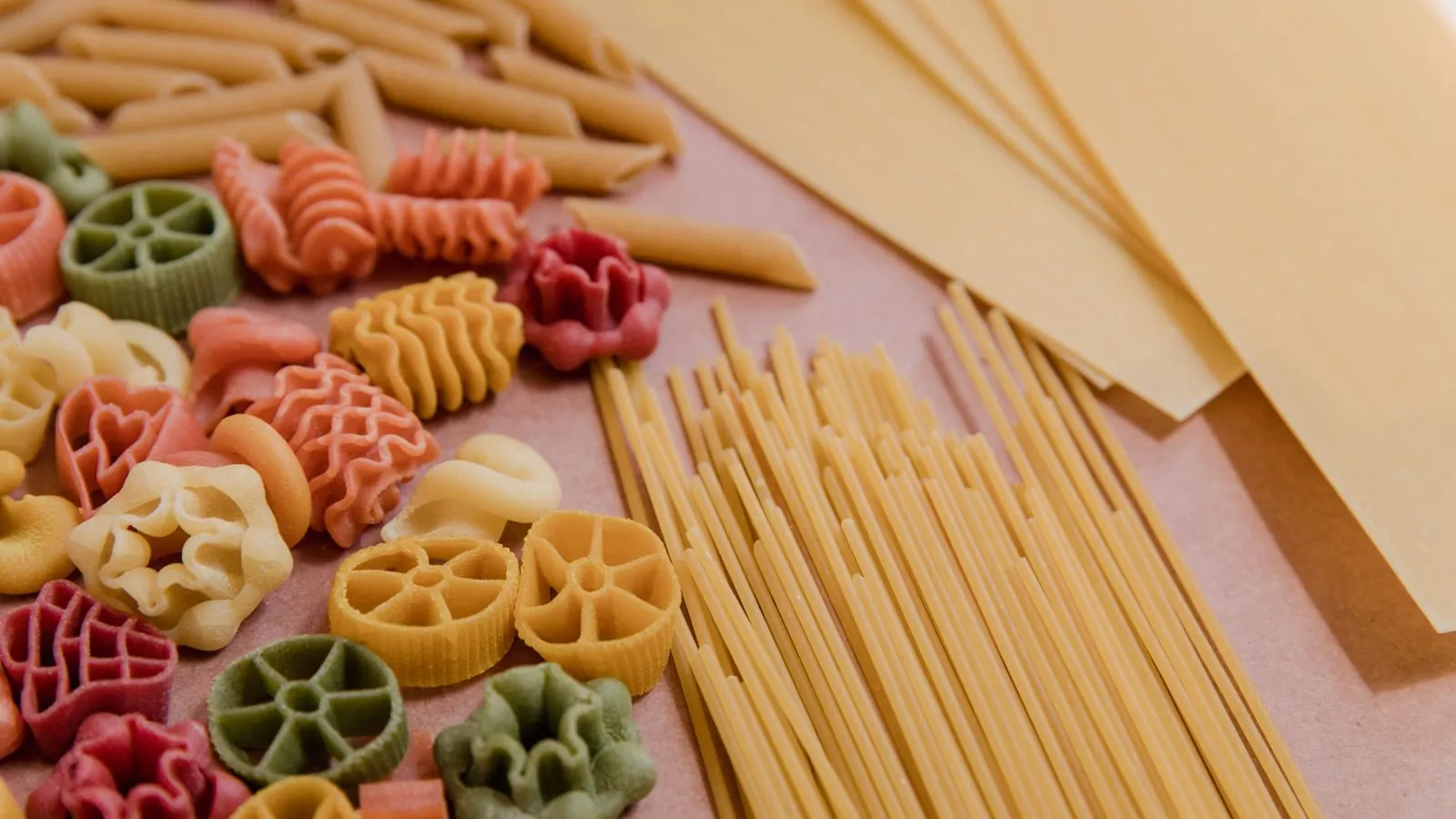
Thickness counts for more than shape. Thin strands have almost no margin for error, while thick tubes and shells give you a minute or two of slack. These are typical ranges for dried semolina pasta at sea level, but always check against your box and do a cut test.
| Shape | Typical al dente range | How forgiving it is |
|---|---|---|
| Angel hair (capellini) | 3 to 5 minutes | Very little; check at 2 to 3 minutes |
| Thin spaghetti | 6 to 8 minutes | Small window |
| Spaghetti, linguine | 8 to 11 minutes | Moderate |
| Fettuccine (dried) | 10 to 12 minutes | Moderate |
| Penne, ziti | 10 to 12 minutes | Fairly forgiving |
| Rigatoni, medium shells | 11 to 14 minutes | Forgiving |
| Orecchiette, thick bronze-cut shapes | 12 to 16 minutes | Forgiving, but check the thick center |
Fresh egg pasta is a different case. It cooks in about 2 to 4 minutes and doesn't have a true al dente core the way dried pasta does. You're looking for tender noodles that have lost their raw, doughy chew, and a single taste test is fine there.
Why does pasta sometimes cook unevenly?
If some pieces are done and others still crunchy, the usual culprit is crowding or a weak boil. Rice does the same thing when the heat is too high or the pot is too wide, which is a common reason for crunchy rice. When you add a pound of pasta to too little water, the temperature drops sharply and pieces clump together. Clumped pasta cooks slower on the inside of the clump than on the outside.
A few habits fix most of it:
- Use a big enough pot so the water returns to a boil within a minute or two.
- Stir in the first 1 to 2 minutes, when the surface starch is stickiest.
- Keep the lid off once the pasta is in, so you can keep an eye on the boil and adjust the heat.
- Don't add oil to the water. It mostly floats on top and makes sauce slide off later, without preventing sticking much.
Altitude also plays a role. Water boils at a lower temperature as you go up (around 203°F at 5,000 feet instead of 212°F at sea level), so pasta takes longer to cook. If you live high up, start your first check at the box time instead of 2 minutes before it. The lower boiling point slows soft boiled eggs the same way.
What if you already overshot it?
Overcooked pasta can't be firmed back up, but you can limit the damage. Drain it immediately and get it into the sauce rather than letting it sit in a colander, where it keeps steaming and softening. A quick toss in a hot pan with a little olive oil or butter can tighten the surface slightly.
Don't rinse it unless you're making a cold pasta salad. Rinsing washes away the surface starch that helps the sauce stick, and it won't undo the overcooking in any real way.
Next time, note how many minutes it took on your stove with that brand. After one or two batches you'll rarely need more than a single check. Checking early and then noting the time works for most stovetop cooking times, since boxes and recipes only give a starting range.
 How to read pasta doneness by eye
Judging a pale pinpoint core is easier once you see a cut piece next to a whole one. Gennaro Contaldo works through a pot of pasta, so you can match what you see to the cut test.
Gennaro Contaldo demonstrates how to cook pasta "al dente".
By Penguin Books Australia on YouTube. Their method may vary a little from ours. Watch on YouTube
- Compare the thin pale dot in the center of a cut piece with the chalky, wide core described in the table above.
- Notice how a strand drapes on the fork, since al dente should curve with some spring rather than stand stiff or hang limp.
- Watch when the pasta comes out relative to the sauce, because pulling it about 1 minute early lets it finish in the pan.


