 Food Storage
How Long Does Leftover Turkey Last in the Fridge Before You Freeze It?
 By the CookClear writers
Checked against USDA and FDA food safety guidance
 Clear Answer
Leftover cooked turkey lasts 3 to 4 days in a refrigerator holding 40°F or below, counting the day it was roasted. That clock only holds if the turkey went into the fridge within 2 hours of coming out of the oven. Anything you will not finish by day 4 belongs in the freezer, where it keeps its quality for months.
For a Thursday dinner, that means Sunday or Monday is the last day for turkey sandwiches. The sides run on their own shorter clocks, and how you pack the bird away decides whether you get the full 4 days.
 On the menu9 sections
The 2-hour window starts when the turkey leaves the oven
The 2 hours start when the turkey comes out of the oven, not when dinner ends. A bird that rested 40 minutes, sat on the table through a long dinner, and then waited on the counter during dessert can run out of time before anyone thinks about the fridge. If the room is above 90°F, as it can be in a crowded kitchen with the oven running, the limit drops to 1 hour.
Bacteria grow fastest between 40 and 140°F. Cooked turkey on a platter at room temperature sits right in that range. Turkey that has been out longer than 2 hours should be thrown out, and reheating it does not fix the problem, for the same reasons covered with chicken left out overnight.
Breaking down the bird so it cools fast
A whole turkey is too big to cool safely in one piece. The center can stay warm for hours in the fridge, and that warm mass also raises the temperature of everything around it. USDA and extension services all give the same instruction: take it apart and use shallow containers.
 The Method
- Take any stuffing out of the cavity first and pack it in its own shallow container. Stuffing left inside the bird cools slowest of all.
- Slice the breast meat off the frame. Thin slices or chunks chill much faster than a whole breast half.
- Cut the legs and wings off at the joints. These can stay whole, since they are thin enough to cool well.
- Pick the remaining meat off the back and thighs while it is still warm and easy to pull. It comes away cleanly when the bird is warm and clings once it is cold.
- Spread the meat in shallow containers, about 2 inches deep or less, and leave the lids slightly open until it stops steaming.
- Put the containers on fridge shelves with space around them so cold air can circulate. Stack them only once they feel cold.
- Set the carcass in a large bag or bowl and refrigerate it, or start stock with it right away.
Label each container with the cook date. On a holiday weekend with three or four kinds of leftovers, nobody remembers which day the turkey went in.
How long does stuffing last in the fridge?
Stuffing and gravy get less time than the meat. The University of California Cooperative Extension lists cooked turkey at 3 to 4 days but stuffing and gravy at 1 to 2 days in the fridge.
Stuffing is moist, starchy, and often mixed with broth, egg, sausage, or giblets. If it baked inside the bird, it also soaked up raw poultry juices before cooking. Gravy is made from drippings and broth, a rich, protein-heavy liquid that bacteria like.
| Leftover | Fridge (40°F or below) | Freezer (0°F, best quality) |
|---|---|---|
| Turkey pieces, plain | 3 to 4 days | About 4 months |
| Turkey covered in broth or gravy | 3 to 4 days | About 6 months |
| Stuffing | 1 to 2 days | About 1 month |
| Gravy | 1 to 2 days | About 1 month |
| Homemade turkey stock | 3 to 4 days | 2 to 3 months |
Store stuffing and gravy separately from the meat, each in its own container. If you plan to eat the stuffing on Saturday, it can stay in the fridge. If it will be Sunday or later, freeze it on Friday.
Freezer times are about quality. Food held at 0°F stays safe indefinitely, but turkey dries out and picks up freezer burn after a few months. For the rest of the meal, the general leftovers timeline covers casseroles, pies, and cooked vegetables.
Can you freeze leftover turkey?
Yes, and the best time to do it is the day after the meal, not on day 4. Freezing does not kill bacteria. It pauses them, so turkey frozen on day 4 has used up its fridge time and must be eaten soon after thawing.
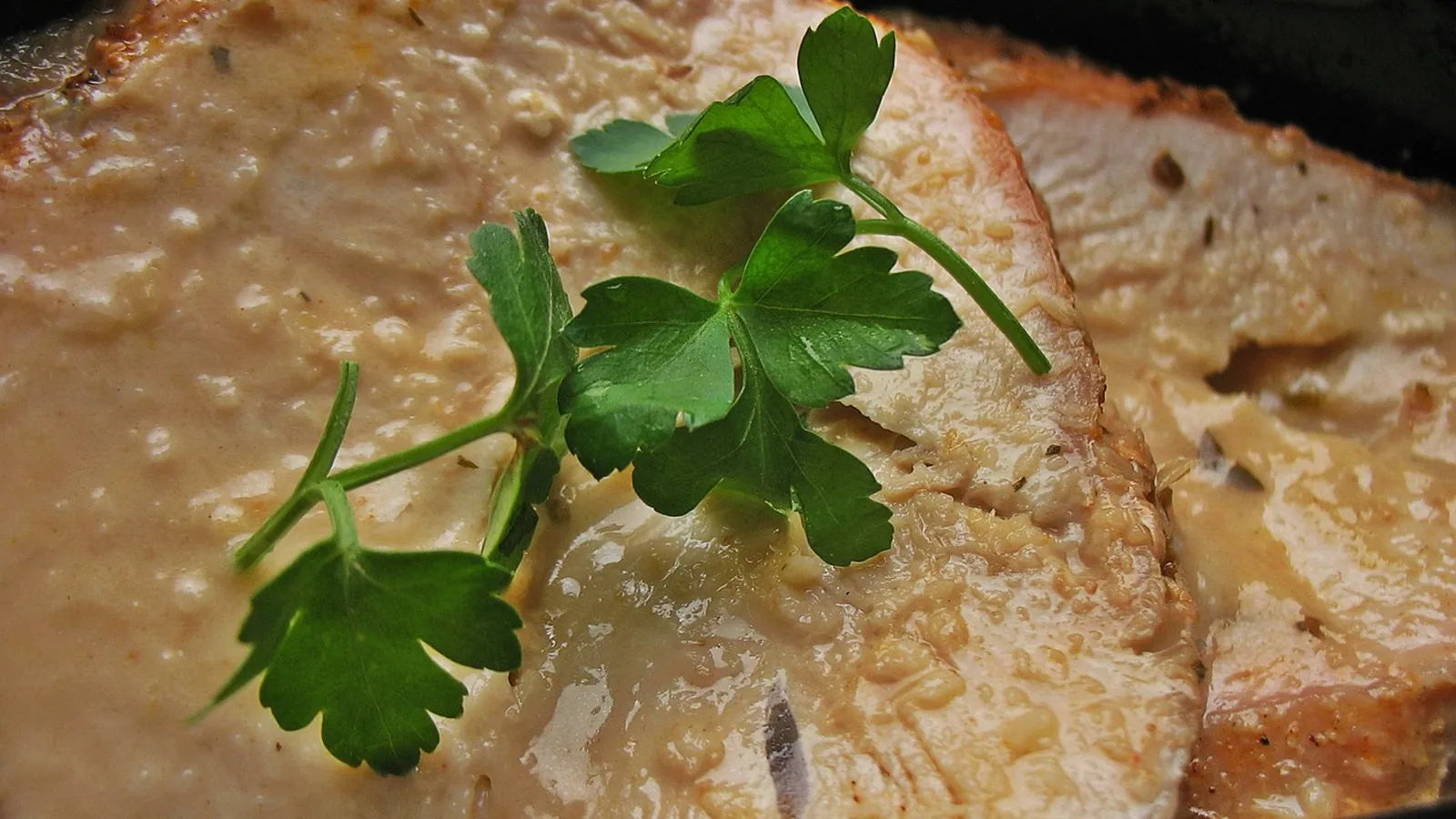
The biggest problem with frozen turkey is dryness. Breast meat is lean, and freezer air pulls moisture out of the surface. Covering the meat with liquid protects it. UC Cooperative Extension gives plain turkey slices about 4 months in the freezer and turkey covered with broth or gravy about 6 months.
- Pack the meat in portions you will use at once: 1 to 2 cups for a casserole, a few slices for sandwiches.
- Pour in a few spoonfuls of broth or gravy so the meat sits in a thin layer of liquid.
- Press the air out of freezer bags and lay them flat to freeze. Flat bags freeze faster and stack well.
- Write the contents and date on each bag.
Thawing and reheating turkey to 165°F
Thaw frozen turkey in the fridge overnight. Small flat bags usually thaw in about a day. Turkey thawed this way can be refrozen within its fridge window, as the rules for refreezing thawed meat explain, though each round costs some texture. You can also reheat portions straight from frozen; it simply takes longer.
All leftovers should reach 165°F before eating. Check the thickest piece with a reliable instant-read thermometer, the same tool used to confirm the turkey's done temperature on the day itself.
How to reheat turkey without drying it out
Dry heat is the enemy. These approaches keep slices moist:
- Oven: Put the turkey in a baking dish, add a splash of broth, cover tightly with foil, and heat at 325°F until it reaches 165°F. Slices take about 20 to 30 minutes; larger pieces take longer.
- Stovetop: Warm slices in a covered skillet with a little broth or gravy over medium-low heat, turning once.
- Microwave: Cover the dish, add a spoonful of liquid, and rotate or stir partway through. Microwaves leave cold spots, so check the temperature in more than one place.
Do not reheat a whole half turkey or an intact leg quarter in one piece. The outside overcooks before the center gets hot.
Gravy needs more than warming. USDA says to bring gravy, soups, and sauces to a rolling boil when reheating. If it thickened in the fridge, whisk in broth as it heats, and if it turns lumpy, the fixes for lumpy gravy still work on leftovers.
Stuffing reheats best in a covered dish in the oven with a little broth sprinkled over it, until the center reads 165°F. Uncover for the last 10 minutes if you want a crisp top.
How to tell if leftover turkey is bad
Turkey that has gone off usually gives some signs:
- A sour, sulfur, or ammonia smell when you open the container
- A slimy or sticky film on the surface
- Gray or greenish patches, or any fuzzy mold
- Gravy that smells sour, separates oddly, or has bubbles it did not have before
The harder truth is that the bacteria that cause food poisoning, such as Salmonella and Clostridium perfringens, usually do not change the smell or look of turkey at all. Turkey can seem perfect on day 6 and still make someone sick. Go by the calendar first. If it is past day 4 in the fridge, throw it out without tasting it.
| What you see | Likely cause | Fix |
|---|---|---|
| Center of the turkey still warm the next morning | Bird refrigerated whole or packed too deep | Throw it out; carve and spread meat in shallow containers next time |
| Sliced breast dry and stringy after reheating | Reheated uncovered or without liquid | Add broth, cover tightly, and heat gently to 165°F |
| Frozen turkey with white, leathery patches | Freezer burn from air in the bag | Trim the dry spots; pack with broth or gravy and less air next time |
| Gravy thick as pudding from the fridge | Gelatin and starch set as it cooled | Whisk in broth while bringing it to a rolling boil |
| Stuffing soggy and dense when reheated | Too much liquid added, heated covered the whole time | Uncover for the last 10 minutes in the oven |
| Nobody knows which day the turkey went in | No label on the container | When unsure, throw it out; date every container next time |
How long is turkey stock good for?
The carcass runs on the same clock as the meat. Make stock within 3 to 4 days of the dinner, and sooner is better, since the bones were sitting at room temperature on the platter with everything else. Many cooks start the pot on Friday morning.
Break the frame into pieces so it fits in the pot, cover it with cold water, and add an onion, carrot, and celery if you have them. Keep it at a gentle simmer rather than a boil so it stays clear; the timing and cues for simmering chicken soup apply to a turkey frame too, though the bigger bones can take longer.
Cool the finished stock fast. Strain it, divide it into shallow containers or a few smaller jars, and refrigerate. Homemade stock follows the FoodSafety.gov soup timeline: use it within 3 to 4 days, or freeze it for 2 to 3 months. Freeze some in 1 or 2 cup portions so you can thaw only what a recipe needs.
Planning the leftovers before the bird is carved
The easiest way to stay inside these limits is to decide on Thanksgiving night how much will be eaten fresh and how much goes straight to the freezer. If you cooked a big bird, the time per pound in the turkey roasting chart gives you a sense of how much meat is coming before dinner even starts.
A simple plan for a Thursday dinner:
- Thursday night: carve, pack, refrigerate everything within 2 hours.
- Friday: freeze surplus turkey with gravy, freeze any stuffing you will not finish Saturday, and start the stock.
- Saturday: last day for stuffing and gravy in the fridge.
- Sunday: last full day for refrigerated turkey. Freeze or toss what is left by Monday.
More storage times for other foods are on the food storage page.
 Packing up turkey leftovers, step by step
Storage rules are easier to remember when you hear them laid out for a real holiday kitchen, with a counter full of food and a fridge to fill.
Storing Thanksgiving leftovers safely
By WCNC on YouTube. Their method may vary a little from ours. Watch on YouTube
- Listen for when the 2-hour clock starts, since it runs from the moment the turkey leaves the oven.
- Notice the advice on container depth, the step that lets turkey cool fast enough to keep 3 to 4 days.
- Compare any freezer timing with the roughly 4 months for plain turkey and 6 months under broth or gravy.


