 Picking Produce
Which Signs Help You Choose Fresh Chicken, Whole or Cut Into Parts?
 By the CookClear writers
Checked against USDA grading standards and university extension buying advice
 Clear Answer
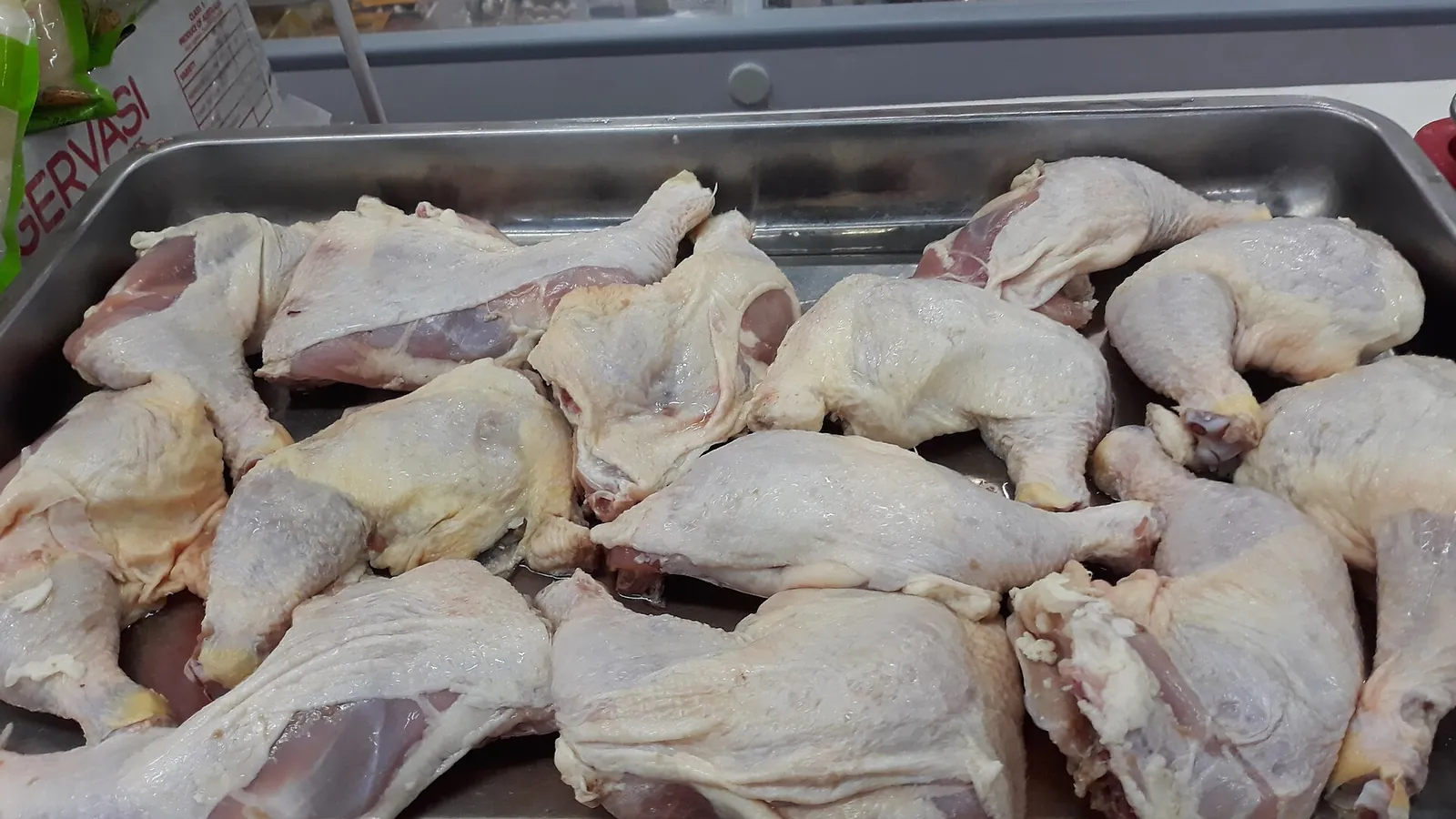
To choose fresh chicken, pick a package that feels cold, is tightly sealed with no leaks or tears, and is well inside its sell-by date. Once it is open, the meat should smell clean and feel firm rather than slimy. Skin color, from cream to yellow, comes from the bird's feed and says nothing about freshness.
What to check first: the date and the package
Start with what you can judge without opening anything.
 On the menu9 questions
- The date. USDA's Food Safety and Inspection Service (FSIS) says product dates are not a measure of safety, but it still advises buying chicken before the sell-by date. Pick the latest date you can find.
- The temperature. FSIS says chicken should feel cold to the touch when you buy it.
- The seal. Look for film that is tight against the meat with no tears, punctures or loose corners.
- The liquid. A little pink liquid in the tray is normal. FSIS explains it is mostly water the chicken absorbed during chilling, not blood.
- The shape of the pack. A swollen or puffy package can mean gas from bacteria or a broken seal. Skip it.
Grab chicken last, just before checkout, as FSIS recommends, and ask for it to be bagged apart from produce. At home it goes into a fridge at 40°F or below. FSIS gives fresh whole chicken and parts just 1 to 2 days there, so how long raw chicken lasts in the fridge should shape which date you buy.
What color should fresh raw chicken be?
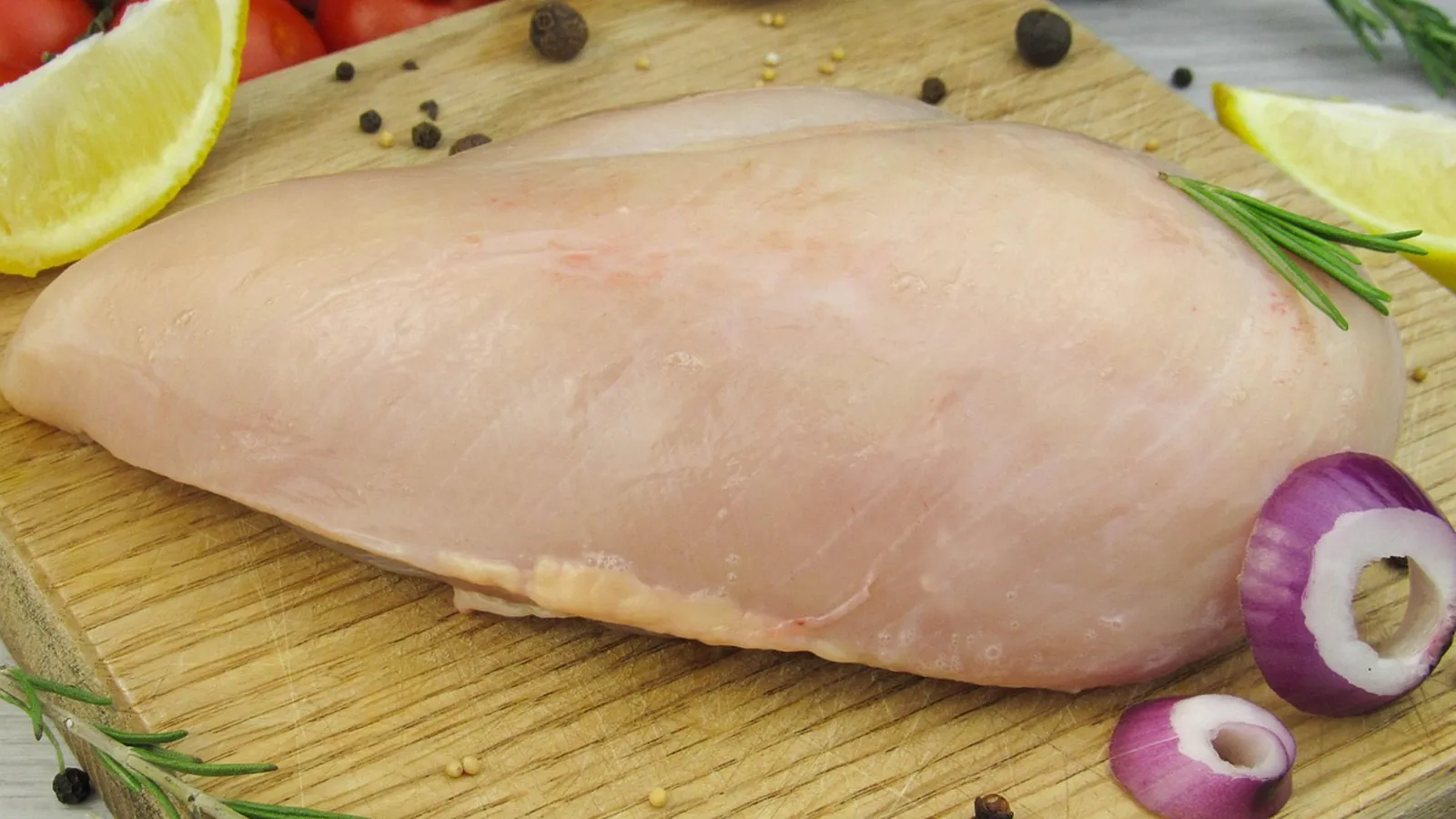
Fresh raw chicken meat runs from light pink (breast) to a deeper pink or red (thighs and legs), with skin anywhere from creamy white to yellow.
Why is some chicken skin yellow?
Some chicken skin is yellow because of what the bird ate. FSIS says skin color "is a result of the type of feed eaten by the chicken" and is not a measure of nutrition or flavor. Different feed gives different shades, so two brands can look nothing alike on the same shelf and still be equally fresh.
| What you see | Likely cause | What to do |
|---|---|---|
| Pale cream or bright yellow skin | Feed, normal either way | Buy based on date and smell |
| Light pink breast, deeper pink thighs | Normal muscle color | Buy it |
| Some pink liquid in the tray | Water absorbed during chilling | Normal; choose the pack with less |
| Gray or greenish tint on the meat | Age or spoilage | Skip it |
| Swollen, puffy package | Gas from bacteria or a broken seal | Do not buy |
| Slimy or tacky surface after opening | Bacterial growth | Return or throw out |
How should fresh chicken smell and feel?
Fresh raw chicken has almost no smell. Spoiled chicken smells sour or plainly off as soon as the pack is open, and trust that over the date.
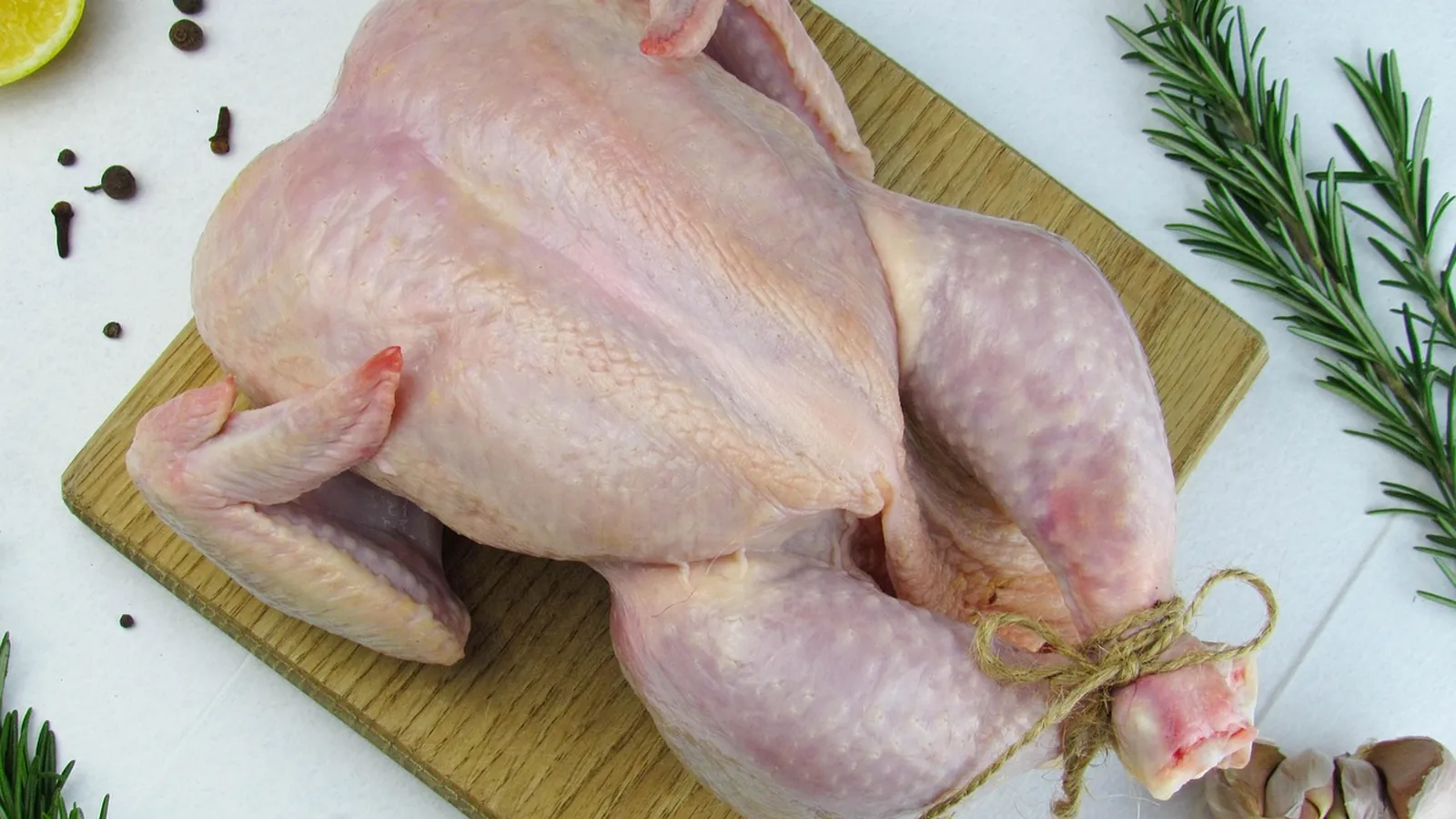
Check the feel too. Fresh chicken is firm and moist; a slimy or tacky coating means bacterial growth.
You can't smell through plastic, so this check usually happens at home. If a new pack smells off when you open it, return it.
Do not rinse raw chicken to "freshen" it. FSIS advises against washing raw poultry because rinsing does not kill bacteria and splashes them around the sink. Pat it dry with paper towels instead, and use a separate board; a plastic or wood cutting board both work if you clean it right after.
What do chicken labels really mean?
Labels describe how the bird was raised or processed, never how fresh the pack is. Under USDA rules, each common claim means the following.
| Label term | What it means | Notes |
|---|---|---|
| Fresh | Never held below 26°F | Chicken labeled frozen or previously frozen went below that |
| Natural | No artificial ingredients or added color, minimally processed | Says nothing about how the bird was raised |
| No hormones added | Must be followed by "Federal regulations prohibit the use of hormones" | Hormones are banned in all U.S. poultry, so every chicken qualifies |
| Free range | Producer showed USDA the birds had access to the outside | How much time or space outdoors is not set |
| USDA Organic | Organic feed, no antibiotics, outdoor access, certified by a third party | Usually the highest price |
| Air chilled | Cooled with cold air instead of a cold water bath | Little or no added water |
| Contains up to X% retained water | Water chilled; label shows how much water the meat held on to | You pay for that water by the pound |
| Enhanced, or "contains up to X% of a solution" | Injected or tumbled with salt water or broth | Check sodium on the Nutrition Facts panel |
Hormones are not allowed in raising any U.S. poultry, which is why the disclaimer must sit next to the claim. A store-brand bird without it is raised the same way.
What does air chilled chicken mean?
Air chilled chicken means the birds were cooled after processing by moving through chambers of cold air rather than soaking together in chilled water. Water chilling is the common method, and the meat can absorb some of that water; America's Test Kitchen says water-chilled birds can retain up to 14 percent water, which has to be stated on the label.
Air chilled chicken costs more, but you are not paying for water, and the skin starts out drier, which makes crisp chicken thigh skin easier to get.
Is chicken enhanced with a solution worth avoiding?
Chicken enhanced with a solution has been injected or tumbled with water, salt and sometimes broth or phosphates. It keeps the meat juicy but adds weight you pay for and a lot of sodium.
Consumer Reports has found that enhanced chicken commonly carries about 15 percent of its weight in solution, sometimes more. News reports comparing labels put plain chicken at roughly 45 to 70 mg of sodium per serving and enhanced chicken at roughly 200 to 500 mg. Those figures vary by brand, so read the Nutrition Facts panel on the pack in your hand.
Look for wording like "contains up to 12% of a solution of water and salt" near the product name, often in small type. Enhanced chicken can still say "natural." Skip it if you plan to brine, season heavily or watch sodium.
What is woody breast chicken, and how do you avoid it?
Woody breast chicken is a muscle condition in boneless breasts that makes the meat hard, pale and chewy. Poultry scientists describe affected fillets as swollen and firm, often with ridge-like bulges toward the narrow end.
Researchers link it mainly to fast-growing, heavy birds bred for large breasts. One research review, published in the National Library of Medicine's PubMed Central, reported moderate to severe woody breast in roughly 25 to 35 percent of birds in some high-yield flocks. It is treated as a texture and quality problem, not a food safety one, so affected breasts are safe to eat.
How to lower your odds at the store:
- Press the breast through the package. A normal breast gives when you push on the thickest part. A woody one feels hard, almost rubbery, all the way through.
- Look for ridges and bulges. Raised lines across the surface or a hump at the thick end are warning signs.
- Choose smaller breasts. Very large boneless breasts come from heavier birds, where the condition is more common.
- Buy bone-in or whole birds. You can feel and inspect them more easily, and thighs are not affected the same way.
If one slips through, slice it thin against the grain or chop it for soup or chicken salad.
Is a whole chicken cheaper than parts?
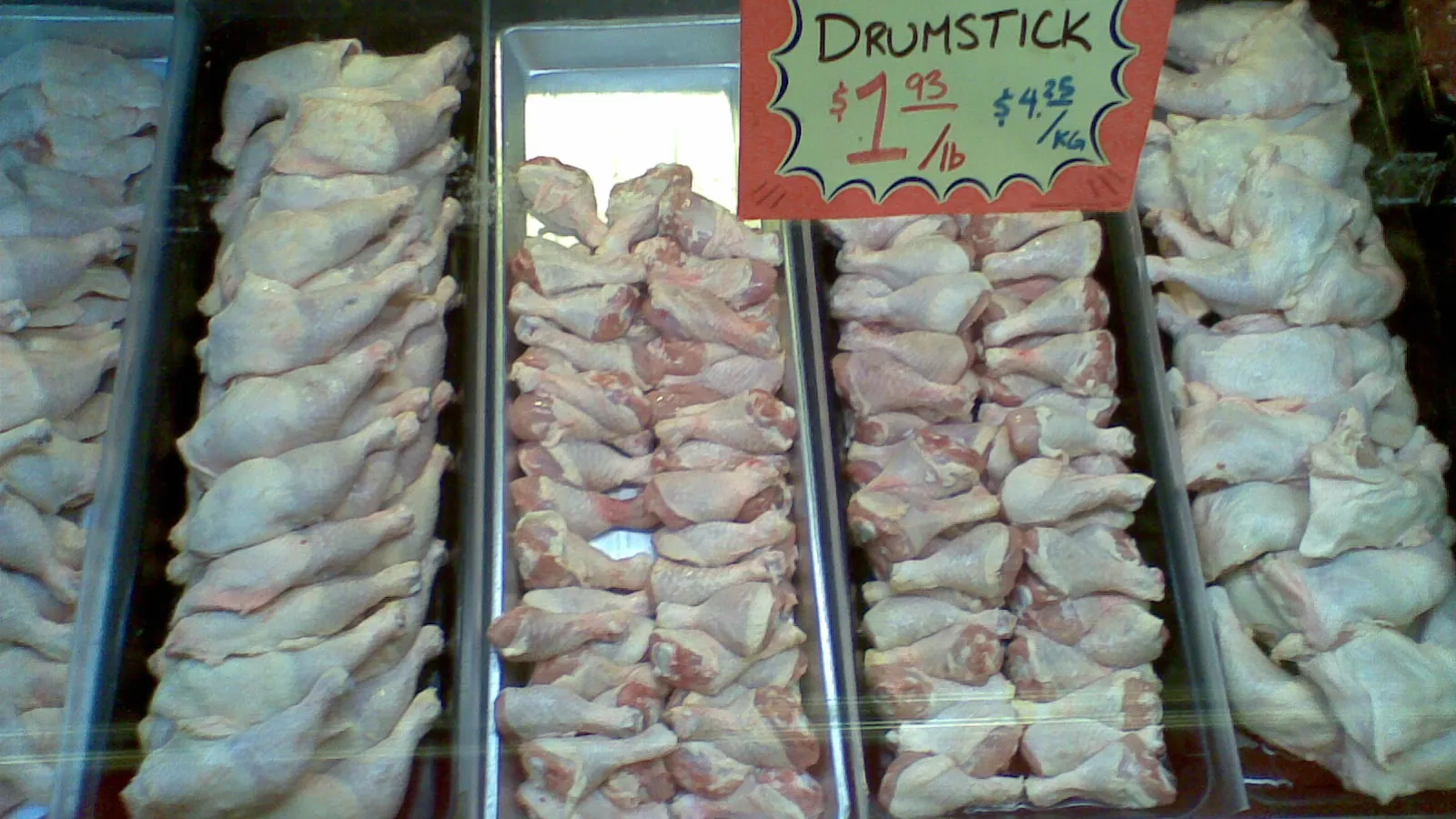
A whole chicken is usually cheaper per pound than parts, because you are doing the cutting yourself. Boneless, skinless breasts usually cost the most, with leg quarters and drumsticks near the bottom. Prices swing by region and sale, so compare the per pound price on the shelf tag.
| Option | Typical price per pound | Best for | Watch for |
|---|---|---|---|
| Whole chicken | Low | Roasting, stock from the carcass, mixed white and dark meat | You pay for bones and back |
| Leg quarters and drumsticks | Low | Braising, grilling, budget meals | More bone per pound |
| Bone-in thighs | Low to moderate | Roasting, crispy skin | Trimming excess fat |
| Bone-in split breasts | Moderate | Roasting, grilling | Size and woody breast |
| Boneless, skinless breasts | Highest | Quick weeknight meals | Woody breast, enhanced solutions |
A broiler-fryer, the standard supermarket whole chicken, is about 7 weeks old and weighs 2 1/2 to 4 1/2 pounds, according to FSIS. A roaster is older, 8 to 12 weeks, and weighs 5 pounds or more. Check how much meat per person you need before picking a size.
When you choose a whole chicken, look for:
- Plump breast and legs with skin covering the meat fully, without big tears
- A neat, tight wrap with little liquid in the bag
- The giblet packet inside, which is normal and good for gravy
A whole bird also gives you a carcass for stock. If you are new to it, roasting a whole chicken is easy once you know where to check the thigh.
Buy parts when you want all one cut or need dinner fast.
Fresh, frozen or previously frozen: which should you buy?
All three are safe when handled right. "Fresh" means the chicken was never held below 26°F. Frozen chicken kept at 0°F stays safe indefinitely, though quality slowly drops over time.
Frozen chicken is a smart buy when it is on sale or when you won't cook within 1 to 2 days. Skip bags with heavy frost inside, and thaw in the fridge.
Treat "previously frozen" chicken like fresh: 1 to 2 days from purchase.
Why did my chicken smell bad before the date?
Usually the cause is temperature, not the date. Chicken that sat warm in a cart, a hot car or a fridge running above 40°F spoils faster than the label assumes. The best by date and sell-by stamps assume cold handling the whole way.
A few habits keep a good pick fresh:
- Shop for chicken last and go straight home.
- Use a cooler on hot days.
- Keep the pack on a plate on the bottom shelf of the fridge so juice can't drip onto other food.
- Cook or freeze within 1 to 2 days of buying.
- Cook all chicken to 165°F, checked with a thermometer in the thickest part, as FSIS advises.
The same habits of reading dates, feeling for cold and checking the seal work for choosing a good steak and most of the meat counter, and they carry over to the rest of your market picks too.
 Spotting fresh chicken in a real meat case
Seeing packages handled up close makes it easier to judge cold, seal and texture before you open one.
How to Buy Chicken (Organic? Pastured? Air-Chilled?)
By Helen Rennie on YouTube. Their method may vary a little from ours. Watch on YouTube
- When a package is handled, check the same points listed earlier: a cold, tight seal, no tears and little pooled liquid, then the sell-by date.
- If you see cream and yellow skin side by side, remember that feed, not freshness, sets that color.
- Pay attention to how a boneless breast looks and feels at its thickest point, since a hard, ridged breast is the sign of woody breast.


